
Worms in Apples? 7 Simple Steps to Prevent More Damage
Worms in apples usually come from codling moth caterpillars or apple maggot fly larvae, not earthworms. Check for a tunnel toward the core, crumbly brown insect waste, or winding brown tracks through the flesh. Remove infested fruit, identify the pest, and protect developing apples before new larvae enter.
Table of Contents
Key Takeaways
- Worms in apples are often codling moth caterpillars, but apple maggot larvae leave a different damage pattern.
- A spray cannot repair fruit already tunneled by an insect. Remove infested apples and focus protection on clean fruit.
- Fruit bags, cleanup, monitoring traps, and correctly timed protection work together. No single method solves every infestation.
Biting into a homegrown apple and finding a tunnel can be frustrating, especially when the rest of the fruit looks normal. However, the shape of that tunnel often gives you a useful starting point for identifying the pest.
This guide explains what causes worms in apples, how to inspect damaged fruit, and what to do during the current season. It also covers lower-input prevention methods and when an insecticide decision may be justified.
What Causes Worms in Apples?
The word “worm” describes what a gardener sees, rather than the insect’s identity. Most fruit-infesting larvae are young insects that hatch from eggs laid by adult moths or flies.
Codling Moth Larvae
The codling moth (Cydia pomonella) is a major cause of the familiar wormhole in an apple. Its cream-colored caterpillar may become pinkish as it matures, and it has a distinct brown head.
After hatching, the larva bores into the fruit and may tunnel toward the seed cavity. A hole plugged with coarse, brown droppings, called frass, is an important clue, according to Utah State University Extension.
A small, shallow scar called a sting can also mark an unsuccessful entry. Therefore, not every mark means a larva is still inside the apple.
Apple Maggot Larvae
The apple maggot fly (Rhagoletis pomonella) is a different pest, despite the similar everyday name. Its small, pale, legless larvae feed through the flesh rather than following one obvious path to the core.
Female flies place eggs beneath the apple skin, sometimes leaving tiny dimples. As larvae feed, the flesh may develop winding brown trails and soft, discolored areas, as described by University of Minnesota Extension.
Damage That May Be Mistaken for Worms
A dent, corky spot, or bruise is not proof of an insect infestation. Fruit can also develop non-insect blemishes, so cutting across the damaged area is more informative than judging the skin alone.
Likewise, finding a different insect on an apple leaf does not establish that it tunneled through the fruit. Look for a larva, frass, or a distinctive feeding path before deciding how to respond.
How to Identify Worms in Apples
Inspect the Skin, Tunnel, and Larva
Choose a recently damaged apple and inspect its stem end, blossom end, and sides. Then cut through the suspicious area and toward the core, keeping the pieces on a clean surface so you can see the feeding pattern.
The comparison below is a practical identification aid, not a substitute for a confirmed diagnosis. If several signs disagree, photograph the fruit exterior and cut surface for your local extension office.
| What You Find | More Consistent With | Next Check |
|---|---|---|
| Noticeable entry hole, crumbly brown frass, tunnel toward seeds | Codling moth | Look for a cream or pinkish caterpillar with a brown head. |
| Small punctures or dimples, winding brown trails through flesh | Apple maggot | Look for a small, pale, legless maggot or discolored tracks. |
| Scarring or corky tissue without a tunnel or insect evidence | Possible non-insect injury | Compare multiple fruit and seek local diagnosis before treating. |
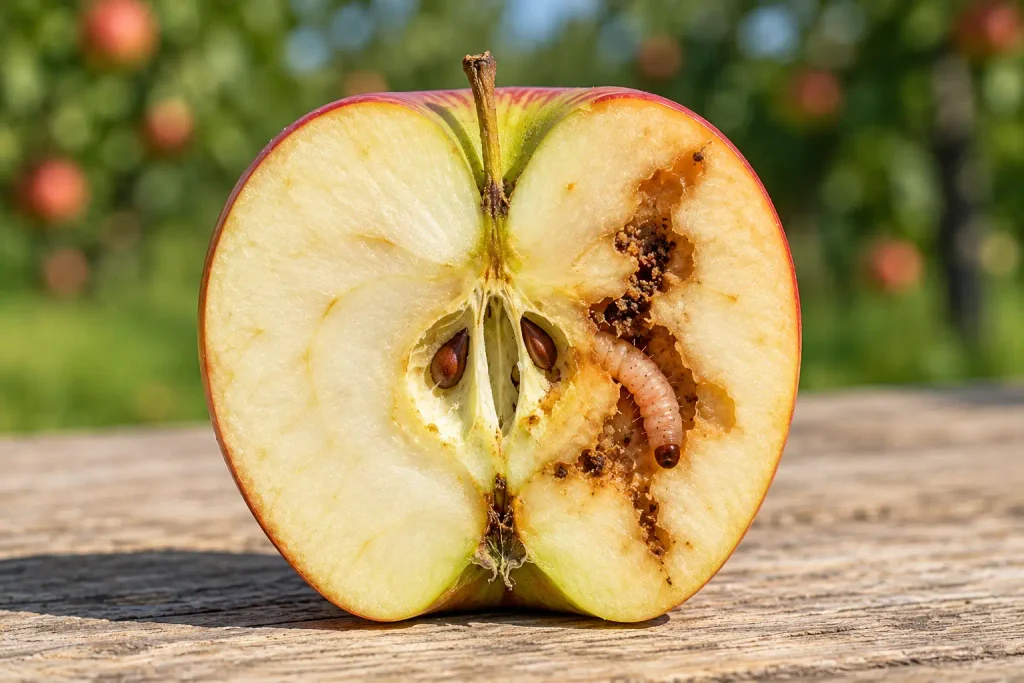
Finding worms in apples does not automatically mean every apple on the tree is damaged. Check a sample of fruit from different branches and record which signs repeat, because a tree can have more than one kind of fruit injury.
Video: How to Control Codling Moth, Gardening Australia. This demonstrates codling moth biology; use the US extension sources below for locally appropriate management.
7 Proven Steps to Stop Worms in Apples
There is no way to close a tunnel or reverse damage inside a fruit. However, the following steps can reduce opportunities for another generation of insects to infest remaining and future apples.
Step 1. Identify Which Insect Is Present
Start with the fruit damage rather than the insecticide shelf. Compare the cut apple with the table above and note whether you see core-directed feeding or branching trails through the flesh.
If the signs suggest codling moth, use the codling moth apple tree guide for its full life cycle. If you suspect another pest, the published apple tree pests identification guide provides a broader comparison.
Step 2. Remove Infested and Fallen Fruit Promptly
Pick visibly damaged fruit that you can safely reach, then collect drops from beneath the tree. This matters because larvae may keep feeding in fallen apples and can later complete their development.
Keep suspected infested fruit out of a normal backyard compost pile. Instead, follow local waste rules or use a municipal composting system that accepts the material, as advised for apple maggot by Minnesota Extension.
Step 3. Use the Right Trap to Monitor Adults
For codling moth, a pheromone-baited sticky trap detects male moth flight. Start monitoring around bloom according to local extension recommendations and record consistent catches, rather than assuming that a trap will catch every moth.
Apple maggot monitoring uses different equipment, commonly sticky red spheres placed in the outer canopy. Because these traps target different adults, choosing the right one matters more than hanging several random sticky traps.
Read the codling moth trap guide for trap selection once that companion article is published. For local monitoring guidance, consult the Oregon State University home-orchard guide.
Step 4. Thin and Bag Clean Developing Apples
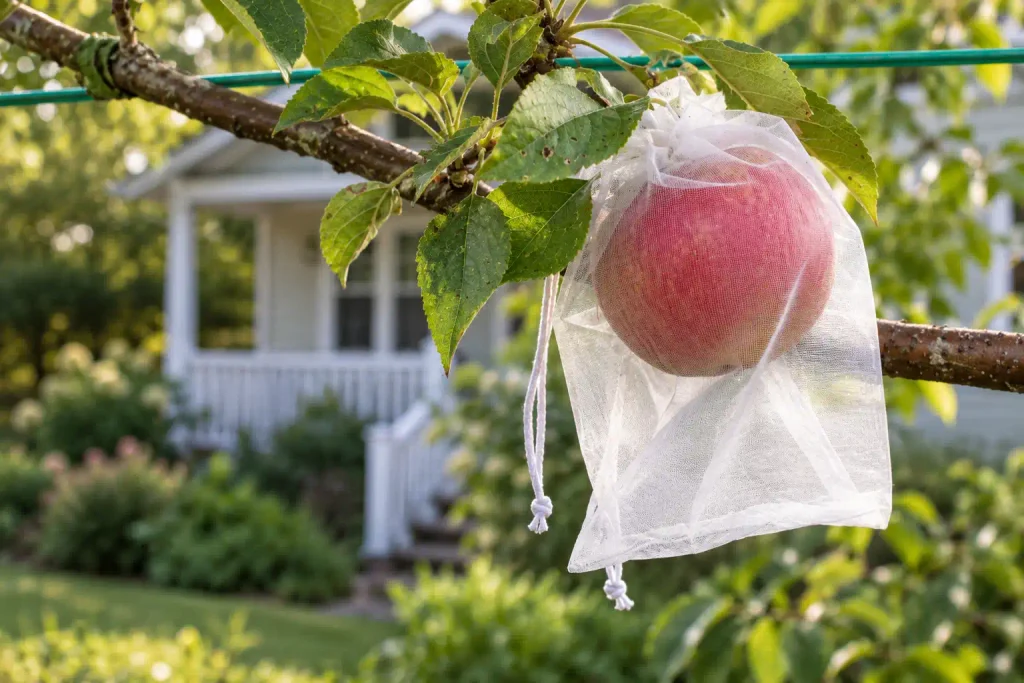
After pollination and fruit thinning, enclose sound young apples in purpose-made fruit bags or an appropriately fitted barrier. Close each bag around the stem without crushing the fruit, and inspect it as the apple grows.
Fruit bagging is useful for a few backyard trees because the barrier stops insects from reaching the apple surface. However, placing a bag over an apple that already contains larvae will not undo the damage.
For apple maggot, Minnesota Extension’s bagging instructions also explain drainage openings when using suitable plastic bags.
Step 5. Consider Netting a Manageable Tree
Fine exclusion netting can reduce adult insects reaching the fruit if the entire tree is enclosed and edges are secured. Install it after pollination and thinning so you do not block the insects needed for fruit set.
Unlike ordinary bird netting with large openings, pest-exclusion material needs a mesh suited to the target insect. Smaller trees are easier to cover completely, and gaps can make protection unreliable.
For a research-based overview, Minnesota Extension explains whole-tree exclusion.
Step 6. Consider Targeted Sprays Only When Needed
A treatment is most useful before the young pest enters fruit, not after tunneling is obvious. Codling moth treatment windows relate to adult flight and egg hatch, while apple maggot treatments depend on fly activity and trapping.
Some home-orchard products contain spinosad, codling moth granulosis virus, or kaolin clay, but their target pests and uses differ. Always verify that the specific product is labeled for apples, the pest, your location, and the intended application method.
Do not spray open blossoms or expose active pollinators. Follow every label direction, including protective equipment, re-entry restrictions, application intervals, and the preharvest interval.
For codling moth spray timing and degree-day decisions, use the current Utah State Extension timing guidance together with local extension advice.
Step 7. Break the Life Cycle and Prepare for Next Year
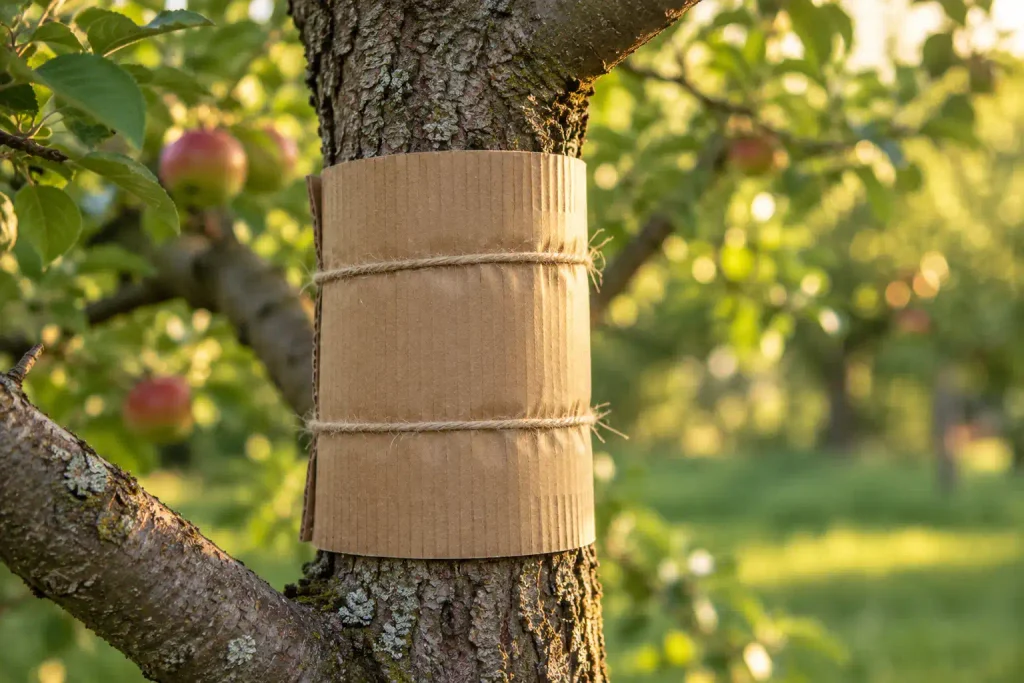
Keep collecting fallen or infested apples throughout the growing season and after harvest. For codling moth, properly managed corrugated cardboard trunk bands can capture wandering caterpillars before they shelter and pupate.
Remove and dispose of bands at the intervals recommended for your region; otherwise, they can become a refuge rather than a control tool. Finally, keep notes on first trap catches, observed damage, and the preventive methods you used.
What to Do if Your Apples Already Have Worms
If worms in apples are visible at harvest, separate affected fruit from sound fruit and cut open any suspicious examples. Discard fruit with extensive tunneling, soft breakdown, mold, off-odors, or uncertain quality, rather than trying to rescue every damaged apple.
Do not assume that trimming away one visible larva makes heavily damaged or rotting fruit suitable for eating, preserving, or cider. For relatively minor blemishes, assess the entire fruit carefully and follow appropriate food-preservation guidance.
For the tree, the goal now is to interrupt the insect’s next life stage and protect unaffected apples if they are still vulnerable. Spraying inside a damaged fruit is not a treatment, and insecticides do not restore its quality.
Organic and Conventional Control Options Compared
The best choice depends on which pest is present, how many apples you want to protect, and whether you can access the canopy safely. An integrated plan combines monitoring, physical barriers, sanitation, and a selective treatment only when necessary.
| Method | Best Use | Main Limitation |
|---|---|---|
| Fruit removal and cleanup | Reducing opportunities for larvae to complete their life cycle | Cannot prevent adults arriving from nearby trees |
| Individual fruit bags | Protecting a manageable number of sound apples | Labor-intensive on large or tall trees |
| Whole-tree exclusion net | Protecting smaller trees after pollination | Needs complete coverage and secure edges |
| Pheromone or sticky monitoring traps | Tracking the appropriate adult pest | Monitoring alone does not guarantee control |
| Labeled, targeted insecticides | Protecting fruit during a confirmed vulnerable pest stage | Timing, pest identity, labels, and pollinator safeguards matter |
Oregon State University’s fruit tree IPM publication explains why combining compatible tactics is preferable to relying on routine broad-spectrum spraying. In practical terms, the lowest-input approach is to identify the insect, protect clean fruit, and respond to monitored activity.
Extension-based integrated pest management starts with prevention, identification, and monitoring. Treatment is chosen to fit the pest and actual risk, rather than applied automatically to every tree.Editorial synthesis of Oregon State University Extension IPM guidance
A Simple Seasonal Prevention Calendar
The sequence below is relative to tree development, not a nationwide spray schedule. Climate, weather, insect species, and local pest pressure all affect when adults become active.
- Late winter to early spring: Review last year’s damage and prepare monitoring materials. Inspect the tree while planning the coming season.
- Bloom: Begin codling moth monitoring when recommended locally. Keep insecticides away from open blossoms and visiting pollinators.
- After petal fall and fruit thinning: Bag clean fruit or install suitable exclusion netting once pollination is complete.
- Summer: Check the correct traps, inspect fruit, remove drops, and use local extension guidance for any necessary treatment decision.
- Harvest and fall: Separate damaged apples, complete sanitation, remove managed trunk bands, and record what worked.
If worms in apples recur despite cleanup, nearby unmanaged host trees or poorly timed barriers may be part of the problem. Therefore, keep a season-by-season record rather than treating each harvest as an unrelated event.
FAQs
Why Are There Worms in Apples From My Backyard Tree?
The common causes are codling moth caterpillars and apple maggot fly larvae. Check whether the insect made a tunnel toward the core or many winding trails through the flesh before selecting a control method.
Can Worms in Apples Be Prevented Without Spraying?
Often, you can lower the risk with timely fruit bagging, properly installed exclusion netting, regular collection of infested fruit, and monitoring. Results depend on pest pressure and how early the barriers are installed.
Will a Codling Moth Trap Get Rid of Worms?
A pheromone trap primarily helps you track adult male codling moth activity and the need for protection. It may capture moths, but it is not a dependable stand-alone answer to heavy damage.
Can You Eat Apples After Removing the Worm?
Do not eat or preserve fruit with rot, extensive tunnels, or other signs of deterioration. If you find a minor blemish, inspect the entire apple and use appropriate food-safety judgment instead of assuming that cutting out the insect is always enough.
When Should I Start Preventing Worms in Apples?
Plan before fruit is visibly damaged: monitor codling moths around bloom as directed locally, then protect clean developing apples after pollination and thinning. Apple maggot fly activity may begin later in the season, so timing depends on the insect and region.
Related Articles
- Codling moth on apple trees: identification and control
- Identify common apple tree pests
- Organic apple tree pest control methods
- Seasonal apple tree pest control
- Apple maggot fly: damage and management
Sources
- Oregon State University Extension. Softer, smarter codling moth control for home orchards.
- Utah State University Extension. Codling moth in Utah orchards.
- University of Minnesota Extension. Apple maggots.
- Oregon State University Extension. Fruit tree integrated pest management.