
Apple Tree Pest Control: 5 Easy Seasonal Steps
Apple tree pest control works best when you identify the pest, monitor its activity, and protect vulnerable growth before damage occurs. Start with a dormant inspection, protect pollinators during bloom, then use timely fruit protection and summer checks. Finish by removing infested apples and recording what needs attention next season.
Table of Contents
Key Takeaways
- Time apple tree pest control by tree growth and local pest activity, rather than a fixed national spray calendar.
- Fruit bags, sanitation, and beneficial insects have useful roles, but each method has limits.
- Choose any pesticide for the identified pest, edible apples, and the application stage specified on its label.
A healthy-looking tree can produce wormy apples, while a few curled leaves may need only monitoring. Therefore, separate your goal into protecting the harvest and protecting the tree’s growth.
This apple tree pest control plan helps US home growers decide what to inspect, what action fits, and when to seek local advice. For a broader comparison of insects and mites, start with our guide to apple tree pests.
Build Your Apple Tree Pest Control Plan Around the Damage
Check fruit, leaves, and bark separately
Before choosing a treatment, photograph the damage and look for the pest itself. For example, a tunnel toward the apple’s seed cavity with crumbly droppings near an opening suggests codling moth; winding brown trails through the flesh suggest apple maggot. See the USU codling moth guide and Minnesota apple maggot guide.
Meanwhile, curled sticky leaves may contain aphids, and gray crusts on twigs may be scale insects. Use our apple tree pests identification guide before treating uncertain symptoms; leaf spots and fruit blemishes alone do not establish an insect problem.
Use three questions to choose the next action
- What is at risk? Record whether injury affects fruit, new shoots, or woody growth.
- Is damage active? Compare fresh injury and live pests with older marks.
- Is protection still possible? Check whether the target is exposed or already inside fruit.
Plan the next action around the pest’s vulnerable stage. An old scar is a record of damage, not proof that another spray is needed.
For monitoring technique, the video below appears in Utah State University’s codling moth resource. It demonstrates trapping, one part of apple tree pest control.
Your Season-by-Season Action Table
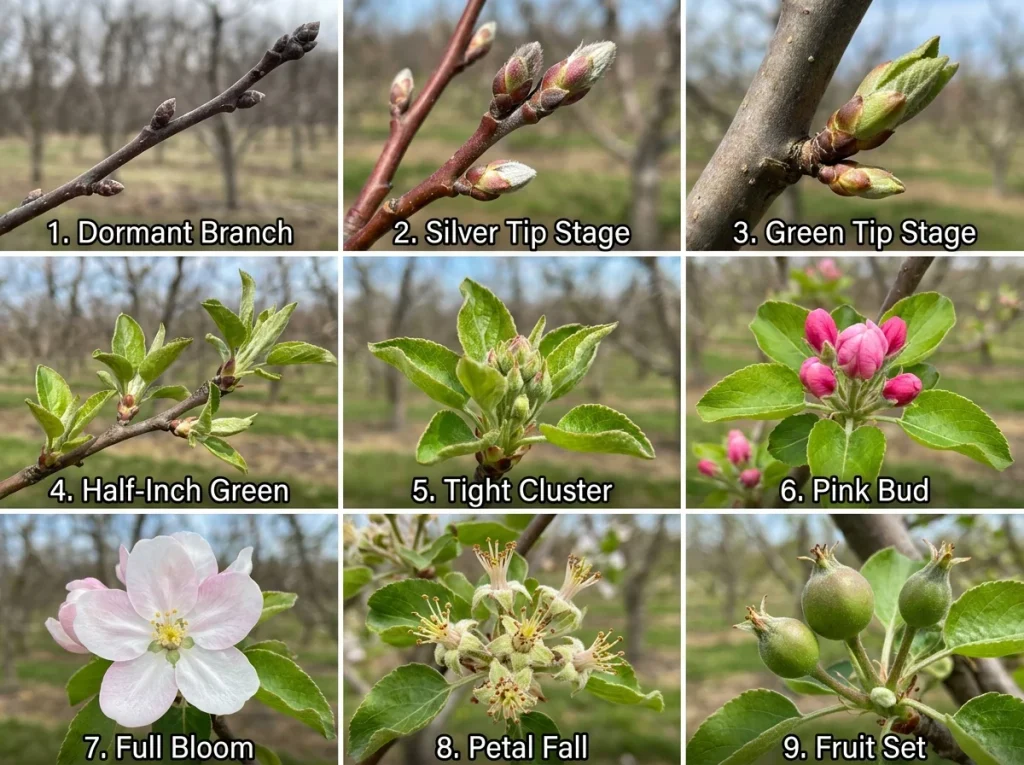
Use this table to locate your tree’s current stage, then follow the corresponding step below. However, regional pest alerts take priority over month-based advice: spring development differs across locations and years.
| Tree stage | Check | Next action | Main limit |
|---|---|---|---|
| Dormant to early green growth | Scale, past aphid damage, neglected fruit | Inspect and plan any justified oil treatment | Oil does not prevent every summer fruit pest |
| Pink buds and bloom | Opening flowers and local moth alerts | Set up monitoring; protect pollinators | Do not spray insecticides on blooming trees |
| Petal fall and small fruit | New punctures and predicted egg hatch | Thin and arrange timely fruit protection | Bagging cannot remove larvae already inside |
| Summer fruit growth | Traps, bag damage, aphids, mites | Maintain protection and respond to new activity | Old injury does not disappear after control |
| Harvest and leaf fall | Fruit injury patterns and fallen apples | Remove infested fruit and review records | Cleanup cannot stop pests arriving from elsewhere |
Step 1: Inspect During Dormancy and Early Bud Growth
Use last year’s damage as your starting point
Start apple tree pest control by writing down the previous season’s main loss: tunneled apples, distorted fruit, sticky shoots, or declining limbs. Then inspect reachable branches and remove leftover infested fruit rather than waiting for the next crop to develop.
If you inherited the tree, begin a record now instead of guessing its history. Also, note which parts of the canopy you can inspect and protect safely from the ground.
Consider horticultural oil only for a matching target
A labeled dormant or delayed-dormant oil can suppress susceptible overwintering stages of certain pests, including scale. However, the useful growth stage depends on the pest and product; USU’s backyard apple guidance distinguishes early-season oil targets from summer fruit pests.
For apple tree pest control with oil, check temperature restrictions, plant sensitivity, and required separation from incompatible sprays. In particular, do not carry a dormant concentration into leafy growth unless the label permits it.
Step 2: Monitor Before Bloom and Protect Pollinators
Prepare traps before the target pest arrives
If codling moth is a known problem, arrange the appropriate monitoring trap before expected flight, following local extension guidance. Then record catches and replace lures as directed, because an unmaintained trap provides poor information.
A male-attracting pheromone trap is a monitoring tool, not dependable control for a backyard tree. For apple tree pest control timing, combine catches with a local advisory or temperature-based model rather than spraying immediately after any unidentified moth appears.
Keep insecticides away from bloom
Do not spray insecticides on blooming fruit trees or while pollinators are present, as emphasized by University of Maryland Extension. Also consider flowering plants beneath and beside the tree when assessing exposure.
Bloom-stage apple tree pest control should emphasize observation and preparation. Meanwhile, leave pollinators access to flowers and organize bags, labels, and monitoring records for the next stage.
Step 3: Protect Small Apples After Petal Fall
Check the locally important early fruit pests
Petal fall means the flowers have shed their petals and small fruit is developing. In areas with plum curculio, inspect for fresh crescent-shaped egg-laying scars; Penn State Extension identifies warm weather soon after petal fall as an important control period.
For codling moth, protection must intercept larvae before they enter apples. Therefore, apple tree pest control cannot rely on waiting for obvious tunnels before taking preventive action.
Bag sound fruit before attack
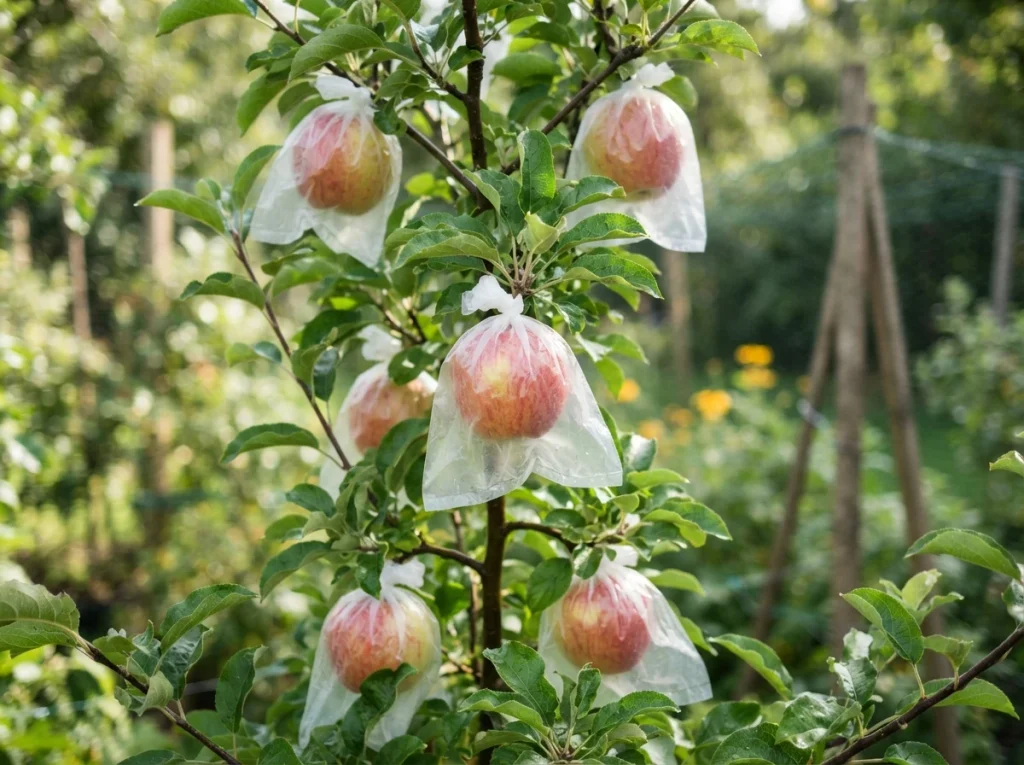
For a manageable tree, thin clusters to one apple and enclose sound fruit using an appropriate fruit-protection bag, as described in USU’s physical control guidance. Minnesota Extension describes sandwich bags with small drainage openings for apple maggot protection; however, bag material and installation timing must also suit any other pest you are targeting.
Do not transfer Minnesota’s June timing to every region or assume it is early enough for codling moth. Instead, arrange apple tree pest control around local pest emergence and reject fruit already showing entry damage.
Choose a realistic workload
If you cannot bag the whole crop, select a reachable group to protect and mark it in your notebook. This makes the work measurable, although untreated fruit still needs inspection and sanitation.
Alternatively, suitable whole-tree exclusion netting can protect small trees after pollination and thinning. However, it needs complete enclosure, and damaged or poorly closed barriers leave access points.
Step 4: Maintain Protection Through Summer
Repeat a short inspection circuit
Choose a regular inspection day as an organizing habit, while following any more frequent trap checks required locally. Each round of apple tree pest control should compare new findings with the previous record.
- Read traps and note whether the catch is the intended species.
- Check several fruit clusters across the reachable canopy.
- Inspect leaf undersides and unfolding shoots.
- Repair displaced bags and collect infested fallen apples.
- Record the next action and its trigger.
Respond selectively to leaf pests
For accessible aphid colonies, a firm water spray may help; first look for lady beetles, lacewing larvae, and other natural enemies. Minnesota’s aphid guidance explains that insecticidal soaps and oils require direct contact, so sheltered colonies can escape treatment.
Meanwhile, increasing stippling and fine webbing during hot weather warrant checking for mites. Broad insecticides can disrupt their predators, so apple tree pest control should target the confirmed problem instead of every visible insect.
How to Choose Between Organic and Conventional Controls
Match the method to what it can reach
Organic apple tree pest control can combine exclusion, sanitation, biological controls, and permitted pesticides. However, an organic label does not mean a treatment controls every pest or is harmless to pollinators.
Kaolin products create a deterrent coating that needs maintenance as fruit grows and rain removes deposits. By comparison, insecticidal soap targets exposed soft-bodied pests; it cannot reach a larva tunneling inside an apple.
Some apple-labeled spinosad products address particular fruit or caterpillar pests, while conventional insecticides have different target ranges, as shown in Penn State’s efficacy comparison. Therefore, compare the specific label with current extension advice; our organic apple tree pest control guide explores the lower-spray options in more detail.
Read the application limits before mixing
Before any pesticide-based apple tree pest control, confirm edible apples, the target pest, permitted timing, protective equipment, and application limits. Also check the preharvest interval, which is the required wait between treatment and harvest.
Use the label’s rate, reapplication interval, and weather restrictions rather than a homemade recipe or universal weekly schedule. If directions are unclear, ask your extension service or a qualified applicator before proceeding.
Step 5: Clean Up and Review at Harvest
Remove fruit that can carry pests forward
Continue collecting infested apples during harvest and afterward, consistent with USU’s apple maggot sanitation guidance. For disposal, Minnesota Extension advises removing fallen apples from the site through an appropriate waste route rather than backyard composting.
However, sanitation alone cannot stop incoming flies from neighboring hosts. Treat it as one part of apple tree pest control, alongside the protection and monitoring needed next year.
Turn observations into next year’s plan
Compare protected fruit with unprotected fruit and note where new injury first appeared. Then summarize apple tree pest control in four notebook fields: suspected pest, first activity, action taken, and harvest result.
For example, intact bags with damaged fruit suggest checking installation timing and the original diagnosis. Conversely, torn bags point to a barrier-maintenance problem that a different spray would not fix.
When to Get Local Help
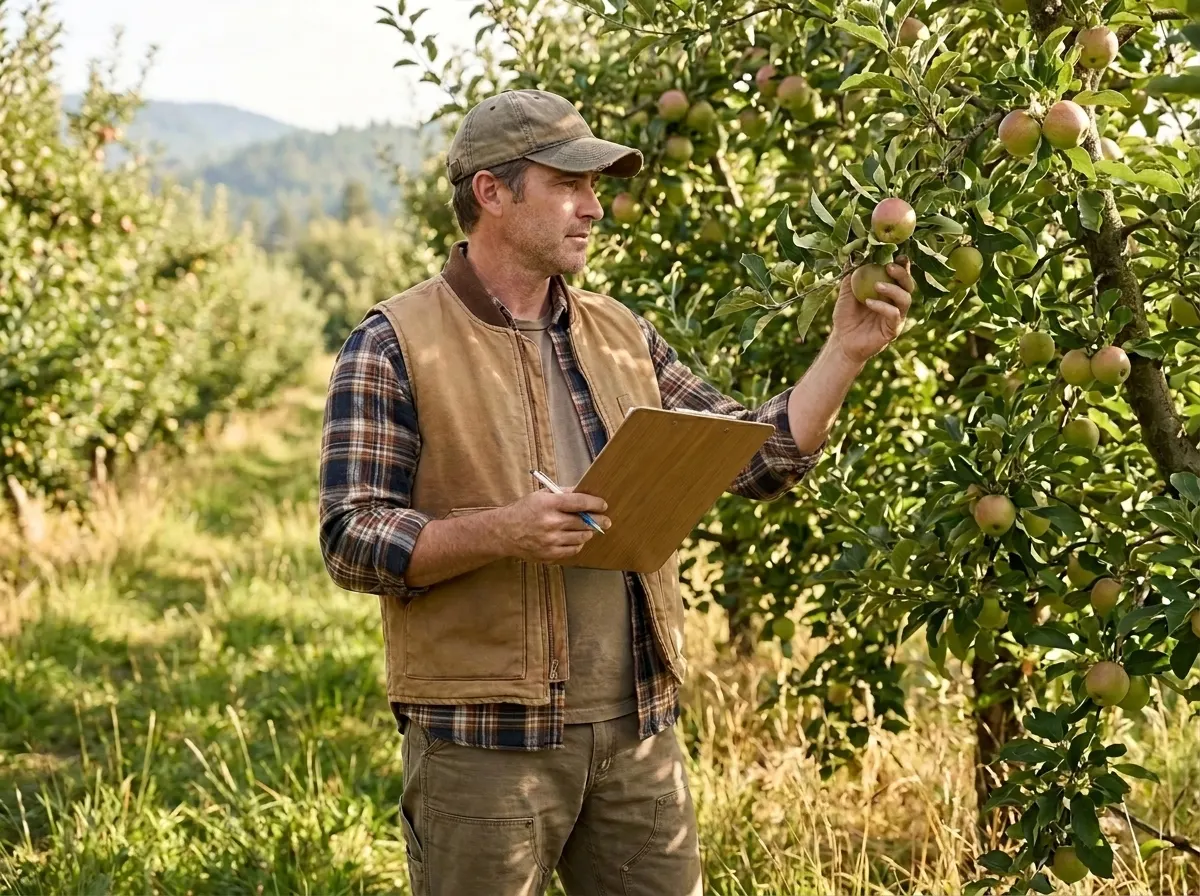
Ask extension for identification when tunnels, scars, or leaf symptoms do not match clearly. Also seek professional help for major limb decline, suspected borers, or a canopy too tall to treat safely.
Bring photographs, a damaged fruit sample if requested, and your treatment record. These details make apple tree pest control advice more specific than a description such as “bugs everywhere.”
FAQs
When should I spray my apple tree for pests?
Time apple tree pest control to the identified pest’s vulnerable stage and local monitoring guidance. For example, USU explains temperature-based timing, which accounts for development changing between years; a calendar date alone cannot do that.
Can I protect apples without spraying?
Fruit bagging or suitable exclusion netting can reduce exposure, particularly on small trees. However, successful apple tree pest control still requires timely installation, barrier checks, and removal of infested fruit, and heavy pressure can make protection more difficult.
Why do apples still have worms after treatment?
Possible reasons include treatment after entry, the wrong target pest, incomplete coverage, or a gap in protection. Therefore, review timing and fresh damage before changing your apple tree pest control program; damaged apples cannot be restored by another application.
Related Articles
- Apple tree pests: the complete overview
- Apple tree pests identification by damage
- Organic apple tree pest control methods
Sources
- Utah State University: Codling Moth
- University of Minnesota: Apple maggots
- Utah State University: The Backyard Orchard, Apple Pests
- University of Maryland: Starting a Home Fruit Garden
- Penn State: Plum Curculio in the Home Fruit Planting
- University of Minnesota: Aphids in home yards and gardens
- Utah State University: Using Degree Days to Time Treatments for Insect Pests
- Utah State University: Codling Moth, including trapping video
- Utah State University: Apple Maggot
- Penn State: Home Orchards, Efficacy of Insecticides and Miticides
Disclaimer: This article is for informational purposes only. Apple tree disease and pest identification in the field can be challenging. For a confirmed diagnosis, consult a certified arborist or contact your local university cooperative extension plant diagnostic clinic. Always read and follow pesticide label directions before applying any product.
