
Organic Apple Tree Pest Control: 6 Proven Methods
Organic apple tree pest control combines pest identification, orchard cleanup, fruit barriers, beneficial insects, and carefully timed treatments when needed. Start by checking whether insects are damaging leaves or entering fruit. Then choose a method that reaches the pest before serious injury occurs, while protecting pollinators and useful predators.
Table of Contents
Key Takeaways
- Organic apple tree pest control works best when several compatible methods address an identified pest.
- Bagging protects clean developing apples; it cannot repair fruit already damaged inside.
- Organic sprays still require label precautions, proper timing, and bee protection.
A curled leaf, a sticky shoot, and a wormy apple need different responses. However, choosing a spray before identifying the problem can leave the damaging insect untouched.
This organic apple tree pest control guide helps backyard growers choose what to do next. For a broader overview of insects affecting fruit, foliage, and bark, begin with our guide to apple tree pests.
Start Organic Apple Tree Pest Control With Identification
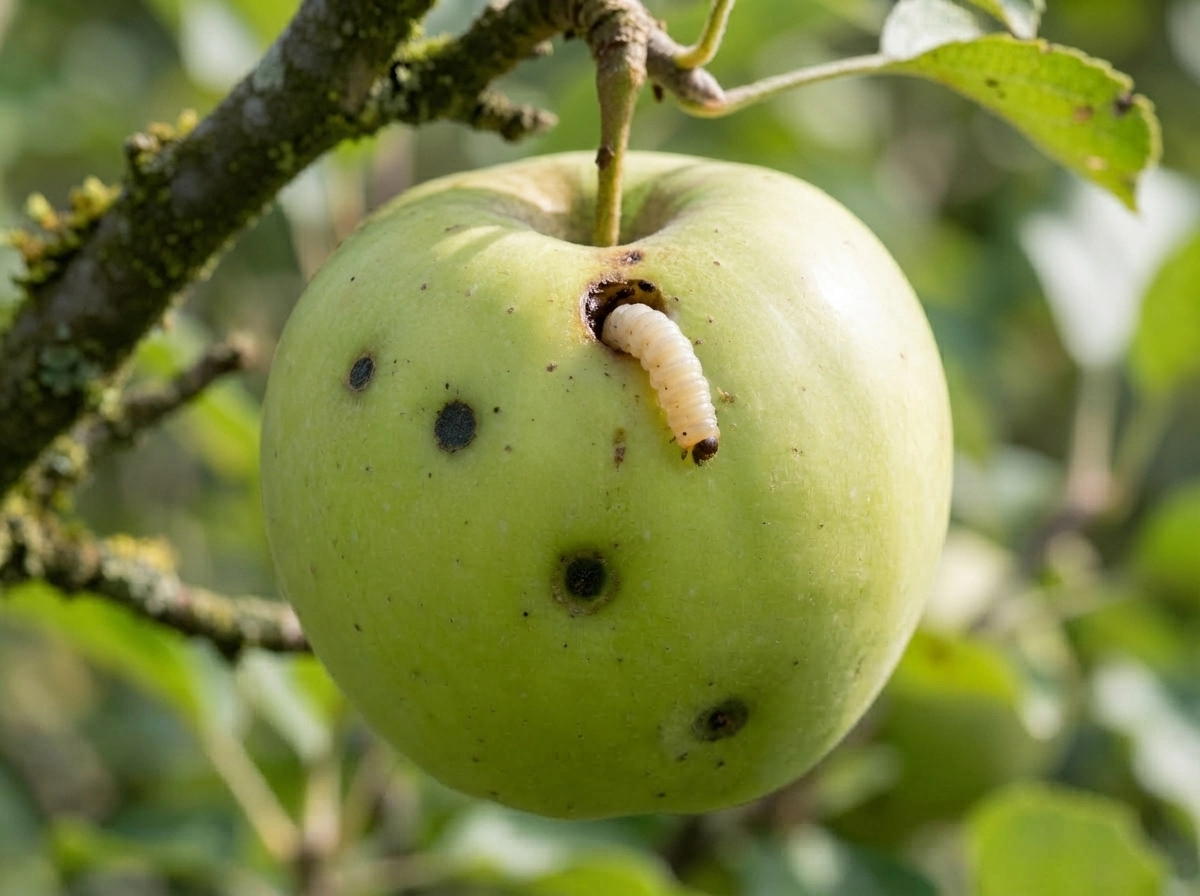
Inspect new shoots, the undersides of leaves, developing fruit, and fallen apples. Next, cut open a damaged apple and compare the feeding pattern with the clues below.
| What you find | Likely pest | Useful next step |
|---|---|---|
| An entry hole with crumbly brown waste and tunneling toward the core | Codling moth caterpillar | Remove affected fruit; protect remaining clean fruit before more larvae enter. |
| Small skin punctures and winding brown trails through the flesh | Apple maggot | Confirm identification; use barriers before adult flies lay eggs. |
| Crescent-shaped scars on young fruit | Plum curculio | Check promptly around petal fall, especially in eastern growing regions. |
| Clusters of small soft insects, sticky residue, and curled leaves | Aphids | Check for predators and whether shoot growth is being affected. |
These are clues, not a confirmed diagnosis. Compare photographs in our apple tree pests identification guide and the extension sources below before applying a treatment.
Set a practical organic apple tree pest control goal
Decide whether you need to protect a young tree’s growth, improve fruit quality, or both. For example, tolerating a few aphids on an established tree is different from accepting larvae inside the apples you want to store.
Organic apple tree pest control does not mean every natural product is harmless. Product suitability depends on its formulation, labeled use, and organic approval, rather than the ingredient name alone.
1. Remove Infested Fruit and Reduce Pest Carryover
Start organic apple tree pest control by removing fruit that contains developing pests. Collect damaged apples from the branches and ground promptly, rather than leaving a pile beneath the tree.
For codling moth, larvae can continue developing inside fallen fruit. Therefore, Oregon State Extension’s codling moth guidance emphasizes sanitation alongside monitoring and protection.
Dispose of fruit without keeping the pest nearby
For apple maggot infestations, Minnesota Extension advises against composting affected apples in the yard or orchard. Use an appropriate disposal route that removes infested fruit from the growing area.
However, cleanup cannot stop adult insects arriving from nearby host trees. Treat sanitation as a foundation for organic apple tree pest control, then add protection where fruit damage continues.
2. Bag Individual Apples or Use Insect Exclusion Netting
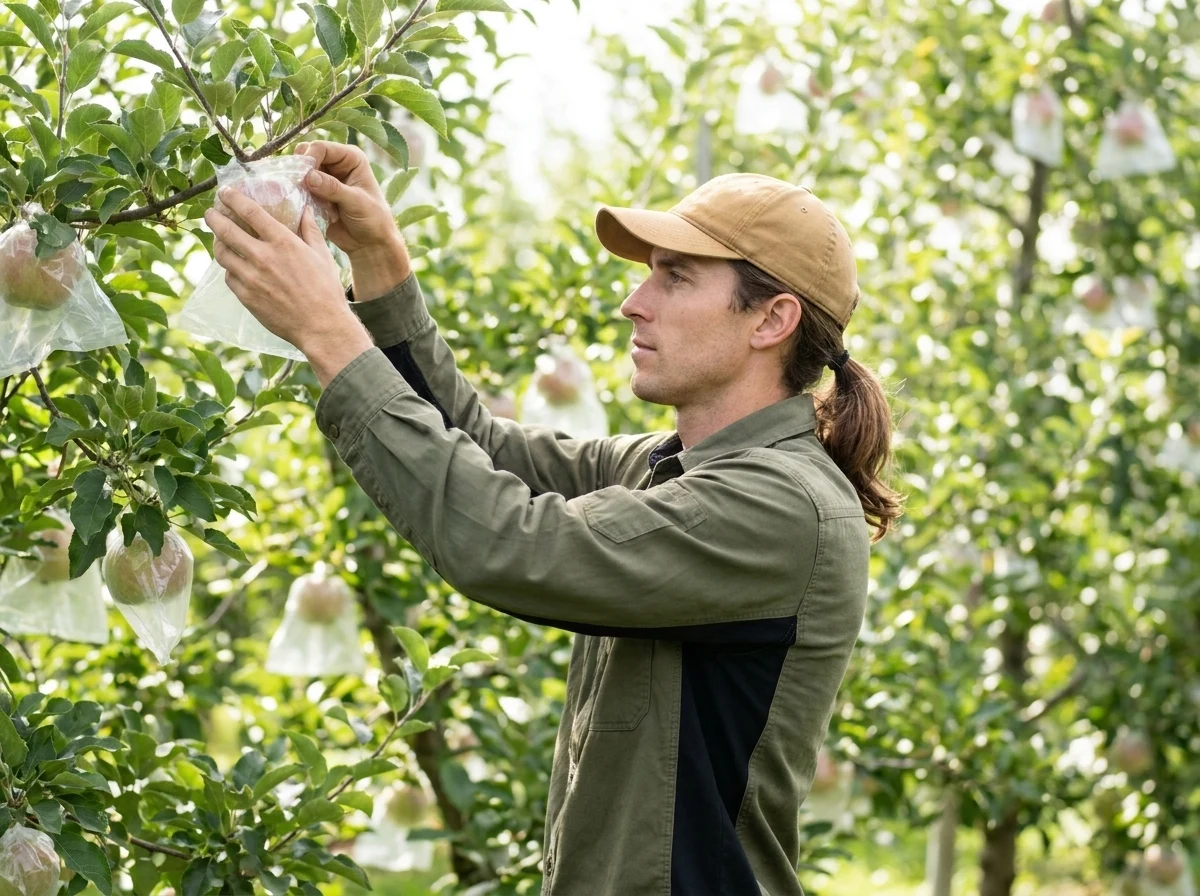
For a reachable backyard tree, bagging is a practical organic apple tree pest control option. The barrier protects selected fruit without requiring spray coverage across the entire canopy.
- Thin the cluster to one healthy apple.
- Inspect the retained fruit for punctures, entry holes, or other damage.
- Enclose it in a suitable fruit bag without constricting the stem.
- For sandwich bags, make tiny drainage openings at the bottom corners.
- Check periodically for torn bags, gaps, and water accumulation.
Protect fruit before the local pest arrives
Utah State Extension recommends waiting until apples are about 1/2 to 3/4 inch across for bagging against codling moth. However, early infestation may occur before that stage, so local advice may call for interim protection.
Alternatively, fully enclose a small tree with insect exclusion netting after bloom and thinning. Minnesota Extension’s apple maggot guide stresses complete enclosure; loose bird netting is not equivalent.
3. Protect Predators and Physically Remove Accessible Pests
Organic apple tree pest control also depends on insects that eat pests. Lady beetles, lacewings, hoverfly larvae, and parasitic wasps help suppress aphids, although their response may lag behind an outbreak.
First, look for these helpers before treating an aphid colony. Next, use a firm stream of water on accessible infested shoots, taking care with tender growth, and inspect again for surviving colonies.
Match this method to exposed insects
Minnesota Extension recommends water sprays and conserving natural enemies for aphid management. Flowering plants that bloom at different times can support those helpers.
For visible Japanese beetles, hand-pick reachable adults into soapy water, as described in Minnesota’s summer pest guidance. However, these approaches do not reach insects already feeding inside apples.
4. Apply a Labeled Kaolin Clay Particle Film
Kaolin clay adds a deterrent coating to organic apple tree pest control. Use a pesticide product labeled for the crop and target pest, rather than craft clay or an improvised powder mixture.
For example, Penn State Extension identifies kaolin as an option for reducing plum curculio infestation. Adult activity becomes important around the warm period following petal fall.
Keep the protective coating intact
Follow the product label to establish coverage before damage occurs. Then inspect after rain and as new fruit surfaces develop, renewing coverage as directed.
The NCAT organic apple production guide explains why thorough coverage matters. Consequently, kaolin is a maintenance commitment, not a one-time organic apple tree pest control treatment.
5. Use Insecticidal Soap or Horticultural Oil for Contact Control
Soap and oil belong in organic apple tree pest control when the identified pest and label match. They can help manage exposed soft-bodied insects or mites, but direct coverage is essential.
However, a dried coating is not a season-long shield. Maryland Extension’s horticultural oil profile describes its short residual activity and potential to affect beneficial insects contacted by spray.
Check formulation, weather, and plant sensitivity
Read temperature limits, plant-sensitivity warnings, and restrictions on combining or closely spacing oil with other products, especially sulfur. Also, use the dilution appropriate to the tree’s growth stage.
Choose a labeled insecticidal soap instead of dish detergent. Maryland Extension distinguishes formulated soaps from household detergents, which can injure plant tissue.
6. Time Targeted Biological Sprays to Vulnerable Pest Stages
When barriers and cultural controls are insufficient, organic apple tree pest control may include an approved biological insecticide. Choose it for the particular insect and vulnerable life stage, rather than spraying for unspecified “worms.”
- Codling moth granulovirus: A targeted option for codling moth larvae.
- Spinosad: An option for certain labeled pests, with organic eligibility depending on formulation.
- Bt kurstaki: Useful against certain young caterpillars feeding on exposed plant surfaces; it is not a treatment for apple maggot fly larvae.
Use monitoring to find the treatment window
Hang a pest-specific monitoring trap at the locally recommended stage and record catches. For codling moth, traps help establish moth activity so local advisories or degree-day models can guide egg-hatch protection.
Oregon State explains that codling moth timing changes with weather. Therefore, a fixed national spray date is unsuitable for organic apple tree pest control.
Protect bees and avoid ineffective repeat spraying
Do not apply insecticides during bloom or while bees are visiting treated plants. In particular, Utah State’s home orchard guide identifies fresh spinosad residues as hazardous to bees.
Follow the current label for protective equipment, application limits, resistance management, and the interval before harvest. If larvae are already inside fruit, redirect organic apple tree pest control toward preventing additional entries instead of trying to reverse damage.
Build Your Organic Apple Tree Pest Control Calendar
- Dormancy: Review last season’s damage, remove remaining fruit, and assess whether overwintering pests warrant a labeled dormant treatment.
- Bloom: Preserve pollinator access and begin monitoring as locally advised.
- Petal fall and fruit set: Inspect young fruit, thin, and install barriers at the appropriate stage.
- Fruit development: Check traps, new damage, barrier integrity, and any coating affected by rain.
- Harvest: Record the type of damage and use it to plan next year’s prevention.
Keep a short record you can act on
For example, record the date, tree stage, pest observed, damaged fruit found, and action taken. This simple log makes organic apple tree pest control easier to adjust when the same problem returns.
Extension-based principle, paraphrased: Combine monitoring, cultural practices, biological controls, and selective treatments according to the pest. Timing and coverage determine whether a chosen treatment can work.
See Oregon State’s home orchard guidance for the basis of this approach. If damage persists or you cannot reach the canopy safely, contact your local extension service or a qualified tree-care professional.
FAQs
Is neem oil enough to protect an apple tree?
Usually, neem alone is not a complete organic apple tree pest control plan. Clarified neem oil and azadirachtin formulations differ, so check the active ingredient and target pest rather than assuming all neem products work alike.
How do I keep worms out of apples without spraying?
Start with clean fruit, timely bagging, and prompt removal of infested apples. However, organic apple tree pest control without sprays becomes harder where pests attack before bags can be installed or arrive continuously from nearby trees.
When should I start organic pest control?
Start planning before bloom, using last year’s damage and local pest guidance. Then time organic apple tree pest control actions to tree development, monitoring, and the product label rather than a generic monthly schedule.
Related Articles
Sources
- Oregon State Extension: Codling moth control for home orchards
- Utah State Extension: Codling moth
- Minnesota Extension: Apple maggots
- Penn State Extension: Plum curculio in home fruit plantings
- Maryland Extension: Pollinator-friendly pest control
- Oregon State Extension: Managing diseases and insects in home orchards
Disclaimer: This article is for informational purposes only; pest identification can be challenging. For a confirmed diagnosis, consult a certified arborist or your local university cooperative extension diagnostic clinic, and always read and follow pesticide label directions before applying any product.
