
Best Pruning Shears For Apple Trees: Best Options Compared
Best pruning shears for apple trees are bypass hand pruners that match your hand size, cut live twigs cleanly, stay adjustable, and can be maintained instead of discarded. For most backyard growers, the right choice is not the model with the biggest claimed capacity. It is the pruner that feels controlled on small fruiting wood and lets you stop before a branch really needs loppers or a saw.
Table of Contents
Key Takeaways
- Choose bypass pruning shears for routine cuts on live apple shoots, suckers, water sprouts, and small branches.
- The best pruning shears for apple trees should fit your hand first. Oversized handles can make precise cuts tiring and awkward.
- Do not force hand pruners through wood that makes you twist, bounce, or use two hands. Move up to loppers or a pruning saw.
- Replaceable blades, springs, bolts, and other service parts can matter more over time than small differences in purchase price.
- This roundup is research-based. Apple Tree Guide does not claim hands-on testing of these models.
Choosing pruning shears is deceptively simple until you spend twenty minutes inside a dense apple canopy. A tool that looks sturdy on a product page can still feel too wide, too heavy, or too awkward when you are making repeated thinning cuts around fruiting spurs.
Our research team built this guide around the jobs home apple growers actually face: young-tree training, removal of suckers and water sprouts, light dormant pruning, and selective summer cuts. We also separated hand-pruner work from the thicker branch work covered in our pruning shears vs loppers guide, because forcing one tool to do every job is where poor cuts and sore hands begin.
How we selected the best pruning shears for apple trees
We did not assign fake laboratory scores or imply that our team personally cut apple wood with every model. Instead, we compared current manufacturer-listed design details such as bypass action, stated cutting capacity, hand orientation, handle fit, blade material, and availability of service parts, then checked those features against extension guidance on how apple trees should be pruned.
The University of Minnesota recommends removing dead, diseased, crossing, downward-growing, and vigorous vertical growth while making pruning cuts close to the branch collar. Its guidance also stresses minimal pruning on young trees and annual pruning in late winter or early spring after the coldest weather has passed. University of Minnesota Extension pruning guidance provides the horticultural baseline for how a hand pruner should support the work, rather than define it.
Extension consensus: Apple-tree pruning should remove damaged or poorly placed growth while preserving a well-spaced canopy with good light and airflow. The tool should help you make a controlled cut at the correct location, not encourage you to force through an oversized branch.
What we prioritized
For the best pruning shears for apple trees, our first priority was control on live wood. Bypass blades pass alongside a counter-blade like scissors, which makes them a sensible default for the small living shoots and twigs commonly removed during apple-tree training and maintenance.
Second, we looked at fit and maintainability. A compact pruner can be a better choice than a larger model for a smaller hand, while replaceable wear parts can keep a familiar tool in service after the original blade or spring eventually needs attention.
Best pruning shears for apple trees: quick comparison
The five models below cover different hand sizes and priorities rather than pretending one pair is perfect for everyone. When comparing the best pruning shears for apple trees, use the table as a fit-and-function shortlist rather than a universal ranking. Prices change frequently, so this comparison focuses on design and use case instead of temporary sale prices.
These capacities are manufacturer listings, not a recommendation to cut every branch at the maximum diameter. Apple wood varies in hardness, angle, moisture, and accessibility. If the cut requires straining or twisting, use a larger tool even when the branch appears to fall within the printed capacity.
1. FELCO 2: best overall research pick
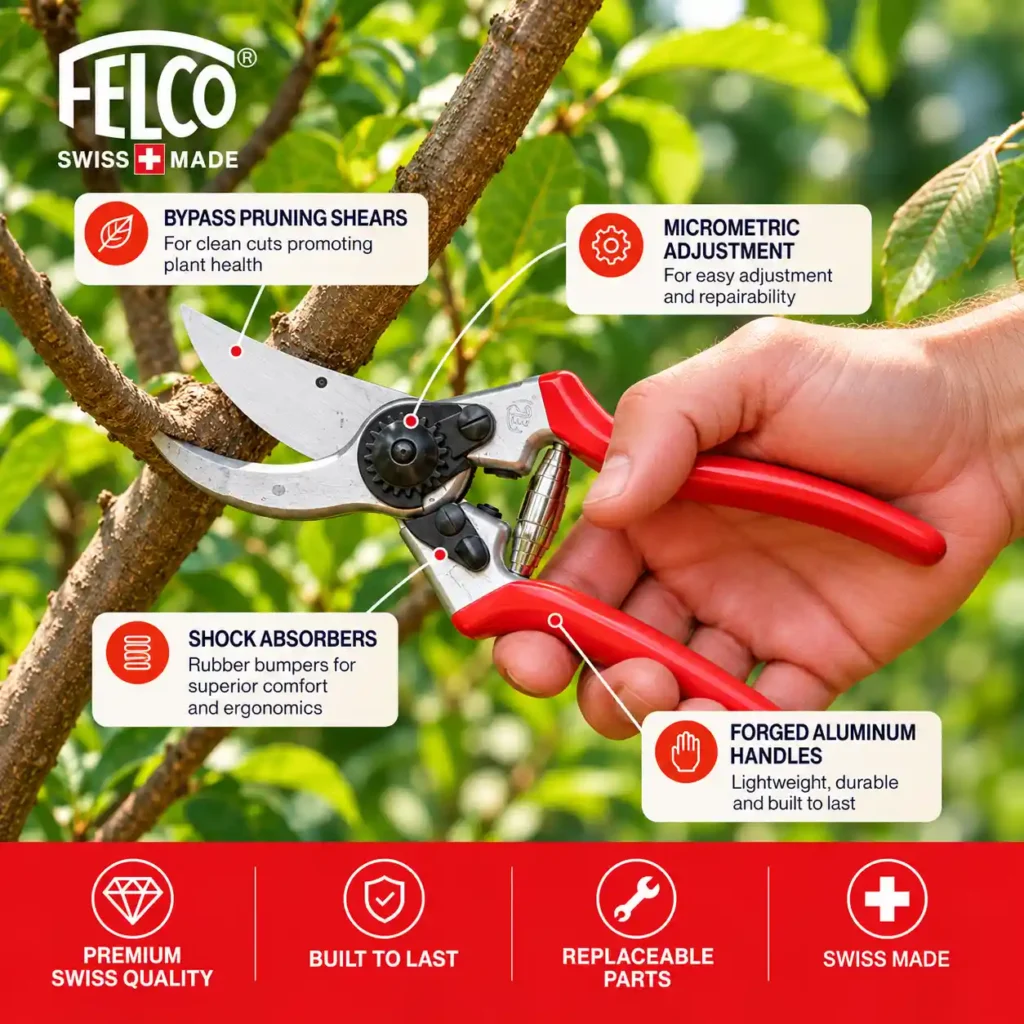
For many growers with larger right hands, the FELCO 2 is the most straightforward research pick among the best pruning shears for apple trees. Its bypass head, forged aluminum handles, adjustable cutting mechanism, replaceable blade, and broad spare-parts ecosystem make it easy to understand what you are buying and how you could keep it working.
The tradeoff is fit. FELCO lists this model for a large right hand, so a grower with smaller hands may get better control from a compact model instead of stretching to use a classic that does not match the hand. For that reason, the best pruning shears for apple trees are not always the most famous model.
Top Pick
FELCO 2 Pruning Shears
FELCO 2 is a Swiss-made bypass pruning shear designed for precise one-handed pruning. Its forged aluminum handles, hardened steel blade, shock absorbers, and adjustable cutting head make it well suited to routine apple-tree pruning where control and clean cuts matter.
- Cushioned shock absorbers help reduce impact at the end of each cut
- Micro-metric adjustment system for maintaining blade alignment
- Replaceable wear parts support long-term maintenance
Best for: Best Overall Research Pick
Price, rating, and availability may change.
Affiliate disclosure: Apple Tree Guide may earn a commission from qualifying purchases made through this link, at no additional cost to you. Product selection is based on editorial research, not advertiser influence.
- Choose it if: you want a conventional, serviceable bypass pruner and have a larger right hand.
- Skip it if: you prefer a lighter compact grip or need a true left-handed cutting layout.
- Apple-tree use: routine cuts on young shoots, suckers, water sprouts, and small branches within comfortable one-hand capacity.
2. ARS VS-8Z: best lightweight precision alternative
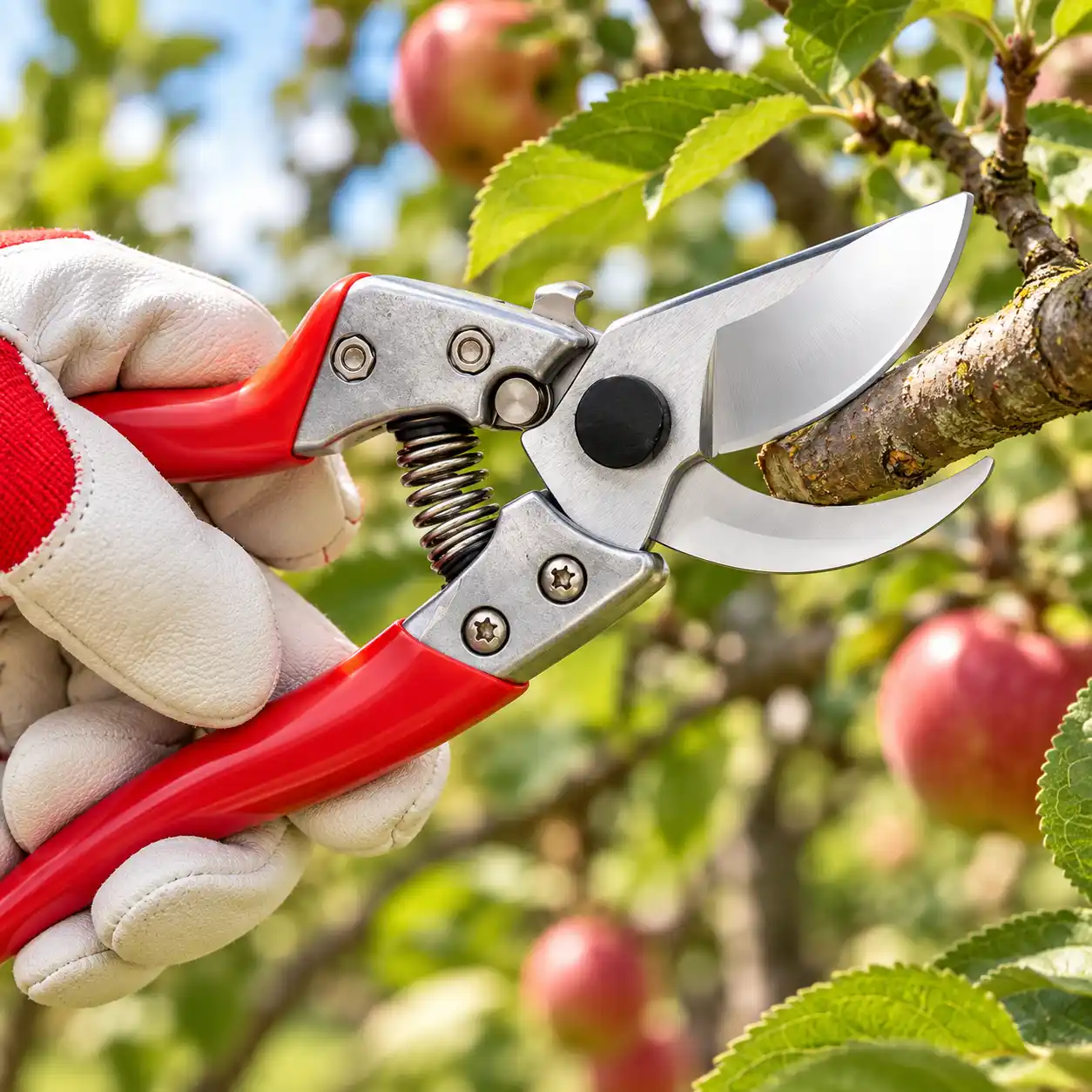
The ARS VS-8Z earns a place in this list because it combines a 200 mm overall length, a 220 g listed weight, a 22 mm cutting guide, high-carbon-steel blade material, and hard-chrome blade treatment. For growers who value a relatively light tool and a straightforward pruning-shear shape, that combination is worth comparing with the heavier classic options.
ARS also publishes replacement blade references and a parts list for the VS-8Z. That matters because the best pruning shears for apple trees should not become disposable simply because a blade, spring, or other wear component eventually needs service. For buyers who prioritize low weight and serviceability, the best pruning shears for apple trees may look more like this than a heavier classic.
Best Lightweight Pick
ARS VS-8Z
A light, precise bypass pruner that feels nimble in dense apple canopies. Its compact feel, sharp cutting geometry, and replaceable parts make it a strong choice for detailed pruning work.
- Lightweight feel for repeated pruning
- Precise bypass cutting geometry
- Good for detailed canopy work
- 22 mm listed cutting guide
- Replacement blades and service parts available
Best for: Best Lightweight Pick
Price, rating, and availability may change.
Affiliate disclosure: We may earn a commission from qualifying purchases made through this link, at no additional cost to you.
- Choose it if: you want a light, simple bypass tool with published replacement parts.
- Skip it if: you need a model specifically shaped for left-handed use.
- Apple-tree use: detailed canopy work where a lighter hand tool can feel more controlled.
3. FELCO 6: best for medium right hands
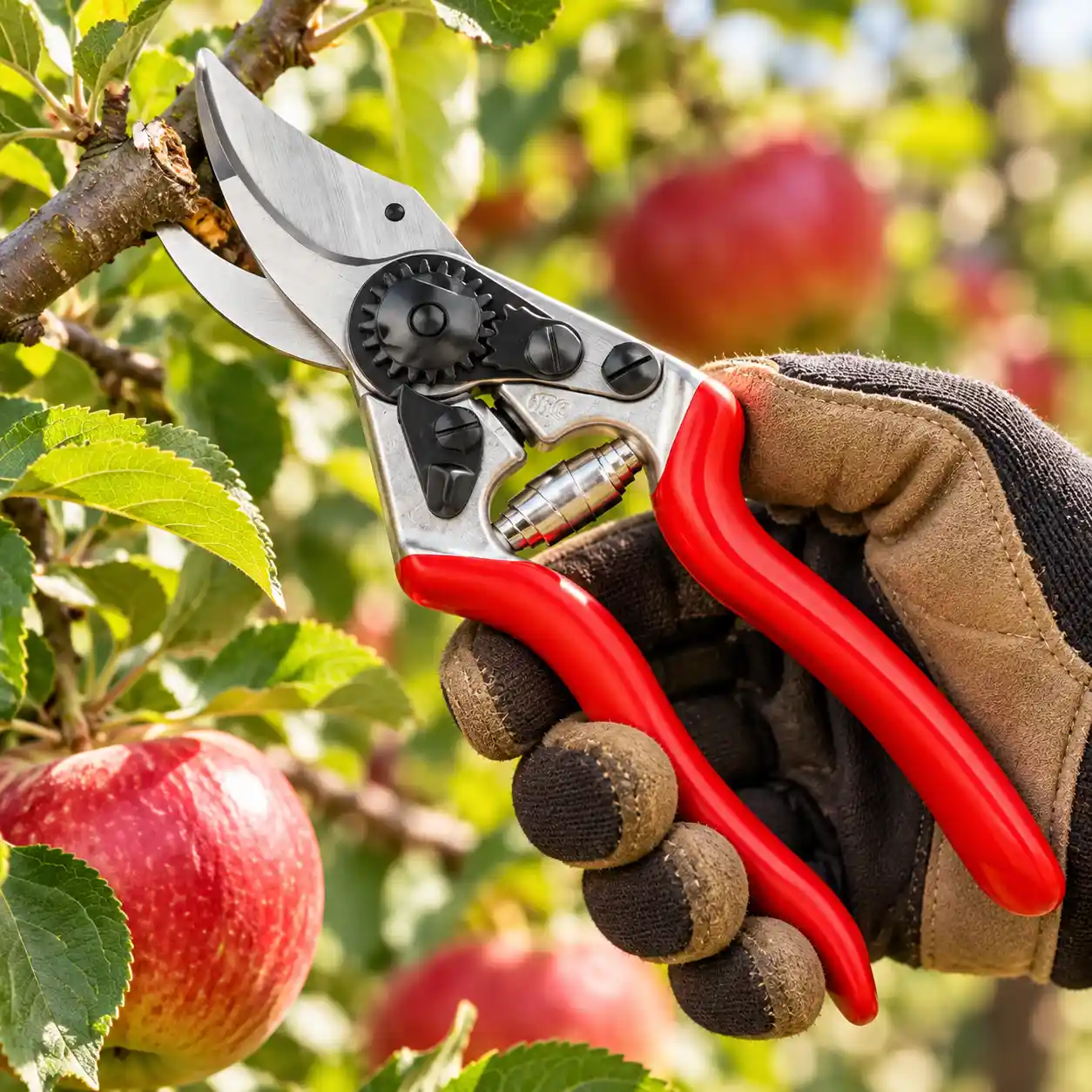
The FELCO 6 addresses a common buying mistake: choosing pruning shears by maximum branch size before checking handle fit. FELCO lists the 6 for medium right hands, with a shorter and lighter body than the FELCO 2 and a manufacturer-listed cutting diameter just under one inch.
For the best pruning shears for apple trees, a smaller grip can be an advantage when you are working around tight crotches, fruiting spurs, and young scaffold branches. You give up some listed capacity compared with the larger FELCO 2, but you may gain control if the tool better matches your hand. In other words, the best pruning shears for apple trees should fit the user before they impress on paper.
Best for Medium Hands
FELCO 6
A more compact FELCO option designed for better control in medium-size hands. It is especially well suited to young-tree training, water sprouts, and frequent precision cuts where a larger pruner can feel bulky.
- Compact size gives better control for medium hands
- Easier to maneuver around young shoots and fruiting wood
- Bypass design suited to live apple growth
- Good for training young trees and precision cuts
- Replaceable components
- Useful alternative when the FELCO 2 feels too large
Best for: Medium Hands
Price, rating, and availability may change.
Affiliate disclosure: We may earn a commission from qualifying purchases made through this link, at no additional cost to you.
- Choose it if: the FELCO 2 feels oversized or you know you prefer a compact grip.
- Skip it if: you have a large hand and prefer a longer handle.
- Apple-tree use: young-tree training and routine maintenance where precision matters more than maximum capacity.
4. FELCO 16: best true left-handed option
Left-handed growers should not have to rotate a right-handed tool and accept a compromised sight line. The FELCO 16 is built as a left-handed bypass pruner for medium hands, with a published cutting diameter just under one inch.
This is one of the clearest cases where the best pruning shears for apple trees depend on the user rather than the branch. If you prune primarily with your left hand, the mirrored cutting layout and controls can be more relevant than choosing the most popular right-handed model. For a left-handed grower, the best pruning shears for apple trees should not require adapting to right-handed controls.
- Choose it if: you are left-handed and want a dedicated left-handed bypass pruner.
- Skip it if: your dominant pruning hand is right-handed.
- Apple-tree use: the same small live-wood work as other bypass hand pruners, with controls oriented for the left hand.
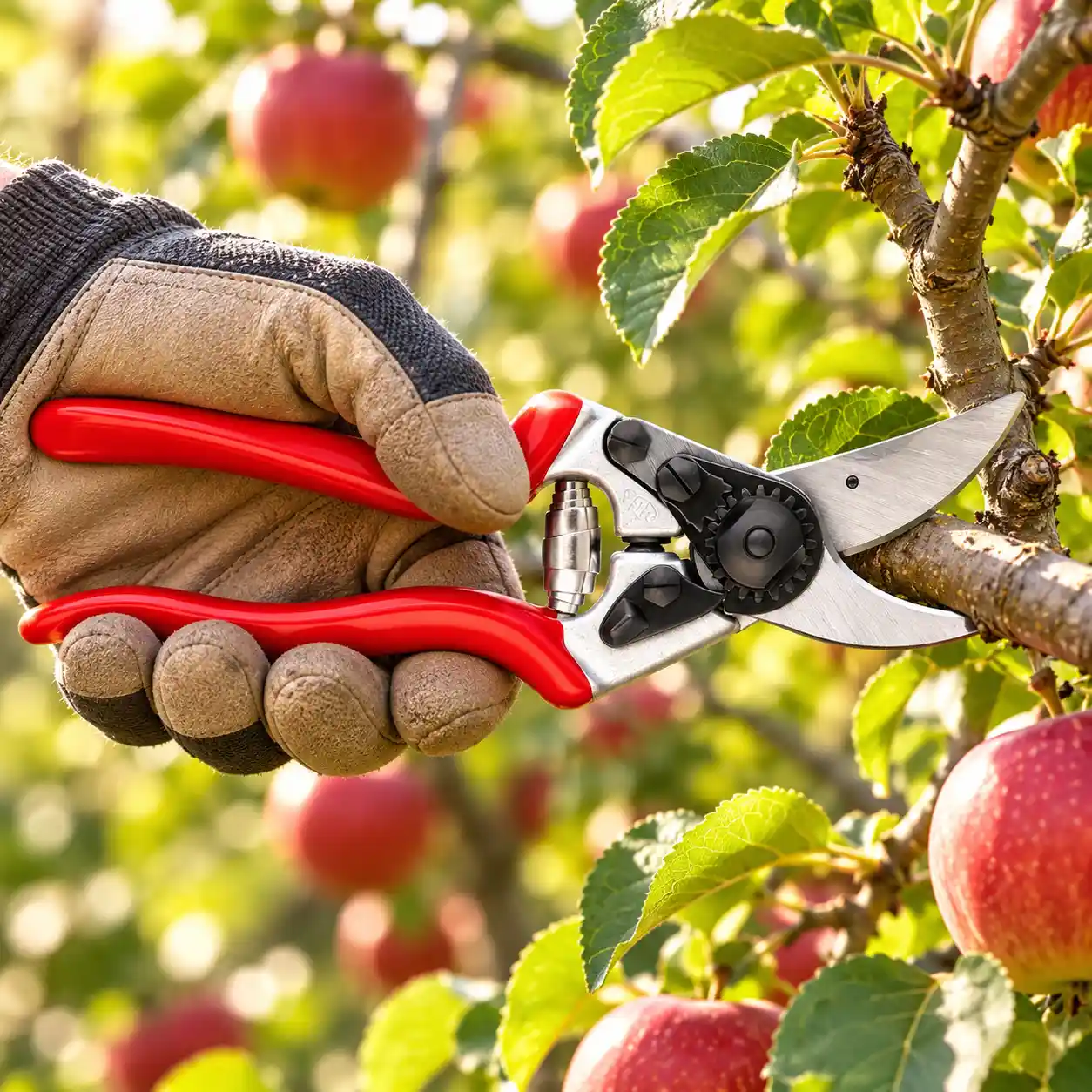
Best for Left-Handed Growers
FELCO 16
A true left-handed bypass pruner that gives left-handed growers a more natural blade orientation and grip. It is a practical choice for precise apple-tree pruning without adapting to a right-handed tool.
- True left-handed pruning shear
- More natural cutting orientation for left-handed users
- Designed for medium-size hands
- Bypass cutting action for live apple wood
- Replaceable components
- Better control without adapting to a right-handed pruner
Best for: Left-Handed Growers
Price, rating, and availability may change.
Affiliate disclosure: We may earn a commission from qualifying purchases made through this link, at no additional cost to you.
5. Corona ClassicCUT BP 3180D: best value-focused large-hand option
The Corona ClassicCUT BP 3180D is a practical alternative for growers who want a traditional one-inch-capacity bypass pruner without moving straight to the higher-priced Swiss options. Corona describes it as best suited to medium-to-large hands and sells replacement blades, springs, and pivot hardware for the model.
The comparison point is not simply cost. Among the best pruning shears for apple trees, this model stands out because it combines a familiar bypass layout with a stated one-inch capacity and accessible replacement parts, while the larger handle fit may be less comfortable for smaller hands. Value matters most when the best pruning shears for apple trees remain comfortable and maintainable after the first season.
- Choose it if: you want a conventional bypass pruner with service parts and a larger grip.
- Skip it if: you need a compact or left-handed handle layout.
- Apple-tree use: routine hand-pruner cuts before the job crosses into lopper territory.
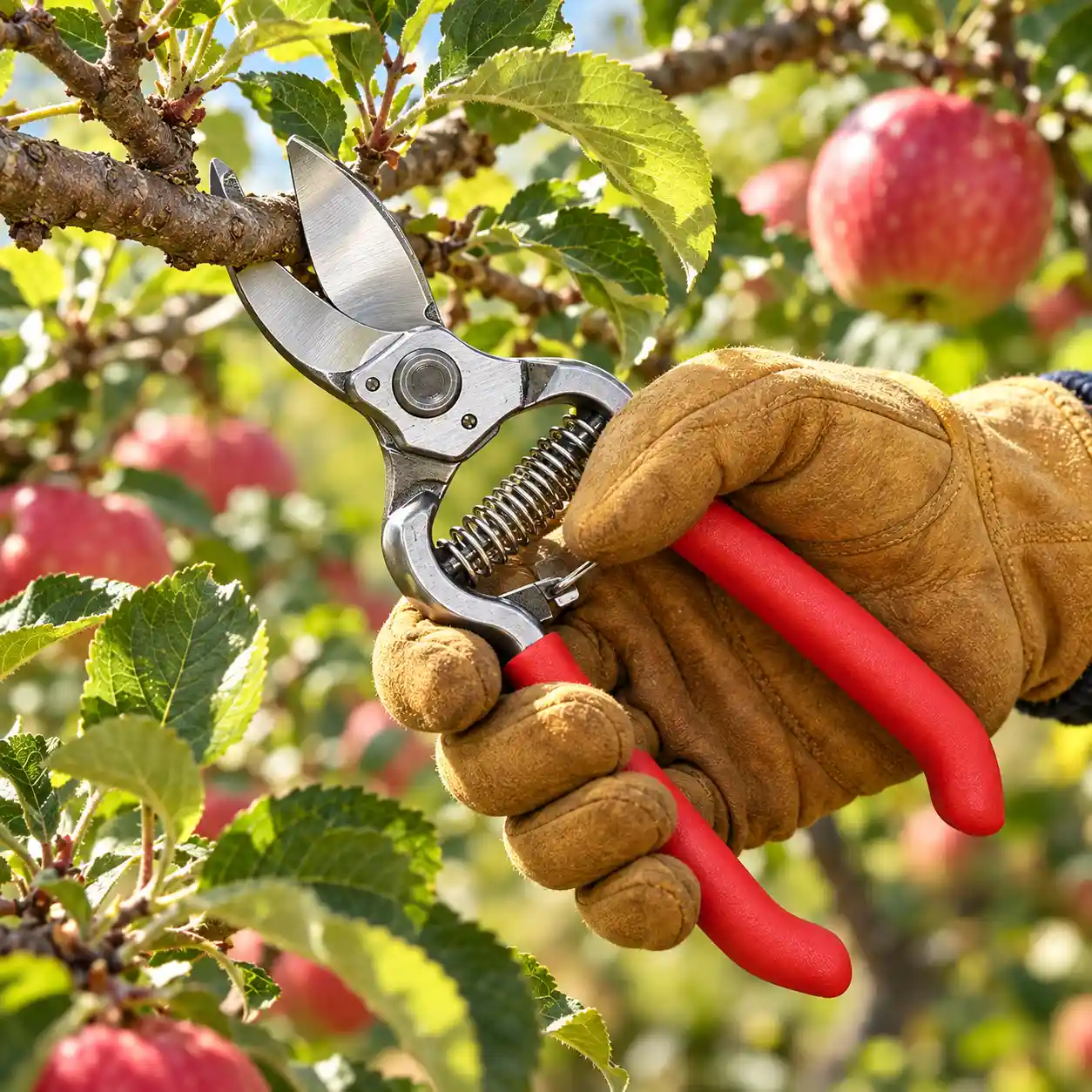
Best Value Pick
Corona ClassicCUT BP 3180D
A traditional bypass pruner with solid cutting capacity and replaceable parts at a more value-focused position. A good fit for medium-to-large hands and everyday orchard maintenance.
- Value-focused choice for everyday orchard pruning
- Up to 1-inch manufacturer-listed capacity
- Good fit for medium-to-large hands
- Traditional bypass cutting design
- Replacement blade available
- Replacement spring and pivot parts available
Best for: Value Pick
Price, rating, and availability may change.
Affiliate disclosure: We may earn a commission from qualifying purchases made through this link, at no additional cost to you.
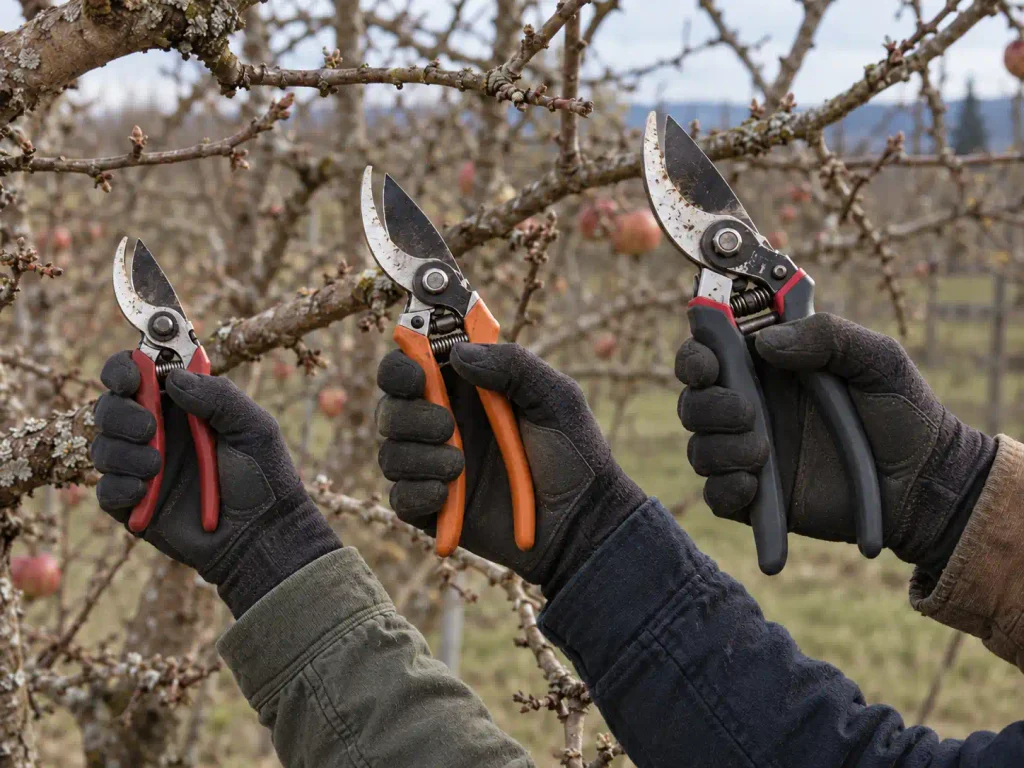
How to choose the best pruning shears for apple trees
Start with bypass blades for live apple wood
For routine pruning of living apple shoots, bypass shears are the easiest default to justify. The blade slides past the counter-blade, allowing a controlled slicing action on the small live wood that hand pruners are meant to handle.
That does not mean an anvil pruner is useless in gardening. It means this buyer’s guide is focused on live apple-tree pruning, where control and clean cut placement matter more than crushing through dry material.
Match the handle to your hand.
Hand fit is one of the most overlooked differences among the best pruning shears for apple trees. A pruner that opens too wide can force smaller hands to overreach on every cut, while a handle that is too small can feel cramped for a larger hand during repetitive work. This is why the best pruning shears for apple trees should be chosen by hand fit as well as branch size.
Whenever possible, compare the maker’s hand-size guidance before buying. Left-handed growers should also look for a true left-handed model instead of assuming that every symmetrical-looking pruner works equally well in either hand.
Use cutting capacity as a ceiling, not a target
Published capacity is useful for comparing models, but it should not become a challenge to see how much wood the tool can force through. A hard, awkwardly angled branch can be unpleasant to cut even when its diameter appears technically within range. The best pruning shears for apple trees are used below the point where control starts to disappear.
For better control, stop when you need two hands, repeated squeezing, side-to-side twisting, or body weight. Move to the best loppers for apple trees for thicker branches, or compare hand tools directly in pruning shears vs loppers.
Prefer tools you can clean, sharpen, and adjust.
The best pruning shears for apple trees are easier to keep useful when the blade can be sharpened, the pivot can be adjusted, and common wear parts can be replaced. A slightly loose pivot or dull edge can turn a precise hand tool into one that folds, tears, or crushes small wood.
Before replacing a familiar pair, see our step-by-step guide on how to sharpen pruning shears. If the blade is damaged rather than merely dull, replacement may be more sensible than removing excessive metal during sharpening.
Using pruning shears correctly on apple trees
Make the cut where the tree needs it
A premium pruner cannot correct poor cut placement. University of Minnesota guidance recommends making removal cuts close to the branch collar and using thinning cuts for many pruning situations, while heading cuts stimulate vegetative growth below the cut and are used more selectively.
For a full sequence from branch selection to cut placement, use our guide on how to prune apple trees. The broader apple tree pruning pillar explains why canopy structure, light, and age of the tree matter alongside the tool in your hand.
Know when pruning shears are the wrong tool
Hand pruners are for small branches and shoots that can be cut with controlled one-hand pressure. As branch diameter increases, loppers provide longer handles and greater leverage, while a pruning saw becomes the better choice for branches too large or awkward for loppers.
Our best pruning saw for apple trees guide covers that next step. If you are building a complete kit, start with our apple tree pruning tools overview so each tool has a defined job instead of overlapping badly with the others.
Time the work to the tree, not the tool sale
University of Maryland Extension recommends annual pruning in late winter and cautions against excessive pruning, especially on young trees. It also notes that thinning cuts help open the canopy and that summer pruning should be limited to improving light penetration. University of Maryland Extension apple and pear pruning guidance is a useful reference for young, mature, and older trees.
If you are deciding when to use the best pruning shears for apple trees, read when to prune apple trees before making the first cut. For the dormant season specifically, our apple tree pruning in winter guide covers timing and common mistakes.
Cleaning and sanitation between cuts
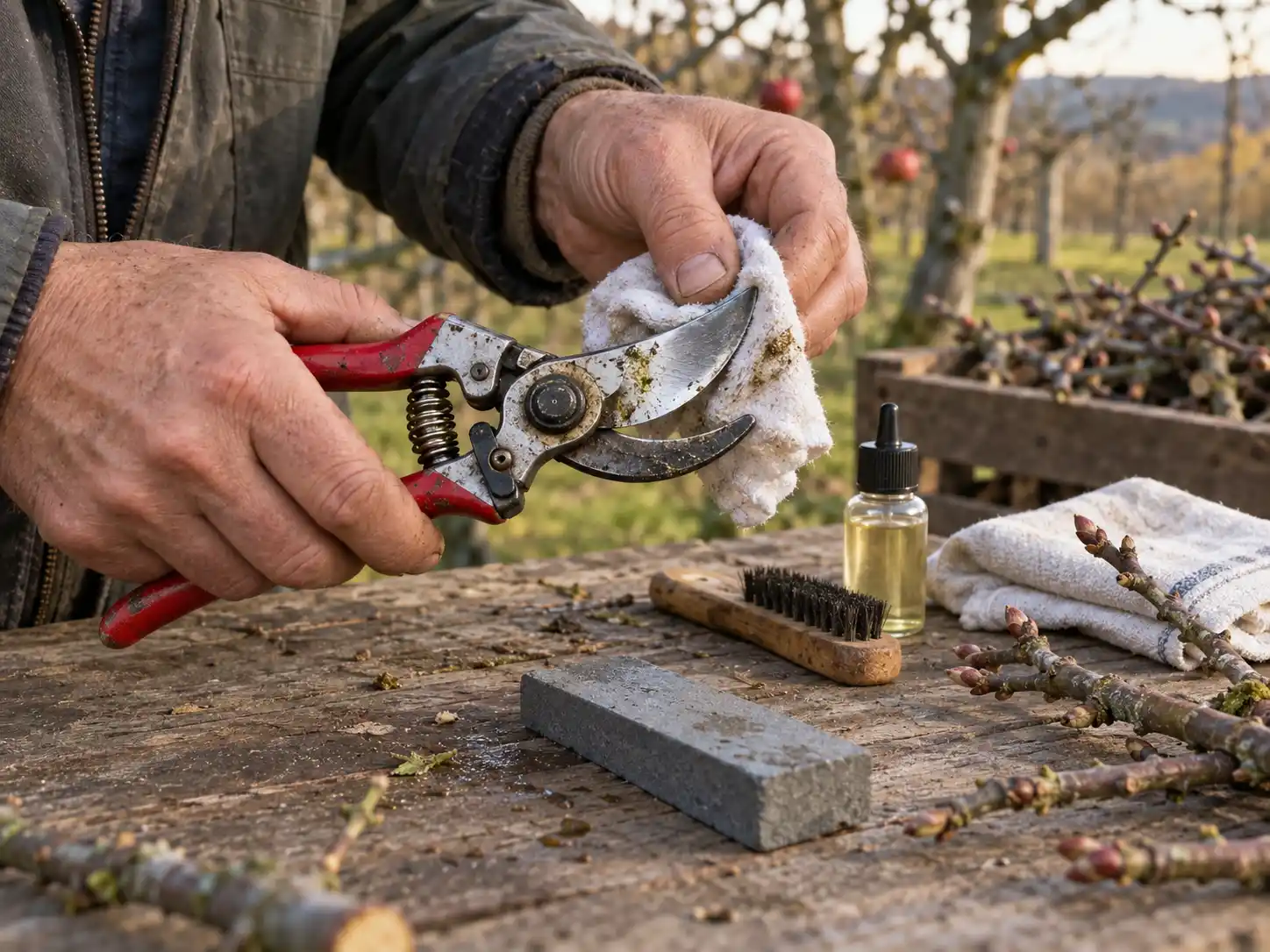
Remove sap and debris before they affect the tool.
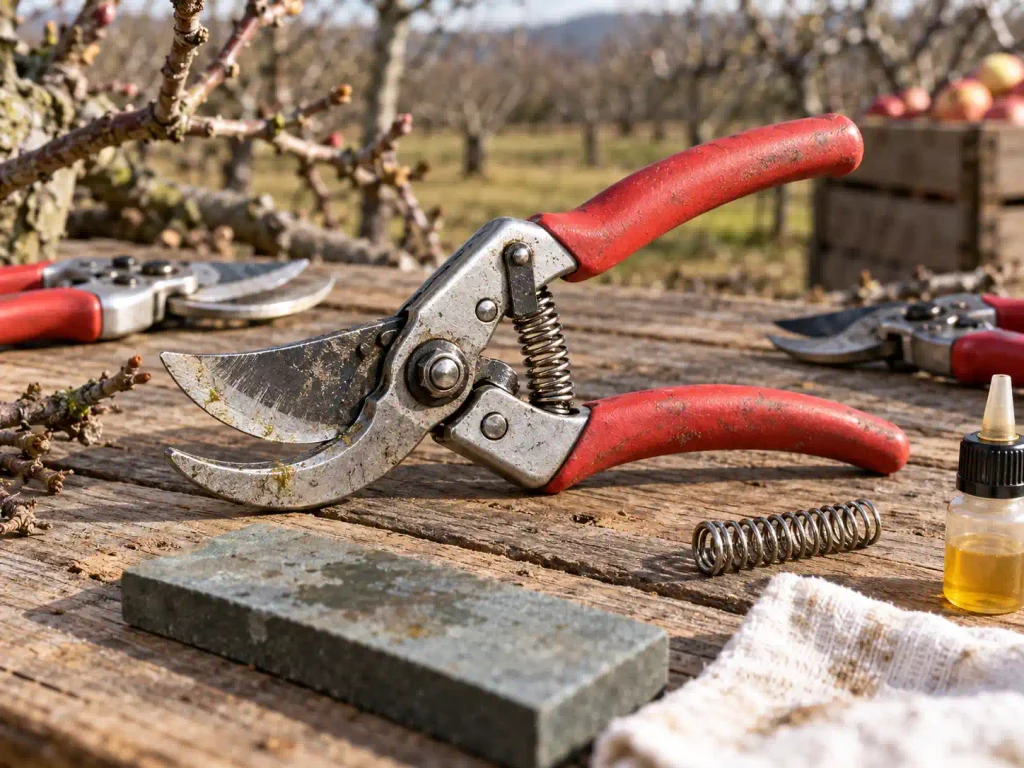
Sticky residue can make any pair of pruning shears feel worse than it is. Wipe off sap and plant debris after pruning, keep the pivot moving freely, and store the tool dry rather than leaving it exposed to rain or wet grass. Even the best pruning shears for apple trees will cut poorly if sap, corrosion, or a loose pivot is ignored.
For the best pruning shears for apple trees, regular maintenance is part of the ownership decision. A serviceable tool only delivers that advantage if the blade is kept sharp and the pivot is checked rather than ignored until the cut quality declines.
Be more careful around diseased wood.
When pruning visibly diseased branches, sanitation becomes more important because tools can contact infected tissue. Follow disease-specific extension guidance for whether and how to disinfect between cuts, since recommendations can vary by disease and disinfectant.
Do not assume that a stronger chemical is automatically better for the tool or the tree. Clean off corrosive residues after use, and follow both extension guidance and the tool manufacturer’s maintenance instructions.
Which pruning shear should you buy?
If you have a large right hand and want a highly repairable classic, the FELCO 2 is the strongest all-around research pick in this roundup. If you prefer a lighter alternative, the ARS VS-8Z is worth comparing closely, while the FELCO 6 makes more sense for many medium right hands. The best pruning shears for apple trees depend on which of those priorities matters most to you.
For left-handed growers, the FELCO 16 solves a fit problem that generic recommendations often ignore. For a value-focused conventional bypass pruner with replacement parts, the Corona ClassicCUT BP 3180D belongs on the shortlist. In both cases, the best pruning shears for apple trees are the pair that reduces compromise in your actual pruning routine.
The best pruning shears for apple trees are ultimately the pair that fits your hand, makes controlled cuts on the small live wood you actually prune, and has a maintenance path you are willing to follow. That is the practical standard we would use when comparing the best pruning shears for apple trees for a backyard orchard. Buying the largest capacity on the shelf does not replace choosing the correct tool class for each branch.
FAQs
What type of pruning shears are best for apple trees?
Bypass hand pruners are the best default for live apple shoots and small branches because the cutting blade passes beside the counter-blade rather than closing onto a flat anvil. The best pruning shears for apple trees should also match your hand size and be easy to maintain.
How thick a branch can pruning shears cut?
It depends on the individual model, with many full-size hand pruners listing capacities around three-quarters of an inch to about one inch. Treat that number as a maximum guide, not a target. If you need excessive force, move to loppers or a pruning saw.
Are FELCO pruning shears worth it for a few apple trees?
They can be if you value repairability, familiar ergonomics, and a large spare-parts ecosystem. However, the best pruning shears for apple trees are not automatically the most expensive pair. A less costly model that fits your hand and can be sharpened may be the better buy for light seasonal use.
What is better for apple trees, pruning shears or loppers?
Pruning shears are better for small shoots, suckers, water sprouts, and twigs that cut comfortably with one hand. Loppers are better when the branch is thicker or extra leverage and reach are needed. Use our pruning shears vs loppers comparison for a direct decision guide.
How often should pruning shears be sharpened?
There is no single sharpening interval that fits every orchard because frequency depends on use, blade steel, wood hardness, contamination, and storage. Sharpen when the blade no longer slices cleanly after cleaning and adjustment, then follow the existing bevel rather than changing the blade geometry.
Do I need separate pruning shears for diseased branches?
Not necessarily, but pruning diseased wood calls for more careful cleaning and disease-specific sanitation practices. If you routinely work between healthy and infected trees, a dedicated tool can simplify your workflow, but sanitation still matters.
Related Articles
- Best loppers for apple trees
- Best pruning saw for apple trees
- How to sharpen pruning shears
- Pruning shears vs loppers
- Apple tree pruning tools
- How to prune apple trees
- When to prune apple trees
- Apple tree pruning
Sources
- University of Minnesota Extension: Pruning and training apple trees
- University of Maryland Extension: Growing Apple and Pear Trees in a Home Garden
Disclaimer: This article provides general pruning guidance based on university extension research. Pruning requirements vary by variety, rootstock, tree age, and regional climate. When in doubt, consult a certified arborist or your local cooperative extension service.
