
7 Best Apple Tree Pruning Tools for Clean, Healthy Cuts
Having the right apple tree pruning tools makes the difference between clean cuts that heal quickly and ragged wounds that invite disease. This guide covers seven essential tools for home growers, explains which tool matches which branch size, and shows how to keep blades sharp and sanitized season after season.
Table of Contents
Key Takeaways
- The right pruning tool for the job depends largely on branch diameter: hand pruners handle up to 3/4 inch, loppers handle up to 2 inches, and a pruning saw handles anything larger.
- Bypass blades produce cleaner cuts than anvil blades and are the preferred choice for live wood on apple trees.
- Sanitizing tools between cuts is critical when fire blight or other bacterial diseases are present in your orchard.
Why the Right Apple Tree Pruning Tools Matter
Choosing the correct tools for the job is not a minor detail. A blade that is too small for the branch it is cutting will crush and tear bark rather than slice cleanly. Crushed tissue heals slowly and creates entry points for fungal pathogens like apple canker.
Dull or contaminated blades can also spread fire blight bacteria from one branch to another in a single pruning session, which is why University of Minnesota Extension treats sharp, sanitized tools as being just as important as pruning timing for protecting tree health.
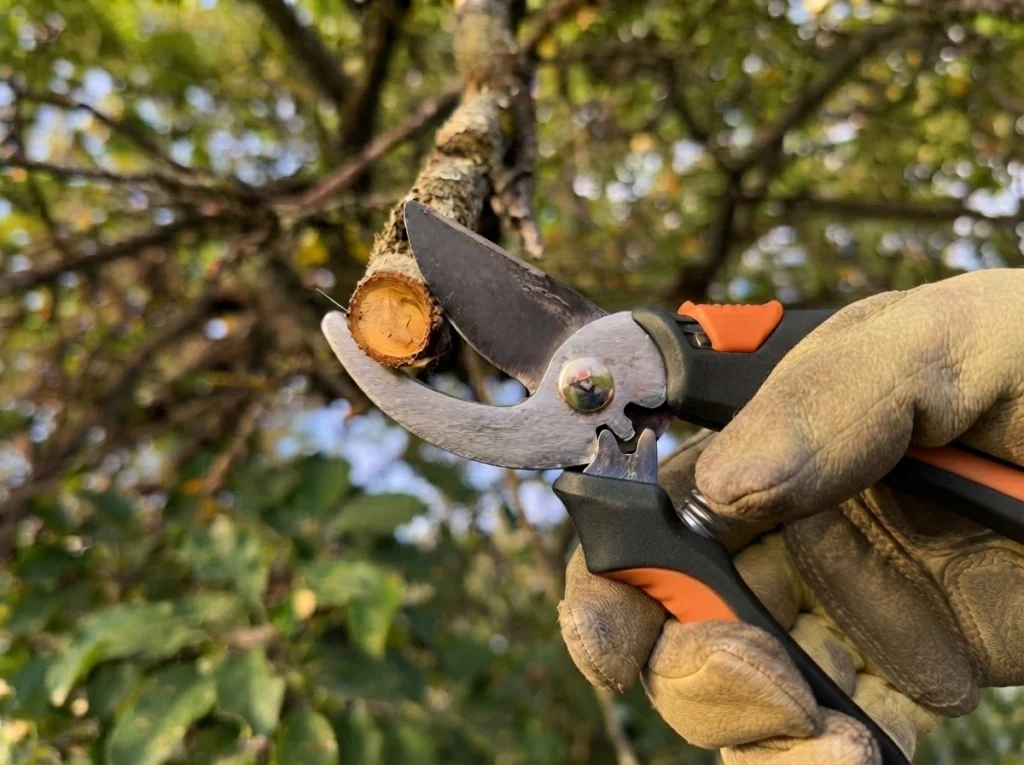
The 7 Essential Apple Tree Pruning Tools
Most home growers need a core set of tools to cover every task from removing water sprouts to taking out scaffold limbs. The seven tools below cover the branch sizes and situations most likely to come up in a backyard orchard.
Building a toolkit incrementally is a practical approach. Start with hand pruners and loppers, then add a pruning saw as your trees mature. A pole pruner becomes especially useful once your apple tree reaches around 10 feet tall.
1. Bypass Hand Pruners
Bypass hand pruners are the foundation of most pruning kits for apple trees. The two blades pass each other like scissors, slicing cleanly through branches up to 3/4 inch in diameter. According to University of Minnesota Extension’s pruning tool care guide, bypass blades tend to produce a cleaner cut than anvil designs, which is why they’re the standard recommendation for live wood.
For heavy seasonal use, carbon steel blades generally hold an edge better than coated or stainless alternatives. Stainless or coated blades resist rust more effectively, which suits growers who prefer easier upkeep, though they typically need more frequent sharpening.
2. Anvil Pruners
Anvil pruners use a single blade that cuts down onto a flat metal plate. They generate more cutting force per squeeze than bypass pruners, which makes them useful for cutting dry, dead wood where a clean slice matters less. However, anvil blades can crush live bark tissue, so they are not the first choice for active pruning on growing branches.
Some growers keep a pair of anvil pruners specifically for removing dead stubs and sucker shoots at ground level, where a perfectly clean cut is less critical.
3. Bypass Loppers
Loppers extend your reach and your cutting power. Their long handles generate enough leverage to cut branches between 3/4 inch and 2 inches in diameter. This puts them in the range that handles most mature spur wood, lateral branches, and water sprouts thicker than what hand pruners can manage.
This makes loppers one of the most frequently used tools during dormant pruning of established apple trees. Compound or geared loppers are worth the added cost for growers managing multiple trees, as they can meaningfully reduce hand fatigue over a full pruning session.
4. Pruning Saw
A pruning hand saw handles scaffold branches and larger limbs that exceed the capacity of loppers. Pruning saws intended for orchard use have a slightly curved blade with large, aggressive teeth that cut on the pull stroke, which gives the user better control. Most quality pruning saws fold for safe transport between trees.
For large-scale renovation of neglected apple trees, an extension saw or small chainsaw may be needed. However, a folding pruning saw covers the vast majority of cuts a home grower will need to make.
5. Pole Pruner
Pole pruners extend your reach into the upper canopy without requiring a ladder. They consist of a hooked blade and a cutting head mounted on an extendable pole, allowing cuts on branches roughly 8 to 15 feet overhead. Some models include an integrated pole saw for larger upper limbs.
In taller semi-dwarf or standard apple trees, a pole pruner becomes especially valuable. It allows growers to remove crossing branches and water sprouts from the upper scaffold without the safety risk of climbing on a ladder while carrying cutting tools.
6. Battery-Powered Pruner (Optional)
Battery-powered pruners are increasingly practical for home growers managing several trees or for anyone with reduced hand strength. They function like bypass hand pruners but operate with a motor-driven blade, eliminating the repetitive squeezing motion that causes fatigue. Capacity varies by model, but most battery pruners handle branches up to roughly 1 to 1.2 inches in diameter.
The trade-off is cost and battery management. For a grower with two or three trees, manual bypass pruners are typically sufficient. For a small orchard of ten or more trees, the time and effort savings from a battery pruner can become worthwhile.
7. Sanitation Supplies
Tool sanitation is an often-overlooked part of building out a pruning kit. A solution of 70% isopropyl alcohol or diluted bleach (10% concentration) disinfects blades between cuts when fire blight is present. UMN Extension also notes that Lysol disinfectant containing .1% alkyl dimethyl benzyl ammonium saccharinate is an effective alternative.
For routine end-of-session maintenance, a light oil such as WD-40 or linseed oil applied to blades and pivot points helps prevent rust on carbon steel tools. A simple sharpening block or whetstone rounds out the sanitation kit.
Bypass vs Anvil Pruners: Which Cut Is Right for Apple Trees?
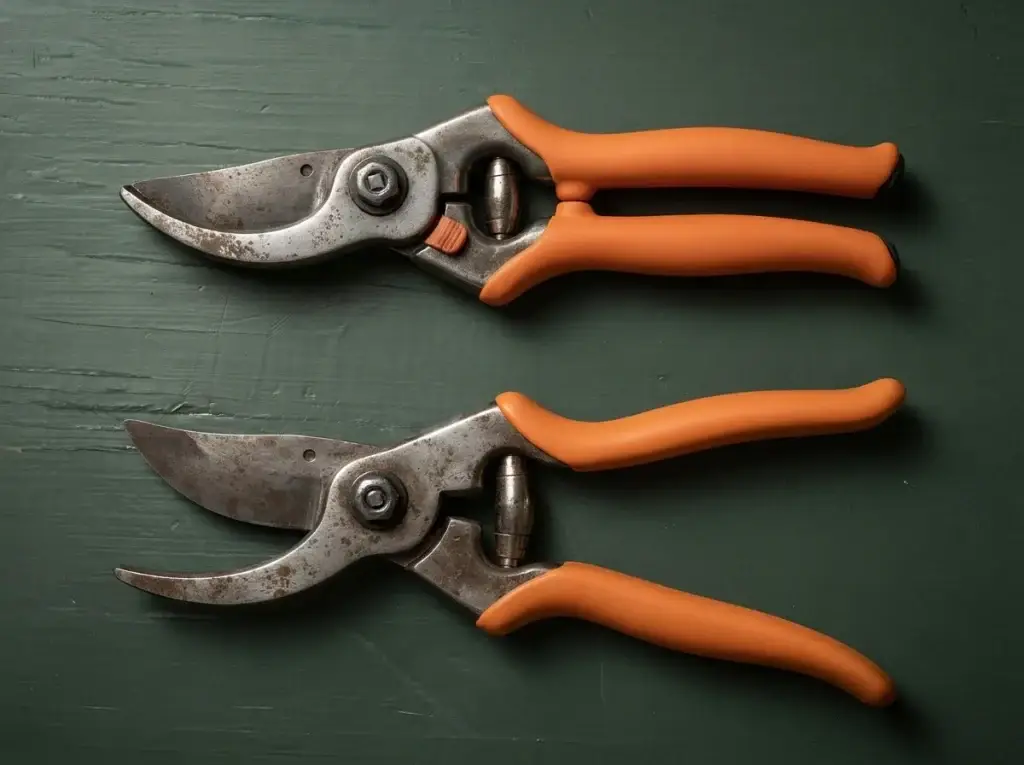
The distinction between bypass and anvil blade designs matters more than most home growers realize. Bypass pruners slice through wood with two passing blades, leaving a clean, flat wound that supports faster callus formation. Anvil pruners press a single blade against a flat plate, which can pinch and crush the surrounding bark tissue on live branches.
Bypass pruners are the standard recommendation for active growth on apple trees. Anvil-style tools remain useful for removing already dead or dry wood, where cutting force matters more than cut quality. If you can only buy one style, bypass is the more versatile choice for live wood apple tree care.
Pruning Tools at a Glance
| Tool | Branch Diameter | Best Use | Blade Type |
|---|---|---|---|
| Bypass Hand Pruners | Up to 3/4 inch | Spurs, small laterals, water sprouts | Bypass (recommended) |
| Anvil Pruners | Up to 3/4 inch | Dead wood, dry stubs | Anvil |
| Bypass Loppers | 3/4 inch to 2 inches | Lateral branches, scaffold renewal | Bypass or compound |
| Pruning Saw | 2 inches and above | Scaffold removal, renovation cuts | Pull-stroke serrated |
| Pole Pruner | Up to about 1.5 in (varies by model) | Upper canopy, no-ladder reach | Bypass hook blade |
| Battery Pruner | Up to about 1.2 in (varies by model) | High-volume pruning, reduced fatigue | Motor-driven bypass |
| Sanitation Kit | N/A | Disease prevention between cuts | N/A |
How to Sanitize Your Pruning Tools
Sanitizing your pruning tools is especially important when fire blight has been active in your orchard. Fire blight bacteria spread easily on blade surfaces, so a single contaminated cut can pass the infection to a healthy branch within the same pruning session.
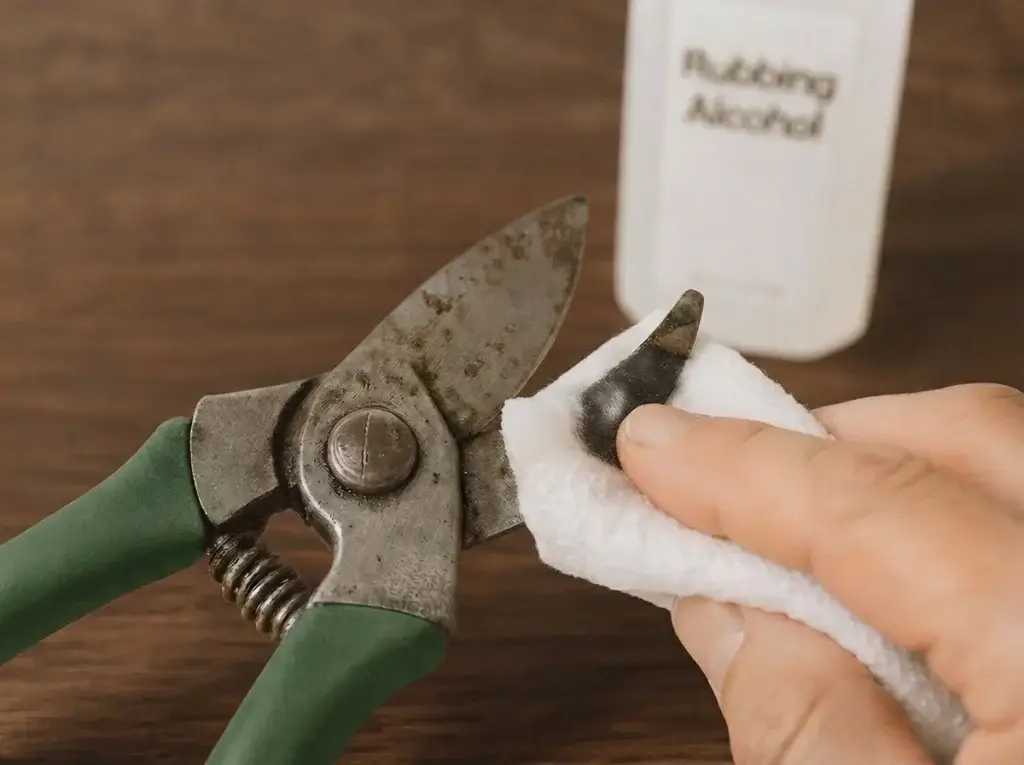
UMN Extension recommends dipping blades in 70% isopropyl alcohol, a 10% bleach solution, or a Lysol-based disinfectant between every cut when disease is present. For routine end-of-season cleaning, removing sap and debris with soap and water, followed by a light oil application, keeps blades in working condition year to year.
Avoid using vinegar as a cleaning agent on metal tools, too. UMN Extension notes that vinegar can accelerate rust on carbon steel blades, which shortens tool life.
When to Sharpen and Oil Your Blades
Sharp pruning tools produce cleaner cuts and reduce the effort needed to get through a full pruning session. A blade that requires excessive force to close is usually overdue for sharpening. Most bypass pruners and loppers can be sharpened with a fine sharpening block or whetstone, following the blade’s existing bevel angle.
A general sharpening tip: work in one direction along the existing bevel rather than sawing back and forth — this helps preserve the blade’s edge geometry. Pruning saws, by contrast, rarely need sharpening and are often more practical to replace once their teeth wear down.
For complete guidance on when and how to prune, see our article on apple tree pruning best practices. If you’re selecting the right timing for your region, our guide on when to prune apple trees covers dormant season windows by USDA zone. For technique, our how to prune apple trees article walks through the seven key cuts in detail.
FAQs
What tools do I need to start pruning apple trees?
For most home growers, a good pair of bypass hand pruners and a set of bypass loppers covers the majority of apple tree pruning tasks. Add a folding pruning saw for scaffold branches over 2 inches in diameter, and you have a complete basic kit for young and mature apple trees alike.
Should I use bypass or anvil pruners on apple trees?
Bypass pruners are the better choice for live wood on apple trees. The two-blade scissor action produces a clean, flat cut that heals more readily. Anvil pruners are better suited for removing dead, dry wood, where cut quality matters less and raw cutting force is the priority.
How do I sanitize my apple tree pruning tools between cuts?
Dip or wipe blades with 70% isopropyl alcohol, a 10% bleach solution, or a Lysol-based disinfectant containing .1% alkyl dimethyl benzyl ammonium saccharinate. This step matters most when fire blight is present, since the bacteria spread readily on contaminated blade surfaces. See the NC State Extension tools guide for further disinfection recommendations.
Related Articles
- Apple Tree Pruning: Proven Season Guide
- When to Prune Apple Trees by Season
- How to Prune Apple Trees: 7 Proven Steps for Beginners
Sources
- University of Minnesota Extension — Caring for Winter Pruning Tools (2024)
- NC State Extension — Tools to Make the Cut (Publication AG 780-2)
Disclaimer: This article provides general pruning guidance based on university extension research. Pruning requirements vary by variety, rootstock, tree age, and regional climate. When in doubt, consult a certified arborist or your local cooperative extension service.
