
When To Prune Apple Trees: 4 Proven Times by Season
Knowing when to prune apple trees is one of the most important decisions a home orchardist makes each year. Understanding when to prune apple trees correctly means targeting the late winter dormant window, after the coldest temperatures have passed but before new buds open. Choosing the wrong season can invite disease, delay fruiting, or push the tree into excessive leafy growth at the expense of fruit production.
Table of Contents
Key Takeaways
- The best time to prune apple trees is late winter, while the tree is still fully dormant and before bud swell begins.
- Summer pruning is a valid secondary window for controlling size and removing water sprouts, but should never replace dormant pruning.
- Fall pruning increases the risk of cold injury and disease infection at fresh wound sites and is not recommended for most home growers.
- Young trees benefit from annual dormant pruning to build scaffold structure; established trees need yearly light maintenance.
- Never remove more than one-third of the canopy in any single pruning session.
Why the Timing of When To Prune Apple Trees Matters
Pruning timing directly affects how the tree heals, how vigorously it grows the following season, and how vulnerable fresh cuts are to fungal and bacterial infection. When to prune apple trees is not a single fixed date — when to prune apple trees is a window tied to the tree’s dormancy cycle, the local climate, and what the grower is trying to achieve.
Additionally, timing affects the balance between vegetative growth and fruiting. Dormant pruning stimulates vigorous new shoot growth in spring. Summer pruning, by contrast, reduces overall vigor and is useful when a grower needs to limit size or improve light penetration without triggering a flush of new growth.
University extension research consistently recommends late winter dormant pruning as the primary strategy for home orchardists. However, understanding the purpose of each seasonal window allows growers to use timing strategically across the full year.
The Best Time To Prune Apple Trees: Late Winter (Primary Window)
Late winter is the primary recommended window for pruning apple trees. According to Utah State University Extension, dormant pruning should be completed after the coldest part of winter has passed but before spring bud swell begins. Pruning too early in winter while temperatures remain extreme increases the risk of cold injury at fresh cut sites.
During this window, the tree structure is easy to assess without foliage obstructing the view. Diseased wood, crossing branches, water sprouts, and weak scaffold candidates are all clearly visible. Consequently, growers can make better structural decisions during dormant pruning than at any other time of year.
This visibility advantage is one reason extension programs consistently identify late winter as when to prune apple trees for structural work.
What “Dormant” Means and When It Applies in Your Zone
A dormant apple tree has drawn its energy reserves down into the root system for the winter. Leaf buds remain tight and closed, and no new growth is visible on the branch tips. For most growers in USDA Zones 4 through 7, this window falls between February and early April depending on latitude and local weather patterns.
In warmer zones such as Zone 8 or parts of the Pacific Northwest, the window may open in January. In colder northern zones, late March or even early April may still be within the dormant window if spring has been slow. Therefore, growers should monitor their specific tree rather than follow a calendar date rigidly.
“Pruning when the tree is dormant gives you the best chance to shape it for strong, healthy growth. Late winter, just before spring, is the best time to prune apple trees.” — Nicole Sanchez, Horticulturist, Oregon State University Extension Service
How Late Winter Pruning Affects Spring Growth
Dormant pruning stimulates vigorous growth at remaining buds the following spring. The tree redirects its stored energy into fewer growing points, which produces stronger, more productive shoots. For young trees in their first three to five years, this is the primary mechanism for building the scaffold framework that will support fruit for decades.
For established trees, late winter pruning removes competing and unproductive wood while keeping the canopy open for light and airflow. As a result, spray coverage improves, disease pressure drops, and fruit quality typically increases over seasons of consistent annual pruning.
Apple Tree Pruning in Summer: The Secondary Window
After late winter, summer is the next seasonal answer to when to prune apple trees — a secondary option that serves specific purposes a dormant pruning session cannot achieve. According to Utah State University Extension, both summer and dormant pruning have a place in orchard management, but summer pruning should complement dormant pruning rather than replace it.
The most common targets for summer pruning are water sprouts, which are the vigorous, non-fruiting vertical shoots that emerge from older scaffold branches. Removing these in May, June, and July prevents them from shading the interior canopy and consuming resources that would otherwise support fruit development.
When Summer Pruning Helps and When It Hurts
Summer pruning reduces overall tree vigor, which is useful for growers managing dwarf or semidwarf trees on dwarfing rootstocks. It is also the preferred timing for controlling the size of trees that have become too large through neglect. However, heavy summer pruning late in the season stresses the tree and can interfere with the nutrient reserves the tree is building for winter.
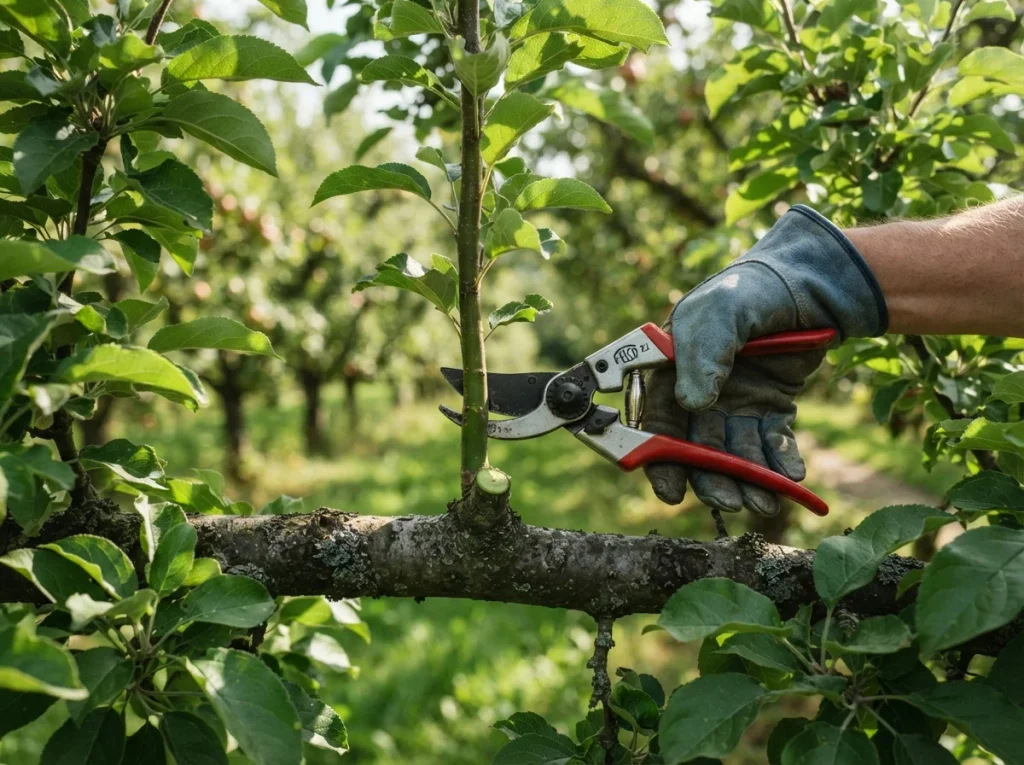
Penn State Extension cautions that heavy pruning during late spring and early summer exposes fresh wound sites to active airborne pathogens, including the bacteria responsible for fire blight. For this reason, summer pruning should remain light and targeted. Removing large structural limbs is best reserved for the dormant season.
Fall and Early Winter Pruning: Why Most Growers Should Wait
Fall is the season most commonly cited as a pruning mistake by home growers. When to prune apple trees in autumn is a frequently searched question, and the extension consensus is clear: fall pruning is not recommended for most home orchardists.
Cutting branches in fall stimulates late-season growth at wound sites that will not have time to harden before frost arrives. This new tissue is highly vulnerable to cold damage. Additionally, many fungal and bacterial pathogens remain active in fall, and fresh pruning wounds provide an entry point that growers should avoid when disease pressure is elevated.
The only fall pruning that most extension programs support is the removal of dead, broken, or storm-damaged limbs where the structural hazard outweighs the risk of disease entry. Routine shaping, thinning, and training cuts should wait until late winter.
Pruning by Tree Age: Young Trees vs Established Trees
When to prune apple trees also depends on whether the tree is newly planted or fully established. The timing is the same in both cases — late winter — but the goals, intensity, and structure of the pruning session differ significantly.
| Tree Age | Primary Goal | Pruning Intensity | Key Focus |
|---|---|---|---|
| Year 1 | Establish central leader | Light | Select 3–5 scaffold branches with wide crotch angles |
| Years 2–5 | Build scaffold structure | Moderate | Add second scaffold tier, remove competing shoots |
| Established (6+ years) | Maintain canopy openness | Light to moderate | Remove water sprouts, crossing branches, and dead wood annually |
| Neglected/Overgrown | Renovation over 2–3 years | Progressive (max 1/3 per year) | Lower height gradually; restore light to interior canopy |
University of Minnesota Extension notes that dwarf apple trees begin bearing fruit in two to three years after planting, while standard-sized trees may take up to eight years. Consistent annual dormant pruning during those early years is one of the most reliable ways to maintain the balance between vegetative growth and fruit production.
3 Signs Your Apple Tree Is Ready To Prune Right Now
Knowing when to prune apple trees is sometimes more about reading the tree than reading a calendar. These three indicators confirm that the dormant pruning window is open and the timing is correct.
- Buds are swollen but not yet open. The ideal moment is just before bud swell accelerates. Once buds begin to open and show green tissue, the dormant window is closing rapidly.
- Temperatures are consistently above freezing during the day. Pruning during a stretch of days above 32°F reduces the risk of cold damage to fresh cut surfaces. Night temperatures can still drop below freezing without causing harm to properly made cuts.
- The branch structure is fully visible. The absence of leaves allows clear identification of crossing branches, water sprouts, and poorly angled scaffold candidates before any cuts are made.
For an in-depth guide on apple tree pruning techniques, cuts, and tools, our complete pruning guide covers every step from first-year training through mature tree renovation. Growers interested in the secondary timing window can also review our dedicated resource on apple tree pruning in summer for guidance on water sprout removal and size control between dormant sessions.
For step-by-step pruning techniques tailored to beginners, see our guide on how to prune apple trees with correct cut placement, tool selection, and the most common mistakes to avoid.
FAQ’s
What is the best month to prune apple trees?
For most growers in USDA Zones 4 through 7, February and March are the ideal months for pruning apple trees. The key requirement is that the coldest temperatures have passed and bud swell has not yet begun. In warmer zones, January may be appropriate. In colder northern zones, April can still fall within the dormant window.
Can you prune apple trees in summer?
Yes, summer pruning is appropriate for specific tasks. Removing water sprouts in May, June, and July is well supported by extension research. Light shaping to improve canopy light penetration is also acceptable. However, heavy structural cuts, large limb removal, and renovation pruning should always be reserved for the dormant season.
Is it too late to prune apple trees once growth has started?
Once buds have opened and new leaf tissue is visible, dormant pruning is no longer ideal. Extension guidance from the University of Vermont indicates that pruning should be delayed once trees show signs of breaking dormancy, waiting until new growth has fully expanded in mid-to-late spring if pruning at that point is necessary. The next reliable window is summer, targeting only water sprouts and crossed branches.
Should I prune my apple tree every year?
Yes. Annual light dormant pruning is the approach most strongly supported by university extension programs. Trees that are left unpruned for multiple years develop dense canopies with poor light and airflow, increasing disease pressure and reducing fruit quality. Annual pruning also prevents the need for heavy renovation cuts later, which carry greater risk of over-stressing the tree.
How much can I safely remove when pruning apple trees?
The standard guideline supported by Cornell University Extension is to never remove more than one-third of the total canopy in a single pruning session. For overgrown or neglected trees requiring heavy renovation, the work should be spread across two to three growing seasons to avoid excessive stress and an unproductive flush of water sprouts in response to aggressive cutting.
Related Articles
- Apple Tree Pruning: Complete Techniques, Timing, and Tools
- How To Prune Apple Trees: 7 Proven Steps for Beginners
- Apple Tree Pruning In Summer: Benefits and Best Practices
Sources
- Pruning and Training Apple Trees — University of Minnesota Extension
- Training and Pruning Apple Trees — Utah State University Extension
- Prune Apple Trees in Late Winter for Stronger Growth — Oregon State University Extension
- Fruit Tree Pruning: Summer Pruning Cautions — Penn State Extension
Disclaimer: This article provides general pruning guidance based on university extension research. Pruning requirements vary by variety, rootstock, tree age, and regional climate. When in doubt, consult a certified arborist or your local cooperative extension service.
