
Apple Tree Pruning in Winter: Timing, Cuts and What to Avoid
Apple tree pruning in winter is the most reliable way to shape your tree, stimulate strong spring growth, and improve fruit quality year after year. When the tree is fully dormant and the worst cold has passed, you have a clear window to remove problem wood without triggering disease or shock. This guide covers timing, cuts, tools, and the most common mistakes to avoid.
Table of Contents
Key Takeaways
- Apple tree pruning in winter works best during late dormancy, after the hardest freezes and before bud break.
- Never remove more than one-third of the tree’s canopy in a single winter season.
- Always disinfect pruning tools between trees to avoid spreading bacterial and fungal disease.
Why Apple Tree Pruning in Winter Is the Right Move
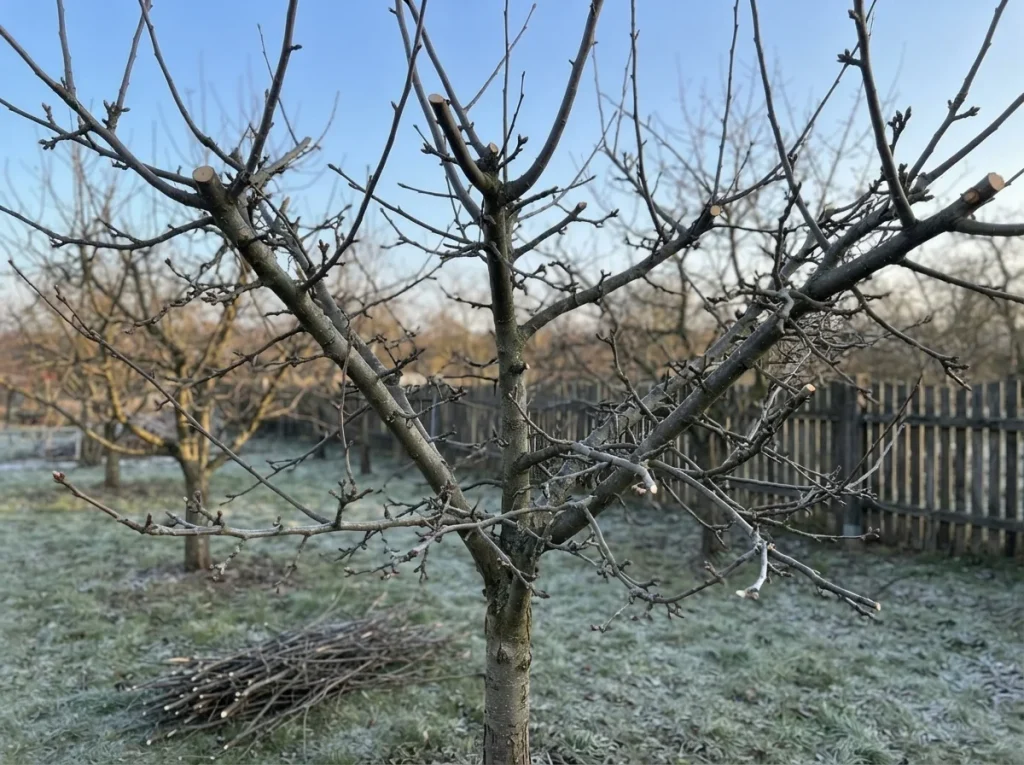
Apple tree pruning in winter takes advantage of the tree’s dormant state to minimize stress and maximize recovery. When temperatures drop and the tree stops actively growing, it pauses sap flow and enters a rest period that makes pruning wounds heal cleanly once spring growth begins. Additionally, dormant trees have no active foliage, so the full branch structure is visible and easy to assess.
There is a practical disease benefit as well. According to the Cornell Cooperative Extension, late winter is ideal for most apple pruning because the tree is dormant and airborne pathogens are not active. However, this advantage only holds if the coldest temperatures have already passed. Pruning too early in winter can expose fresh cuts to hard frost, reducing cold hardiness and causing tissue injury at the wound site.
“Pruning when the tree is dormant gives you the best chance to shape it for strong, healthy growth.” (Nicole Sanchez, Horticulturist, Oregon State University Extension Service)
The Exact Winter Pruning Window by USDA Zone
The correct timing for apple tree pruning in winter depends on your USDA hardiness zone. The shared principle across all zones is the same: prune after the coldest weather has passed and before green growth appears on the buds. However, that window falls at very different calendar points depending on where you garden.
In colder zones, growers often wait until late February or early March. In warmer zones, the window opens in December or January. In all cases, the hard cutoff is bud break. Once you see swelling green tissue at bud tips, stop pruning and wait until summer if additional cuts are needed.
| USDA Zone | Approximate Dormant Window | Target Pruning Months |
|---|---|---|
| Zone 3–4 (MN, ND, northern WI) | Dec – early April | Late February to late March |
| Zone 5–6 (OH, PA, OR coast, NY) | Dec – mid-March | February to early March |
| Zone 7–8 (OR, WA lowlands, VA) | Nov – late February | December to February |
How to Tell If Your Apple Tree Is Still Dormant
Before making any cut, confirm the tree has not yet begun spring growth. Scratch a small section of bark on a young twig with your thumbnail. If the tissue beneath is green and moist, the tree is still alive and dormant. If the bud tips have begun to swell and show a faint green point, bud break is approaching, and your pruning window is closing fast.
University of Minnesota Extension notes that fruit trees should be pruned after the coldest weather has passed and before growth begins. Schedule your pruning on a dry day when temperatures are above freezing. Avoid pruning during or immediately after wet weather, especially if your orchard has a history of fire blight or apple canker.
5 Proven Cuts to Make During Winter Pruning
Effective apple tree pruning in winter follows a clear priority sequence. Work through the list in order, stepping back after each major cut to reassess the tree’s balance before continuing. This approach prevents over-pruning and helps you remove the most damaging wood first.
- Dead, diseased, and broken branches: Remove all dead or damaged wood first, cutting back to healthy tissue at the nearest joint. Disinfect your saw or loppers immediately after each cut on diseased wood.
- Crossing or rubbing branches: Where two branches contact each other, remove the weaker one completely at its base. Rubbing wounds become entry points for fungal disease over time.
- Water sprouts and suckers: Remove vigorous vertical shoots (water sprouts) rising from scaffold branches and any suckers growing from the base or roots. Both compete for energy without contributing to fruit production.
- Downward-growing or shaded branches: Branches that grow downward or into the interior canopy receive little light and produce poor-quality fruit. Remove them to open the canopy and improve airflow.
- Branches larger in diameter than the trunk: Any limb larger than one-third the diameter of the parent branch creates a structural weakness. Remove it at the branch collar, not flush with the trunk.
Thinning Cuts vs Heading Cuts in Winter Pruning
Two types of cuts are used during winter apple tree pruning, and each produces a different growth response. Choosing the wrong cut type for a situation leads to unexpected vegetative surges or stubs that decay. The table below summarizes when to use each approach.
| Cut Type | What It Does | Best For | Result |
|---|---|---|---|
| Thinning cut | Removes entire branch at collar | Overcrowded interior, crossing branches, water sprouts | Opens canopy, minimal regrowth surge |
| Heading cut | Removes only part of branch | Shortening long leaders, reducing height | Stimulates multiple new shoots below cut |
University of Minnesota Extension notes that thinning cuts are usually the recommended type for apple trees. They remove entire branches at the branch collar and generally produce cleaner results with less vegetative regrowth. Heading cuts, by contrast, stimulate multiple new shoots and should be used sparingly during dormant pruning.
Tool Preparation and Sanitation Before You Begin
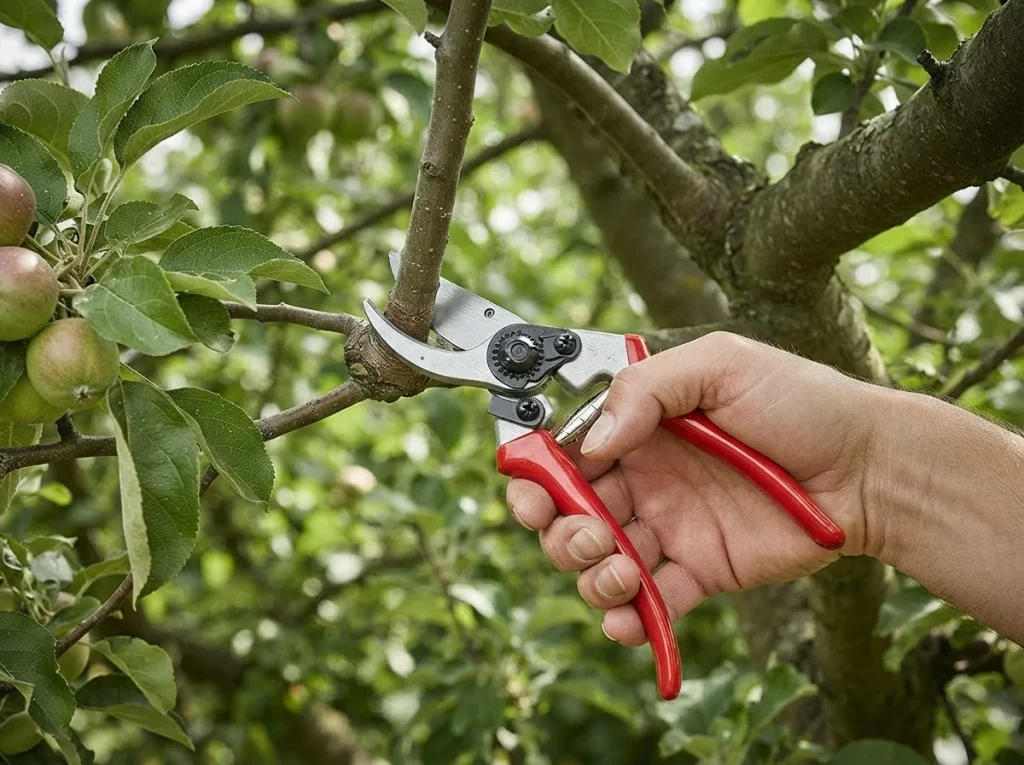
Proper tool preparation is as important as the cuts themselves during apple tree pruning in winter. Dull blades tear bark instead of cutting it cleanly, leaving ragged wounds that heal slowly and invite disease. Before you start, sharpen all cutting edges and confirm blades open and close smoothly.
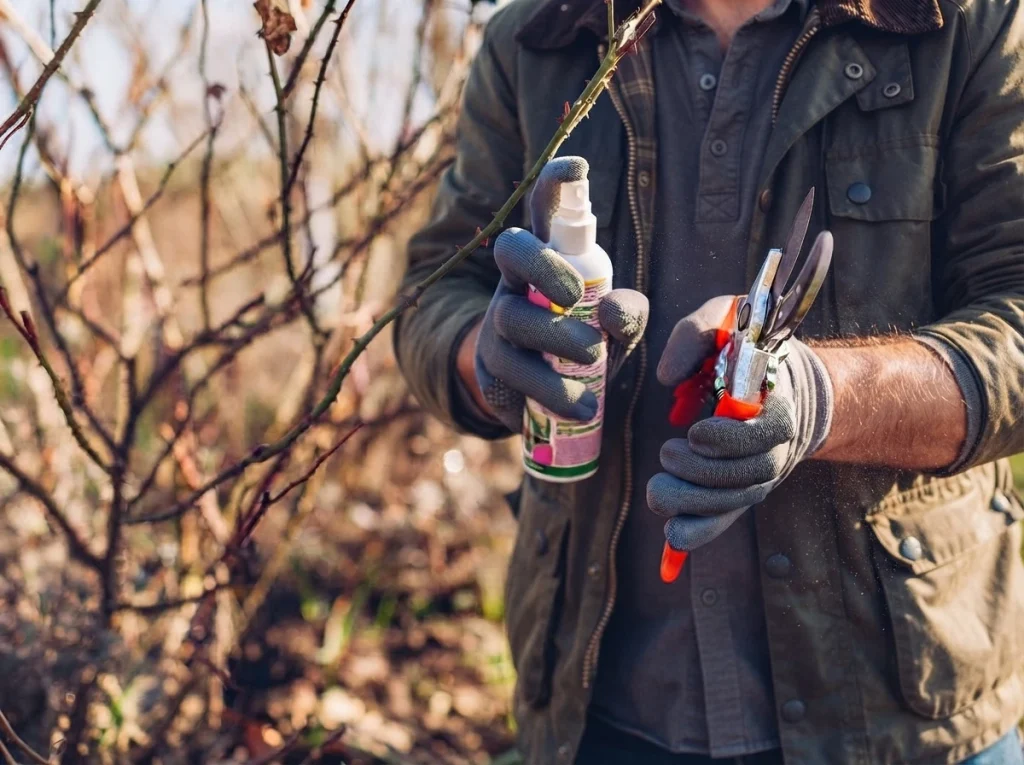
Sanitation between trees is non-negotiable. The Wisconsin Extension advises disinfecting pruning tools with 70% isopropyl alcohol or a Lysol solution before starting and after pruning any branch that shows signs of disease. Allow the tool to air dry briefly before making the next cut. Pruning wound paint is not needed for healthy wood; university extension research consistently shows that leaving cuts open allows them to seal naturally.
For most backyard apple trees, you will need three tools: hand pruners for branches up to three-quarters of an inch in diameter, loppers for branches up to 1.5 inches, and a pruning saw for anything larger. Pneumatic loppers and a chainsaw are practical in larger home orchards.
Common Winter Pruning Mistakes That Hurt Your Tree
Most damage from apple tree pruning in winter comes not from making cuts, but from making them at the wrong time, in the wrong amount, or with contaminated tools. Extension educators consistently identify the following mistakes as the most harmful for home orchardists.
Pruning too early in the dormant season. Cutting in early or mid-winter when hard freezes are still likely exposes fresh wound tissue to frost injury. The University of Maine Cooperative Extension notes that pruning lessens winter hardiness to some degree, so pruning in early winter can lead to winter injury when followed by severely cold temperatures. Wait until the worst cold has clearly passed.
Removing more than one-third of the canopy at once. Cornell Cooperative Extension guidance is direct: never remove more than one-third of the tree in a single season. Exceeding this threshold triggers an overreaction from the tree, sending energy into vigorous vegetative growth and water sprout production rather than fruit development. For neglected trees requiring heavy renovation, spread the work over two to three seasons.
Skipping tool sanitation between trees. Fire blight, in particular, spreads readily on contaminated pruning equipment. If you are pruning multiple trees in one session, disinfect blades between each tree and always after cutting any branch showing blight damage, cankers, or suspicious lesions.
Winter Pruning for Young Trees vs Mature Apple Trees
The goals of apple tree pruning in winter are different depending on tree age. For young trees in their first one to three years, pruning is primarily about training structure. For mature and established trees, it shifts to renewal: removing older, less productive wood and stimulating new fruiting spurs.
Young trees require minimal cuts. According to the University of Minnesota Extension, young trees should be pruned minimally, as excessive pruning delays fruiting and creates too much leafy growth. Focus on selecting the central leader, establishing three to five well-spaced scaffold branches, and removing any competing leaders or crossing branches. Scaffold branches should be spaced approximately 12 inches apart along the trunk.
Mature apple trees that have been neglected for several years require a multi-season renovation approach. Do not attempt to restore a severely overgrown tree in a single winter. In year one, remove the most obviously dead or diseased wood and open the canopy by cutting out two to three of the most crowded large branches. In year two, assess new growth patterns and continue structural improvement. Most apples produce the best fruit on spurs formed on two- to three-year-old wood, so the long-term goal is to continuously cycle older, declining wood out of the tree.
For more on the foundational approach to structuring your cuts, see our complete apple tree pruning guide. If you are uncertain about your timing, our guide on when to prune apple trees covers the full seasonal decision framework, and our detailed walkthrough on how to prune apple trees covers technique step by step.
FAQ’s
Can I prune apple trees when it is frozen outside?
Apple trees can handle cold temperatures, and light dormant pruning during a freeze is generally safe on healthy wood. However, extension guidance consistently recommends waiting until temperatures are above freezing at the time of pruning, both to reduce stress on wound tissue and to allow more comfortable, accurate cutting. Avoid pruning during extreme cold snaps in January in Zone 3 or 4.
How much should I cut off an apple tree during winter pruning?
The standard rule for apple tree pruning in winter is to remove no more than one-third of the canopy in any single season. This applies to both young trees and mature trees. Removing more than one-third redirects energy toward vegetative regrowth at the expense of fruit production and forces the tree to dedicate resources to healing large wounds.
Do I need to seal pruning cuts with wound paint after winter pruning?
No. Research from multiple university extension programs, including Cornell, has concluded that pruning wound sealants and paints do not speed healing and may trap moisture, increasing decay risk. Leave all cuts open and allow the tree’s natural wound-closure chemistry (the branch collar tissue) to seal the wound. The only exception sometimes recommended is for fire blight cuts, where some extension programs suggest a thin copper paint application; check your local extension guidance for your specific region.
Related Articles
- Complete Apple Tree Pruning Guide: Techniques, Timing, and Tools
- When to Prune Apple Trees: A Month-by-Month Seasonal Guide
- How to Prune Apple Trees: Step-by-Step for Home Growers
Sources
- Pruning and Training Apple Trees — University of Minnesota Extension
- Prune Apple Trees in Late Winter for Stronger Growth and Better Fruit — Oregon State University Extension
Disclaimer: This article provides general pruning guidance based on university extension research. Pruning requirements vary by variety, rootstock, tree age, and regional climate. When in doubt, consult a certified arborist or your local cooperative extension service.
