
5 Proven Steps for Apple Tree Pruning in Summer
Apple tree pruning in summer is a targeted practice that removes water sprouts, congested growth, and unproductive wood during the active growing season. Unlike dormant pruning, summer pruning limits vegetative regrowth, opens the canopy to light, and directly improves fruit color and size. This guide covers when to start, which cuts to make, and how to do it safely.
Table of Contents
Key Takeaways
- Apple tree pruning in summer is most effective when combined with dormant-season pruning, not used as a replacement for it.
- The safest timing for summer pruning is after fire blight infection risk has passed, typically mid-July or later depending on your region.
- Summer pruning reduces vegetative vigor and improves light penetration, which leads to better fruit color at harvest.
Why Apple Tree Pruning in Summer Works Differently Than Winter
Knowing when to summer prune apple trees is the most critical factor in getting good results. Cutting too early, before hot and dry conditions arrive, raises the risk of spreading fire blight through fresh pruning wounds. University of Minnesota Extension advises waiting until growth is well established and fire blight conditions have subsided before making any summer cuts.
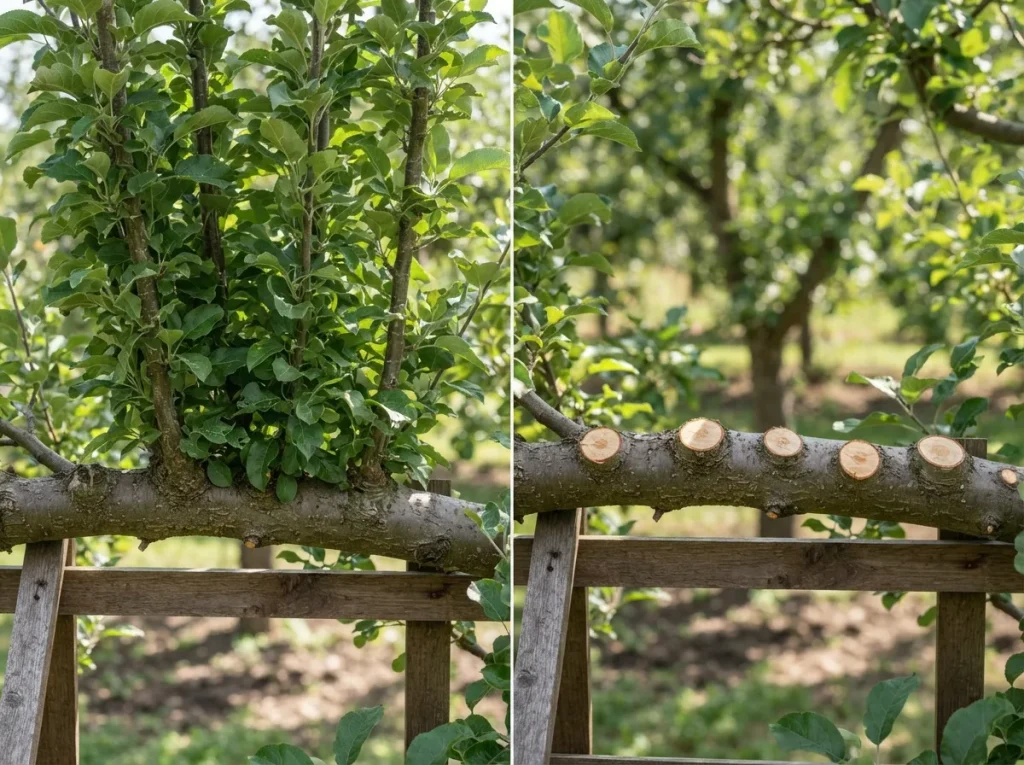
This distinction matters for home growers. Therefore, summer cuts are used to control excessive growth, not to stimulate it. This is why summer pruning fruit trees requires a completely different mindset than winter work: the goal is reduction, not stimulation. Removing water sprouts and crowded laterals during the growing season diverts energy into fruit development rather than new vegetative growth, which is exactly what a productive backyard tree needs.
When to Start Summer Pruning: Timing by Tree Type and Region
Knowing when to summer prune apple trees is the most critical decision a home grower makes each season. Consequently, cutting too early, before hot and dry conditions arrive, raises the risk of spreading fire blight through fresh pruning wounds. University of Minnesota Extension advises waiting until growth is well established and fire blight conditions have subsided before making any summer cuts.
For most home orchardists in Zones 4 through 7, the practical summer pruning window opens in late June through July, after the peak fire blight infection period ends. However, growers in warmer zones with earlier-maturing cultivars may begin as early as mid-June when conditions are consistently dry and hot.
Summer Pruning Timing for Young Trees
Summer pruning young apple trees in their first three years is primarily a training tool for establishing a dominant central leader. Michigan State University Extension notes that early summer pinching of strong lateral shoots in the upper portion of the central leader is highly effective for maintaining the desired shape. For best results, wait until lateral shoots reach at least 6 inches of growth before pinching, to avoid stimulating a second flush of regrowth.
Additionally, summer is the ideal time to remove competing shoots that threaten the leader’s dominance. Removing these competing laterals in late June through July directs energy into the central leader and maintains the desired narrow pyramidal canopy form through the tree’s early years.
Summer Pruning Timing for Mature Trees
For mature apple trees, Missouri University Extension recommends waiting until after terminal bud set before making summer cuts, which typically occurs in mid- to late July. Pruning mature trees earlier than this risks stimulating multiple shoots at the cut sites, which creates more regrowth than was removed.
Furthermore, timing varies by cultivar maturity. For early-maturing varieties such as Gala, Liberty, and Jonathan, summer pruning is recommended in late July. For late-maturing varieties, Missouri Extension advises pruning approximately four weeks before the anticipated harvest date to avoid stressing the tree during fruit development.
5 Proven Steps for Apple Tree Pruning in Summer
Apple tree pruning in summer is most effective when approached systematically. The following steps, based on University of Minnesota Extension and Michigan State University Extension guidance, cover the complete summer pruning process from assessment to cleanup.
- Wait for the right conditions. Begin only after fire blight infection risk has passed in your area, typically when weather is consistently hot and dry. In most regions, this means mid-July at the earliest. Pruning in wet, humid conditions significantly increases disease spread risk.
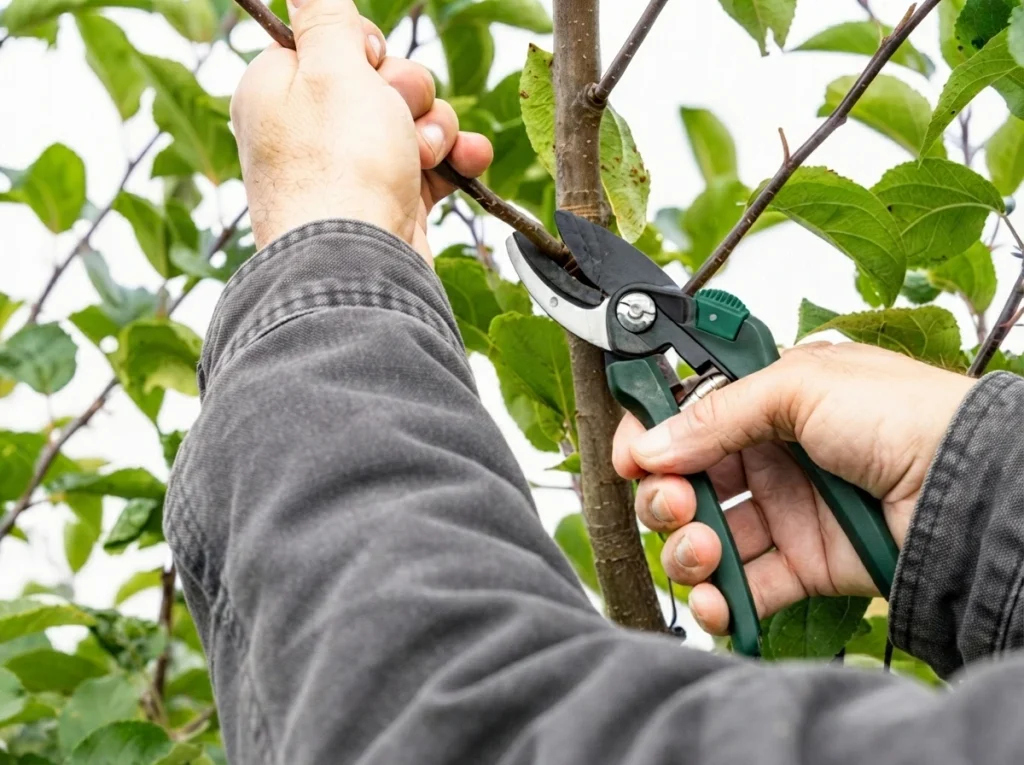
- Remove apple tree water sprouts in summer first. Water sprouts are vigorous, upright-growing shoots that emerge from structural branches and contribute no fruit production. Remove them at their base using sharp bypass pruners. These are the highest-priority targets during summer pruning.
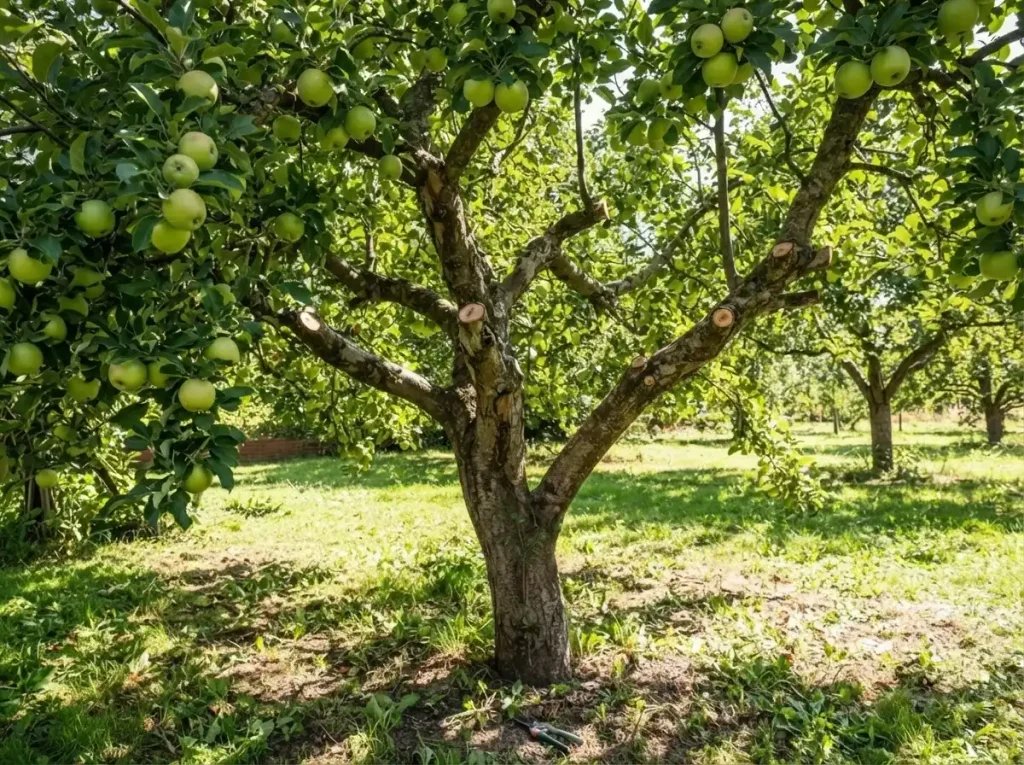
- Shorten or remove crowded laterals. Identify lateral branches that are crossing, shading lower canopy sections, or growing back toward the center of the tree. Remove competing laterals at the branch collar to maintain clean thinning cuts. University of Minnesota Extension identifies thinning cuts (removing the entire branch at its collar) as the preferred cut type over heading cuts (shortening a branch), because thinning cuts do not stimulate regrowth below the cut.
- Open the canopy for light. The goal of summer pruning is to allow sunlight to reach the interior of the canopy and penetrate to developing fruit. Assess the canopy from below. If light does not visibly reach the lower and inner scaffolds, additional removal of upper crowding growth is warranted.
- Limit total removal. Excessive summer pruning reduces root growth and can stress the tree during the critical fruit development period. As a general rule, do not remove more than approximately 20 to 25 percent of the canopy in a single summer session. MSU Extension notes that summer pruning should supplement dormant pruning, not replace it.
Fire Blight and Tool Sanitation: The Summer Pruning Safety Rule
Fire blight risk is the primary reason summer pruning requires more care than dormant pruning. The bacterium responsible for fire blight, Erwinia amylovora, can be transferred from infected wood to healthy tissue on pruning tools within a single cut. This risk is especially elevated during warm, humid summer conditions.
However, the risk is manageable with proper protocol. Sanitize pruning tools between every cut using a 10 percent bleach solution or 70 percent isopropyl alcohol. Additionally, cut well below any visible signs of infection: at least 8 to 12 inches below the last visible symptom. University of Minnesota Extension advises destroying all pruned material rather than composting it, to eliminate the pathogen from the orchard environment.
For general summer pruning on healthy wood, the same sanitation principle applies as a preventive measure. Consequently, keeping a small spray bottle of sanitizing solution in your pruning kit and wiping blades between cuts is a straightforward habit that significantly reduces cross-contamination risk. For more on this disease, see our guide to fire blight on apple trees.
Common Mistakes to Avoid During Summer Pruning
The most common error in apple tree canopy management is pruning too early in the season, before fire blight pressure has subsided and wood has partially hardened. Early cuts on soft, actively growing wood heal more slowly and are more vulnerable to pathogen entry.
A second frequent mistake is over-pruning. Removing too much leaf area in summer reduces the photosynthetic capacity of the tree at the exact moment the tree needs energy to size and color the fruit crop. In contrast, light and selective cuts, targeting water sprouts and congested growth only, produce the best outcomes for both fruit quality and tree health.
Finally, many growers apply heading cuts rather than thinning cuts during summer pruning. Heading cuts, which shorten a branch without removing it at the collar, stimulate multiple new shoots below the cut and can create more congestion than existed before pruning. Use thinning cuts as the default cut type during summer work.
Summer vs Winter Pruning: Key Differences at a Glance
| Factor | Summer Pruning | Winter (Dormant) Pruning |
|---|---|---|
| Effect on vigor | Reduces vegetative vigor | Increases vigor |
| Best timing | Mid-July to 4 weeks before harvest | Late winter before bud break |
| Primary goals | Light penetration, fruit color, water sprout removal | Structural shaping, scaffold selection, renovation |
| Fire blight risk | Higher: tool sanitation between every cut required | Lower: pathogen confined to cankered areas in dormancy |
| Cut type preferred | Thinning cuts (remove at collar) | Thinning cuts + limited heading for young trees |
| Young tree use | Leader training, lateral pinching | Primary scaffold selection |
| Mature tree use | Canopy management, fruit quality | Structural renewal, dead/diseased wood removal |
“Summer pruning is very effective in controlling growth and removing unwanted growth on young developing trees… In all cases, whether young or mature orchard, wait until the prime fire blight conditions are past before attempting.” Michigan State University Extension, Crop Advisory Team Alerts
FAQ’s
Is it OK to prune apple trees in summer?
Yes. Apple tree pruning in summer is an established practice recommended by university extension programs for controlling water sprouts, opening the canopy, and improving fruit color. The key is timing it correctly, after fire blight conditions have passed, and limiting the amount removed to avoid stressing the tree during fruit development.
What is the best time to do summer pruning on apple trees?
For most home growers in USDA Zones 4 through 7, mid-July is the earliest practical starting point, after fire blight infection conditions have subsided. For mature trees, Missouri University Extension advises waiting until after terminal bud set. For late-maturing cultivars, prune approximately four weeks before the expected harvest date.
Will summer pruning reduce next year’s crop?
Light summer pruning targeting water sprouts and excessive canopy density does not reduce next year’s crop. However, heavy summer pruning that removes significant fruiting wood or creates excessive stress during the critical sizing period can affect fruit development. MSU Extension advises keeping summer removal moderate and using it in combination with dormant pruning.
What cuts are safe during apple tree pruning in summer?
Thinning cuts, which remove a branch entirely at its collar, are the preferred cut type for summer pruning. Heading cuts, which shorten a branch mid-length, stimulate multiple new shoots below the cut and generally worsen canopy congestion. Additionally, remove water sprouts at their base and pinch competing laterals on young central leader trees.
How do I avoid spreading fire blight when pruning in summer?
Sanitize pruning tools between every cut using a 10 percent bleach solution or 70 percent isopropyl alcohol. Prune only during dry, hot weather conditions. Cut at least 8 to 12 inches below any visible infection symptoms and destroy, rather than compost, all removed material. Avoid pruning during or immediately after wet or humid periods.
Related Articles
- Complete guide to apple tree pruning
- When to prune apple trees for best results
- How to prune apple trees step by step
- Best apple tree pruning tools for home growers
Sources
- Michigan State University Extension: Summer Pruning Apples
- University of Minnesota Extension: Pruning and Training Apple Trees
- University of Missouri Extension: Summer Pruning Apple Trees
Disclaimer: This article provides general pruning guidance based on university extension research. Pruning requirements vary by variety, rootstock, tree age, and regional climate. When in doubt, consult a certified arborist or your local cooperative extension service.
