
Best Fungicide For Cedar Apple Rust: Best Options Compared
Best fungicide for cedar apple rust is usually a myclobutanil product labeled for edible apples when a susceptible backyard tree needs protection. Spectracide Immunox Multi-Purpose Fungicide Spray Concentrate for Gardens is a practical first choice; Ferti-Lome F-Stop Lawn & Garden Fungicide is an alternative with the same active ingredient. Neither will erase orange spots already on the leaves.
Table of Contents
That recommendation applies to preventing damage during the spring infection period. A tree with a few spotted leaves may need observation rather than another purchase. Start with the cedar apple rust identification and life-cycle guide if you are unsure what is affecting your tree.
This comparison uses manufacturer labels and university extension guidance, not hands-on product trials. The choices below reflect suitability for US home growers, rust-specific evidence, label restrictions, and practical value. Check the label on the exact container and whether that product is registered for your intended use in your state.
Which Is the Best Fungicide for Cedar Apple Rust?
For recurring rust on an edible apple tree, begin by comparing the two myclobutanil concentrates. Purdue Extension’s home-fruit spray guide identifies myclobutanil as a preferred option where cedar rust has been a problem. A combination insect-and-disease spray has a narrower role because its insecticide adds restrictions that may interfere with spring disease protection.
| Exact product | Best fit | Rust performance basis | Main trade-off |
|---|---|---|---|
| Spectracide Immunox Multi-Purpose Fungicide Spray Concentrate for Gardens | First product to compare for rust prevention | Myclobutanil; apple rust use on label | Requires measuring, mixing, and timely coverage |
| ferti-lome F-Stop Lawn & Garden Fungicide concentrate | Alternative when locally available and permitted | Same active ingredient; apple rust use on label | Different concentration and directions; not a rotation partner for Immunox |
| Bonide Fruit Tree & Plant Guard Concentrate | Conditional option when listed insects also need control | Cedar apple rust suppression only | Contains insecticide and cannot be used during bloom |
These are not three interchangeable winners. For rust alone, the first two are the more focused purchases. Plant Guard is included because its broad fruit-tree branding can make it look equivalent on a store shelf. Its rust claim is more limited.
Product comparisons: strengths and limitations
Spectracide Immunox: a practical first choice for rust prevention
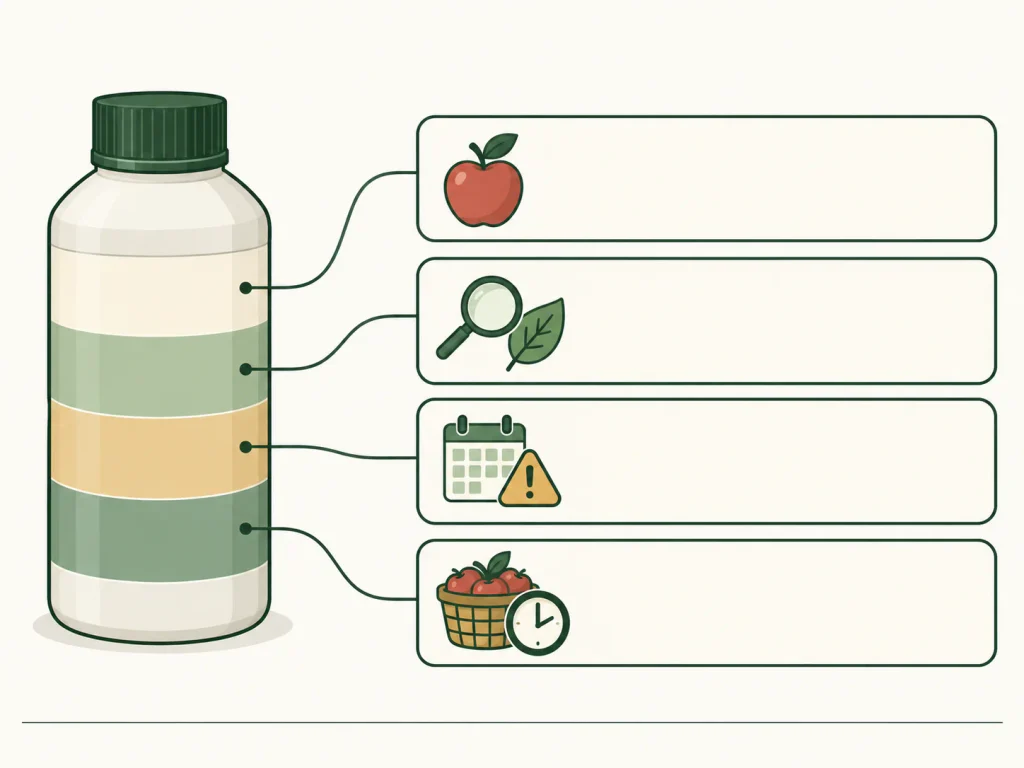
The garden concentrate contains 1.55% myclobutanil. Its apple directions cover rust, scab, and powdery mildew, with rust applications beginning at pink bud. The manufacturer’s linked label specifies a 14-day preharvest interval and a maximum of 10 applications per season. Those are limits, not a target number of sprays. Read the Immunox garden concentrate label before buying.
Its main advantage for a small orchard is that you can address the fungal problem without automatically adding an insecticide. It is still a concentrate: allow time to measure the product, mix it correctly, and reach the canopy with a suitable sprayer.
Match the full name, not just “Immunox.” The brand also sells a Fungus Plus Insect Control for Lawns product. A similar bottle or familiar brand does not establish permission to spray edible apples.
ferti-lome F-Stop: a comparable active ingredient with different directions
F-Stop Lawn & Garden Fungicide concentrate contains 1% myclobutanil. Its apple section lists rust, scab, and powdery mildew, a two-week harvest interval, and no more than five applications in a season. The label also prohibits application at 90°F or above. See the manufacturer’s F-Stop label.
Choose between this and Immunox by comparing the actual bottle price, permitted uses, and how much finished spray the container makes. The different concentrate percentages do not establish that one works better after correct dilution. This review found no head-to-head backyard trial that would justify ranking their field performance separately.
The F-Stop product page lists state restrictions, so confirm local availability before planning around it. Also check the formulation: directions for this concentrate should not be transferred to another F-Stop product.
Buying both brands does not give you two different modes of action. Both use myclobutanil, a FRAC Group 3 fungicide. FRAC groups describe how fungicides act on fungi; switching brand names within the same group is not a meaningful resistance-management rotation.
Bonide Fruit Tree & Plant Guard: a conditional combination product
This concentrate combines the fungicides boscalid and pyraclostrobin with the insecticide lambda-cyhalothrin. Its current manufacturer-linked label places cedar apple rust under “Suppression Only.” It also prohibits spraying during bloom because of the hazard to bees. The pome-fruit section sets a 21-day preharvest interval and four applications per year. These details appear in the Plant Guard label.
It may fit a program where a listed insect and disease require treatment at the same permitted time. For someone shopping solely because of rust, the insecticide is an added constraint. You cannot use this bottle to fill a bloom-period disease-protection gap.
Before paying for a combination spray, identify the insect problem through the apple tree pest control guide. An insecticide has no added value against the rust fungus itself.
In Family Plot’s Apple Tree Diseases video, retired UT Extension Agent Mike Dennison discusses rust alongside other apple diseases. Use it for identification and management context; the current label on your product governs its use.
What about copper, sulfur, captan, and mancozeb?
Copper and sulfur deserve consideration when you want an organic-compatible approach, but “organic” alone does not tell you how well a spray will manage rust. Wisconsin Extension lists both among ingredients in products labeled for related rust diseases and stresses checking edible-fruit uses. Suitability must be established for the specific product, crop, disease, and application stage.
This review does not name an organic winner because it did not establish a product-specific performance comparison that supports one. Ask your local extension service which registered options are useful under your area’s rust pressure. If you follow an organic certification standard, verify the formulation’s eligibility separately.
Captan is a different case. It is useful against some apple diseases, but Kansas State’s rust guidance states that it is ineffective against rust diseases. Do not buy a captan-based fruit-tree spray expecting captan itself to control cedar apple rust.
Mancozeb appears in commercial apple-rust programs. NC State Extension lists it alongside several commercial fungicides, but those recommendations do not authorize every mancozeb product for backyard apples. Package size, application equipment, and product-specific restrictions can make commercial products a poor fit for one or two trees. No home mixing rate is inferred here from a commercial orchard recommendation.
Compare value by the amount of usable spray.
Bottle price can be misleading when concentrates use different dilution rates. Compare the same container size using the apple directions, then consider how much you can realistically use.
For example, the reviewed Immunox label uses 2/3 fluid ounce per gallon for apples, while the reviewed F-Stop label uses 1 fluid ounce. A 16-fluid-ounce container therefore makes 24 gallons and 16 gallons, respectively. These are calculated yields at those label rates, not measurements from a field test.
Here is a hypothetical price comparison, not a current retail quote:
- A $24 bottle making 24 gallons costs $1 per mixed gallon.
- An $18 bottle making 16 gallons costs about $1.13 per mixed gallon.
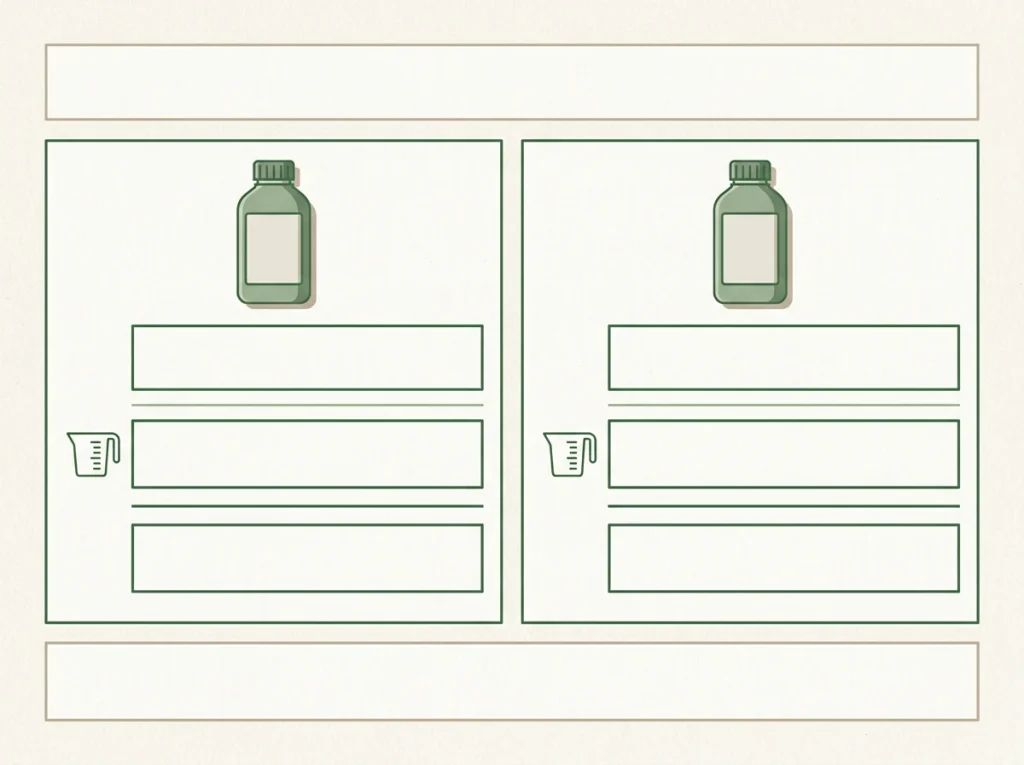
The cheaper bottle in that example costs more per gallon of finished spray. However, if you need only a small amount, the lower upfront expense may still suit your budget. Include the sprayer, measuring equipment, label-required protection, and your time when deciding what the program will cost.
Gallons of mixed spray do not equal a fixed number of trees. Canopy size and coverage requirements vary. A concentrate’s lawn square-foot coverage claim is not a reliable way to estimate how many apple trees it will treat.
Check these details before buying.
- Find edible apples in the crop directions. An ornamental crabapple listing alone is insufficient for an apple harvest.
- Check the disease claim. Distinguish rust control from suppression and from claims for unrelated fungal diseases.
- Read the seasonal maximum, minimum retreatment interval, and preharvest interval. The last of these is the required wait between the final application and harvest.
- Check bloom, temperature, drift, and water-protection restrictions. A product that cannot be used during your required treatment window is a poor purchase for that job.
- Confirm that your sprayer can cover the tree as directed. Buying another fungicide will not solve a canopy-access problem.
Keep the label with the product and record each application. If you change brands, review the active ingredient and previous applications before proceeding. Ask extension for help planning a permitted rotation when repeated treatment is warranted; changing bottles should not become a way to work around a seasonal limit.
Timing determines whether a purchase will help.
Spring protection matters because infection begins before the familiar orange leaf spots become obvious. NC State’s regional program starts around tight cluster and continues through first cover after petal fall. That explains the vulnerable period, but it is not a nationwide calendar or permission to ignore a product’s starting stage.
Use your tree’s development, local disease advice, and the chosen label together. For the fuller sequence, see cedar apple rust treatment and spray timing. Plan before bloom so that a product restriction does not leave you improvising once flowers open.
Nearby junipers with orange, jelly-like growth after rain are another reason to check local infection risk. The juniper apple rust guide explains what those galls mean. Their presence does not automatically mean you should spray the juniper with your apple product.
If you discover spots after spring infection has ended, buying a stronger spray will not restore damaged tissue. Record how much of the canopy is affected and whether the tree loses leaves early. A few spots on an otherwise vigorous tree and repeated heavy defoliation call for different levels of intervention.
University of Minnesota Extension notes that many trees tolerate infection, while susceptible varieties can suffer leaf and fruit damage. For future plantings, compare cedar apple rust resistant varieties before committing to an annual spraying routine.
FAQs
Will fungicide remove existing cedar apple rust spots?
No. Existing damaged tissue will not become healthy again. Whether protecting remaining growth is worthwhile depends on ongoing infection risk. Once that risk has passed, additional rust sprays will not repair the season’s damage.
Is copper as effective as myclobutanil?
Do not assume equal performance. Extension guidance gives myclobutanil stronger support for rust prevention, while copper suitability depends on the formulation and use conditions. Check local recommendations and the apple-specific label before substituting one for the other.
Can I alternate Immunox and F-Stop?
The two concentrates reviewed here contain the same active ingredient. Alternating them does not change the fungicide mode of action. A useful rotation requires a different suitable mode of action and compliance with every applicable label.
How serious is cedar apple rust?
Severity varies with cultivar and growing conditions. Light spotting may need no treatment. Repeated premature leaf loss or damaged fruit makes a prevention plan more worthwhile, particularly after confirming the diagnosis with a local extension office.
What is the best antifungal for apple trees overall?
There is no single product for every apple problem. Select for the diagnosed disease: a spray useful for rust may leave other diseases uncontrolled. For example, Purdue notes that myclobutanil does not protect against sooty blotch or flyspeck.
