
7 Cedar Apple Rust Resistant Varieties for Home Orchards
Short answer: Cedar apple rust resistant varieties can lower the chance of recurring leaf and fruit damage, but resistance is not immunity. Liberty and Enterprise have clear support in university Extension guidance. Other choices require closer attention to regional performance, climate, pollination, rootstock, and resistance to additional apple diseases.
Table of Contents
Key Takeaways
- Choose a cultivar rating from a credible regional source, then verify the nursery’s exact cultivar and rootstock.
- Liberty and Enterprise are the clearest starting points in the Extension sources reviewed here.
- Resistance to cedar apple rust does not guarantee resistance to scab, fire blight, mildew, insects, or summer fruit rots.
- A resistant tree still needs monitoring because disease pressure and weather vary from site to site.
For a backyard grower, choosing a disease-resistant apple is a long-term design decision. Cedar apple rust resistant varieties may reduce repeated leaf spotting and fruit blemishes, but the right tree must also suit the site, climate, pollination plan, and the diseases common in that region.
Cedar apple rust is caused by the fungus Gymnosporangium juniperi-virginianae. It needs an apple or crabapple host and a compatible eastern red cedar or juniper host to complete its life cycle. The disease is therefore influenced by the wider landscape, not only by the tree in the backyard.
What resistance means in a real backyard orchard
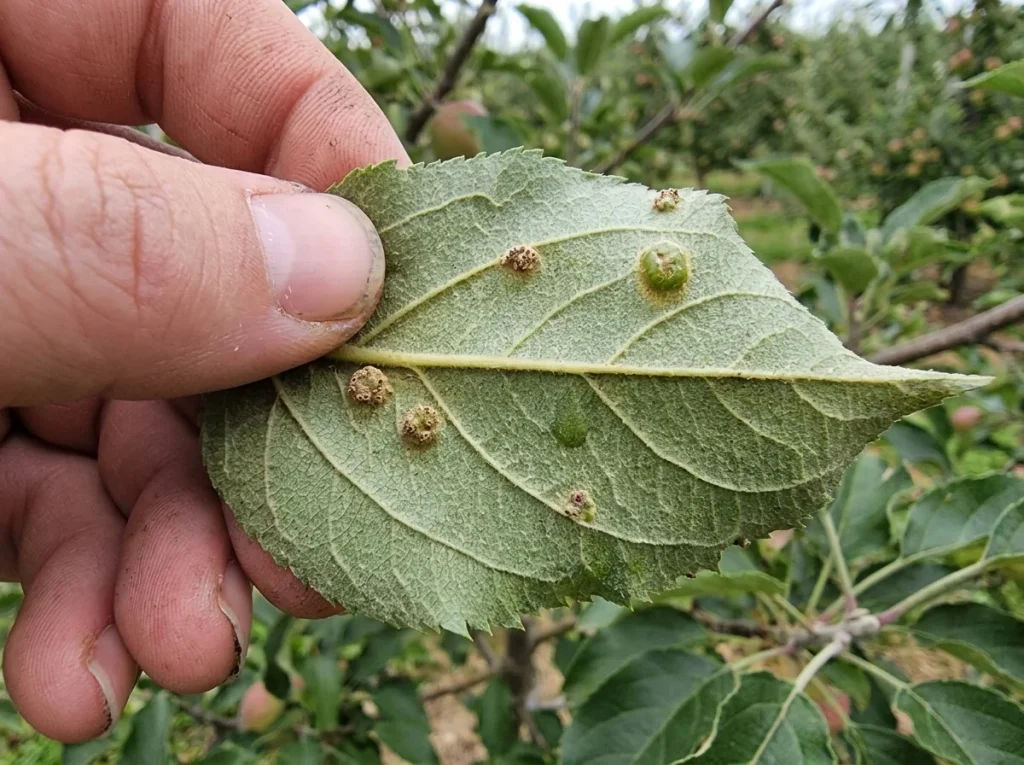
NC State Extension describes yellow to bright-orange leaf lesions, fungal structures on the underside of leaves, and raised orange lesions on developing fruit. In wet spring weather, susceptible cedar or juniper galls can produce orange spore horns that release spores toward young apple tissue.
Those signs are useful clues, not a diagnosis by themselves. Penn State Extension notes that cedar-apple, cedar-hawthorn, cedar-quince, and Japanese apple rusts are related diseases caused by Gymnosporangium fungi, and their hosts and symptoms can overlap.
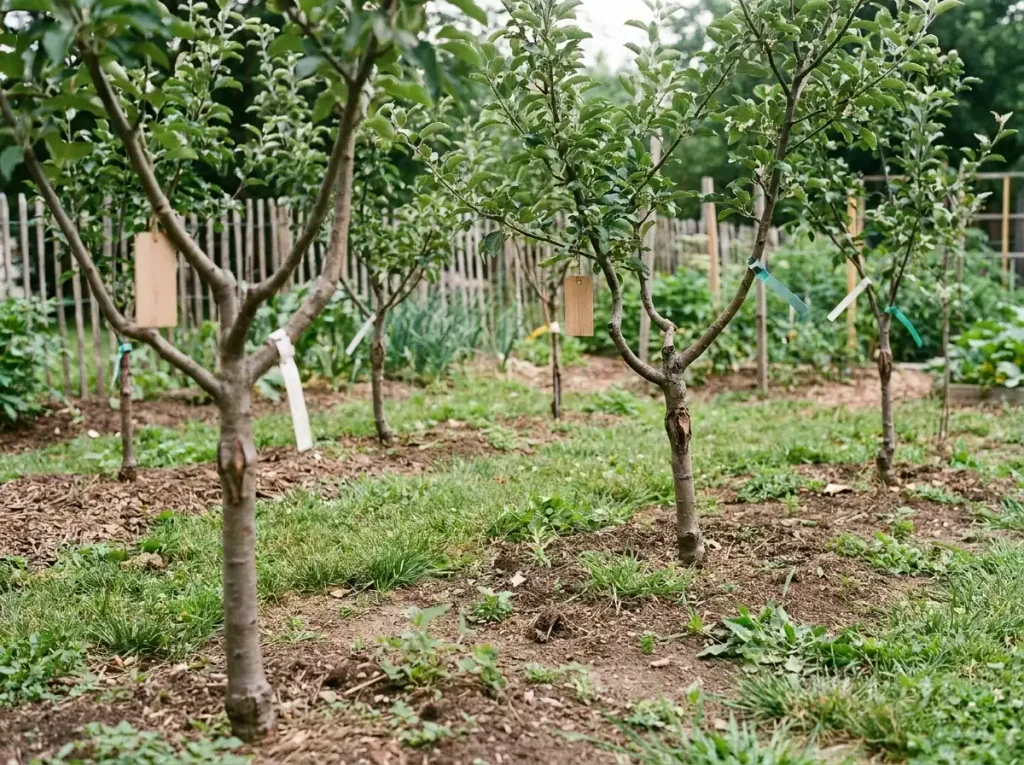
Resistance should be treated as risk reduction within an integrated plan. It is not a promise that a tree will never show symptoms or require diagnosis.Editorial interpretation based on NC State, Missouri, and Penn State Extension guidance.
How to choose cedar apple rust resistant varieties
Check the specific disease rating
Do not assume that “disease resistant” means resistant to cedar apple rust. A cultivar may resist apple scab while remaining susceptible to rust, or it may have a broad resistance profile that still leaves gaps. Look for the disease name in the source, not only a general marketing phrase.
Match the tree to climate and space.
USDA hardiness zone is a starting point for winter survival, while chill requirement affects flowering and budbreak in mild-winter areas. Rootstock also matters because it influences mature size, anchorage, support, and the space required around the tree.
Plan for pollination and other diseases
Most apples crop more reliably when a compatible apple or crabapple blooms nearby. Also compare rust resistance with the diseases that matter locally, such as scab, fire blight, powdery mildew, and summer fruit rots.
Related video: University of Missouri Extension’s Cedar Apple Rust IPM explains the disease triangle and why cultivar choice is only one part of management.
7 cultivars to investigate
1. Liberty
Liberty has the clearest broad-resistance profile in the sources reviewed. University of Missouri Extension describes it as resistant to cedar apple rust, apple scab, fire blight, and powdery mildew, and recommends it for planting in Missouri.
That does not make Liberty suitable for every climate or taste preference. Confirm its hardiness, chill needs, bloom overlap, rootstock, and availability before ordering.
2. Enterprise
Missouri Extension identifies Enterprise as resistant to cedar apple rust, immune to apple scab, resistant to fire blight, and moderately resistant to mildew. This combination makes it a useful candidate for growers comparing several disease risks at once.
However, Enterprise can still face insects and summer diseases. Its harvest timing and fruit qualities should also fit the household’s plans.
3. Red Delicious
NC State Extension lists Red Delicious among cultivars considered resistant to cedar apple rust. Treat that as a disease-rating consideration, not a universal recommendation. Fruit quality, local performance, pollination, and other disease concerns still matter.
4. Gala Supreme
Gala Supreme is also listed by NC State as considered resistant to cedar apple rust. Verify the exact selection because cultivar names and nursery descriptions can differ.
5. McIntosh
McIntosh appears in the same NC State list of cultivars considered resistant. A local source should still guide the decision because winter conditions, chill, bloom timing, and disease pressure vary.
6. Freedom
Freedom is included in Missouri Extension’s disease-resistant cultivar discussion. The source emphasizes its scab resistance and notes that cultivars can remain vulnerable to other diseases in wet seasons. Confirm the local cedar-rust rating before treating it as a primary choice.
7. RubyRush
Missouri Extension describes RubyRush as resistant to fire blight and cedar apple rust. Because the same source identifies it as a newer release, regional availability and evaluation may be more limited than for older cultivars.
| Cultivar | What the cited Extension source says | What to verify locally |
|---|---|---|
| Liberty | Resistant to cedar apple rust in Missouri guidance; broad resistance profile | Zone, chill, pollination, rootstock, fruit preference |
| Enterprise | Resistant to cedar apple rust in Missouri guidance; strong multi-disease profile | Harvest timing, site fit, pests, fruit preference |
| Red Delicious | Considered resistant in NC State guidance | Local performance and other disease risks |
| Gala Supreme | Considered resistant in NC State guidance | Exact selection and nursery identity |
| McIntosh | Considered resistant in NC State guidance | Climate, bloom timing, and pollination |
| Freedom | Included in Missouri’s disease-resistant cultivar discussion | Current local rust rating and wet-season risks |
| RubyRush | Described by Missouri as resistant to cedar apple rust | Availability and regional evaluation |
What to do when symptoms appear anyway
First, do not identify the disease from one orange spot or one photograph. Compare leaf symptoms, fruit symptoms, the underside of leaves, seasonal timing, and nearby cedar or juniper hosts. When the diagnosis is uncertain, contact a county Extension office, plant clinic, certified arborist, or qualified diagnostician.
Next, inspect alternate hosts during the dormant season. Penn State explains that related rust fungi require two living host plants. Removing one ornamental juniper may not remove all disease pressure if wild or neighboring hosts remain.
Finally, use prevention and treatment guidance that is specific to the confirmed disease, crop, cultivar, and location. This article does not prescribe a fungicide or spray calendar. If a pesticide is considered, read the current label for apple use, target disease, jurisdiction, PPE, re-entry interval, pre-harvest interval, pollinator precautions, weather restrictions, and environmental precautions. Never mix products unless the label and qualified guidance allow it.
FAQs
Which cultivars have the clearest support for cedar apple rust resistance?
Liberty and Enterprise have the clearest support in the University of Missouri Extension source reviewed here. NC State also lists Red Delicious, Gala Supreme, and McIntosh as considered resistant, while Missouri discusses Freedom and RubyRush in its disease-resistant cultivar guidance. Regional confirmation is still important.
Can a resistant apple tree still develop cedar apple rust?
Yes. Resistant describes a lower level of susceptibility, not guaranteed immunity. Weather, disease pressure, alternate hosts, cultivar identity, and related rust species can all affect symptoms.
Must every nearby cedar or juniper be removed?
No. Removing susceptible alternate hosts can reduce risk, but complete removal may be impractical when wild hosts are widespread or outside the property. A suitable cultivar, monitoring, good site planning, and locally appropriate disease management are more realistic parts of a complete plan.
Related Articles
- Cedar apple rust lifecycle, symptoms, and management
- Cedar apple rust treatment and prevention options
- Best fungicide for cedar apple rust: product research guide
Sources
- NC State Extension, Cedar Apple Rust. Supports the causal fungus, two-host lifecycle, symptoms, management context, and cultivar list.
- University of Missouri Extension, Disease-Resistant Apple Cultivars. Supports the Liberty, Enterprise, Freedom, and RubyRush cultivar discussion and the limits of broad disease resistance.
- Penn State Extension, Cedar Apple and Related Rusts on Ornamentals. Supports related rust biology, alternate hosts, overlapping symptoms, and management context.
- University of Missouri Extension: Cedar Apple Rust IPM. Supports the integrated-management and disease-triangle explanation.
