
Cedar Apple Rust Treatment: 5 Essential Steps
Cedar apple rust treatment works best before infection: protect susceptible new growth with a fungicide labeled for your apple tree and rust, timed to local spring risk. Existing spots will not heal. The fungus, Gymnosporangium juniperi-virginianae, alternates between apples and junipers, so prevention also includes managing nearby galls and choosing resistant varieties.
Table of Contents
Key Takeaways
- Cedar apple rust treatment protects uninfected tissue; it does not turn damaged leaves green again.
- Use tree growth stages, weather, and local guidance to time protection.
- Check whether a spray permits use on edible apples, ornamental crabapples, or both.
Orange spots can make an otherwise healthy apple tree look alarming. However, choosing cedar apple rust treatment starts with a more useful question: are you preventing spring infection, or looking at damage that has already happened?
This guide helps you make that decision and build a practical treatment plan. For a fuller explanation of the two-host cycle, see our cedar apple rust guide.
Before Cedar Apple Rust Treatment: Confirm the Symptoms
Check leaves, fruit, and nearby junipers.
Look for yellow-orange leaf spots, sometimes with small dark dots, and later check underneath for projecting fungal tubes. Fruit may also develop lesions, although leaf spotting alone does not tell you how much crop damage to expect.
Meanwhile, inspect nearby eastern redcedars and ornamental junipers for woody galls that produce orange jelly-like horns during wet spring weather. Compare your observations with the University of Minnesota symptom guide before selecting a spray.
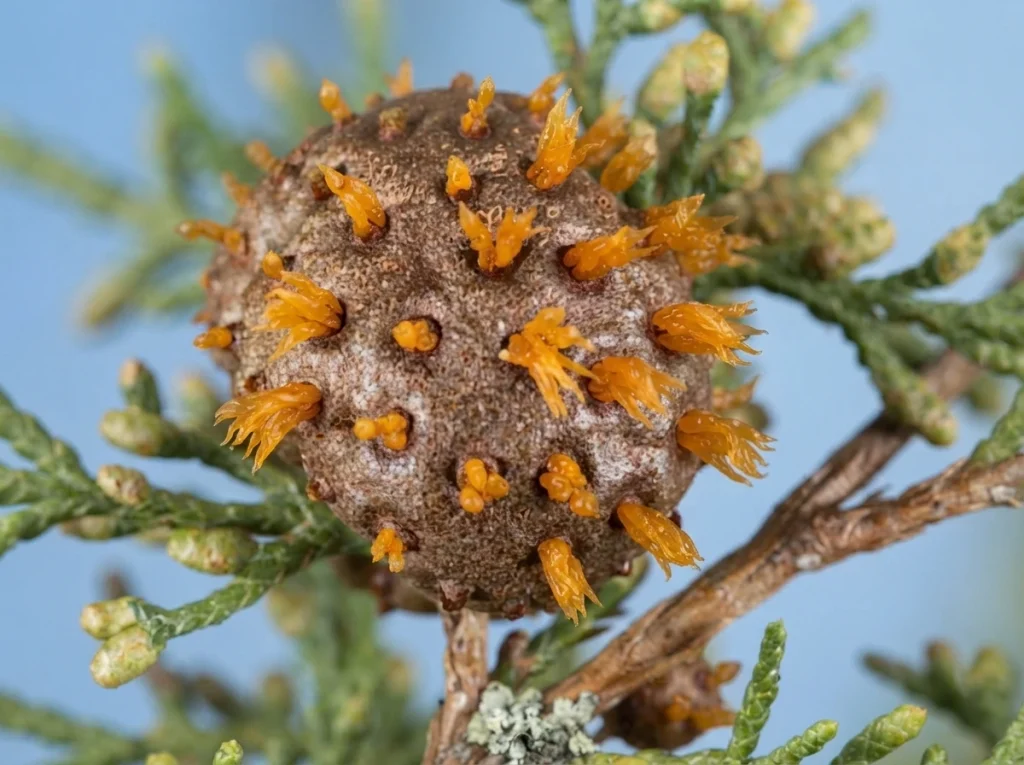
Know when the diagnosis needs another look.
Apple bark wounds, extensive branch death, or badly distorted shoots deserve a separate diagnosis. Related diseases such as cedar-hawthorn rust can overlap in appearance, so avoid treating every orange growth as the same problem.
For example, photograph the whole tree as well as both leaf surfaces and any affected fruit. Those views give a diagnostic clinic more context than a single close-up.
This Cornell disease-management video provides broader orchard context, including rust. However, commercial recommendations still require adaptation to your tree, location, and product label.
Step 1: Time Protection Around Spring Infection
Start with growth stage, not a calendar date.
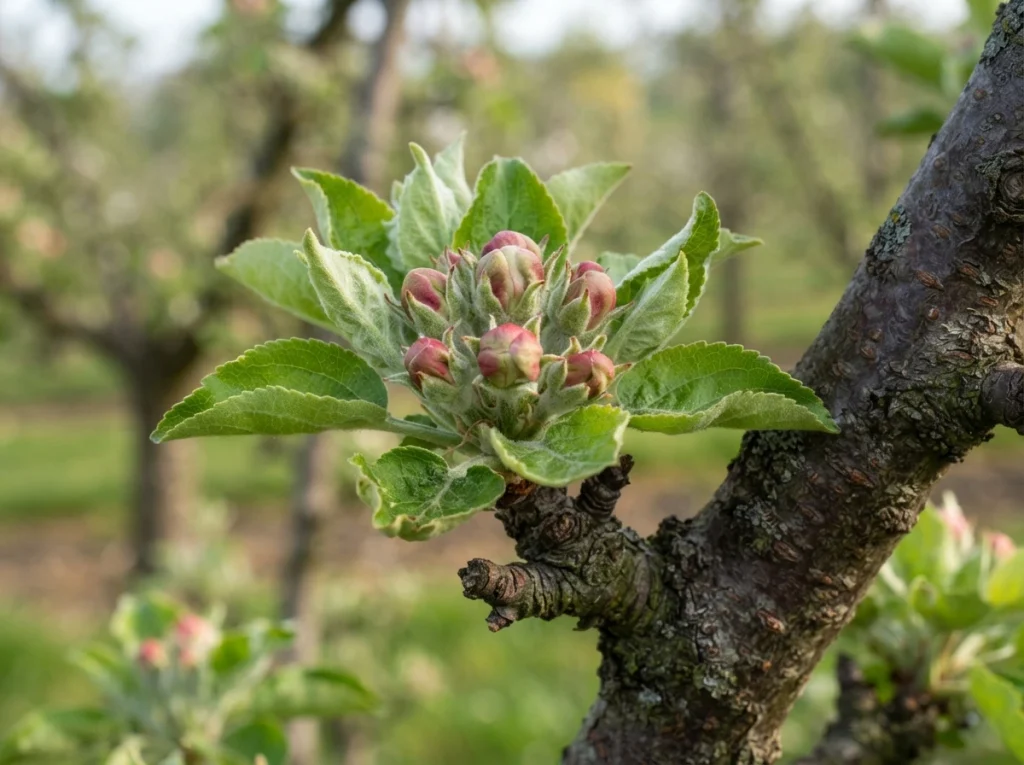
Preventive cedar apple rust treatment belongs in the spring infection window. As one regional example, NC State Extension recommends protection from tight cluster through first cover, approximately 10 to 14 days after petal fall.
Tight cluster means the flower buds are grouped and still closed; petal fall follows bloom. However, that North Carolina schedule is a reference point, not a universal start date or stopping rule for every US garden.
Use rain and host activity as warning signs.
Wet weather and active juniper galls help explain why timing changes between seasons. Therefore, check your local extension forecast alongside the tree’s development instead of copying last year’s dates.
For cedar apple rust treatment, write down three observations before deciding: current flower stage, recent or forecast rain, and whether nearby galls are active. If you cannot see any junipers, that alone does not establish that infection risk is absent.
Step 2: Choose a Spray for the Crop and Disease
Compare cedar apple rust treatment options.
NC State identifies sterol-inhibitor fungicides, including myclobutanil, as effective rust-management options and also lists mancozeb. However, an active ingredient name is only a starting point: different formulations can have different permitted uses.
| Option | Potential role | Check first |
|---|---|---|
| Myclobutanil product | Preventive rust management where labeled | Edible apple permission, rust directions, application limits |
| Mancozeb product | Early-season protection in suitable programs | Harvest interval and restrictions for the specific formulation |
| Copper or sulfur product | Possible preventive option where crop and rust uses are permitted | Crop injury warnings, timing, and organic certification if needed |
| General fruit-tree mixture | Depends on its actual ingredients and label | Explicit rust coverage and any insecticide component |
Separate edible apples from ornamental uses
A spray recommended for ornamental crabapples is not automatically appropriate for apples you plan to eat. In fact, Minnesota’s landscape rust guidance distinguishes ornamental fungicide uses from edible-fruit situations.
For cedar apple rust treatment, compare the complete label with your intended crop before buying. Our guide to the best fungicide for cedar apple rust covers product selection in more detail.
Set realistic expectations for organic options.
Minnesota lists copper and sulfur among options for ornamental rust prevention, but this is not blanket approval for edible apples. Similarly, an organic claim does not establish that a product controls this disease or fits your application timing.
Review the organic treatment options for cedar apple rust alongside local advice. Avoid substituting homemade mixtures for a labeled treatment plan, especially on already stressed foliage.
Step 3: Apply Protection Without Adding Spray Injury
Build a label-based application checklist.
Before cedar apple rust treatment, put the bottle and its full directions beside your spray record. Then record these details so you can follow the same instructions accurately at the next application:
- Crop and disease covered by the label.
- Mixing rate, application method, and required protective equipment.
- Minimum retreatment interval and seasonal application limit.
- Weather, drying, and rain-related instructions.
- Harvest interval, entry restrictions, and pollinator precautions.
Do not compensate for missed timing with extra concentrate
More product cannot restore dead leaf tissue. Instead, excessive concentration, incompatible mixtures, or applications too close together can injure plants, as explained in Maryland Extension’s guidance on chemical damage.
Heat, drought stress, and certain weather conditions can also increase injury risk. Therefore, check temperature and compatibility restrictions before combining sulfur, oils, copper, or any other treatments.
Plan for bloom and realistic coverage
If cedar apple rust treatment overlaps bloom, check every ingredient in a combination product. An insecticide-containing mixture needs its own pollinator precautions, even when you bought it primarily for disease control.
Also, consider whether your equipment can reach the canopy as the label requires. If the tree is too tall to treat safely and effectively, discuss the job with a qualified applicator rather than improvising from a ladder.
Step 4: Manage a Tree That Already Has Spots
Separate existing damage from remaining infection risk
Late cedar apple rust treatment cannot remove established lesions. However, a tree with spots may still have uninfected growth worth protecting if the local spring infection period remains active.
Penn State’s disease-management guidance explains that some fungicides have a short post-infection window. That is not a promise that spraying visibly damaged leaves will cure them, and the appropriate response depends on the product and timing.
Practical takeaway from extension guidance: prevent the next infection rather than expecting a spray to erase the last one.
Assess the whole tree before escalating treatment.
A few spots on a leafy tree call for a different response from substantial early leaf loss or repeated crop damage. Maryland Extension explains that heavy rust infection can reduce vigor and yield.
For cedar apple rust treatment records, note whether leaves remain attached, how widely fruit is affected, and whether symptoms recur next year. Those observations help a local adviser judge whether a preventive program is justified.
Avoid stripping the canopy.
Do not remove every spotted leaf simply to make the tree look clean. The rust’s apple-produced spores move to its alternate host rather than starting another infection cycle on apple, so removing foliage is not a substitute for timely protection.
Instead, preserve the record of what happened: save dated photographs and your spray history. If a late application failed to change old spots, that observation alone does not prove the fungicide failed to protect new tissue.
Step 5: Reduce Next Spring’s Risk
Inspect junipers before orange horns appear.
Include late-winter gall inspection in your cedar apple rust treatment plan. Where accessible, remove juniper galls before spring spore release, following Maryland’s rust-management guidance.
However, nearby host removal cannot guarantee protection when windborne spores arrive from farther away. Our juniper apple rust guide explains what to inspect on the alternate host.
Use resistance to reduce repeated intervention.
When replacing or adding trees, compare cedar apple rust resistant varieties. Liberty is one example listed by extension sources, but local suitability and the exact cultivar still matter.
Also, distinguish resistance to this rust from resistance to other diseases. Ask the nursery for the cultivar name and local performance information rather than relying on a general disease-resistant tag.
FAQs
What is the best fungicide for cedar-apple rust?
Myclobutanil is an extension-supported option, but the best cedar apple rust treatment must also match your crop label and infection window. Therefore, choose by permitted use and timing before comparing brands.
Does cedar-apple rust go away?
Existing leaf damage will not disappear after spraying, and the disease can recur when both hosts remain present. However, mild infections do not always require chemical cedar apple rust treatment; monitor tree health and seek advice if defoliation becomes substantial.
Can I manage rust if I cannot remove nearby cedars?
Yes, a cedar apple rust treatment plan can emphasize resistant cultivars and appropriately timed apple protection where needed. Since distant sources can still contribute spores, removing one cedar is not a guaranteed solution.
Related Articles
- Cedar apple rust: symptoms and disease cycle
- Choosing cedar apple rust resistant varieties
- Organic treatment for cedar apple rust
Sources
- NC State Extension: Cedar Apple Rust
- University of Minnesota Extension: Cedar-apple rust and related rust diseases
- University of Minnesota Extension: Crabapple leaf-spot identification
- University of Maryland Extension: Rust Diseases of Trees
- University of Maryland Extension: Phytotoxicity
- Penn State Extension: 2026 Disease Update
Disclaimer: This article provides general information, not a confirmed diagnosis or a site-specific spray prescription. Consult your local cooperative extension plant diagnostic clinic, a certified arborist, or a qualified pesticide applicator when needed. Always follow the current product label and applicable local requirements.
