Best Time To Plant Apple Trees: Spring vs Fall Guide
The best time to plant apple trees is usually early spring in places with harsh winters, or fall through early spring where winters are mild. Plant bare-root trees while dormant and the soil is workable. For potted trees, choose cool weather and plan to water consistently while new roots establish.
Table of Contents
Key Takeaways
- The best time to plant apple trees depends on winter severity, soil conditions, and whether the tree has bare roots or a container-grown root ball.
- In cold regions, plant bare-root apples as soon as spring soil can be worked. In milder regions, dormant fall planting is also a reasonable option.
- Never plant into frozen, waterlogged, or very hot, dry soil simply to meet a calendar date.
A nursery tag may tell you that an apple tree is hardy to USDA Zone 5, but it will not tell you whether next Tuesday is suitable for planting. The growing conditions at your site matter more than a fixed month on a national calendar.
This guide explains how to choose a planting window, compare spring and fall, and get a new tree into the ground without burying its graft union or damaging its roots. It draws on University of Minnesota Extension, RHS planting guidance, and other named extension resources.
Best Time to Plant Apple Trees by Climate
Cold winters: favor early spring
For much of the Upper Midwest and colder parts of the Northeast, the best time to plant apple trees is early spring. University of Minnesota Extension recommends planting bare-root apple trees in April or May, once the ground is workable, and planting potted trees after the threat of spring frost has passed.
That timing guidance is regional, not a nationwide calendar rule. In a warmer spring, conditions may be ready sooner; in a late thaw, frozen or saturated ground means the gardener should wait.
Mild winters: consider fall or late winter
In regions without prolonged hard freezes, the best time to plant apple trees may be after autumn heat has eased and the tree is dormant. Cool weather reduces the immediate demand on leaves, while suitable soil still lets the planting site settle before active spring growth.
The RHS recommends dormant-season planting from autumn to spring and warns against hot, dry weather. However, a wet winter site with standing water is a poor planting spot even when the month looks ideal.
Why the USDA zone alone is not enough
USDA hardiness zones describe average annual extreme minimum temperatures, not the local best time to plant apple trees or your last spring frost. Two properties in the same zone can have different drainage, elevation, wind exposure, and frost pockets.
As Utah State University Extension notes, warm walls and low-lying areas can produce different local temperatures and frost exposure. Therefore, use your zone to help select a suitable apple variety, then use local weather and soil conditions to select the planting day.
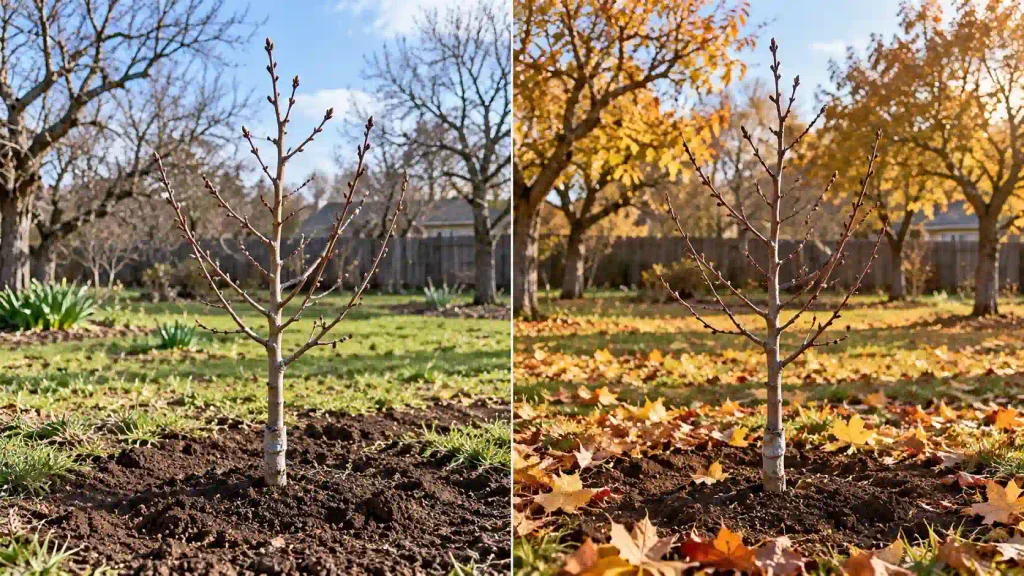
Spring vs. Fall: Which Planting Window Works Better?
There is no single winner for every state. The best time to plant apple trees is the window in which the nursery stock is healthy, the tree can remain appropriately dormant during handling, and the ground drains and can be dug without smearing.
| Decision factor | Spring planting | Fall planting |
|---|---|---|
| Most suitable conditions | Thawed, workable soil before strong growth | Cool weather, dormant tree, unfrozen soil |
| Main advantage | A growing season follows planting | Avoids the immediate heat of summer |
| Main concern | Late planting can expose new roots to rising heat | Severe winter weather can follow too soon |
| Cold-winter locations | Generally preferred for bare-root trees | Requires more caution and local advice |
| Mild-winter locations | Often suitable | Often suitable when drainage is good |
| Potted trees | Choose settled weather and monitor water | Choose settled weather and monitor water |
To choose the best time to plant apple trees, avoid either of two extremes: hard-frozen or saturated ground, and prolonged hot, dry weather. If both seasons are possible, choose the one that offers better planting conditions and dependable follow-up care.
Video: Jon Clements, UMass Fruit Advisor, demonstrating bare-root apple tree planting. The demonstration illustrates planting technique; use local extension advice to choose your seasonal window.
Does Tree Type Change When You Should Plant?
Bare-root apple trees
For bare-root stock, the best time to plant apple trees is during dormancy; these trees arrive with exposed roots and little or no soil. They are normally sold and transplanted during dormancy, so plan to plant promptly when your ground is ready and protect their roots from drying during transport and preparation.
For colder climates, the best time to plant apple trees purchased bare-root is usually shortly after thaw, before they leaf out. If your shipment arrives before you can dig, ask the nursery for specific short-term holding instructions rather than leaving the roots exposed.
Container-grown apple trees
For potted stock, the best time to plant apple trees is a cool, settled period; these trees keep a root ball and remain available beyond the bare-root season. They are more flexible, but that does not make midsummer heat or waterlogged winter soil a good planting choice.
In Minnesota, Extension advises waiting until spring frost danger passes before planting potted apples. In milder regions, fall may offer comfortable temperatures; however, you still need to check that container roots are not circling tightly and that irrigation will be available.
Seedlings are different from grafted nursery trees
An apple grown from seed does not reliably reproduce the same named variety as its parent. For a predictable fruit variety and tree size, most homeowners choose a grafted tree and a rootstock suited to their space and climate.
If you are raising a seedling, review apple tree growing from seed before moving it outdoors. Indoor-grown seedlings need gradual acclimation to outdoor conditions, and their planting schedule depends on their development rather than a nursery bare-root shipping calendar.
How to Choose the Best Time to Plant Apple Trees in 5 Steps
Step 1: Check the local planting window
To find the best time to plant apple trees, check the last expected spring frost, the likelihood of a hard autumn freeze, and your county extension’s fruit tree recommendations. Then check the weather forecast for several days around the planned planting date, not just the forecast high on planting day.
If your soil is still frozen, postpone the job. If the weather is unusually hot and dry, use the cooler part of the season instead of assuming a potted tree can handle any temperature.
Step 2: Test the site before buying
The best time to plant apple trees will not compensate for a poor site, so choose full sun and soil that drains rather than holding water around the roots. University of Minnesota Extension recommends at least eight hours of daily direct sun during the growing season, while Utah State University warns against sites where water stands for more than a day.
Test the soil before making major amendments. A pH near 6.0 to 6.5 is a useful target for apple growing, but the lab result and local extension advice should guide adjustments; see our apple tree soil requirements guide.
Step 3: Match the tree to your climate and space
Before deciding on the best time to plant apple trees, read the variety label and rootstock label. The variety must suit local winter cold and growing-season conditions, while the rootstock influences tree height, support needs, and spacing.
Check compatibility with a second apple cultivar or suitable crabapple that flowers at the same time. For help narrowing the options, use our guides to apple tree varieties by zone and apple tree rootstocks.
Step 4: Plant at the correct height
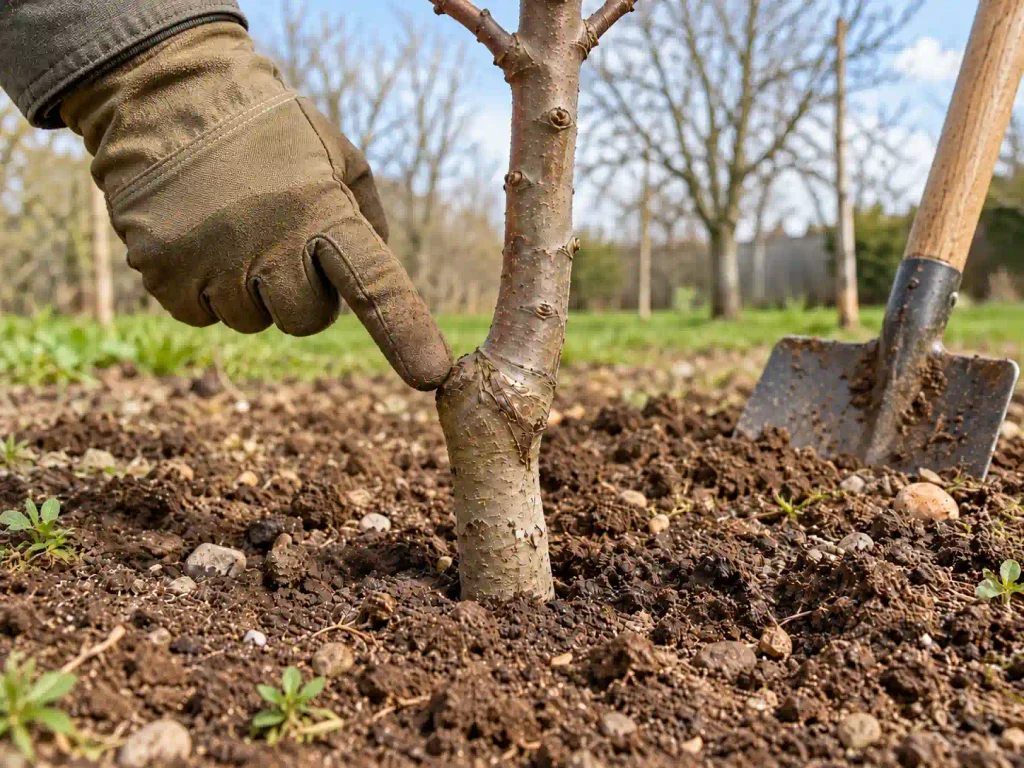
When the best time to plant apple trees has arrived, dig a hole broad enough for the roots to spread without folding. Keep the hole no deeper than the root system needs, and set the root collar at its appropriate soil level rather than sinking the trunk below grade.
On grafted trees, keep the graft union well above the final soil line. University of Minnesota Extension specifies about four inches above grade and recommends using the excavated soil to backfill, rather than adding fertilizer directly into the hole.
- Keep bare roots damp before and during planting, or water the container root ball before removal.
- Inspect the roots and correct circling or sharply bent roots as directed by extension guidance.
- Spread roots outward, backfill with the excavated soil, and firm gently.
- Water thoroughly, then recheck the planting height after the soil settles.
Step 5: Give the new tree consistent aftercare
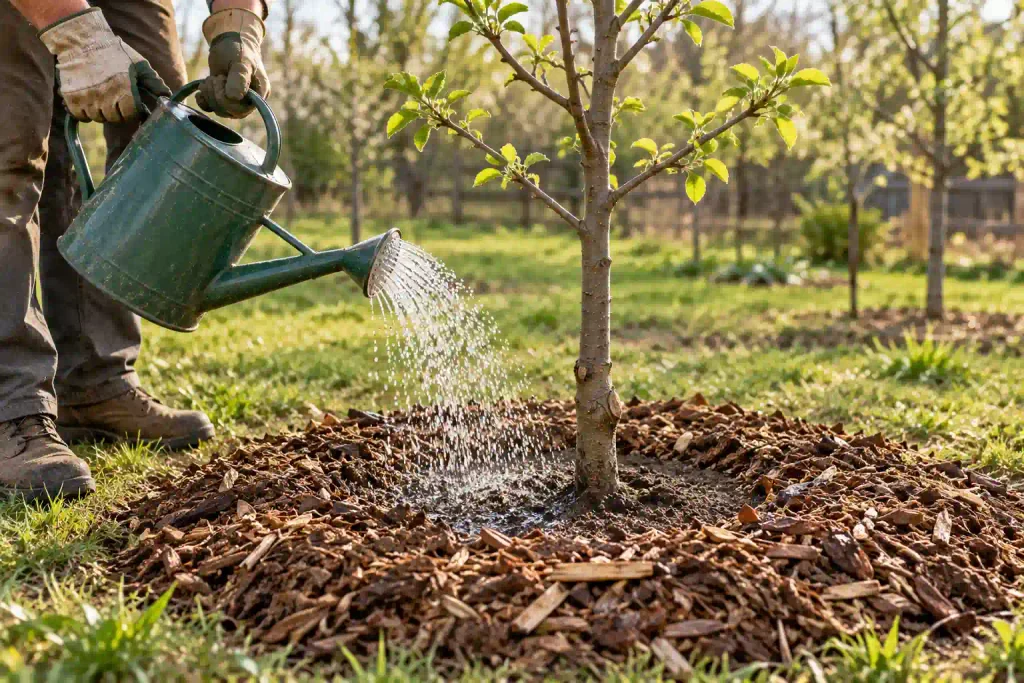
Even if you chose the best time to plant apple trees, water the new root zone thoroughly and keep checking moisture during dry spells. The correct interval depends on rainfall, drainage, temperature, and whether the tree is newly planted, so avoid automatically watering several times a day.
Apply a shallow layer of organic mulch around the root zone, but leave a gap next to the trunk. Our how often to water apple trees and apple tree mulching guides cover these establishment tasks in greater detail.
Regional Examples: When Would You Plant?
Upper Midwest or colder northern garden
Imagine a bare-root tree arriving while snow still covers the shaded side of the yard. Waiting until the soil thaws and drains is better than forcing roots into icy or waterlogged ground, even if a national article says to plant in March.
For this situation, the best time to plant apple trees is usually the earliest workable part of spring. Keep the roots protected until planting, and check the nursery’s holding instructions if delivery precedes your local window.
Mid-Atlantic yard with wet winters
The best time to plant apple trees in a Mid-Atlantic yard is not necessarily fall just because its winters are mild. If rain leaves standing water in a test hole or your soil becomes sticky and compacted, correct the drainage issue or choose a better site before bringing a tree home.
When the soil drains well, either dormant fall or early spring planting may be possible. The right choice depends on the tree’s condition, local weather, and your ability to water after planting.
Pacific Northwest or other mild coastal location
On a site with moderate winters and freely draining soil, autumn can be a useful planting period after summer dryness ends. However, trees still need protection from waterlogging, deer, rabbits, and drying wind.
The best time to plant apple trees in such a location is not necessarily the rainiest week of the season. Look for moist but workable soil, suitable dormant nursery stock, and a forecast without severe weather.
Hot inland or dry climate
The best time to plant apple trees in a hot inland climate may be during cooler weather, but soil moisture still needs careful attention. A warm, sunny wall can also change local temperature and frost exposure, so consider the planting site’s microclimate rather than its USDA zone alone.
Utah State University Extension emphasizes choosing apple varieties suited to local frost patterns, irrigation conditions, and growing-season length. Therefore, ask your county extension about the suitable window before ordering a tree for an unusually hot or dry site.
Common Timing Mistakes That Can Set Back a New Apple Tree
Planting by month instead of soil condition
A calendar date is only a rough guide to the best time to plant apple trees. Soggy soil is easily compacted during digging, while frozen ground prevents proper planting, so wait until the site can be worked without damaging its structure.
Buying a bare-root tree without a planting plan
Roots exposed to wind and sun can dry out quickly. Choose the delivery period to match your local season, prepare the site first, and follow the seller’s storage instructions if the weather changes.
Assuming summer planting is always harmless
A container-grown apple tree may be transplanted outside dormancy, but the best time to plant apple trees in pots still avoids severe heat and drought. If you cannot reliably monitor soil moisture, choose spring or fall instead.
Burying the graft union or adding fertilizer to the hole
Too-deep planting can undermine the benefit of a dwarfing rootstock when the scion roots above the graft. Fertilizer in direct contact with newly planted roots can also cause injury, so follow the planting-depth and soil preparation recommendations from extension specialists.
After planting, watch for stress rather than assuming more water will fix it. If leaves wilt while the soil remains wet, check drainage and consult our overwatered apple tree symptoms guide.
A Quick Planting-Day Checklist
- Is the tree dormant or actively growing, and is its root system bare-root or container-grown?
- Can you dig the soil without hitting frost, standing water, or sticky compacted layers?
- Does the chosen variety suit the local climate and have a compatible pollination partner?
- Do you know the mature tree size, rootstock, and support requirements?
- Is the root collar properly positioned and the graft union above the soil?
- Can you water during establishment and protect the trunk from animal damage?
Extension guidance points to the same practical principle: plant a healthy tree in workable, well-drained soil at the appropriate depth, and match the season to the local climate rather than following a universal date.
For most homeowners, the best time to plant apple trees is the first suitable cool-weather window when these checks all have satisfactory answers. A good site and sound aftercare are more useful than squeezing a tree into an unsuitable weekend.
FAQs
Can you plant apple trees in October or November?
Sometimes. The best time to plant apple trees can fall in October or November in milder regions if the tree is dormant and the soil is unfrozen and drains well; however, cold-climate gardeners may be safer waiting for spring.
Is March too early to plant a bare-root apple tree?
Not necessarily. The best time to plant apple trees in your area begins when the soil has thawed and can be worked without compacting, not on a nationwide March date.
Do I need to wait until after the last frost?
For actively growing potted trees, avoiding damaging frost is sensible, and Minnesota Extension advises planting potted apple trees after spring frost danger. Dormant bare-root trees can often be planted earlier, once the soil is workable and local recommendations permit.
Can I plant a potted apple tree in summer?
It may be possible, but hot and dry periods are less forgiving. If you must plant then, water carefully according to soil moisture and weather; otherwise, choose a cooler season.
Is fall better because roots grow all winter?
Do not assume roots will grow continuously through winter. Root activity depends on soil temperature, moisture, and local conditions, so fall is only attractive where the site remains suitable and the tree has time to settle before severe weather.
Can two apple trees be planted at the same time?
Yes. The best time to plant apple trees together is a suitable planting window for both sites. Choose compatible varieties with overlapping bloom times and space them according to mature size and rootstock, not merely the distance between their nursery pots.
Related Articles
- Apple tree growing from seed
- Apple tree rootstocks
- Apple tree soil requirements
- Apple tree varieties by zone
- How often to water apple trees
- Apple tree mulching
Sources
- University of Minnesota Extension, Growing apples in the home garden. Planting seasons, sun exposure, soil preparation, planting depth, and watering.
- Royal Horticultural Society, How to grow apples. Dormant planting windows, bare-root and container-grown stock, and avoidance of hot, dry planting weather.
- University of Maryland Extension, Growing Apple and Pear Trees in a Home Garden. Rootstocks, pollination, spacing, and care of young trees.
- Utah State University Extension, Apple Production and Variety Recommendations for the Utah Home Garden. Regional climates, microclimates, drainage, and irrigation.