
Overwatered Apple Tree Symptoms: 6 Signs & Essential Fixes
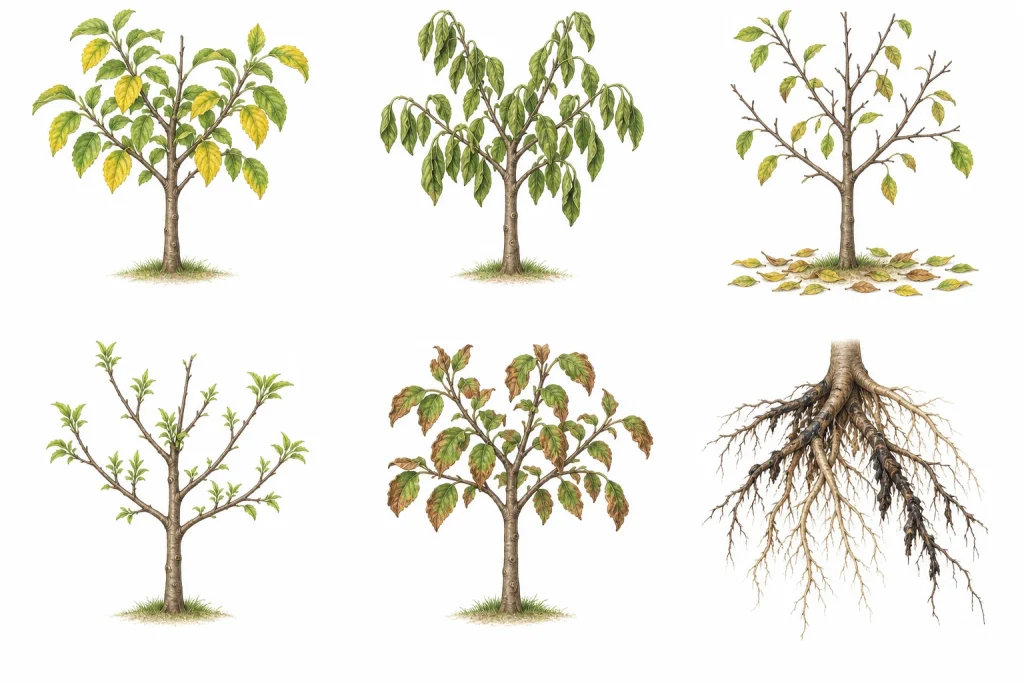
Overwatered apple tree symptoms include yellowing leaves, wilting despite wet soil, early leaf drop, weak growth, browning foliage, and deteriorating roots. However, these signs also occur with other problems. Check moisture below the surface before watering again, then correct excess irrigation or poor drainage so roots can regain access to oxygen.
Table of Contents
Key takeaways
- Overwatered apple tree symptoms become more meaningful when paired with persistently saturated root-zone soil.
- Pause irrigation when soil is waterlogged, but keep checking so damaged roots do not subsequently dry out.
- Progressive decline or decaying roots warrants professional diagnosis, especially when root rot is suspected.
A drooping apple tree can tempt you to reach for the hose immediately. Yet overwatered apple tree symptoms can resemble thirst because injured roots struggle to supply the canopy.
This guide helps you decide what to check and what to change first. For routine irrigation after the immediate problem is resolved, use our apple tree watering guide.
6 overwatered apple tree symptoms to investigate
These are warning signs, not six independent proofs of overwatering. University of Maryland Extension explains that excess moisture damages roots and can produce drought-like symptoms, sometimes after the original damage occurred.
1. Leaves turn yellow during active growth
Yellowing foliage belongs on an overwatered apple tree symptoms checklist, especially when it follows repeated irrigation or prolonged rain. However, yellow leaves alone cannot distinguish waterlogging from nutrient problems, disease, or seasonal leaf loss.
Record whether yellowing is scattered or widespread and whether spots accompany it. Also note the season: an apple approaching normal dormancy needs a different assessment from one rapidly yellowing during active growth.
2. Leaves wilt even though the soil is wet
Wilting with saturated soil is a particularly useful reason to investigate root stress. Although water surrounds the roots, oxygen shortage can impair their function, leaving leaves short of water.
Therefore, do not interpret drooping as an automatic instruction to irrigate. Check beneath the surface first, especially if the tree looks worse despite repeated watering.
3. Leaves drop earlier than expected
Premature leaf drop can accompany excessive soil moisture and declining root function. When evaluating overwatered apple tree symptoms, look for an ongoing pattern rather than counting one or two fallen leaves.
For example, photograph the canopy from the same position to track whether thinning continues. However, leaf loss without moisture evidence should prompt a wider investigation.
4. New growth becomes weak or sparse
Waterlogging can stunt growth, while root disease can leave a thin canopy. Consequently, short shoots and sparse foliage matter most when considered alongside soil conditions and the tree’s earlier growth.
Do not treat slow growth as proof that fertilizer is missing. Instead, document when growth slowed and whether the planting area remained wet during that period.
5. Leaves brown or shoots begin dying back
Browning does not rule out overwatered apple tree symptoms: a damaged root system can leave foliage scorched and shoots declining. However, drought and other root problems can create similar damage.
Check whether browning affects scattered leaf margins or accompanies expanding branch dieback. The latter deserves prompt assessment, particularly if soil remains wet.
6. Fine roots deteriorate
Decaying roots may be unusually soft, dark internally, or missing many fine feeder roots. However, naturally brown woody roots are not automatically rotten, and color alone cannot identify a pathogen.
The RHS root-rot guide explains that waterlogging and Phytophthora can produce very similar damage. Avoid excavating an established tree’s roots to complete this checklist; a diagnostic clinic can advise on suitable samples.
Confirm the moisture problem before changing care
Check below the surface in several places
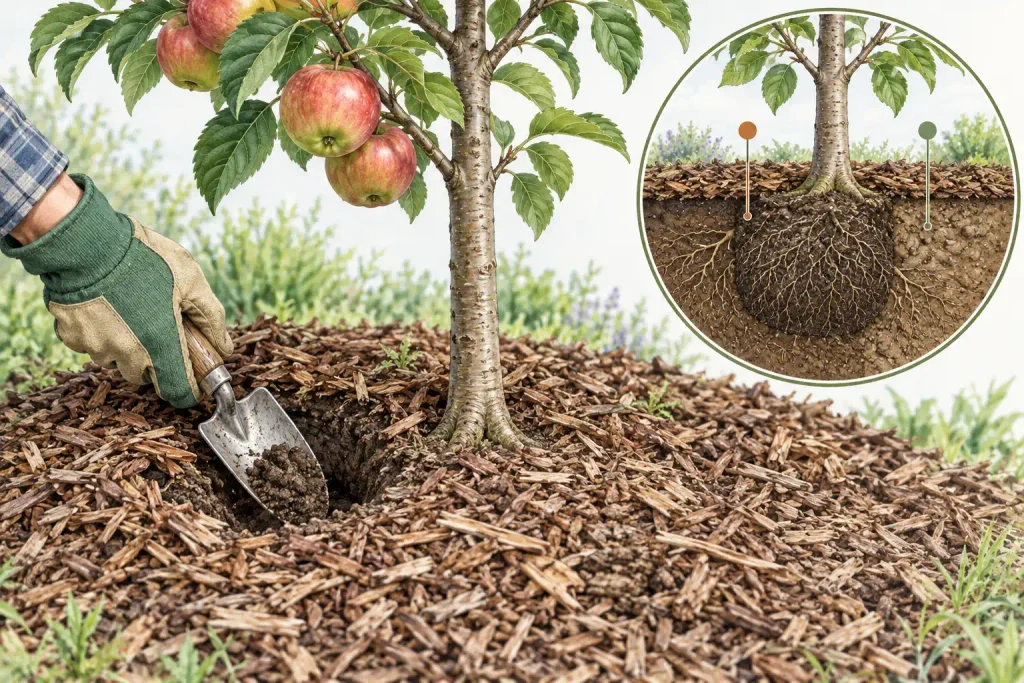
To investigate overwatered apple tree symptoms, move loose mulch aside and gently check soil about 6 inches deep without cutting major roots. Maryland Extension recommends checking at this depth because surface appearance is insufficient.
Compare several locations rather than relying on one wet spot beneath an emitter. For a newly planted tree, compare the original root ball with nearby soil: different soil textures can complicate water movement, as described in Minnesota Extension’s planting guidance.
Use the result to choose your next step
| What you find | What it suggests | Next step |
|---|---|---|
| Wilting with persistently saturated soil | Waterlogging or impaired roots | Pause irrigation and investigate drainage |
| Wilting with dry root-zone soil | Insufficient available water | Water appropriately and reassess |
| Yellow leaves with moist, aerated soil | No clear moisture diagnosis | Investigate season, planting, nutrition, and disease |
| Decline with decaying roots or stem-base damage | Potential serious root disorder | Seek diagnostic advice |
Moist soil is not necessarily waterlogged soil. Therefore, distinguish normal dampness from prolonged saturation before deciding that overwatered apple tree symptoms explain the decline.
If the root zone is dry, compare your observations with apple tree drought stress symptoms. Also record recent rainfall, irrigation frequency, and whether puddles persist between watering events.
This University of Maryland Extension demonstration shows how to check whether soil is dry enough to need water. Use the technique alongside the symptom assessment above.
How to help an overwatered apple tree
Step 1: Stop adding water to saturated soil
When overwatered apple tree symptoms coincide with waterlogging, pause the tree’s irrigation and check for leaks. Include nearby lawn sprinklers, watering bags, and roof runoff in your inspection.
Then write down what you changed and when. Avoid imposing a fixed seven-day or two-week drought: the next watering decision should depend on actual moisture, not a recovery countdown.
Step 2: Identify why water cannot escape
Watch where water collects after rain and trace its source from firm ground. Sometimes a misplaced downspout or obstructed surface flow explains repeated saturation.
However, persistent wetness across the planting area can require professional drainage planning. Maryland Extension notes that site correction may range from a small surface adjustment to substantial regrading; avoid improvised trenches through an established root system.
Step 3: Protect the planting area
Keep foot traffic and equipment off saturated soil while addressing overwatered apple tree symptoms. The RHS waterlogging guidance warns that working wet soil can worsen compaction.
Also check planting depth and pull mulch away from the trunk. If the root flare is deeply buried, seek an assessment before removing substantial soil or attempting to lift the tree.
Step 4: Check container drainage separately
For a potted apple, investigate blocked drainage holes and water trapped in a saucer or outer container. Empty collected water and make sure the pot can drain freely without becoming unstable.
However, avoid replacing every root and all the potting mix as an automatic response to yellow leaves. The RHS container-fruit guide cautions against overpotting and recommends allowing the compost surface to dry between waterings without letting the whole root ball become bone dry.
Step 5: Resume watering from observed need
As overwatered apple tree symptoms stabilize, keep monitoring below the surface. Young trees need particular attention because their roots have not explored the surrounding soil as extensively.
For an established tree, assess a broader area rather than watering only beside the trunk. Use our guide to how often to water apple trees to build a routine around rainfall, soil, and tree age.
Step 6: Review nutrition after moisture is corrected
Do not use fertilizer as the first response to overwatered apple tree symptoms. Once drainage is addressed, use a soil test and growth history to decide whether nutrition needs attention.
As context, Minnesota Extension gives typical annual shoot growth of 12 to 18 inches for young nonbearing apples and 8 to 12 inches for bearing trees. These are general benchmarks, not a fertilizer prescription for injured roots.
A pH target around 6.0 to 6.5 sits within Minnesota’s broader suitable range of 6 to 7. However, changing pH will not drain saturated soil; follow soil-test recommendations and our apple tree soil requirements guide.
Track recovery and know when to seek help
Follow a trend instead of a promised deadline
There is no dependable recovery time that applies to every tree with overwatered apple tree symptoms. Severity, root damage, season, and continuing saturation all affect the outlook.
Keep a simple record of soil moisture, watering, rainfall, new leaf loss, and canopy photographs. During active growth, look for decline slowing and healthy growth continuing; during dormancy, new shoots are not an immediate recovery measure.
Escalate progressive decline
Seek help if overwatered apple tree symptoms worsen after moisture is corrected, or if you find decaying roots, stem-base damage, or substantial branch dieback. Send your local extension clinic the whole-tree photograph, close-ups, planting date, and watering history.
Waterlogging is a soil condition, while Phytophthora is a disease caused by fungus-like organisms. Consequently, identifying the cause may require laboratory examination rather than a photograph alone.
FAQs
Is my apple tree overwatered or underwatered?
Check root-zone moisture before interpreting leaf color. Overwatered apple tree symptoms and drought symptoms overlap, so yellow or brown leaves cannot settle the question without soil and site information.
Can an apple tree recover after heavy rain?
Recovery is possible, but prolonged saturation is more concerning than a brief downpour. If overwatered apple tree symptoms follow rain, prioritize drainage and moisture monitoring, then seek help if decline continues.
Should I stop watering when leaves turn yellow in winter?
Seasonal yellowing alone does not establish overwatered apple tree symptoms, since apples are deciduous. Check soil conditions and rainfall, especially for container trees, instead of continuing a summer schedule or assuming winter roots never need water.
Related articles
- Apple tree watering: routine care through the seasons
- Drip irrigation for apple trees: review your setup
- How often to water apple trees
Sources
- University of Maryland Extension: Tree Problems Caused by Excess Water
- University of Maryland Extension: Watering Trees and Shrubs
- Royal Horticultural Society: Waterlogging and Flooding
- Royal Horticultural Society: Phytophthora Root Rot
- Royal Horticultural Society: Fruit in Containers
- University of Minnesota Extension: Growing Apples in the Home Garden
- University of Minnesota Extension: Planting and Transplanting Trees and Shrubs
Disclaimer: This article provides general growing guidance based on university extension research and RHS horticultural advice. Soil conditions, climate, variety, and rootstock affect results; contact your local cooperative extension service for regional recommendations and diagnosis.
