
5 Proven Fixes for Apple Tree Not Fruiting After Pruning
Apple tree not fruiting after pruning is usually linked to lost fruiting wood, excessive vigor, or a separate problem such as frost or poor pollination. First, identify whether the tree has flower buds, flowers, or only leafy shoots. Then adjust the next pruning cycle instead of making more heavy cuts immediately.
Table of Contents
Key Takeaways
- An apple tree not fruiting after pruning may have responded to severe cuts with leafy water sprouts instead of flower buds.
- Heading cuts usually stimulate more vegetative growth, while thoughtful thinning cuts remove a whole branch and create less regrowth.
- Before blaming pruning, check tree age, sunlight, nitrogen, cross-pollination, and late-frost damage.
It’s frustrating to prune for a healthier canopy and then see no blossoms or apples, especially when the tree looked vigorous going into the cuts. Pruning is only one part of fruit production, though. Apple trees also need adequate light, compatible pollen, suitable weather during bloom, and enough mature fruiting wood to carry flower buds.
This guide covers five likely causes of a no-fruit year after pruning, along with a practical recovery plan for US backyard growers in any USDA hardiness zone. The recommendations draw on university extension guidance, though local climate, rootstock, variety, and tree age still shape the best schedule for your tree.
Why an apple tree not fruiting after pruning may happen
Pruning changes the balance between roots, leaves, shoots, and reproductive growth, which is one reason a tree may respond to hard cuts with foliage instead of flowers. When a large portion of the canopy is removed, the remaining roots have fewer leaves to support. The tree often responds by producing long, upright shoots that rebuild foliage before it invests in flowers.
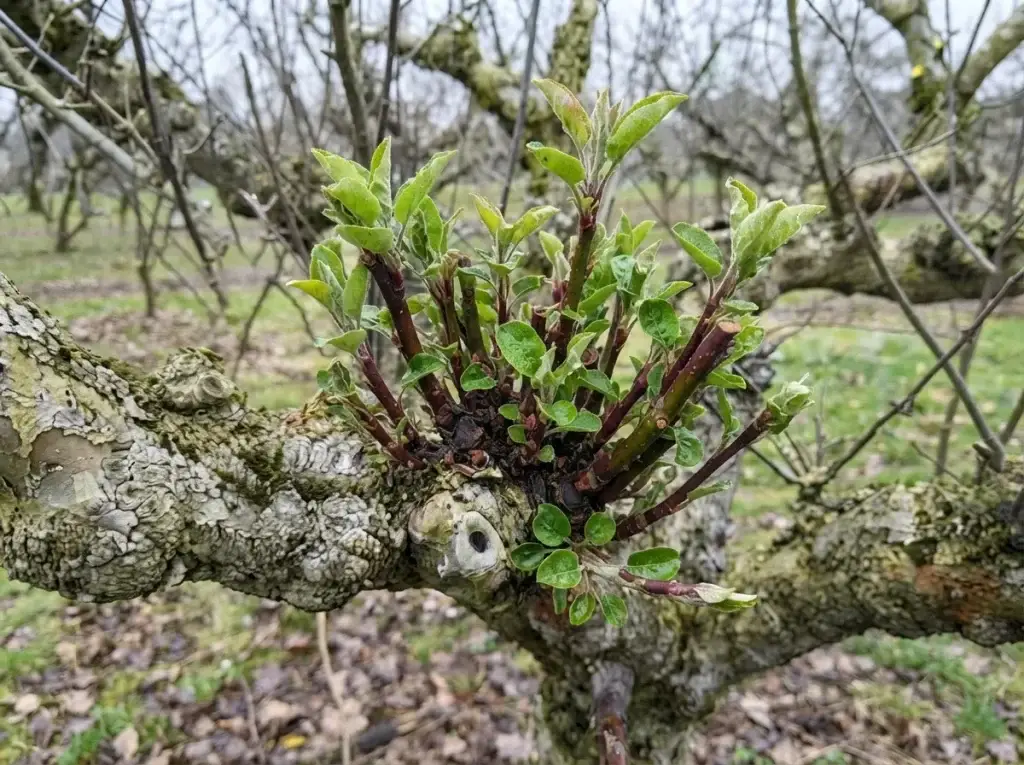
Heavy pruning can shift the tree toward shoots
Penn State Extension identifies excessive vigor as a leading reason fruit trees fail to bear, with overpruning and overfertilization as common causes. Removing too much foliage also reduces photosynthesis and creates large wounds, so an overpruned apple tree can lose fruit production while becoming more vulnerable to stress.
Therefore, do not try to correct a no-fruit year with another severe cut. Observe the new growth first, record where flowers appear, and remove only damaged, crossing, diseased, or clearly unwanted wood during the next appropriate pruning window.
| Observation after pruning | Likely interpretation | Better next step |
|---|---|---|
| Many long upright shoots | Strong vegetative response or excessive vigor | Thin selectively and avoid another hard cut |
| Few or no flower buds | Fruiting wood may have been removed, or the tree is juvenile | Preserve spurs and well-placed laterals |
| Flowers but no young fruit | Pollination failure or frost may be involved | Check bloom overlap, pollen sources, and frost history |
| Weak annual shoots | Stress, poor nutrition, root issues, or low vigor | Check soil, water, light, and regional advice |
Heading cuts and lost fruiting wood
A heading cut removes part of a branch and commonly stimulates shoots below the cut. In contrast, a thinning cut removes a branch back to its point of origin and is generally less stimulating. Repeated heading cuts can delay flowering and fruiting, especially when they remove short spurs or the ends of tip-bearing branches.
Apple varieties differ in fruiting habit. Many modern varieties bear on spurs, while some older varieties bear more heavily on tips. Consequently, identify the variety or ask a local extension office or nursery before removing unfamiliar short shoots.
Check these five causes before pruning again
Cause 1: Too much canopy was removed
If the tree made a flush of long, upright shoots after pruning, excessive canopy removal is a strong possibility. These water sprouts are often weakly attached and less productive than well-placed lateral branches. Although a few may be useful for rebuilding structure, allowing many to remain can keep the canopy crowded and leafy, which delays a return to flowering.
For now, avoid another hard renovation if the tree is putting out vigorous recovery shoots. Thin selected water sprouts when removing them will improve light and structure, but keep well-positioned shoots that could become future fruiting branches.
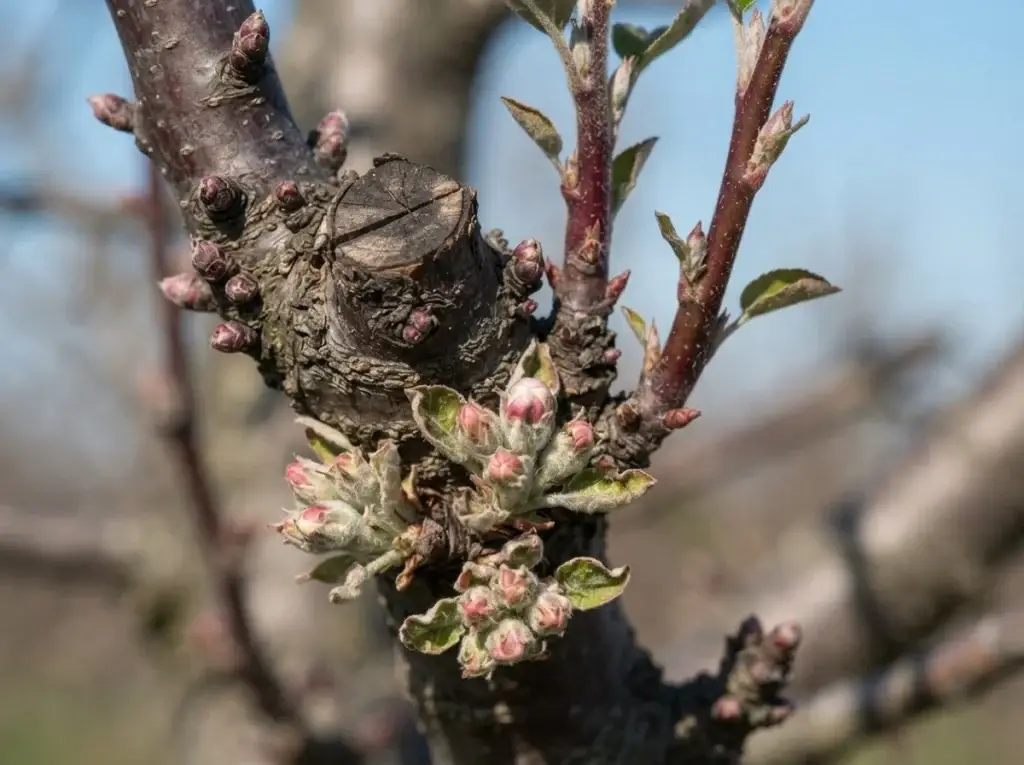
Cause 2: Fruiting spurs or tips were removed
Apple flower buds form on specialized short shoots called spurs or, for some varieties, near branch tips. If pruning removed most of these structures, the tree may need time to produce new fruiting wood. Oregon State University Extension notes that new limb growth may begin bearing in its second year, so recovery is not always immediate.
Look closely during the dormant season, since the tree may still be rebuilding fruiting wood. Flower buds tend to look plumper than the narrower vegetative buds nearby, though this varies by variety and takes some practice to judge reliably. Mark productive branches and make fewer cuts around them next season.
Cause 3: Pruning stimulated water sprouts
Water sprouts can shade interior branches and consume growth energy. They are not automatically harmful, though, because a well-placed shoot can replace an aging or damaged limb. The goal is selective removal, not stripping the tree bare.
In summer, remove a small number of unwanted upright shoots while they are young and easy to handle. Then use the dormant season for structural decisions. This approach is more measured than repeatedly shortening every vigorous shoot.
Cause 4: The tree is young, stressed, or overfertilized
Some trees are simply not mature enough to crop yet, so a no-fruit year can fall within a normal juvenile period rather than signal a pruning mistake. UMN Extension reports that dwarf apple trees may begin bearing in two to three years, while standard-size trees can take up to eight years. Rootstock, variety, climate, water stress, and planting conditions all affect that timeline.
Excess nitrogen can also favor leaves over flowers. Penn State Extension suggests using soil tests and annual shoot growth to guide fertilizer decisions. Bearing trees commonly average 12 to 18 inches of annual shoot growth, while young nonbearing trees may average 18 to 30 inches. Treat these as diagnostic benchmarks, not automatic fertilizer instructions.
Cause 5: Flowers failed because of pollination or frost
An apple tree can bloom and still set few apples when compatible pollen is absent or weather limits insect activity, so don’t assume pruning is to blame without checking pollination first. Apples generally need pollen from a different compatible variety, and UMN Extension recommends a pollen source within about 100 feet. Cold, rain, wind, or insecticide exposure during bloom can also reduce pollination.
Late frost is another possibility, particularly if flowers turn dark inside. Flowers may open normally yet fail to set fruit after cold injury. Examine flower centers after a suspected frost: dark brown or black centers are a warning sign, though only local diagnosis can confirm the cause.
A recovery plan for the next growing season
First, stop corrective pruning until you know what the tree is doing, particularly if it’s putting out long shoots instead of flowers. Photograph the canopy in spring and summer, note whether it produces flowers, and measure representative new shoots. Also check sunlight, irrigation, lawn fertilizer near the root zone, and whether a compatible apple or crabapple blooms at the same time.
- Protect the remaining canopy. Keep the tree watered during dry periods and avoid unnecessary nitrogen. Do not apply fertilizer solely because the tree has no apples.
- Preserve productive wood. During dormancy, identify spurs and well-placed laterals before selecting cuts. Remove broken, diseased, crossing, or strongly competing branches first.
- Reduce crowding gradually. If the canopy is dense with water sprouts, remove only enough growth to improve light and airflow. Spread major renovation over more than one season when possible.
- Verify pollination. Confirm that a compatible second variety or nearby crabapple blooms at the same time. Avoid insecticide use during bloom unless a label and local expert recommendation support it.
- Allow recovery time. A tree that lost much of its fruiting wood may need a season or more to rebuild the balance between shoots and spurs.
These steps help separate a pruning-related setback from a flowering problem caused by weather or pollination. That way, the next cut can be based on evidence rather than frustration.
How to prune differently next time
Dormant pruning by climate and tree condition
For most backyard apple trees, late winter before spring growth begins is the main pruning period. OSU Extension recommends pruning while trees are dormant and after the worst cold has passed. In colder USDA zones, that means waiting until the most severe winter conditions have eased, while warmer zones may reach the same stage earlier.
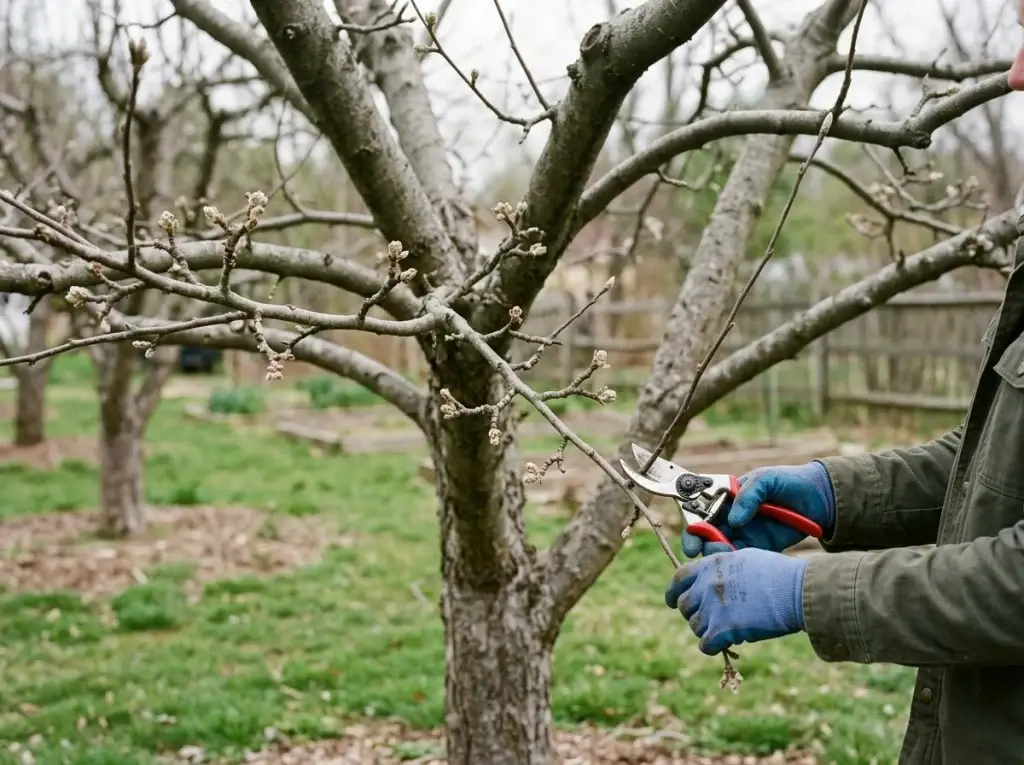
Summer pruning has a narrower role. It can help remove diseased or damaged limbs promptly and control selected vigorous shoots, but it is not a substitute for a thoughtful dormant framework review. For more timing detail, see our guide to when to prune apple trees, plus the seasonal references for apple tree pruning in winter and apple tree pruning in summer.
Young-tree training versus mature-tree maintenance
Young trees need a strong framework before maximum fruit production. Keep the central leader or chosen training system clear, select well-spaced scaffold branches, and avoid removing more wood than necessary. A young tree needs vegetative growth to build its structure, so a no-fruit season on its own isn’t automatically a pruning mistake.
Mature trees need maintenance rather than repeated drastic reduction. Remove declining, damaged, crowded, and poorly attached limbs first. The complete apple tree pruning guide explains how training goals change with tree age and structure, which is useful context when a tree has stopped fruiting.
Sanitation, tools, and cut selection
Use sharp tools sized for the branch, and clean them when moving between visibly diseased cuts or trees. Make cuts just outside the branch collar, without leaving long stubs or cutting into the trunk. Good sanitation limits the movement of some pathogens, while correct cut placement supports wound closure.
For a step-by-step sequence, see how to prune apple trees. If the tree has major limbs over a roof, utility line, walkway, or uncertain attachments, stop and obtain professional help.
When should you call a professional?
Consult a certified arborist or local cooperative extension service if more than one season passes without flowers and there’s no clear recovery pattern — especially alongside large wounds, a split union, a declining canopy, or an unknown fruiting habit. A professional can separate pruning injury from disease, root problems, nutrient imbalance, frost, or pollination failure.
Professional advice matters most for old, neglected trees and large restoration cuts, especially if decay or weak attachments are involved. A safe plan often uses staged pruning across more than one season rather than trying to achieve the final shape in one year.
FAQs
Can severe pruning stop an apple tree from fruiting?
Yes, severe pruning can remove flower-bearing wood and trigger vigorous leafy shoots instead of flowers. That said, a lack of fruit can also stem from tree age, frost, pollination problems, shade, or excess nitrogen, so it’s worth checking the whole picture before blaming the pruning alone.
Should I prune an overpruned apple tree again?
Usually, do not make another severe cut immediately. Observe the new shoots, preserve well-placed laterals, and make only selective structural cuts at the appropriate dormant or summer window. A staged plan is safer than chasing every water sprout.
How long will an apple tree take to fruit after hard pruning?
There is no single timetable. If the tree lost its fruiting spurs or tips, it may need a season or more to rebuild productive wood. New limb growth can begin bearing in its second year, while a young tree may still be within its normal juvenile period.
What if my apple tree has flowers but no apples?
Check for a compatible pollen source, overlapping bloom, cold or wet weather, insect activity, and frost injury. Flowers without fruit often point to a pollination or weather issue rather than the pruning itself.
Related Articles
Sources
- Penn State Extension, Home Orchards: Why is There No Fruit on My Tree?
- University of Minnesota Extension, Growing apples in the home garden
- Oregon State University Extension, Prune apple trees in late winter for stronger growth and better fruit
Extension guidance summary: Across Penn State, UMN, and Oregon State Extension guidance, healthy fruiting depends on keeping enough mature, well-placed fruiting wood while controlling excess vegetative vigor from overpruning or overfertilization. In practice, that means favoring selective thinning cuts over heavy heading cuts and giving the tree time to rebuild its fruiting wood after a hard prune.
Disclaimer: This article provides general pruning guidance based on university extension research. Pruning requirements vary by variety, rootstock, tree age, and regional climate. When in doubt, consult a certified arborist or your local cooperative extension service.
