
Codling Moth Trap: Best Options Compared
A codling moth trap is a pheromone-baited monitoring tool that catches adult moths before their caterpillars damage apples. For most backyard growers, a refillable delta trap with a species-specific lure is a practical starting point. The best kit depends on how many trees you monitor, replacement supplies, and whether mating disruption is already in use.
Table of Contents
Key takeaways
- A codling moth trap helps establish when adults are flying; it does not reliably prevent every wormy apple on its own.
- For ordinary home orchards, a standard sex-pheromone lure and a trap with replaceable sticky liners are sensible features.
- Check the exact kit contents and lure duration, not just the number of traps or the package price.
Seeing a small hole and brown, sawdust-like material on an apple is frustrating, particularly when the fruit looked healthy a week earlier. The culprit may be a codling moth larva, although other fruit pests can leave confusing damage. For identification before buying equipment, see our guide to codling moth on apple trees.
This is a buying comparison, not a field trial. We compared identifiable, commercially listed kits using published package contents, lure specifications, maintenance needs, and university extension guidance. We have not physically tested these products, measured catch rates, or accepted payment for their placement.
What makes a codling moth trap worth buying?
Codling moth, Cydia pomonella, lays eggs around developing fruit. Its larvae tunnel into apples and feed near the core; brown frass around an entry hole is a common clue. A codling moth trap catches adults and helps growers decide when to inspect fruit and consider further protection.
According to Oregon State University Extension, delta and wing traps with sticky inserts and synthetic pheromone lures are useful for tracking moth flights. In a small backyard, a codling moth trap may remove some males, but a full prevention program still includes checking fruit and removing infested windfalls.
Four codling moth trap buying checks that matter
- Correct pest: Look for Cydia pomonella, rather than a pantry moth, apple maggot, or false codling moth lure.
- Appropriate attractant: A standard sex-pheromone lure mainly attracts males. Combined pheromone and fruit-odor lures may attract females as well, depending on formulation.
- Replaceable parts: A reusable delta housing with removable glue liners is generally simpler to service than replacing an entire sticky base.
- Supplies for the season: Compare the number of lures, spare liners, specified field life, and refill availability before deciding which kit represents better value.
For a simple home orchard, prioritize a recognizable codling moth lure and an accessible liner. An expensive codling moth trap kit with many stations is not automatically more useful for a single small tree.
How we compared these codling moth trap kits
Our editorial ranking favors a complete kit, clear labeling for codling moth, easy liner replacement, and a replenishment schedule a home grower can follow. “Best” describes the fit for a particular buyer, not a proven difference in insects captured.
Each package below is identified by a supplier stock code so you can compare the correct version. Contents and stated lure life come from product listings, while the reasons to monitor and the limits of traps come from extension advice. Stock, packaging, and prices can change, so check the seller’s current listing before paying.
Video: “Codling Moth: Using Traps Properly,” published by Washington State University Tree Fruit and featuring Oregon State University entomologist Christopher Adams. It explains trap placement and interpretation of catch records.
Best codling moth trap kits at a glance
| Kit and stock code | Included equipment | Stated lure life | Best fit | Main trade-off |
|---|---|---|---|---|
| Trécé PHEROCON VI L2, GL/TR-4511-3K | 3 delta traps, 3 extra liners, 3 lures | 8 weeks | Fewer lure changes | Only one lure per station initially |
| Trécé PHEROCON VI CM, GL/TR-3511-6K | 3 delta traps, 3 extra liners, 9 lures | 4 to 6 weeks | More included lure replacements | Shorter refill interval |
| Scentry codling moth kit, GL/SC-3111-4K | 4 wing traps, 8 extra liners, 12 lures | 4 to 6 weeks | Several monitoring locations | Wing-style maintenance |
| Trécé PHEROCON VI CMDA COMBO-P + AA, GL/TR-4661-7K | 3 orange delta traps, 3 extra liners, 3 dual lures | 12 weeks | Specialized multi-gender monitoring | More complex lure choice |
Package quantities and lure durations are seller-stated specifications, not independent longevity or catch tests. None of these entries should be read as a guaranteed reduction in damaged fruit.
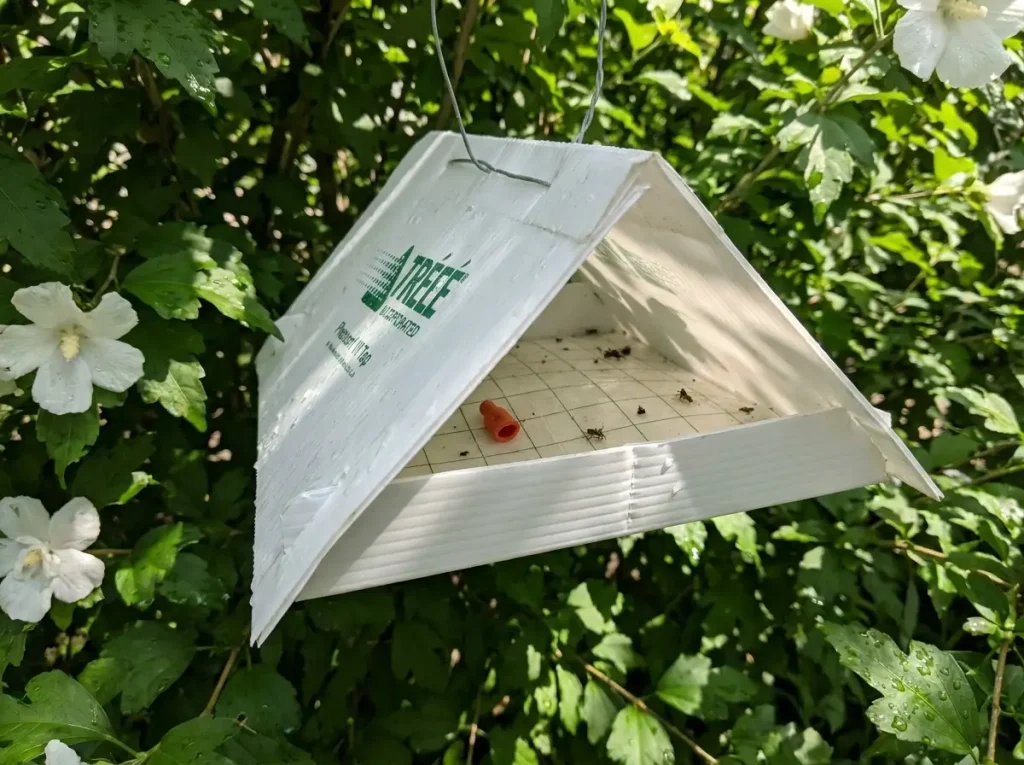
4 codling moth trap options: pros and limitations
1. Trécé PHEROCON VI L2 kit: easiest refill schedule to plan
For a homeowner who wants a straightforward delta-style codling moth trap, the three-station L2 package is a strong starting choice. The listing for GL/TR-4511-3K specifies three VI Delta housings, three spare liners, and three L2 pheromone lures with an eight-week stated field life.
Why choose it: The codling moth trap’s replaceable liner makes weekly inspection manageable, and the longer listed lure duration may reduce replacement visits compared with shorter-life kits. Watch for: There are only three lures in the box, so a longer growing season may require additional L2 lures.
This is our best overall fit for a modest home orchard that wants simple male-flight monitoring rather than specialized mating-disruption tools. It is a recommendation based on kit design and specifications, not head-to-head performance data.
2. Trécé PHEROCON VI CM kit: best for included refill supply
The GL/TR-3511-6K package uses the same general delta-style housing but includes nine standard codling moth lures for three stations. The seller specifies a four-to-six-week lure field life, so a grower who likes keeping replacements on hand may prefer this box.
Why choose it: More lures are included at purchase, and the standard sex-pheromone formulation suits conventional monitoring in orchards without mating disruption. Watch for: You must change those lures on the manufacturer’s schedule, even if the adhesive card still looks clean.
Compare the full-season cost rather than the sticker price of this codling moth trap kit alone. The relevant calculation is how many stations you actually need multiplied by the replacement supplies used during your local moth-flight period.
3. Scentry four-station kit: best for more monitoring positions
Scentry’s GL/SC-3111-4K package lists four wing-style traps, eight additional liners, and twelve codling moth lures. The stated lure duration is four to six weeks, so the included quantity supports ongoing replacement across several monitoring points.
Why choose it: Four stations give you flexibility across several trees or separated planting areas. Watch for: Wing-style traps are less convenient to service than delta units with slide-out liners, an important consideration when checking catches every week.
Choose this option for the number of monitoring locations, not because wing traps have been shown here to catch more moths. If your trees stand together in one small yard, buying extra stations may be unnecessary.
4. Trécé CMDA COMBO-P + AA: best for specialized monitoring
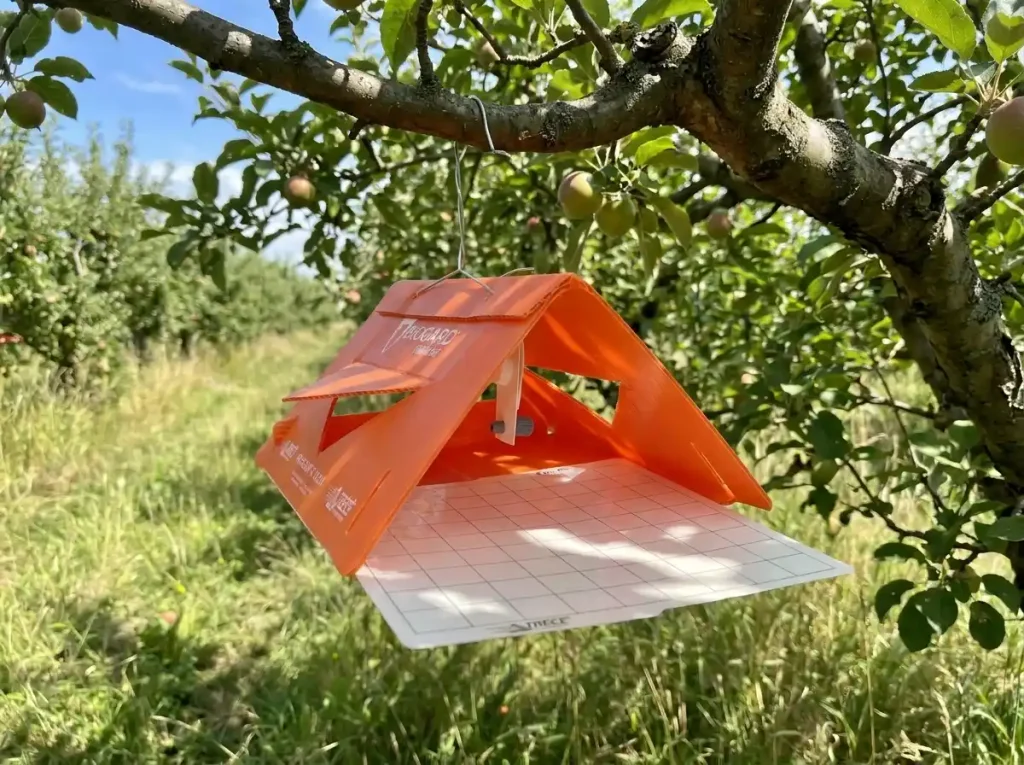
GL/TR-4661-7K combines three orange VI Delta housings, three extra liners, and three dual-attractant lures. The listing specifies a twelve-week field life, and the manufacturer describes its CMDA combinations as attractants designed to monitor both sexes.
Why choose it: A multi-gender lure may help in a property or orchard where background mating-disruption pheromone interferes with ordinary male-only monitoring. Watch for: The combined attractant is not required for every home grower, and a long lure lifespan does not mean the sticky liner can be ignored.
Utah State University Extension explains that lure selection depends partly on whether mating disruption is used. Therefore, buy this specialized codling moth trap only when its lure type matches your monitoring goal or regional extension advice.
Which codling moth trap should you buy for your trees?
If you have one or two backyard apple trees and no mating-disruption program, start by comparing the two Trécé delta kits. Choose the L2 kit when fewer planned lure changes matter most, or the standard CM kit when having extra lures in the original package matters more.
For multiple separated trees, the Scentry wing kit offers an additional station, but consider the ongoing effort of servicing it. For a larger or specialized orchard already using mating disruption, ask the local extension office whether a dual lure is more appropriate.
Amazon alternatives for backyard apple growers
Prefer shopping through Amazon? The Monterey LG8500 and VivaTrap VT-106 are alternatives to the four specialist kits above, not identical replacements. Monterey targets codling moth, while VivaTrap is offered for monitoring codling moth and Oriental fruit moth. Check the current listing for the exact kit contents, replacement lures, and seller before ordering.

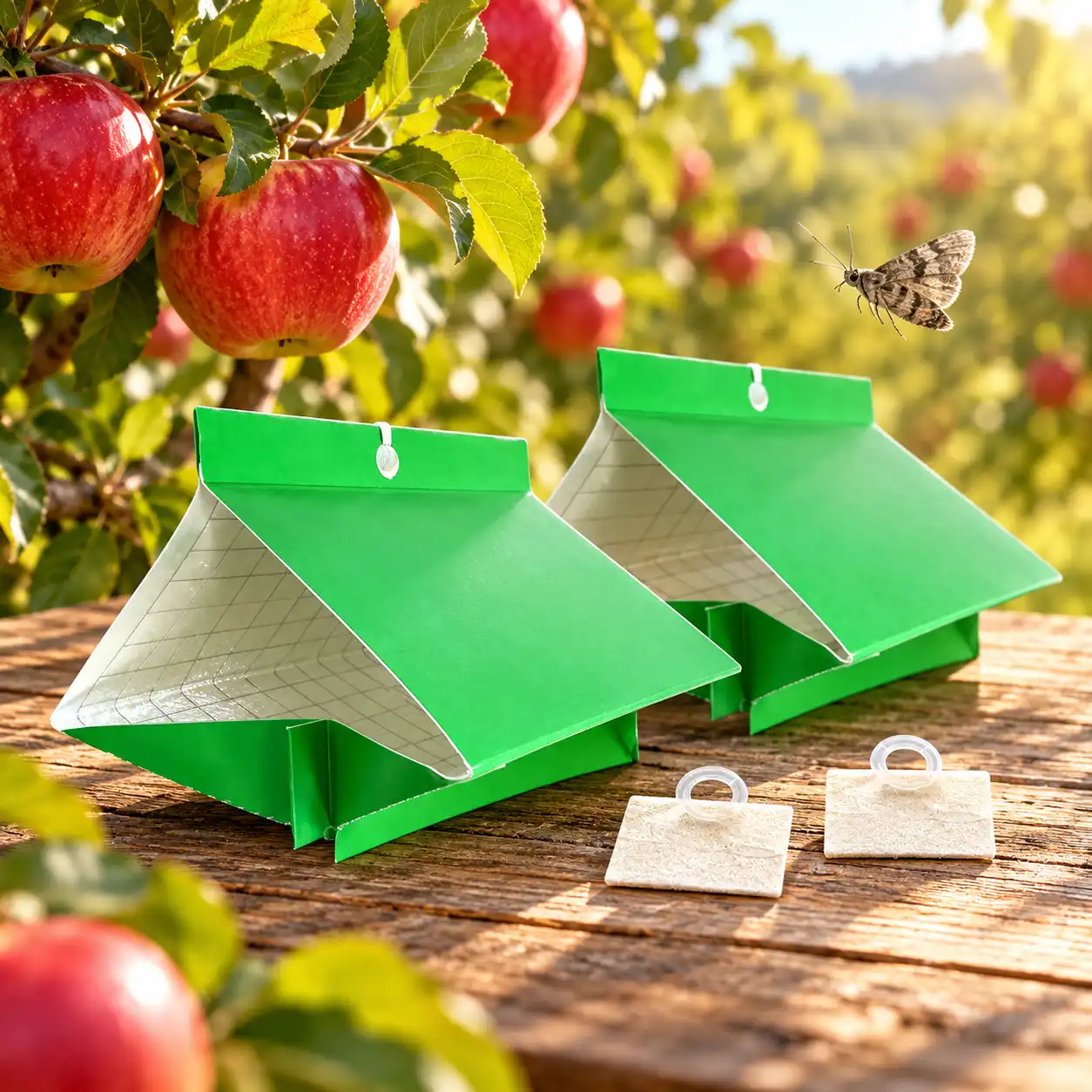
A quick buyer’s worksheet
- Count how many monitoring locations you genuinely need, not just how many trees you own.
- Check whether the kit includes the housing, hanger, lure, and replaceable sticky insert.
- Calculate the expected number of lure changes using the listed field life and your local season.
- Confirm that replacement lures and liners fit the exact trap model and that the package names Cydia pomonella.
- Keep the seller’s stock code when comparing listings, because similar product names may contain different quantities.
A basic codling moth trap is often the more appropriate purchase than an elaborate system if you are simply trying to find out when moth flight begins. If you are already finding damaged apples but no moths in the trap, reassess placement, lure age, and identification rather than immediately buying more equipment.
How to set up and read a codling moth trap
Hang the codling moth trap before you miss the first flight
Oregon State University Extension advises hanging traps at apple bloom and checking them weekly. Exact dates vary with region, weather, and elevation, so a fixed nationwide calendar date is less useful than local bloom and pest-monitoring guidance.
Place the codling moth trap within the upper part of the apple canopy where its openings are not blocked by leaves. Utah State University recommends the upper third of the canopy and warns that white-colored traps can attract bees, making an orange housing a preferable choice when available.
Check your codling moth trap weekly and keep a record
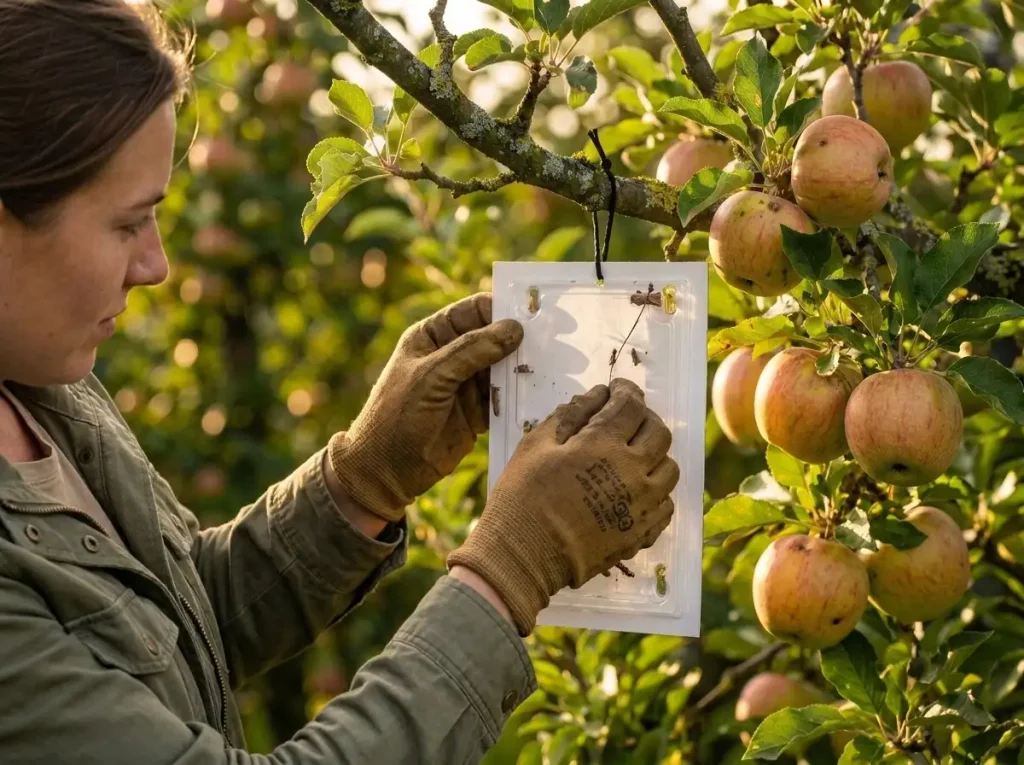
At the start of the season, Utah State University recommends checking every one to two days until the first sustained moth flight is established. After that, check weekly. At each visit, record the date, newly captured moths, lure age, liner condition, and any fresh fruit injury so changes are easier to interpret.
Replace lures according to the specific product instructions and sticky liners when their condition interferes with seeing or catching insects. A sticky card without the correct pheromone bait is not the same tool as a functioning codling moth trap.
The first sustained catches help establish the beginning of moth flight, but home orchard treatment decisions should also consider fruit inspection and local extension models. Do not assume a single moth automatically means that spraying is necessary.
What a codling moth trap cannot do
Pheromone monitoring is one part of integrated pest management, not a guarantee of clean fruit. Even when a trap catches males, mated females may still lay eggs, and larvae already inside an apple are beyond the reach of the trap.
Extension consensus: Codling moth pheromone traps are primarily tools for tracking adult activity and guiding management. Combine monitoring with fruit inspection, orchard sanitation, and appropriately timed protective measures when needed. This is a synthesis of Oregon State and Utah State extension guidance, not a quotation from an individual researcher.
Remove infested fruit promptly and do not leave wormy windfalls under the trees. In small plantings, protecting individual apples with properly fitted bags may also help; see our broader organic apple tree pest control guide for nonchemical approaches.
If codling moth trap monitoring suggests that an insecticide might be needed, check local extension recommendations and the pesticide label for the crop, target pest, and current registration. Avoid calendar-only spraying, never spray in ways that expose active pollinators, and follow every label restriction.
Common codling moth trap buying mistakes
- Confusing pests: Apple maggot is a fly, not a moth, and generally needs a different monitoring method. Review our apple maggot fly identification guide if the injury is uncertain.
- Buying only a housing: Verify that codling moth pheromone and sticky liners come with the order, or add the correct supplies separately.
- Assuming longer lure life means longer liner life: These consumables do different jobs and may need attention on different dates.
- Expecting a cure for existing damage: A codling moth trap does not remove larvae already feeding inside fruit. See our article on worms in apples to distinguish causes and plan next season.
One final shopping detail: “mating disruption” dispensers and monitoring traps are different product types. Dispensers attempt to interfere with mating across an orchard; a sticky monitoring trap is intended to reveal moth activity.
FAQs
Does a codling moth trap actually stop worms in apples?
It can catch some male moths, especially in a small yard, but should not be considered reliable stand-alone control. Its main value is identifying when moths are active so other protection methods can be considered.
When should I put up a codling moth trap?
Set it out around apple bloom, before or at the beginning of expected adult activity in your region. Consult local extension alerts because moth flights differ between warm and cool growing areas.
How often should I replace codling moth pheromone lures?
Use the interval printed for your particular lure. The compared standard kits list four to six weeks, the L2 kit lists eight weeks, and the cited dual-lure package lists twelve weeks; these are supplier specifications, not tested guarantees.
Why is my trap empty even though apples have holes?
The wrong lure, an old lure, poor placement, past moth flights, or damage caused by a different insect could explain the mismatch. Confirm the culprit before drawing conclusions from a zero catch.
Related articles
- Codling moth on apple trees: signs and control
- Worms in apples: causes and prevention
- Apple maggot fly: identification and damage
- Organic apple tree pest control
Sources
- Oregon State University Extension, Softer, smarter codling moth control for home orchards.
- Utah State University Extension, Codling Moth.
- North Carolina State Extension, WNC Orchard Insect Pest Update, April 6, 2026.
- Washington State University Tree Fruit, Codling Moth: Using Traps Properly.
- Great Lakes IPM: Trécé PHEROCON VI L2 kit, GL/TR-4511-3K (supplier specifications).
- Great Lakes IPM: Trécé PHEROCON VI CM kit, GL/TR-3511-6K (supplier specifications).
- Great Lakes IPM: Scentry four-station codling moth kit, GL/SC-3111-4K (supplier specifications).
- Great Lakes IPM: Trécé CMDA COMBO-P + AA kit, GL/TR-4661-7K (supplier specifications).
Product specification note: Stock codes, component quantities, and stated lure lives for the four main kits come from the linked Great Lakes IPM listings. The two Amazon alternatives are described by Monterey’s product page and VivaGrow’s VT-106 listing. All package specifications are supplier claims, not independent efficacy measurements. Confirm the exact listing and product model before ordering.
Disclaimer: This article provides general pest-monitoring information, not a field diagnosis or pesticide prescription. Distinguishing fruit insect damage can be difficult. For uncertain infestations, consult your local cooperative extension diagnostic service or a certified arborist. Always follow current pesticide labels, regional requirements, and pollinator safety precautions.