
Apple Maggot Fly: Proven ID, Damage Signs & 5 Control Steps
Apple maggot fly lays eggs beneath the skin of developing apples. The larvae hatch inside and feed through the flesh, leaving winding brown trails. Protecting fruit before the flies lay eggs is the most useful place to start. Bags can cover individual apples, while traps help you find out when adult flies are active.
If you’ve already found damaged apples, cut a few open before buying a treatment. Dimples alone aren’t enough to identify this pest. The marks inside help you work out what happened and which fruit you can still protect. A spray won’t undo tunnels that are already there.
Table of Contents
How to identify apple maggot fly and its damage
The adult fly, Rhagoletis pomonella, is about 1/4 inch long, with a dark body and a noticeable white spot on its back, toward the rear of the thorax. Look closely at the clear wings: their dark bands form a pattern often described as an F. Compare your specimen with Utah State University Extension’s identification images, which show it alongside similar fruit flies.
Inside an apple, look for a pale maggot with no legs, a tapered front, and a blunt rear. A codling moth caterpillar has a more obvious brown head and legs. You might find the feeding tracks without finding the insect, so check both.
The tiny punctures where a female lays eggs can become dimples. Beneath them, larvae leave irregular feeding trails that turn brown and may begin to decay. An apple can have more damage inside than its skin suggests, as Wisconsin Extension’s apple maggot guide shows.
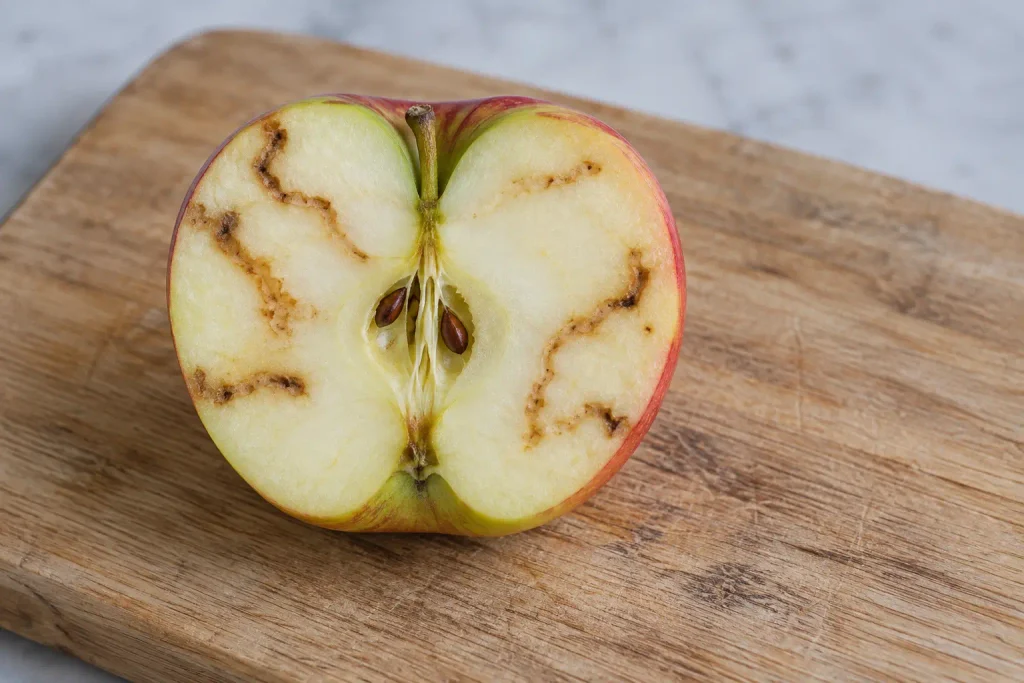
| What you find | What it suggests | Next check |
|---|---|---|
| Winding brown tracks through the flesh; small pale larvae without legs | Apple maggot | Compare a trapped adult’s wing pattern with an extension identification image. |
| A tunnel toward the seed cavity; crumbly brown waste near an opening | Codling moth | Look for a caterpillar with a distinct head and legs. |
| Separate corky brown spots beneath sunken skin, without a connected feeding trail | Possible bitter pit or another fruit disorder | Have the fruit assessed before applying insecticide. |
For a closer comparison, see UC Cooperative Extension’s descriptions of the two insects and Minnesota Extension’s examples of bitter pit. One tree can have more than one problem, so don’t assume every brown mark has the same cause.
Use our guide to worms in apples for a broader comparison. If the damage leads to the core, the codling moth guide covers that pest’s different monitoring and control needs.
When flies appear and why timing matters
Apple maggots spend winter as pupae in the soil. Adult flies emerge over several weeks and lay eggs under apple skin. After feeding inside the fruit, the larvae leave it and enter the ground to pupate. That’s why both early fruit protection and prompt cleanup matter: one keeps eggs out of apples, and the other removes infested fruit before larvae escape.
There is usually one generation a year, though UC IPM reports a partial second generation in some years. Even with one generation, flies can keep appearing for weeks. Finding the first fly doesn’t mean the rest have finished emerging.
Your location affects the timing. Illinois Extension describes emergence from late June through September; in New Hampshire, adults start appearing around early July. Before setting a date for your own tree, ask your county extension office when to put traps out. Another state’s schedule may start too late for your garden.
5 steps to reduce apple maggot damage
For the first inspection, you’ll need a knife, cutting board, and a magnifier or phone camera. Have a notebook ready for trap counts and dates. The later steps use apple maggot monitoring traps, suitable fruit bags, scissors, and a closable container for discarded apples. Plan to keep checking the tree through harvest.
Step 1. Confirm the pest before choosing a treatment
Pick several suspect apples from different branches. Take a picture of the skin, then cut through a damaged spot. Does the brown track wander through the flesh or run toward the seeds? Make a note of what you find. If there’s a larva, photograph it beside a ruler.
If you’ve caught a fly on a trap, try to get a clear photograph of its wings. Other flies can land on red spheres too. In particular, snowberry maggot flies are difficult to tell apart from apple maggot flies.
Still unsure? Send the photos to your county extension office and ask whether they need a specimen. Tell them when and where you found the damage, the apple variety if you know it, and whether the marks appeared on the tree or during storage.
Step 2. Monitor with traps designed for apple maggot
Choose a sticky red sphere or another apple maggot trap recommended by your local extension office. The flies are attracted to its appearance; some traps also use a scent lure. Check the packaging carefully. A codling moth pheromone trap won’t tell you when apple maggot flies are around.
Put traps out before flies usually appear in your area. Hang them near fruit, where leaves won’t hide them or touch the sticky surface. Fruit should stay clear of the adhesive too. Check at least weekly, or more often if your local guide recommends it. Write down the date and number of confirmed apple maggot flies, along with the trap and lure you used. Maintain the adhesive and replace lures according to the product instructions.
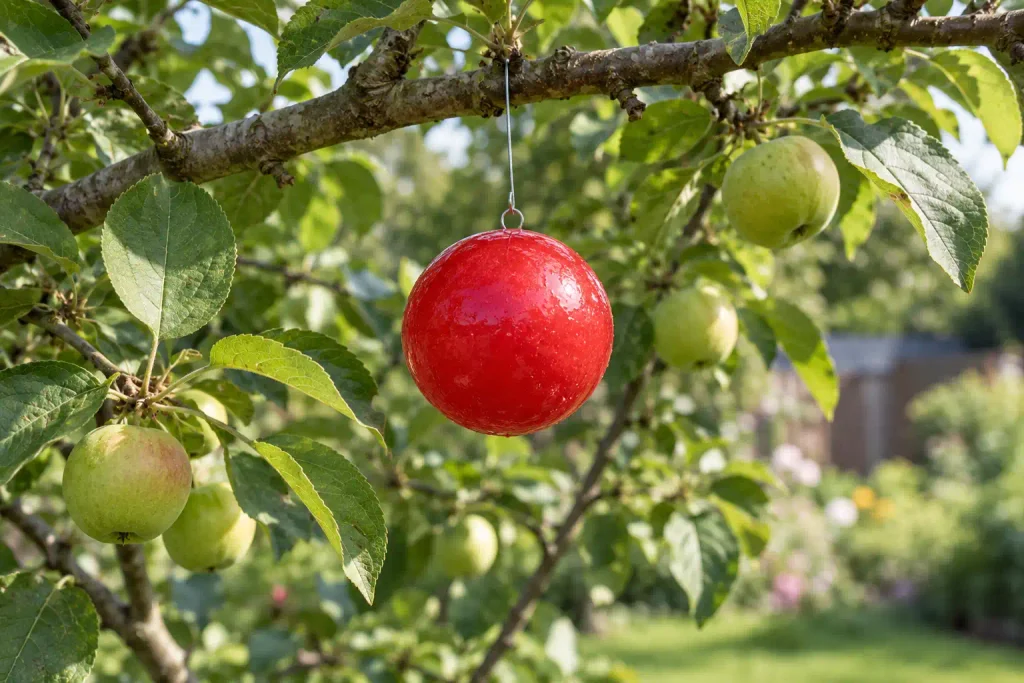
How many flies should trigger action? That depends on the trap. New Hampshire Extension, for example, gives different thresholds for scented and unscented traps. Use advice that matches your region and equipment, and check whether the count covers one inspection or a longer period.
Several traps may catch enough flies to reduce their numbers, but don’t assume that catching them means every apple is protected. Watch for birds or other wildlife getting caught in the adhesive, a problem noted by UC IPM. If that happens, ask about a safer monitoring setup and use fruit barriers for protection.
Step 3. Bag clean fruit before egg laying
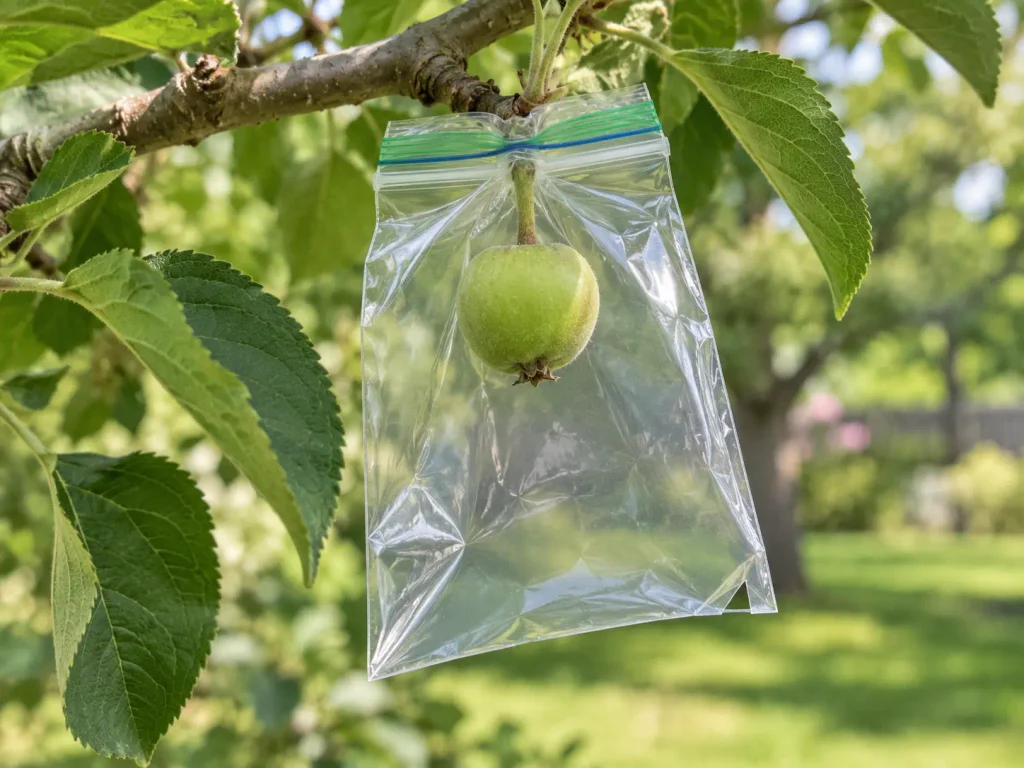
Bagging works best when you have a number of apples you can comfortably reach and check. Wisconsin Extension recommends bagging when apples are about 1/2 to 3/4 inch across. Thin each cluster to one sound apple first. Check it for damage before putting the bag on, because a bag won’t stop a larva already inside.
- Select an undamaged apple and remove competing fruit in its cluster.
- Slip a plastic sandwich bag or suitable fruit-protection bag over it.
- Secure the opening around the stem without injuring it.
- For a plastic bag, snip a small bottom corner opening so water can drain.
- Check that the bag stays attached as the fruit grows. Replace torn or loose bags and remove plastic bags at harvest.
You can also cover a small tree with insect exclusion netting. Minnesota Extension recommends enclosing the whole tree after bloom and thinning. Check that the netting is designed to exclude the pest and that you can install it as directed. The openings in ordinary bird netting may let small flies through.
If you can only reach the lower branches safely, bag those apples. The uncovered fruit is still exposed, so keep collecting fallen apples from beneath the whole tree.
Step 4. Remove infested apples and windfalls promptly
Pick up fallen apples throughout the season. Look in the grass for small drops as well as the larger fruit, and remove visibly infested apples still hanging within safe reach. Don’t leave a pile beneath the tree for later: larvae can soon leave dropped fruit and enter the soil.
Collect the apples in a container you can close. Keep infested fruit out of an ordinary backyard compost pile, where larvae may survive. Your local waste service can tell you whether it accepts sealed fruit waste or whether an approved municipal composting facility will take it.
Continue picking up fruit until the harvest cleanup is finished. This helps reduce the number of larvae reaching the soil, though adult flies can still come from nearby host trees. If your area restricts fruit movement, get local disposal instructions before taking suspect apples off the property.
Step 5. Decide whether additional protection is needed
If you’ve confirmed apple maggot and still have exposed apples, compare your trap records with local treatment advice. Any added protection needs to work before flies lay eggs, as Illinois Extension explains. Spraying after you find tunnels won’t repair the affected fruit.
Ask your extension office which home-orchard treatments are suitable where you live, and tell them how close you are to harvest. Before using a pesticide, read its label. It must allow the intended use on edible apples. Follow the application limits and protective-equipment requirements, including how long you must wait before picking fruit. Keep sprays away from open blossoms and foraging pollinators, and follow the label’s bee-protection restrictions.
Minnesota Extension also describes kaolin particle films as a preventive option. They need good coverage, and rain can wash that coating away. If you choose this method, use a crop-protection product labeled for the intended use and follow its directions. Don’t substitute household clay.
For other jobs around the tree during the season, see our apple tree pest control guide. The organic pest-control guide also covers physical barriers and other methods. Check when and how to use any product, including those labeled organic.
Choose your next action from what you find
| Your situation | Next action | What to check afterward |
|---|---|---|
| Dimples, but no clear tunnels or confirmed insect | Collect diagnostic photographs before treating. | Does the same pattern occur in several apples? |
| Young, sound fruit before local fly activity | Thin and bag reachable apples; prepare monitoring traps. | Are closures secure and drainage openings clear? |
| Confirmed flies with exposed fruit remaining | Use local action guidance to assess added protection. | Were counts recorded for the correct trap and lure? |
| Tunnels discovered near harvest | Sort fruit, remove infested apples, and record the damage. | Was protection installed late, damaged, or incomplete? |
A few notes will help next season. Record the first confirmed fly catch and the date you bagged fruit, then note any bags that tear or go missing. At harvest, count how many apples you inspect and how many have damage. Keep separate counts for bagged and unbagged fruit. Writing “3 damaged out of 20 inspected” gives you something clearer to compare next year than “quite a few.”
If the problem returns, share those notes with extension staff. The dates and damage patterns can help them work out whether protection went on too late, bags failed, or you need to check the diagnosis again.
What to do with apples that already have tunnels
Set damaged apples aside from sound fruit and cut them open. Discard apples with extensive breakdown, mold, or rot. Picking out a maggot doesn’t tell you whether the rest of the apple is sound; check the surrounding flesh too.
Keep rotten apples out of homemade juice. Moldy apples can contain a toxin called patulin, which pasteurization does not remove, according to the FDA. If an otherwise firm apple has one small damaged area, inspect the whole fruit. Ask for food-preservation guidance before using questionable fruit in a batch you plan to process.
FAQs
Do apple maggot flies kill apple trees?
Apple maggots damage the fruit. If branches are dying or you also see trunk wounds or widespread leaf damage, investigate those symptoms separately. Our apple tree pest overview can help you compare other signs.
Will cardboard trunk bands control apple maggot?
Trunk bands target codling moth caterpillars looking for shelter. Apple maggot larvae leave the fruit and pupate in the soil, so a band around the trunk misses that stage. For apple maggot, concentrate on protecting fruit and picking up infested apples promptly.
Can I prevent damage without spraying?
Yes. You can bag individual apples before flies lay eggs, or enclose a small tree in suitable insect netting. Get the covers on early enough and check for gaps or tears as the fruit grows. Keep picking up fallen apples too.
Why are apples damaged even though my traps are empty?
Start with when you hung the traps. Flies may have laid eggs before they went up. Check whether leaves hide the traps, whether the adhesive still works, and whether any lure needs replacing. Then check the diagnosis: brown marks can have other causes. Ask extension staff to identify uncertain specimens before changing treatments.
Are these the same fruit flies found around a kitchen fruit bowl?
No. The much smaller flies around kitchen fruit are usually vinegar or pomace flies, a distinction explained by UC IPM. For the orchard pest, compare the wing markings and examine damage in apples growing on the tree.