
Pruning Shears vs Loppers: Which Tool Do You Need?
Pruning shears vs loppers comes down to branch size, leverage, reach, and control. Pruning shears are the precision choice for small shoots and twigs, while loppers use long handles and two-handed leverage for thicker branches. On an apple tree, the cleanest workflow often uses both tools, then switches to a pruning saw for larger wood.
Table of Contents
Key Takeaways
- Pruning shears vs loppers is mainly a question of branch diameter, leverage, and how precisely you need to place the cut.
- For live apple wood, bypass-style cutters are generally preferred because they slice past one another instead of crushing the stem.
- Do not force either tool through wood beyond its rated capacity. Move up to a pruning saw when the branch is too large for a clean, controlled cut.
Apple growers often discover the difference between these tools halfway through a pruning session. A hand pruner feels perfect for water sprouts and pencil-size shoots, then suddenly a thumb-thick branch makes the same tool feel awkward and hard on the hand.
That is where pruning shears vs loppers becomes a practical orchard decision rather than a product debate. The better tool is the one that matches the cut in front of you without forcing the blade, twisting the branch, or sacrificing control.
Pruning shears vs loppers: the quick answer
| Feature | Pruning shears | Loppers |
|---|---|---|
| Operation | One hand | Two hands |
| Best role | Precise cuts on small shoots and branches | More leverage on thicker branches |
| Typical extension guidance | About 3/4 to 1 inch, depending on the tool | About 1 1/2 to 2 inches, depending on the tool |
| Reach | Close, compact access | Longer handles reach farther into the canopy |
| Control in tight spaces | High | Lower because handles and jaws need room to open |
| Best apple-tree examples | Water sprouts, young laterals, small dead twigs | Older laterals and medium branches that exceed hand-pruner capacity |
University of Minnesota Extension lists pruning shears for cuts up to about 3/4 inch and lopping shears for branches up to about 1 1/2 inches. University of Maryland Extension gives a slightly broader range, with hand pruners up to 1 inch and loppers up to 3 inches. Because tool construction varies, the safest rule is to stay within the cutting capacity printed for your specific tool rather than chasing one universal diameter.
1. Cutting capacity is the first decision
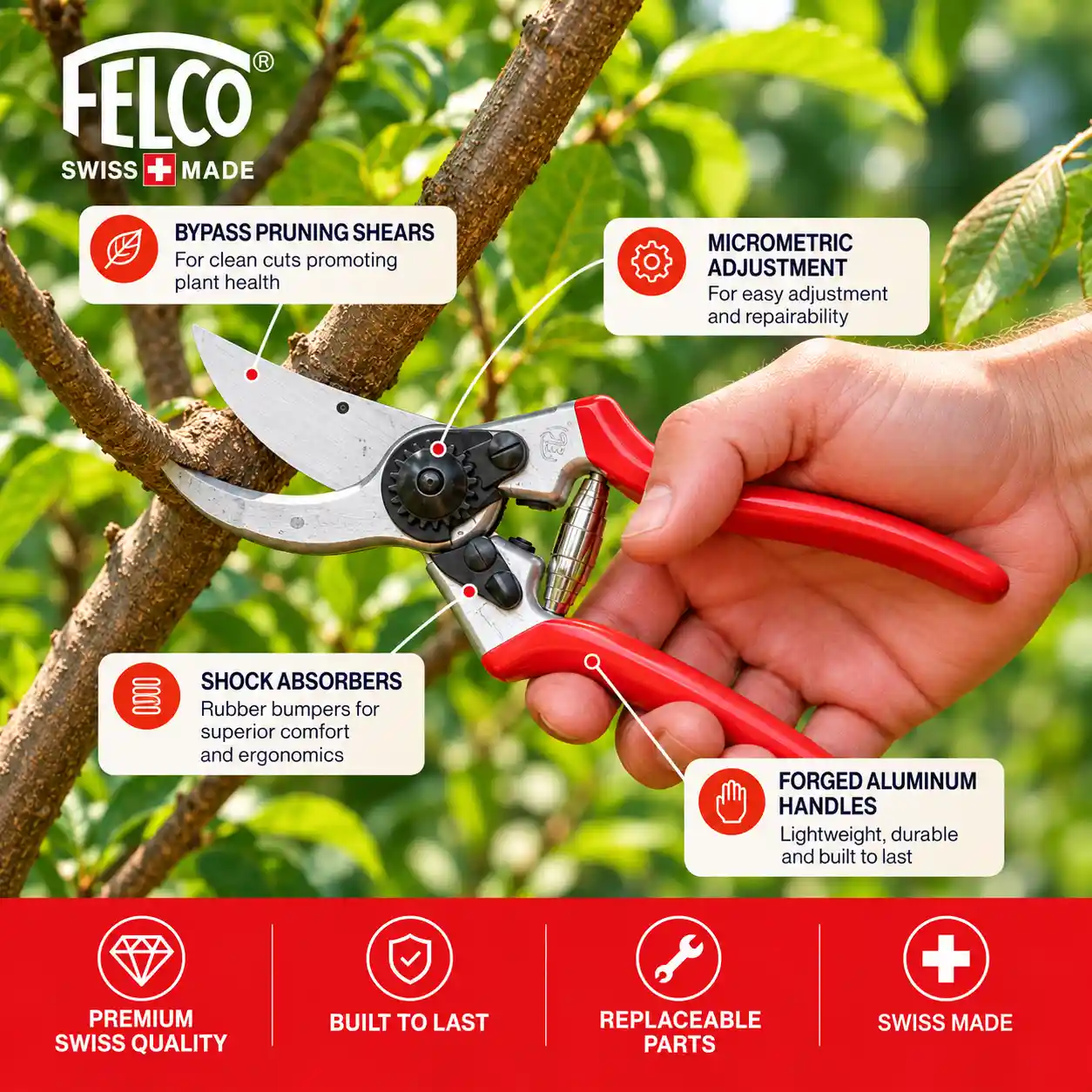
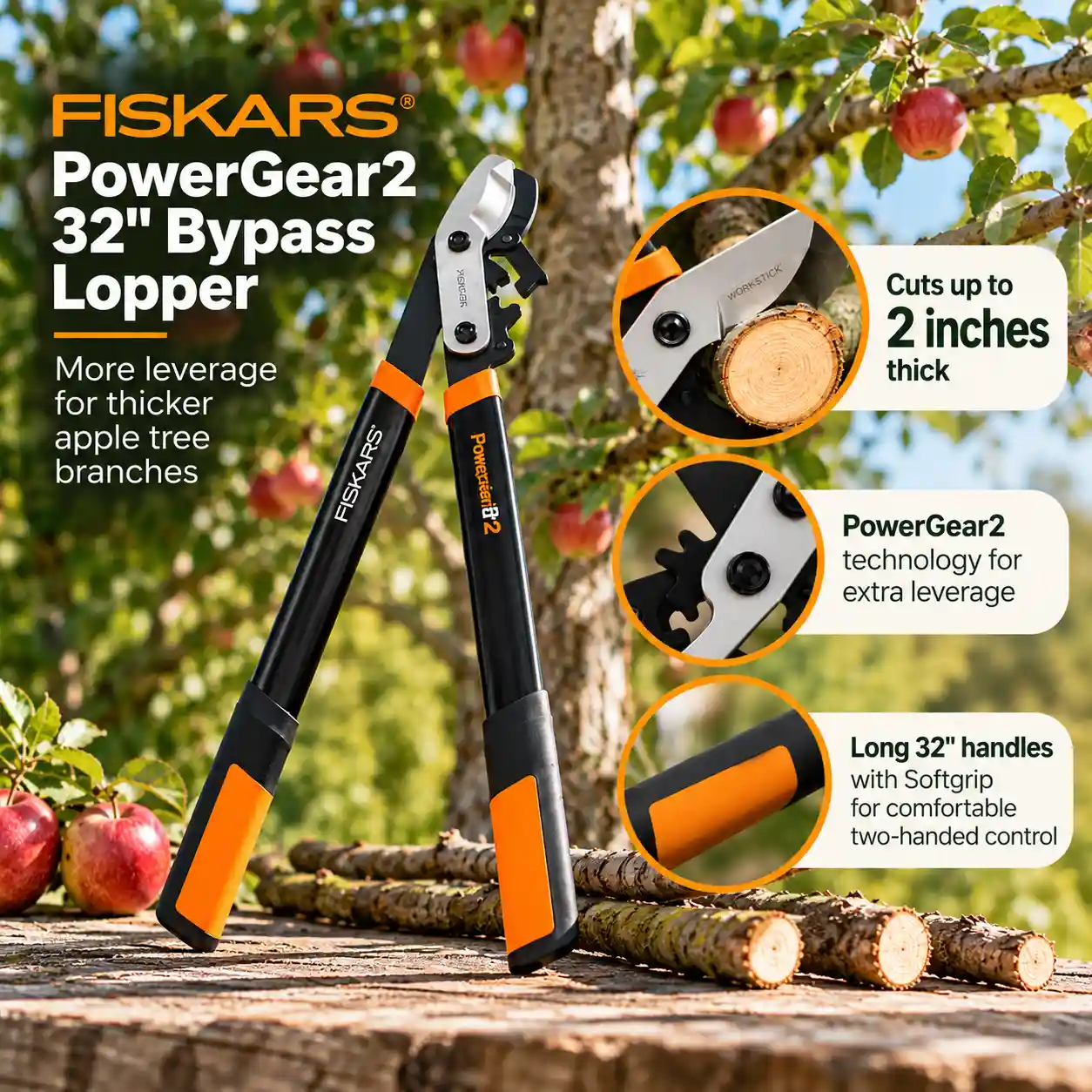
When comparing pruning shears vs loppers, start with the diameter and toughness of the branch. Hand pruners are compact and precise, but forcing them through wood that is too large can damage the plant and dull or ruin the tool.
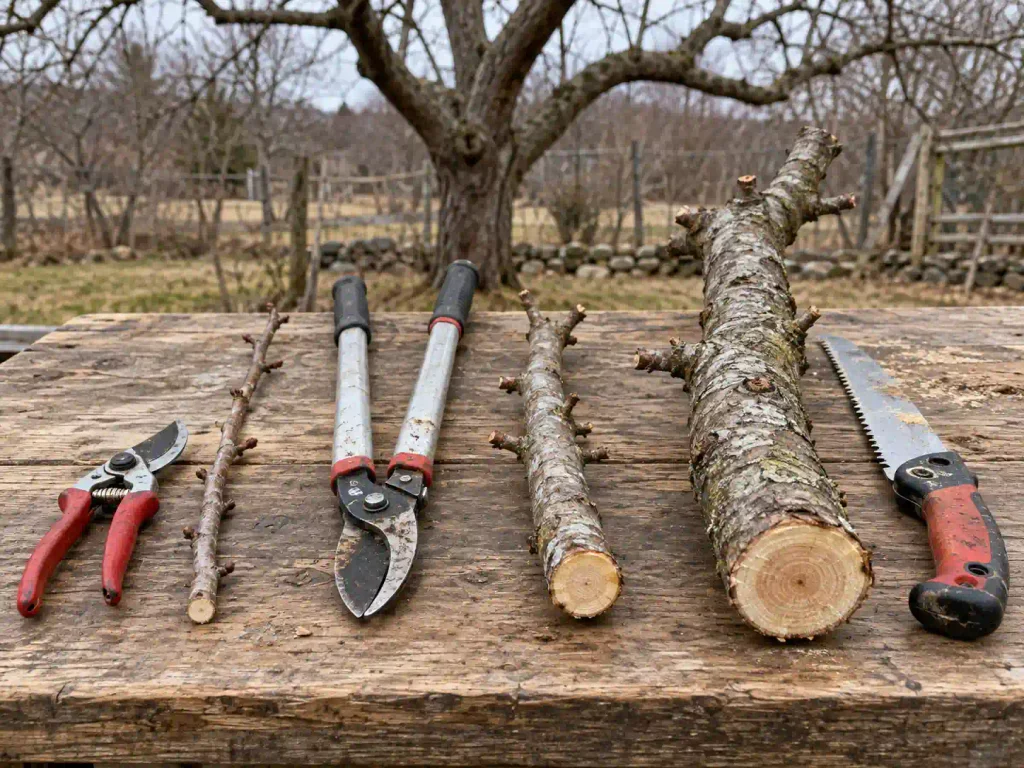
Loppers solve that problem with longer handles that multiply leverage. However, a branch that still requires straining, bouncing on the handles, or twisting the cutter is a sign to stop and use a larger apple tree pruning tool, usually a pruning saw.
Why branch size matters on apple trees
Young apple trees often need many small training cuts, so hand pruners do most of the work. Mature trees can have older laterals and crowded scaffold wood where loppers become useful, although the largest renovation cuts belong to a saw rather than an oversized squeeze with loppers.
This distinction also protects the branch collar. Extension pruning guidance emphasizes clean removal cuts close to the collar and warns against bark tearing on larger limbs, so tool choice should support a controlled cut rather than merely getting through the wood.
2. Pruning shears give better precision
Precision is where hand pruners have the clearest advantage in the pruning shears vs loppers comparison. Their short handles and one-handed operation make it easier to position the blade around a small shoot, work between neighboring branches, and make selective cuts without bumping nearby buds or fruiting wood.
That control is especially useful on young trees. University of Maryland Extension recommends removing poorly spaced and narrow-angled branches while they are still small, which reduces the need for larger cuts later.
Best jobs for pruning shears
- Removing water sprouts while they are still small
- Cutting suckers at the base of the trunk
- Removing thin dead, damaged, crossing, or inward-growing shoots
- Making selective training cuts on young apple trees
- Cleaning up small twiggy growth in a mature canopy
If most of your annual work falls into those categories, pruning shears will spend more time in your hand than loppers. For a broader pruning sequence, see how to prune apple trees before deciding which cuts to make.
3. Loppers trade precision for leverage and reach
Loppers are two-handed cutters with much longer handles, so they can generate more cutting force with less hand squeeze. In the pruning shears vs loppers comparison, that makes loppers more comfortable when a branch is within the tool’s capacity but too large to cut cleanly with hand pruners.
The extra handle length also gives modest reach into the canopy. Still, loppers are not pole pruners, and they should not tempt you to overreach, work from an unstable ladder, or make a cut you cannot see clearly.
Best jobs for loppers
- Medium-diameter live branches that exceed hand-pruner capacity
- Selected older laterals during canopy thinning
- Branches slightly deeper in the canopy when the jaws can be positioned safely
- Dead wood that is within the lopper’s rated cutting capacity
For dormant structural pruning, the timing matters as much as the tool. University of Minnesota Extension recommends pruning apple trees in late winter or early spring after the coldest weather has passed and before growth begins, while University of Maryland gives a similar late-winter window for annual pruning.
4. Bypass vs anvil matters for both tools
In pruning shears vs loppers, both tools can use bypass or anvil cutting heads. University of Maryland Extension favors bypass hand pruners because the curved blade slides past the lower blade and is less likely to crush living tissue.
For live apple branches, that makes bypass models the safer default. Anvil tools can be useful on dead wood, but a crushing action is not what you want when making a clean cut on living tissue that will remain on the tree.
Extension consensus: Use sharp tools that match the branch size, favor clean bypass cuts on live wood, avoid forcing a cutter beyond its capacity, and place removal cuts at the branch collar. Those basics matter more than brand or handle color.
5. Hand fatigue can change the right choice
Real-world gardeners repeatedly mention hand pain, grip strength, tool weight, and balance when discussing pruning shears vs loppers. That concern is reasonable because repeated one-handed squeezing can become tiring, while long loppers shift more of the work to both arms and the leverage of the handles.
However, heavier is not automatically easier. A long lopper can be tiring overhead or awkward inside a dense canopy, so choose a tool you can open, position, and close without losing control.
Use the smallest tool that makes the cut cleanly
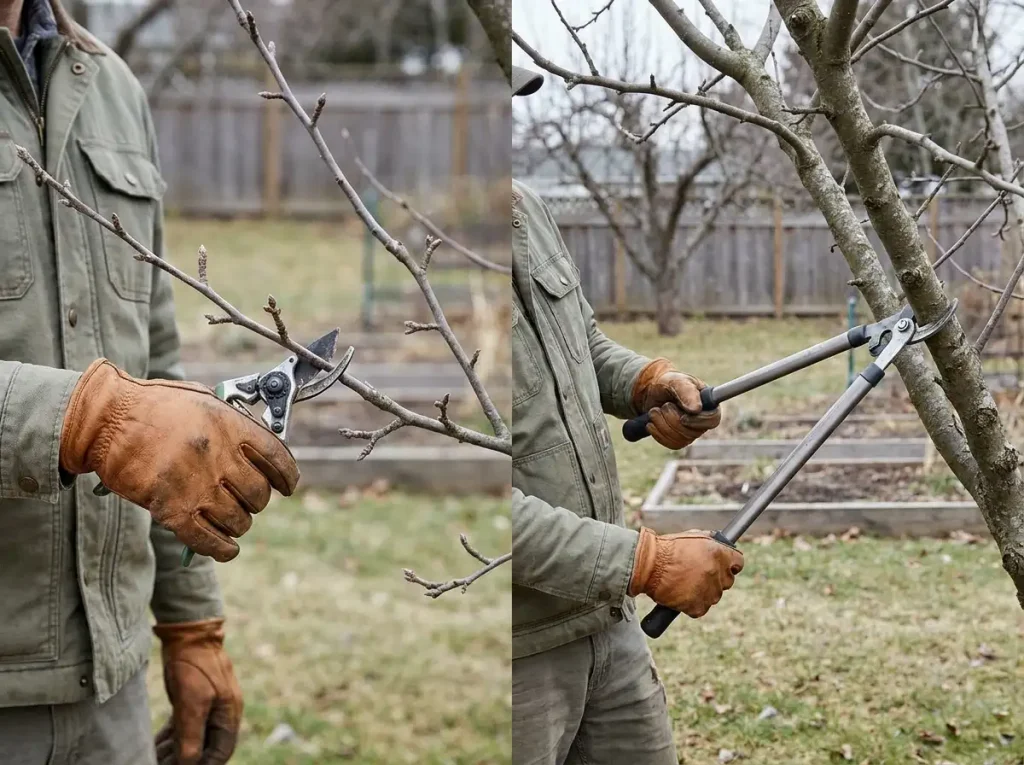
For pruning shears vs loppers, a useful decision rule is simple: start with hand pruners for a small, accessible branch. Move to loppers when the branch is too large for an easy one-handed cut, then move to a pruning saw when the loppers are at their limit.
This approach reduces forcing and keeps the job efficient. It also matches the logic in our apple tree pruning tools guide, where each tool has a specific range rather than one tool trying to do everything.
Pruning Shears vs Loppers: Pros & Cons
Pruning Shears: Pros & Cons
Pros
- Better precision on small cuts
- Easier to use in tight spaces
- One-handed operation
- Good fit for water sprouts, suckers, and young laterals
Cons
- Lower cutting capacity
- More hand squeezing on thicker wood
- Can be damaged if forced through oversized branches
Loppers: Pros & Cons
Pros
- More leverage for thicker branches
- Two-handed operation reduces one-hand strain
- Longer handles provide additional reach
- Better suited to medium branches
Cons
- Bulkier in dense canopies
- Less precise around nearby buds and fruiting wood
- Heavier and more awkward overhead
- Still not suitable for branches beyond lopper capacity
6. Sharpness and sanitation affect both tools
A dull blade makes the pruning shears vs loppers decision almost meaningless because either tool can leave a rough cut when poorly maintained. University of Maryland Extension recommends keeping cutting edges sharp and notes that clean cuts avoid stubs, split branches, and torn bark.
If disease may be present, clean visible debris from the tool and disinfect it before moving from infected material to healthy tissue or another tree. University of Minnesota Extension also recommends cleaning and disinfecting pruners, loppers, and pruning saws when disease transmission is a concern.
Maintenance checklist for pruning shears vs loppers
- Check that blades are sharp and free of nicks.
- Confirm the pivot opens and closes smoothly.
- Remove sap, dirt, and plant residue.
- Disinfect tools when working around suspected disease.
- Use the manufacturer’s rated cutting capacity as the upper limit.
7. Which tool should you buy first?
For a backyard grower with young or regularly maintained apple trees, pruning shears are usually the first cutting tool to own because so many routine cuts are small and selective. Loppers become the logical second tool when branches routinely exceed hand-pruner capacity or when you need more leverage.
That does not make one side of pruning shears vs loppers universally better. They are complementary tools, and a mature home orchard often benefits from pruning shears, loppers, and a pruning saw rather than one oversized tool.
Pruning shears vs loppers decision matrix
| If the branch is… | Start with… | Why |
|---|---|---|
| Small, flexible, and easy to reach | Pruning shears | Better control and fast one-handed cuts |
| Thicker but still within lopper capacity | Loppers | More leverage with less grip force |
| Too thick for a clean lopper cut | Pruning saw | A saw is designed for larger wood |
| Diseased or suspect | Correct-size sharp tool plus sanitation | Clean, controlled cuts and lower risk of carrying debris between cuts |
| High enough that you must overreach | Reassess access | Do not trade control for reach |
Once you understand pruning shears vs loppers, tool choice becomes much faster. If you are pruning during the dormant season, our apple tree pruning in winter guide covers timing and structural priorities. For the full system behind canopy management, see the main apple tree pruning guide.
FAQs
Are loppers better than pruning shears?
No single tool wins every pruning shears vs loppers comparison. Pruning shears are better for small, precise cuts, while loppers are better when a thicker branch needs two-handed leverage.
How thick a branch can pruning shears cut?
Branch diameter is the practical dividing line in pruning shears vs loppers.
University extension guidance commonly places hand-pruner capacity around 3/4 to 1 inch, but the exact limit depends on the tool and the wood. Use the manufacturer’s rating and stop if you need excessive force.
When should I switch from loppers to a pruning saw?
Switch when the branch is beyond your lopper’s rated capacity or the cut no longer feels smooth and controlled. Forcing loppers can damage the tool and make a poor cut, so a pruning saw is the better next step.
Related Articles
Sources
- University of Maryland Extension: Pruning Tools
- University of Minnesota Extension: Pruning and Training Apple Trees
- University of Maryland Extension: Growing Apple and Pear Trees in a Home Garden
- University of Minnesota Extension: Caring for Winter Pruning Tools
Disclaimer: This article provides general pruning guidance based on university extension research. Pruning requirements vary by variety, rootstock, tree age, and regional climate. When in doubt, consult a certified arborist or your local cooperative extension service.
