
Apple Tree Pests: 10 Harmful Bugs and Proven Controls
Apple tree pests include fruit-boring larvae, sap-sucking aphids, scale insects, leaf-feeding beetles, and mites. Identify them by combining visible insects with damage patterns such as core tunnels, sticky, curled leaves, cottony bark colonies, or skeletonized foliage. Effective management starts with correct identification, regular inspection, and controls timed to the pest’s vulnerable life stage.
Table of Contents
Key Takeaways
- Apple tree pests can damage fruit without seriously threatening the tree itself.
- Cut open damaged apples and inspect leaf undersides before choosing a treatment.
- Fruit bags, sanitation, hand removal, and beneficial insects can reduce pesticide use.
- Traps have different jobs: monitoring moth activity is different from protecting every apple.
- Use local pest advisories and product labels instead of a nationwide spray calendar.
How to Identify Apple Tree Pests Before Treating
Finding apple tree pests on a favorite backyard tree raises two separate questions: will the tree recover, and can you protect the crop? A few damaged leaves and larvae tunneling through developing apples require different decisions.
First, locate the damage on fruit, leaves, shoots, or bark. Then look for the insect itself, its eggs, silk, shed skins, or frass, the waste material left by feeding insects.
This guide covers ten useful identification categories for US home growers, including two distinct aphid problems and one mite group. However, these are not ten equally important pests in every region, and mites are arachnids rather than insects.
This video accompanies Utah State University’s woolly apple aphid guidance. Use it for that specific pest, and check current labels before applying any treatment mentioned.
A repeatable inspection for apple tree pests
Start with reachable branches on different sides of the tree, including both damaged and apparently healthy growth. Next, photograph the whole affected branch before taking close-ups so a diagnostic adviser can see the pattern.
- Turn leaves over and gently open a curled leaf.
- Inspect several fruit clusters, including where leaves touch apples.
- Cut through a damaged apple and note whether tunnels reach the core.
- Check branch junctions, old pruning cuts, and the lower trunk.
- Record the date, tree growth stage, recent treatments, and whether damage is spreading.
Confirm the pest before naming the problem.
Leaf curl alone does not identify apple tree pests, and a hole does not establish which insect made it. For example, fungal problems and environmental injury can also distort leaves or mark fruit, as the RHS apple problem guide illustrates.
Use the table below to narrow the possibilities, then compare the pest profiles. For additional diagnostic comparisons, see our apple tree pests identification guide.
Apple Tree Pests at a Glance
| Pest | Most useful clue | First response |
|---|---|---|
| Codling moth | Frass near a fruit hole; tunnel toward seeds | Inspect cut fruit; use local moth monitoring |
| Apple maggot | Winding brown trails through flesh | Remove fallen fruit; plan early exclusion |
| Plum curculio | Crescent-shaped scar on young fruit | Check fruit after petal fall |
| Green and rosy apple aphids | Colonies inside sticky, curled leaves | Check predators and new shoot growth |
| Woolly apple aphid | Cottony colonies around bark wounds | Inspect colony margins and root suckers |
| San Jose scale | Tiny bark shields; red halos on apples | Confirm scale and identify crawler timing |
| Spider mites | Fine stippling, bronzing, sometimes webbing | Examine leaf undersides with magnification |
| Leafrollers | Silk-fastened leaves sheltering caterpillars | Open rolled leaves and inspect nearby fruit |
| Japanese beetles | Metallic beetles and lacy leaf damage | Handpick reachable adults |
| Brown marmorated stink bug | Sunken fruit spots with internal browning | Confirm bugs as well as fruit injury |
These clues identify candidates rather than provide a diagnosis by themselves. In particular, several apple tree pests can occupy the same tree, so match each symptom to the relevant profile and its linked extension source.
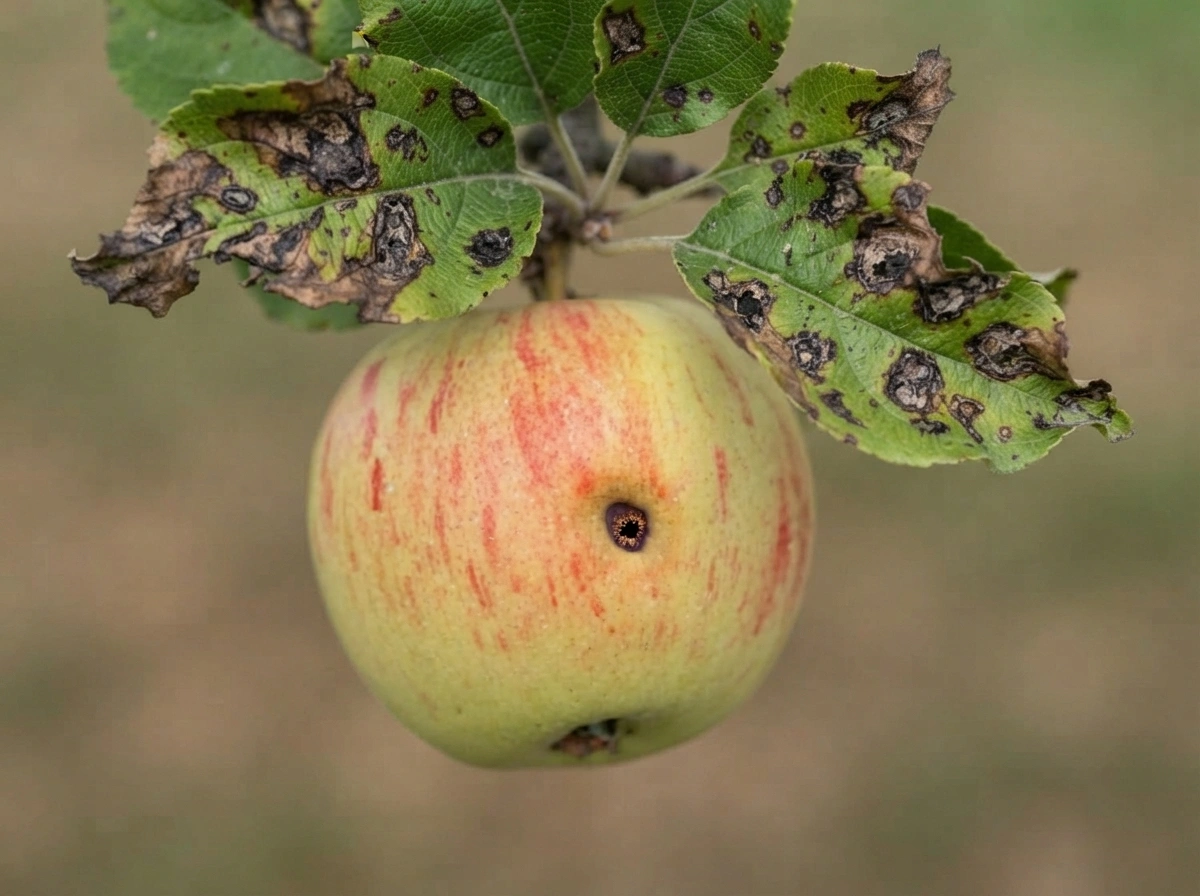
10 Common Apple Tree Pests and What to Do About Them
1. Codling moth: tunnels leading into the core
Codling moth larvae are pale caterpillars with darker heads that tunnel into apples and feed near the seeds. Brown, crumbly frass around an opening provides a stronger clue than an unmarked surface blemish.
First, cut through the opening and follow the tunnel toward the core. However, an empty tunnel can mean the caterpillar has already left, rather than that insects were never involved.
Remove infested fruit and use locally recommended fruit protection before larvae enter apples. A codling moth pheromone trap helps track adult activity, but catching males does not by itself protect the crop; see Minnesota Extension’s codling moth guidance.
2. Apple maggot: winding trails through the flesh
Apple maggot larvae leave irregular brown trails through the flesh, unlike the characteristic core-directed feeding of codling moth. The adult is a small fly with patterned wings, while its pale larvae can be difficult to find.
For these apple tree pests, preventing egg laying is more useful than reacting to rotten tunnels. Collect fallen apples promptly and avoid putting infested fruit in an ordinary backyard compost pile.
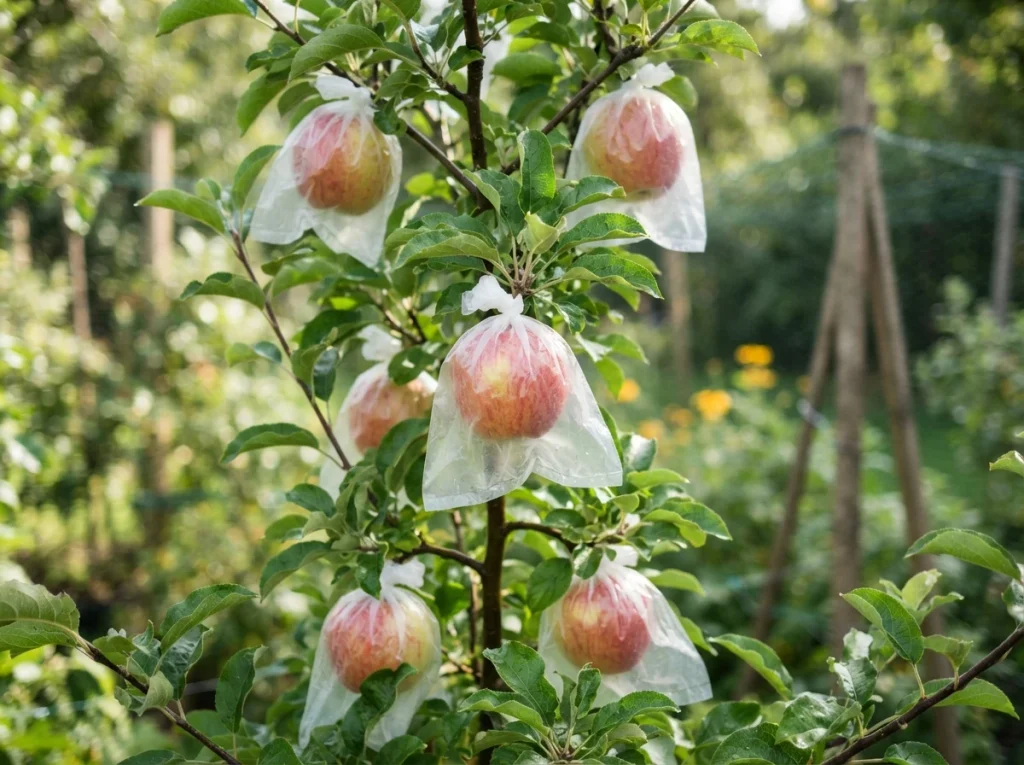
Fruit bags and properly enclosed netting can protect fruit when installed before attack and after pollination. Red sticky spheres help monitor flies; the Minnesota apple maggot guide explains these options, but its seasonal dates apply to Minnesota.
3. Plum curculio: crescent scars on small apples
Plum curculio is a snout beetle whose egg-laying cuts leave distinctive crescent-shaped scars. Additionally, its feeding punctures can contribute to misshapen fruit and early drop.
Watch young apples during warm weather after petal fall, especially where this pest has damaged previous crops. Unlike a midsummer leaf problem, this early fruit injury calls for decisions while apples are still small.
Kaolin particle films can reduce infestation when used correctly, and locally recommended insecticides may be appropriate under substantial pressure. However, neither reverses existing scars; Penn State’s plum curculio guidance emphasizes the early postbloom control window.
4. Green and rosy apple aphids: sticky curled leaves
Aphids cluster on tender growth and leaf undersides, where feeding can produce curled leaves and sticky honeydew. Rosy apple aphids can also distort developing fruit, so identifying the type improves decisions about these apple tree pests.
First, open a curled leaf and check for living aphids alongside lady beetle larvae, lacewings, or other predators. Small colonies on a vigorous mature tree may require observation, while stunted shoots on a young tree deserve closer attention.
A directed stream of water can dislodge exposed aphids, and labeled insecticidal soaps or horticultural oils are options when treatment is justified. However, contact products need to reach the insects; consult Minnesota Extension’s aphid management advice and our apple tree aphids guide.
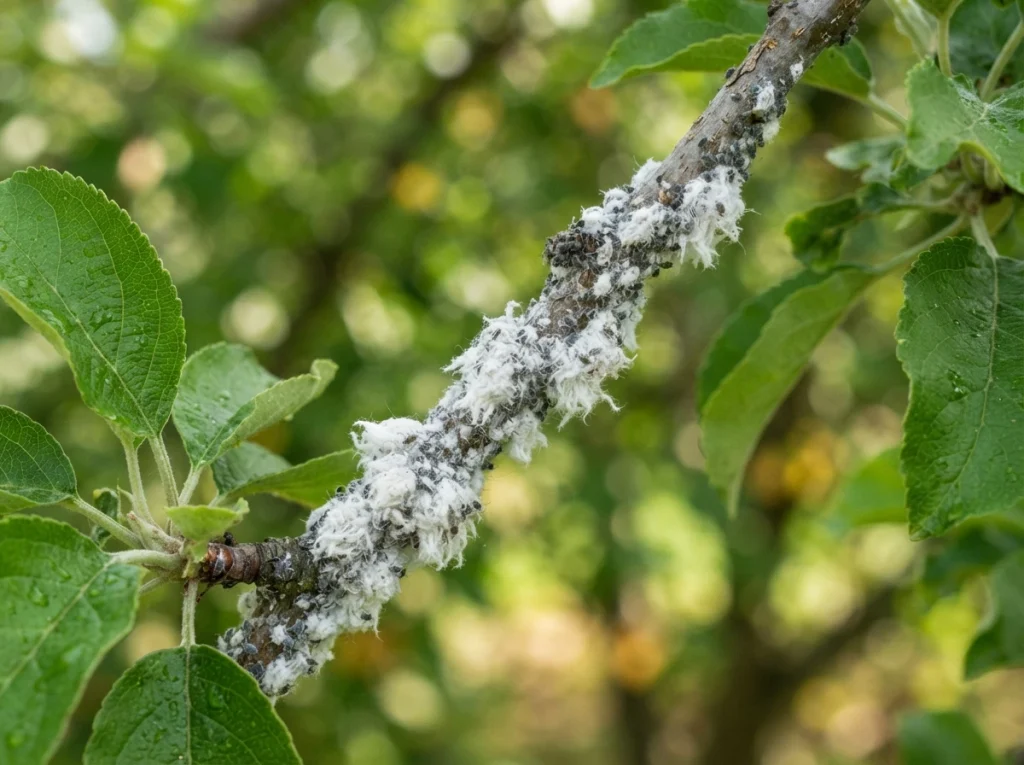
5. Woolly apple aphid: white cotton on bark
Woolly apple aphids form wax-covered colonies around wounds, pruning cuts, and other sheltered sites. Beneath the white material are reddish-purple insects, which distinguishes a colony from an unexplained patch of white residue.
Additionally, these apple tree pests can feed on roots and cause swellings on roots or twigs. Therefore, clearing visible colonies does not prove that the entire infestation has disappeared.
Inspect new colony growth and use targeted, apple-labeled treatment when needed, with attention to coverage through the wax. Utah State’s woolly apple aphid guidance explains why dormant oil alone may provide incomplete control; our woolly apple aphid article explores the problem further.
6. San Jose scale: tiny shields on wood and fruit
San Jose scale insects hide beneath small, rounded protective covers on bark. On apples, feeding can leave red halos around the settled scales, while heavy infestations can weaken branches.
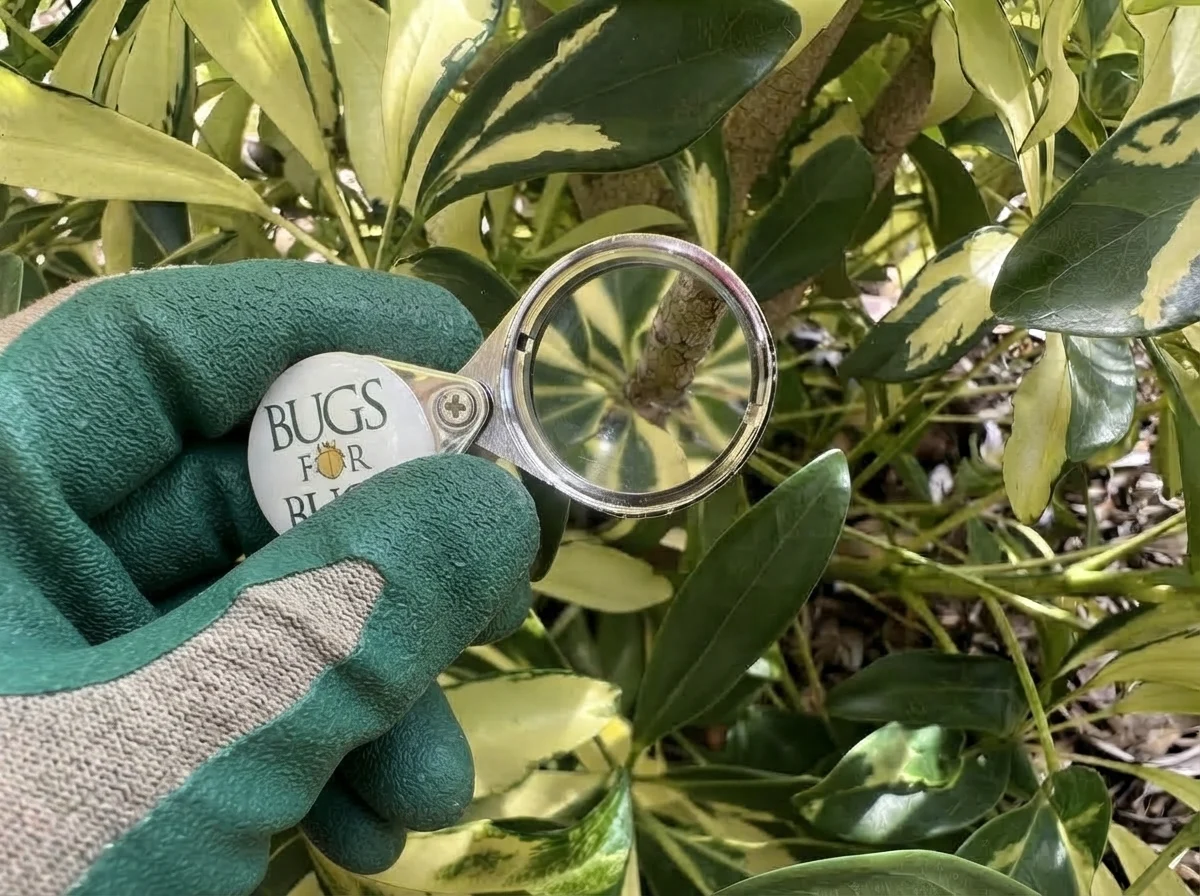
Because these apple tree pests barely resemble moving insects, inspect suspicious bark with a hand lens. However, do not assume every rough patch or natural bark feature is scale.
Management often targets overwintering stages with appropriately timed horticultural oil or the exposed crawler stage with a labeled product. Timing matters because established armored scales are harder to reach; use Maryland Extension’s San Jose scale guidance to understand the life cycle.
7. Spider mites: pale speckling and bronzed leaves
Spider mites are tiny arachnids that remove leaf cell contents, producing fine stippling that can progress to bronzing. Heavy infestations may produce delicate webbing, although the absence of obvious webs does not exclude mites.
During hot, dry conditions, examine affected leaf undersides with magnification. Next, compare damaged leaves with healthier ones instead of assuming that every brown leaf indicates these apple tree pests.
Protect predatory mites, reduce water stress, and consider an apple-labeled soap or oil only when needed. Broad insecticide use can disrupt natural control; Minnesota’s spider mite guidance covers inspection and management, while our apple tree spider mites guide focuses on apples.
8. Leafrollers: caterpillars inside silk-bound leaves
Leafrollers use silk to fold or fasten leaves into feeding shelters. Additionally, they can scar fruit where a leaf or another apple provides cover.
Open suspicious leaves carefully and look for a caterpillar, silk, and feeding debris together. Compared with apple tree pests that tunnel deeply into fruit, leafrollers often leave surface injury beside their shelter.
Remove isolated occupied rolls where practical, and consider a labeled Bacillus thuringiensis product for susceptible young caterpillars when treatment is warranted. However, it must be eaten to work; Utah State’s leafroller guide also explains how thinning crowded fruit reduces protected feeding sites.
9. Japanese beetles: lacy leaves and metallic adults
Japanese beetles have metallic green bodies, coppery wing covers, and small white hair tufts along their sides. They chew tissue between leaf veins, producing a skeletonized appearance that can look dramatic.
First, remove reachable beetles by hand or knock them into soapy water, particularly when they are sluggish in cool conditions. Concentrate attention on young trees with limited foliage and on continuing damage.
However, baited Japanese beetle traps can attract more beetles to nearby plants rather than protect them. The Minnesota Extension beetle guide explains why an impressive trap catch is not evidence that your tree benefits.
10. Brown marmorated stink bug: dimples and internal browning
Brown marmorated stink bugs pierce fruit to feed, leaving depressed areas and damaged tissue beneath the skin. Both immature bugs and adults can injure crops, although the damage varies with feeding stage and fruit development.
However, a dimpled apple alone does not confirm these apple tree pests. Compare fruit symptoms with observed shield-shaped bugs, and seek identification when the insect or injury is uncertain.
For a few reachable insects, physical removal is a practical first response; repeated immigration makes broader control more complicated. Maryland Extension’s stink bug FAQ describes the feeding injury and management limitations.
Decide Whether Apple Tree Pests Need Treatment
Separate fruit loss from tree decline
A wormy harvest can be disappointing even when the tree remains vigorous. In contrast, repeated severe foliage loss or extensive scale injury raises a different concern about tree growth and survival.
Penn State separates direct fruit pests from indirect pests that primarily affect other tree tissues. Use that distinction when deciding whether your immediate goal is protecting apples, preserving young growth, or diagnosing decline.
Extension-based management principle, paraphrased: Identify the pest, determine whether intervention is needed, and choose a treatment that fits its biology. Protect natural enemies as part of the control plan.
Make the next decision explicit.
For apple tree pests, a useful inspection ends with a specific next step. Write one of these decisions in your notes so repeated checking produces actionable information.
- Observe: document limited injury and compare new growth at the next inspection.
- Remove: collect affected fruit or physically remove an accessible pest.
- Protect: install suitable barriers before further fruit attack.
- Confirm: send photographs or a specimen when symptoms overlap.
- Treat: use a suitable labeled product after identifying the target and timing.
Control Options: What Each Method Can Accomplish
Start with practical physical controls
Fruit bagging is especially useful when you can reach a manageable number of apples, while collecting infested drops removes a local pest source. However, sanitation cannot prevent every flying insect from arriving from neighboring trees.
Choose undamaged fruit for protection and inspect barriers for openings as apples grow. For a broader plan addressing apple tree pests, see our apple tree pest control guide.
Understand organic options and their limits.
Organic management of apple tree pests can combine exclusion, natural enemies, particle films, and appropriate pesticides. However, a material’s natural origin does not establish its effectiveness against a particular insect or its suitability during bloom.
Kaolin discourages some attacks through a maintained particle coating, whereas insecticidal soaps act through direct contact with susceptible pests. Explore our organic apple tree pest control guide for method selection, and verify the individual product’s apple labeling and organic eligibility.
Select pesticides by pest, crop, and life stage.
No single spray reliably controls all apple tree pests. For example, an insecticide chosen for a fruit-feeding moth should not be assumed effective against mites, and a fungicide is not a substitute for insect control.
Penn State’s insecticide and miticide comparison demonstrates that effectiveness varies by target. Additionally, it warns that broad-spectrum products can harm bees and predatory insects.
Read the label before mixing or spraying.
Check that the product permits use on edible apples and your target pest, then follow its rate, protective equipment, application limits, and preharvest interval. Also check bloom restrictions, temperature precautions, and compatibility before combining products.
Do not substitute dish detergent for a formulated insecticidal soap or improvise mixtures from unrelated recommendations. For uncertain applications, ask your local extension service or a qualified licensed applicator to help interpret the label.
Prevent Apple Tree Pests Through the Growing Season
Dormancy and bud development
Review last season’s photographs and inspect bare branches for persistent scale or other suspicious signs. Next, obtain local advice on whether an oil treatment is appropriate for an identified overwintering pest.
A dormant application is one possible tool, not complete protection from apple tree pests arriving later. Build the season’s plan around the problems actually documented on your tree.
Bloom and newly set fruit
During bloom, prioritize pollinator protection and follow all product restrictions. After petal fall, inspect developing fruit and begin the locally appropriate monitoring or exclusion program.
For moth pests, local advisories may use temperature accumulation and trap catches to estimate activity. Therefore, a calendar date copied from another state may miss the relevant stage of apple tree pests in your orchard.
Summer, harvest, and cleanup
Continue checking fruit, new shoots, and the undersides of leaves as the season progresses. Additionally, record whether fresh damage appears after an intervention rather than judging success by old scars.
At harvest, compare representative fruit with your spring and summer notes. This simple record helps separate apple tree pests that affected only a few apples from recurring problems needing earlier protection next season.
When to Call a Professional
Seek diagnostic help when branches are declining, the trunk has suspicious holes or debris, or treatments repeatedly fail. These signs may involve problems beyond the ten categories here, including apple tree borers.
Send clear photographs of the whole tree, affected tissue, and any insect, plus your location and treatment history. Additionally, use professional help when the canopy cannot be inspected or treated safely from the ground.
FAQs
What is eating my apple tree leaves?
Leafrollers and Japanese beetles are possibilities, but other caterpillars can also chew apple foliage. First, look for the insect and silk shelters; visible chewing separates this problem from sap-feeding apple tree pests that usually cause curl or stippling.
How do I tell apple maggots from codling moth larvae?
Codling moth injury often leads toward the core and includes coarse frass near an opening. In contrast, apple maggot feeding produces winding trails through the flesh, making a cut-open apple useful when identifying these fruit pests.
Can I control apple tree pests without spraying?
Often you can reduce damage through fruit protection, sanitation, physical removal, and conservation of predators. However, results depend on the pest, local pressure, and how much fruit you can protect, so inspect regularly instead of assuming one method covers everything.
Why are my apple tree leaves curled and sticky?
Aphids are a strong possibility when curled leaves contain colonies and sticky honeydew. However, inspect inside the curl before diagnosing apple tree pests, since leaf distortion has other causes and beneficial insects may also be present.
Why do I still find worms after spraying my apple tree?
The product may not target the insect, the application may have missed its vulnerable stage, or protection may have been incomplete. For fruit-boring apple tree pests, review identification, trap records, weather, coverage, and label instructions before repeating the treatment.
Sources
- RHS: Apple tree problems
- University of Minnesota: Codling moths in home orchards
- University of Minnesota: Apple maggots
- Penn State: Plum curculio in home fruit plantings
- University of Minnesota: Aphids
- Utah State: Woolly apple aphid
- University of Maryland: San Jose scale
- University of Minnesota: Twospotted spider mites
- Utah State: Leafrollers in fruit orchards
- University of Minnesota: Japanese beetles
- University of Maryland: Brown marmorated stink bug FAQ
- Penn State: Important insects and mites
- Penn State: Efficacy of insecticides and miticides
- Utah State: Backyard orchard apple pests
- Utah State: Apple pest monitoring resources
Disclaimer: This article is for informational purposes only; apple tree disease and pest identification in the field can be challenging. For a confirmed diagnosis, consult a certified arborist or your local university cooperative extension plant diagnostic clinic. Always read and follow pesticide label directions before applying any product.
