Apple Tree Frost Damage: 5 Bad Signs & 7 Proven Steps
Apple tree frost damage can kill flower centers, injure new leaves, scar developing fruit, or damage young bark. To assess it, check the tree’s stage when temperatures fell, cut a small sample of flower buds to inspect their centers, and watch surviving shoots and fruitlets before deciding on pruning or fertilizing.
Affiliate disclosure: As an Amazon Associate I earn from qualifying purchases. This article contains affiliate links. If you make a qualifying purchase through these links, AppleTreeGuide may earn a commission at no additional cost to you.
Table of Contents
Key Takeaways
- Apple tree frost damage to blossoms is different from winter injury to the trunk and branches.
- A flower can look healthy outside while its reproductive center has turned brown.
- Wait for visible regrowth before removing questionable shoots, and avoid fertilizer or sprays intended as a quick cure.
A sudden cold night is unsettling when your apple tree is covered in pink buds or flowers. However, a brown blossom does not automatically mean the whole tree is dying, and a green canopy does not guarantee a fruit crop.
This apple tree frost damage guide separates crop injury from tree injury, shows how to inspect a few representative buds, and explains what to do next. For seasonal background, see our apple tree winter care guide and explanation of apple tree dormancy.
5 Signs of Apple Tree Frost Damage
Apple tree frost damage looks different depending on whether the freeze struck during dormancy, budbreak, flowering, or fruit development. Therefore, record the tree’s growth stage before interpreting what you see. Penn State Extension documents substantial variation in injury within the same tree and between cultivars after a freeze.
1. Brown or black centers inside blossoms
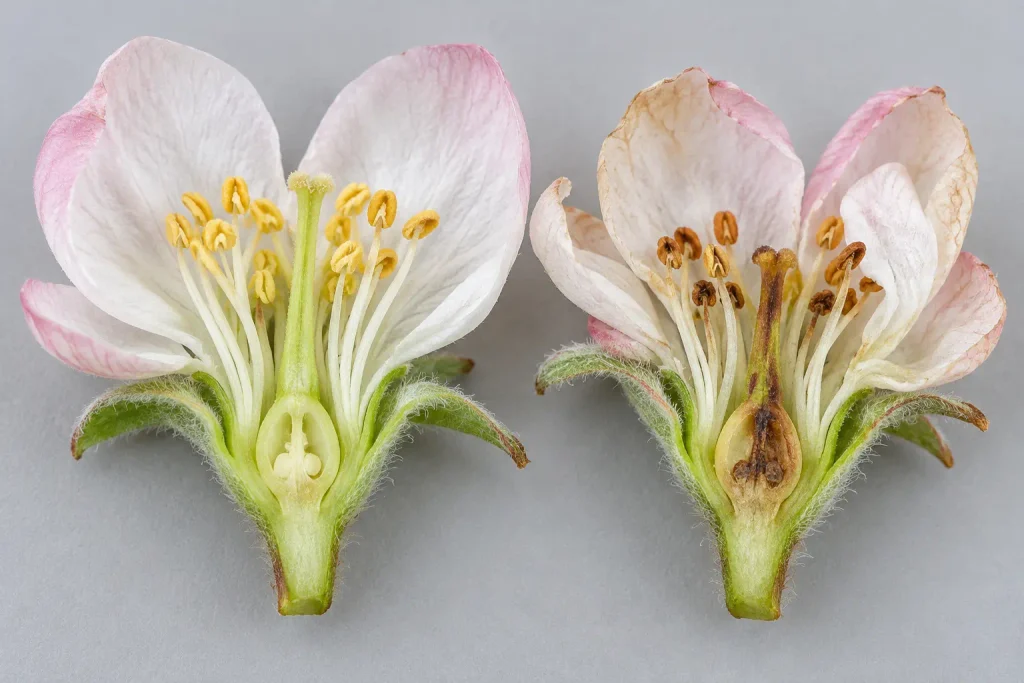
Cut an affected flower lengthwise with a clean, sharp blade. A brown or black pistil or ovary suggests injury to reproductive tissue, even when the surrounding petals still look white or pink. In contrast, a green or pale, healthy-looking center is more encouraging, although later fruit set is the final test.
The first, central flower in a cluster is called the king blossom. It may be injured while the smaller side flowers survive, so check more than one flower before judging the entire cluster.
2. Wilted, darkened, or dropped flowers
Apple tree frost damage can leave flowers brown, collapsed, or dropping after a cold event. Yet petals also fade naturally as bloom ends, and a flower’s appearance alone cannot confirm whether its reproductive parts survived. Open a few blooms and compare their centers.
3. Brown, curled or limp young leaves
When apple tree frost damage reaches tender new foliage, leaves may discolor or droop after freezing weather. If established buds and wood remain alive, a tree may produce replacement foliage, although the affected leaves will not become green again.
Do not treat leaf browning as proof of frost injury without checking the weather history and other causes. Drought, root stress, insects, and disease can produce overlapping symptoms.
4. Small fruit that stalls, drops, or develops a ring
Apple tree frost damage after bloom can leave young apples stalled, dropping, or marked with corky rings and surface scars. Penn State describes delayed frost-ring symptoms following injury to very small fruitlets, which means the damage may not be obvious the next morning.
Apple tree frost damage to young fruit is not necessarily damage to the entire tree. Watch fruitlet growth over the following days, and do not assume every flower or fruitlet on the canopy was affected equally.
5. Split or sunken bark on a young trunk
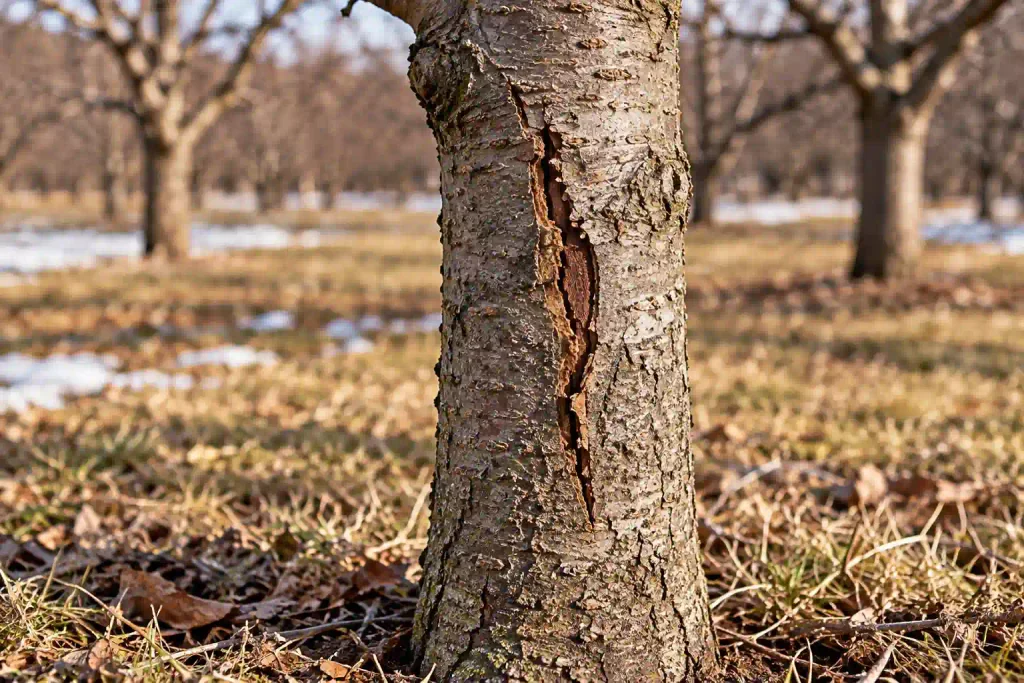
Long vertical cracks or dead-looking patches on the south or southwest side of a young apple tree trunk can suggest winter sunscald or related cold injury. This develops differently from a late spring freeze that kills blossoms, so the location and timing matter.
Check whether the wound is widening, whether new growth emerges above it, and whether the bark remains firmly attached. Severe damage around much of the trunk deserves a professional assessment rather than home wound surgery.
| What you notice | What it may mean | Best next check |
|---|---|---|
| Brown center inside an open flower | Possible reproductive tissue death | Dissect several king and side flowers |
| Brown petals, but a pale center | Normal fading or less severe injury | Watch whether fruitlets develop |
| Brown young leaves after freezing | Possible tender-growth injury | Monitor buds and subsequent growth |
| Small apples with corky rings | Possible frost injury after bloom | Track fruitlet size and shape |
| Vertical crack in young trunk | Possible winter sunscald | Inspect bark and new growth |
Why the Same Freeze Hurts Some Apple Trees More
Apple tree frost damage is governed by tissue temperature, exposure length, bud stage, and location. Dormant buds are relatively cold hardy, but as they swell and open, they lose much of that protection. For that reason, your local low temperature is useful evidence, not a complete diagnosis.
Open apple blossoms can be injured at roughly 28°F under some conditions. However, that is not a universal cutoff for every cultivar, flower, or freeze event. A sheltered upper branch and a flower near the bottom of the same tree may experience different outcomes.
Extension-based consensus: Bud stage and actual tissue condition are more informative than a single forecast low. First check which flowers are still viable; then observe how the surviving fruit and shoots develop before changing your care plan.
Use bud stage, not just your USDA hardiness zone
A USDA hardiness zone describes typical extreme winter minimums; it cannot tell you when this year’s blossoms will open. Mild spells and the tree’s chilling and heat accumulation help determine bud development. Our guide to apple tree chill hours explains why winter cold and spring flowering are related but not interchangeable.
Apple tree frost damage may also be greater in low ground where cold air settles. Therefore, note whether the damaged flowers occur across the tree or are concentrated on lower branches or particular cultivars.
Watch: Cornell Cooperative Extension’s frost protection webinar explains apple bud development, freeze risk, and the limits of different protection methods. It is aimed mainly at orchard growers, so the inspection principles are more useful here than its commercial treatment discussions.
How to Check the Damage Before You Act
Check 1: Write down the freeze and growth stage
When checking apple tree frost damage, record the date, lowest measured temperature if available, approximate hours of exposure, wind, and whether buds were closed, pink, or open. Then photograph the whole tree and a few affected clusters to compare with later growth. A nearby weather station may not match the actual temperature in your yard.

For Tracking Overnight Lows
TempPro TempAir Wireless Therm
Monitor air temperature near your apple tree with a wireless outdoor sensor. The indoor display stores 24-hour highs and lows to help you track overnight cold conditions.
- Check outdoor temperature from an indoor display
- Review 24-hour minimum and maximum readings
- Place the wireless sensor near your apple tree
Best for: Monitoring air temperature near apple trees and checking overnight lows from indoors.
Price, rating, and availability may change.
Affiliate disclosure: We may earn a commission from qualifying purchases made through this link, at no additional cost to you.
Check 2: Dissect several flowers across the canopy
After flowers have thawed, cut a small sample from high and low branches and from both central and side blossoms. Look at the ovary and pistil rather than relying on petal color. This gives a more useful picture of apple tree frost damage than examining one unusually brown flower.
A pale or green reproductive center is encouraging; a uniformly dark, water-soaked center is concerning. Nevertheless, this is a field check, not a guarantee of pollination or fruit production.
Check 3: Follow fruitlets and shoots over time
Mark a few clusters with loose tags and take repeat photographs from the same angle. If fruitlets enlarge and healthy leaves emerge, the tree is functioning even if some blossoms were lost. Conversely, fruitlets that stop growing or fall may confirm crop injury.
Check 4: Separate flower loss from structural damage
A tree with apple tree frost damage and dead blossoms can still be healthy enough to leaf out and grow next year. However, widespread branch dieback, split bark near the graft union, or a trunk wound that encircles much of the stem raises a different concern. Those signs warrant closer diagnosis.
How to Help a Tree Recover: 7 Practical Steps
There is no household spray or fertilizer that restores a flower center already killed by freezing. Recovery means protecting the living parts of the tree while you assess what remains, then adjusting normal care instead of trying to force rapid new growth.
- Step 1: Let frozen tissue thaw before handling it. Avoid cutting or manipulating frozen shoots, buds, or fruit. Wait until temperatures rise and surfaces have thawed before inspecting flowers; handling frozen mature apples can also cause severe bruising. First-day appearances can mislead, especially when young fruit has been affected. Therefore, take photographs, check a few representative buds, and leave most growth undisturbed.
- Step 2: Check flower centers and keep viable side blooms. To assess apple tree frost damage, inspect several clusters rather than removing all browned flowers. If the king blossoms are injured but side flowers remain healthy, those later flowers may still set fruit when pollination conditions are favorable. Apple tree frost damage often varies within one cluster. Consequently, avoid removing remaining blossoms or beginning aggressive fruit thinning before you know how many fruitlets survive.
- Step 3: Water according to soil moisture, not leaf color. Check the soil below the mulch and irrigate when it is drying, especially if the tree is newly planted. However, wet soil does not need extra water merely because damaged leaves look limp. Excess water can create another root problem. A shallow layer of mulch helps moderate moisture swings, but keep it off the trunk. See the practical placement guidance in our apple tree mulching guide.
- Step 4: Wait to prune uncertain twigs. Leave questionable branch tips in place until new growth shows which sections survived. Then remove truly dead or broken wood with clean tools, cutting at an appropriate branch junction without leaving a long stub. Routine shaping is better scheduled for late winter or early spring after the coldest weather has passed. If the tree is young, keep pruning light; our winter pruning guide covers that timing.
- Step 5: Skip rescue doses of fertilizer. Fertilizer cannot revive frost-killed flowers. In fact, Penn State cautions that heavily fertilizing trees after crop loss can promote excessive vegetative growth because fewer developing apples are using the tree’s resources. Base feeding on soil conditions, tree age, and annual shoot growth instead. For apple tree frost damage, steady care is more appropriate than trying to replace the lost crop with extra nitrogen.
- Step 6: Protect wounded trunks without sealing them. On young trees, inspect white trunk guards and remove or loosen anything rubbing the bark. If you find a sunscald crack, do not paint it with tar or a commercial wound dressing; the tree needs to compartmentalize damaged tissue naturally. Severe or expanding trunk wounds should be assessed by a qualified arborist. Also, keep mulch off exposed bark and prevent mower or string-trimmer injury around the base.
- Step 7: Recheck fruit set before making crop decisions. Watch marked clusters as the weather warms. A tree may retain enough healthy side blossoms or fruitlets to produce apples, although final fruit set still depends on pollination and subsequent conditions. If few fruitlets remain, avoid normal heavy thinning; if many survive, use your usual thinning guidance later. Apple tree frost damage calls for observation before intervention, especially in a small home orchard.
Which Injuries Recover, and Which Do Not?
Apple tree frost damage is often a loss of flowers or that season’s fruit, not a death sentence for the tree. Dead reproductive tissue cannot be repaired, but a tree with intact buds, cambium, and roots may resume foliage growth and set flower buds for a future season.
In contrast, extensive trunk injury or dying branches require more attention than an isolated black blossom center. If the trunk is badly split, the graft union appears damaged, or much of the canopy fails to leaf out, seek local extension or professional advice before removing the tree.
How to Reduce Apple Tree Frost Damage Next Spring
Protect small trees when a freeze is forecast
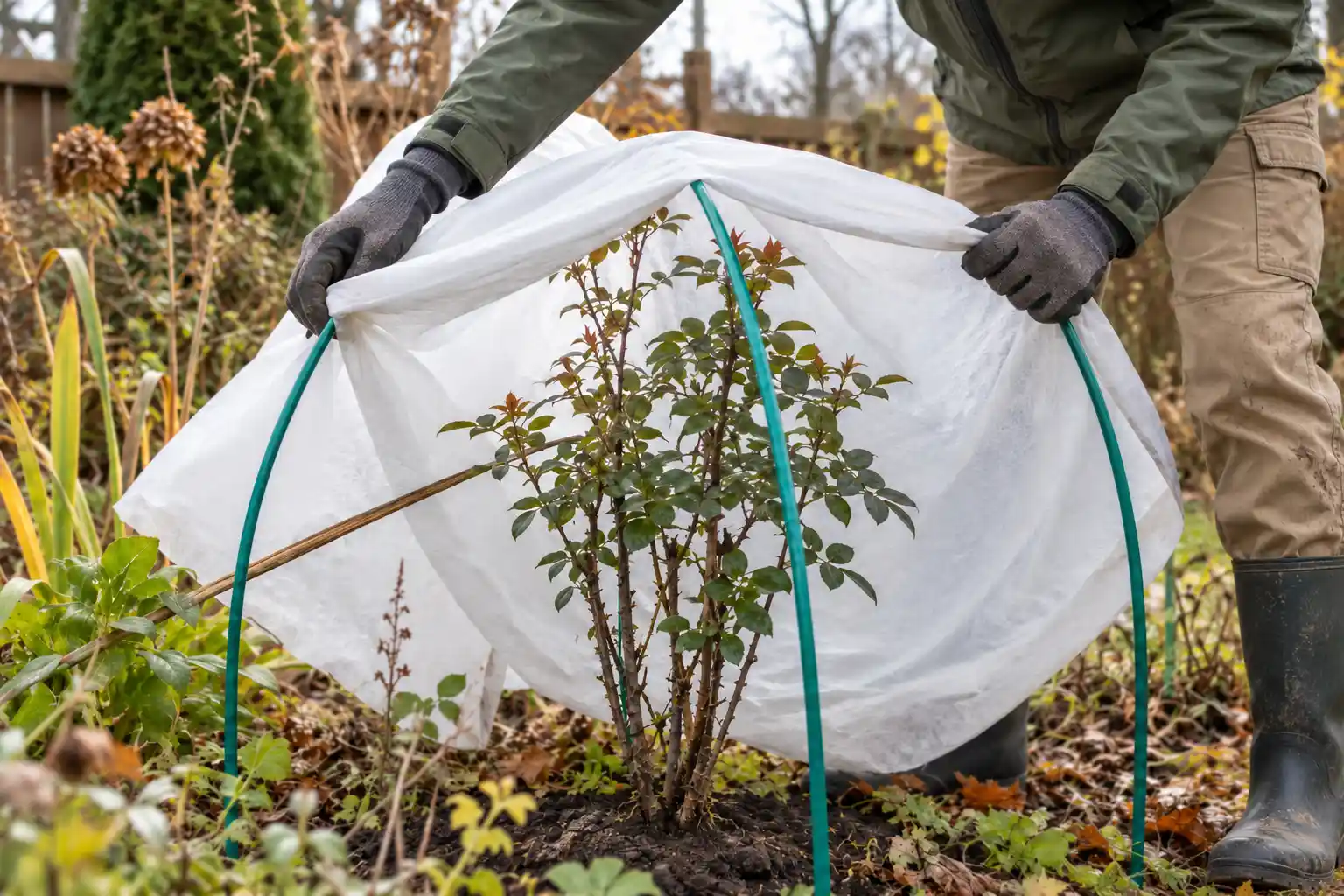
To limit apple tree frost damage on a short apple tree or espalier, a securely supported frost covering can help reduce exposure during some freezing nights. Keep the cover from crushing blossoms, anchor it against wind, and remove it when conditions improve. University of Maryland Extension specifically recommends coverings for short or espaliered apple trees.

For Small Trees & Espaliers
Agfabric Frost Blanket — 10 × 50 ft
Reusable, breathable frost cloth for small apple trees and espaliers. The 10 x 50 ft sheet needs a support frame and enough width to reach the ground on every side.
- Breathable fabric lets air and moisture through
- Reusable for seasonal frost protection
- Large sheet can cover a supported small-tree frame
Best for: Small apple trees and low espaliers that fit beneath a supported frost cover reaching the ground on all sides.
Price, rating, and availability may change.
Affiliate disclosure: We may earn a commission from qualifying purchases made through this link, at no additional cost to you.
Do not rely on a thin sheet to overcome a severe, windy freeze. Likewise, improvised sprinkling is not equivalent to engineered orchard frost irrigation: water application must continue correctly until thawing conditions return, or damage can increase.
Reduce repeat risks from site and winter injury
If you are choosing a planting location, avoid the lowest frost pocket where cold air settles. Select a locally adapted cultivar and rootstock, and protect young trunks with light-colored guards during winter as recommended by your extension office.
For an existing tree, follow winter care practices that support healthy dormancy and reduce bark injury. However, no winter preparation can guarantee an unaffected blossom crop during an unusually hard spring freeze.
Common Mistakes After Apple Tree Frost Damage
- Pruning the entire canopy immediately: You may remove living wood before regrowth reveals its condition.
- Assuming brown petals equal dead ovaries: Cut open a few representative blossoms instead.
- Overwatering or overfertilizing: Neither can restore damaged reproductive tissue.
- Copying commercial orchard sprays: Such programs require specialized equipment, timing, and legal label compliance.
- Counting fruit too soon: Delayed drop and scarring may take time to appear.
When to Ask a Professional
Seek help for apple tree frost damage from your local cooperative extension office or a qualified arborist when the trunk is deeply cracked, bark damage extends around much of the stem, the graft union appears compromised, or dieback continues well after neighboring apples have resumed growth. In addition, do not assume black shoots or oozing bark are frost injury; disease may require a separate diagnosis.
For apple tree frost damage involving only a few blossoms, photographs, bud dissection, and patient observation are usually the first useful steps. If you are considering any pesticide or growth-regulator product, follow its current label and seek locally appropriate advice first.
FAQs
Can an apple tree survive a hard frost?
Yes. Apple tree frost damage may destroy blossoms or tender growth while leaving the trunk and established branches alive. Survival depends on growth stage, cold exposure, and the extent of woody tissue injury.
Will a frost-damaged apple tree grow leaves again?
It may, provided the buds and supporting wood are alive. Watch for fresh growth rather than judging the tree from one flush of brown leaves, and avoid removing uncertain wood too early.
Should I prune brown apple blossoms after frost?
No routine blossom pruning is needed just because petals look brown. Instead, inspect reproductive centers and wait to see which side flowers and young fruit survive; excessive removal can discard viable crop potential.
What temperature causes apple tree frost damage?
Open apple flowers can begin suffering injury near 28°F, but actual risk varies with duration, cultivar, and bud stage. Dormant buds are much more cold tolerant than open blossoms, so one temperature cannot describe every situation.
Can I save apples after a fall freeze?
Sometimes. Allow frozen apples to thaw on the tree before handling; firm fruit after a mild, brief freeze may be usable promptly, while softened or internally browned fruit is unsuitable for normal storage.
Related Articles
- Apple tree winter care: a full seasonal protection checklist
- Apple tree dormancy: what healthy resting buds look like
- Apple tree chill hours and the timing of spring budbreak
- Apple tree pruning in winter: when it is safe to cut
Sources
- Penn State Extension. Freeze Damage in Peaches and Apples and Other Fruit.
- University of Minnesota Extension. Apples: Reflections on Spring Frost During Bloom in 2026.
- University of Maryland Extension. Growing Apple and Pear Trees in a Home Garden.
- Penn State Extension. Pennsylvania Tree Fruit Phenology Report: April 21, 2026.
- University of Minnesota Extension. Protecting Trees and Shrubs in Winter.
- University of Minnesota Extension. Escaping Spring Frost in the Upper Midwest.
- Penn State Extension. Pennsylvania Tree Fruit Phenology Report: April 14, 2026.
- Penn State Extension. Managing Orchards in a No Crop Year.
- Penn State Extension. Fruit Harvest: Handling of Frozen Apples.
- University of Minnesota Extension. Growing Apples in the Home Garden.
- University of Minnesota Extension. Pruning and Training Apple Trees.