
Apple Tree Propagation From Cuttings: Proven? Does It Work?
Apple tree propagation from cuttings can produce an own-root apple plant, but it is not the standard way that apple cultivars are reproduced. For most home growers, grafting a piece of the desired cultivar onto a selected rootstock is the more predictable route because the rootstock also controls size, anchorage, hardiness, and other growth traits.
Table of Contents
Key Takeaways
- Apple tree propagation from cuttings is possible in principle, but apples are usually propagated by grafting or budding onto rootstocks.
- A rooted cutting would be genetically the same cultivar above and below ground, so it loses the size-control benefits of a chosen rootstock.
- Softwood cuttings are the more logical experimental starting point because young growth generally has greater rooting potential than mature wood.
- Clean tools, a moist but airy rooting medium, high humidity, and indirect light matter more than kitchen remedies.
- If your goal is to preserve a favorite named apple, grafting dormant scion wood onto a suitable rootstock is usually the better plan.
Many backyard growers search for apple tree propagation from cuttings after a storm breaks a branch, an old family tree is about to be lost, or a favorite cultivar is no longer easy to buy. The appealing idea is simple: cut a healthy shoot, root it, and keep the same apple.
The biology is more complicated. A cutting can preserve the genetics of the shoot you take, but a rooted cutting also creates a tree growing on that cultivar’s own roots. That differs from a nursery apple, which normally combines a fruiting scion with a separately selected rootstock.
Does Apple Tree Propagation From Cuttings Actually Work?
Apple tree propagation from cuttings can work, but it should be treated as an experiment rather than the most dependable way to reproduce a named apple. University and horticultural guidance consistently describes grafting and budding as the normal propagation system for apples, while rootstocks are selected for traits such as tree size, anchorage, disease tolerance, and adaptation to site conditions.
NC State Extension explains that grafting reproduces a selected apple variety by joining a twig from that variety to a young apple tree, while the rootstock forms the lower trunk and root system. The University of Maryland likewise notes that modern apple trees are commonly propagated on rootstocks rather than grown on their own roots.
Expert consensus: for a home grower who wants to preserve a known cultivar, the most reliable strategy is to keep the desired cultivar as scion wood and combine it with a rootstock chosen for the site.
| Method | What you preserve | Root system | Best use |
|---|---|---|---|
| Rooted cutting | Genetics of the parent shoot | Own roots of that cultivar | Propagation experiment or own-root trial |
| Grafting | Genetics of the parent scion | Selected apple rootstock | Preserving a named cultivar with predictable tree size |
| Budding | A single bud from the chosen cultivar | Selected apple rootstock | Nursery-style propagation during active growth |
| Seed | Not an exact copy of the parent | Seedling roots | Breeding, experimentation, or rootstock production |
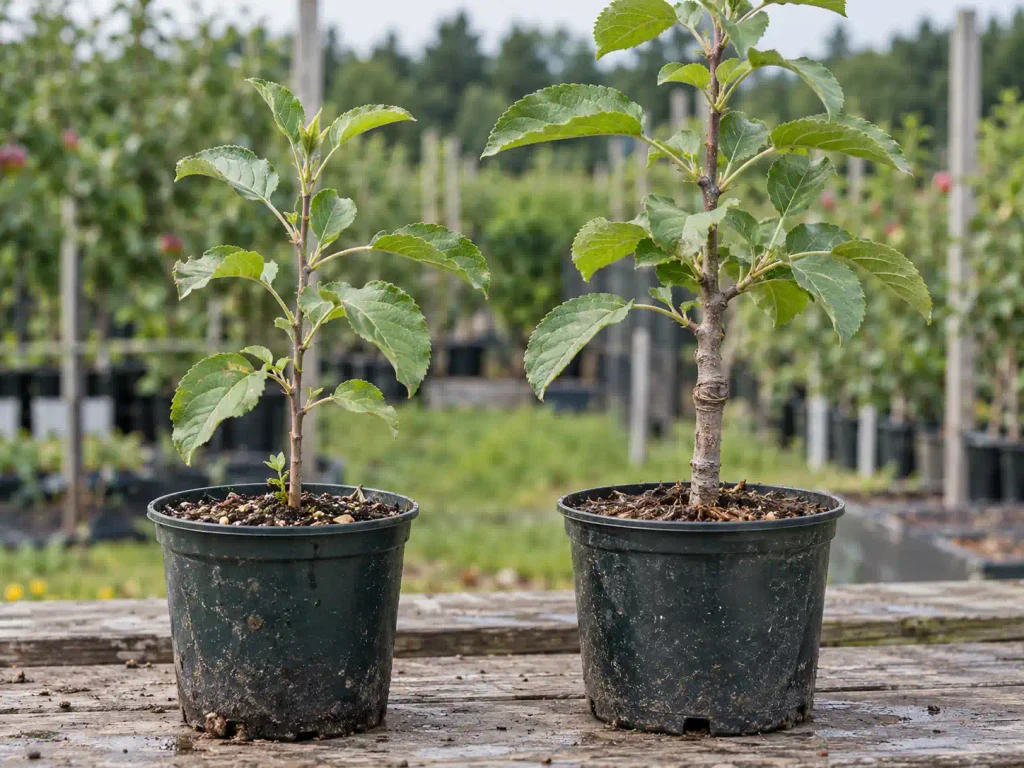
Why Grafted Apples Usually Beat Own-Root Cuttings
The main limitation of apple tree propagation from cuttings is not simply whether roots appear. The larger question is what kind of tree those roots will produce over time.
A nursery tree is a two-part plant. The scion determines the cultivar and fruit, while the rootstock influences vigor, final size, support needs, and how the tree responds to some soil and disease pressures. That is why a cutting from a Honeycrisp, Granny Smith, or heirloom tree does not carry the same rootstock advantages as the original grafted tree.
If you are trying to preserve a favorite apple, read our guide to how to graft apple trees. It explains how to keep the cultivar you value while placing it on a root system selected for the growing space.
A Practical Apple Cutting Trial for Home Growers
If you still want to test apple tree propagation from cuttings, keep the trial simple and label it clearly as an own-root experiment. The following process uses general cutting practices from the Royal Horticultural Society rather than promising an apple-specific success rate.
For apple tree propagation from cuttings across USDA hardiness zones, use shoot stage rather than one fixed calendar date. Soft, flexible spring growth will appear earlier in warm climates, and later in cold climates, so local phenology is a better timing cue than the month alone.
Apple Tree Propagation From Cuttings: Step 1, choose soft young growth
For a first trial, apple tree propagation from cuttings is most sensibly tested with non-flowering softwood material in spring to early summer when shoots are still flexible. RHS guidance for softwood cuttings recommends collecting material early in the day, keeping it from wilting, and preparing it promptly.
Choose healthy growth without obvious pest, disease, or drought damage. Make several cuttings rather than depending on one branch, because apple tree propagation from cuttings is less predictable than standard propagation by grafting.
Step 2: Prepare a short nodal cutting
Use clean, sharp pruners or a knife. General softwood-cutting guidance calls for trimming just below a node, removing lower leaves, and keeping the upper leaves above the rooting medium.
Do not assume a long branch will root better. A short cutting is easier to keep hydrated and fits more easily into a covered propagator where humidity can be controlled.
Step 3: Use a clean, airy rooting medium
Insert the cutting into a clean propagation medium that stays moist while still draining freely. The goal is moisture around the stem without waterlogging, because developing tissues need oxygen as well as water.
RHS softwood guidance uses peat-free compost and a propagator or covered container to reduce moisture loss. If you use rooting compound, follow its label rather than substituting honey, cinnamon, vinegar, or other unverified home remedies.
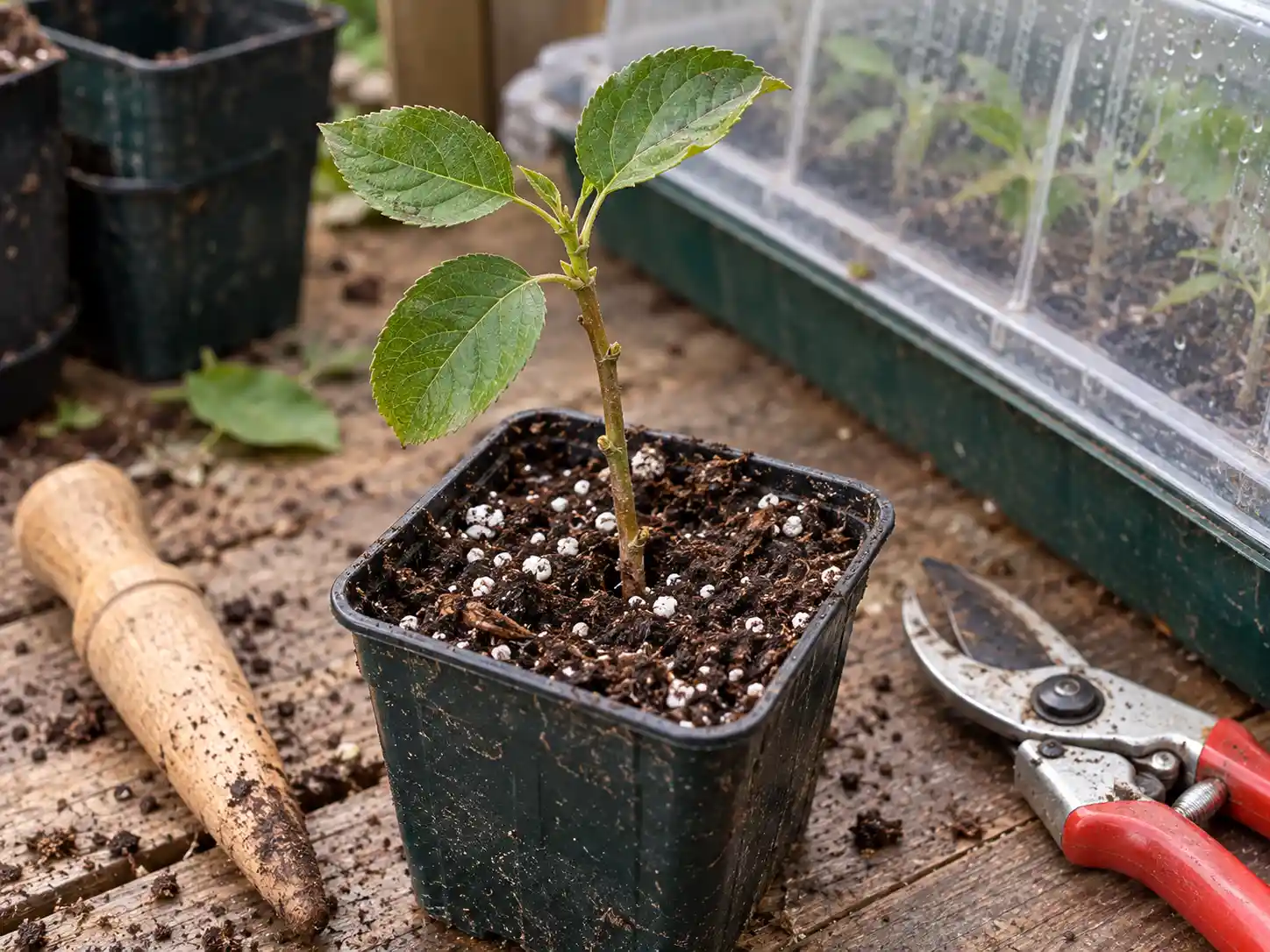
Step 4: Keep humidity high and light gentle
Place the cuttings in bright, indirect light and keep the medium evenly moist. A covered propagator can help limit wilting, but ventilation is still important so stagnant conditions do not encourage decay.
Do not judge success only by new leaves. A cutting can push buds using stored energy before it has a useful root system, so apple tree propagation from cuttings requires patience and a careful root check before potting on.
Step 5: Pot on only after real roots form
Once a cutting has a stable root system, move it into its own container and harden it gradually to normal outdoor humidity and light. Keep the label with the plant because an own-root cutting should not later be mistaken for a nursery-grafted tree.
During the first season, the goal is root and shoot establishment rather than fruit. Avoid heavy feeding or unnecessary pruning while a small rooted plant is still building its root system.
Softwood vs Hardwood Apple Cuttings
Home growers often ask whether dormant winter wood or fresh spring growth is better for apple tree propagation from cuttings. For apple tree propagation from cuttings, general propagation guidance favors softwood when a difficult woody plant can be rooted from young growth because softwood has high rooting potential, while hardwood cuttings can take much longer to establish.
However, apple-specific commercial propagation still centers on grafting and budding. If you have dormant one-year wood from a valued tree, its best use may be as scion wood rather than as a rooting experiment.
| Cutting type | Typical timing | Main advantage | Main concern |
|---|---|---|---|
| Softwood | Spring to early summer | Young tissue has strong general rooting potential | Wilts quickly and needs humidity control |
| Hardwood | Dormant season | Easy to collect and store | Slow rooting, and apple wood may be more valuable as scion material |
What Happens If the Cutting Came From a Grafted Tree?
With apple tree propagation from cuttings, this is the detail that causes the most confusion. If you take a shoot from above the graft union and root it, the new roots belong to the fruiting cultivar itself. You are not cloning the original rootstock.
That means apple tree propagation from cuttings can preserve the cultivar genetics but can change the tree’s growth habit because the original size-controlling rootstock is gone. Before choosing an own-root trial, compare the role of apple tree rootstocks and decide whether size control matters in your yard.
For a very small space, our M9 rootstock apple tree guide explains a strongly dwarfing option that normally needs support. If you want a larger semi-dwarf tree, see the guide to MM106 rootstock.
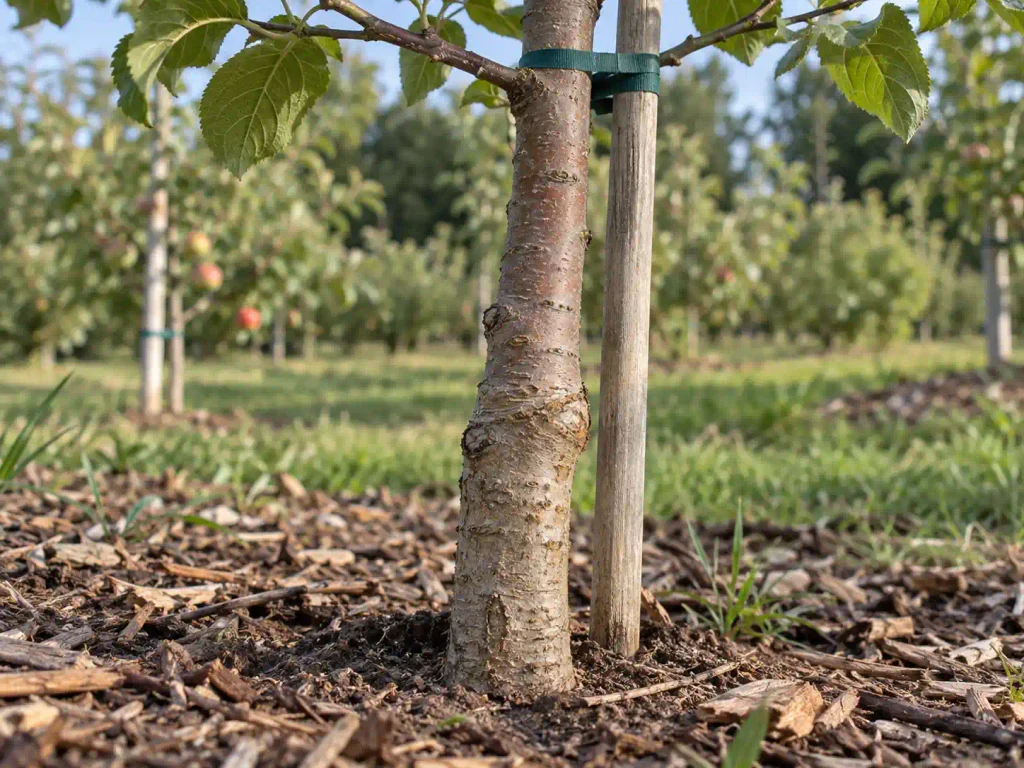
When Grafting Is the Better Choice
Choose grafting instead of apple tree propagation from cuttings when your goal is to save a family cultivar, keep a known apple variety true, control mature tree size, or match the root system to your site. This is also the better route when you already have healthy dormant scion wood but no reason to insist on an own-root tree.
Penn State Extension shows grafting and budding as established fruit-tree propagation techniques. If you are assembling a basic kit, our guide to the best grafting tools for apple trees covers the knife, pruners, tape, and sealing materials you’ll need.
Common Mistakes With Apple Cuttings
- Assuming leaf growth proves rooting: buds can open before a strong root system exists.
- Keeping the stem waterlogged: a rooting medium should stay moist but still contain air.
- Using a large leafy branch: more leaf area means more water loss before roots form.
- Taking diseased or stressed material: propagation starts with healthy parent wood.
- Forgetting the rootstock question: an own-root clone is not the same horticultural package as the original grafted tree.
- Relying on kitchen rooting remedies: use clean technique and labeled propagation products instead of unsupported recipes.
FAQs
Can you grow an apple tree from a cutting?
Yes, a cutting can sometimes form its own roots, but apple tree propagation from cuttings is not the standard method used to reproduce named cultivars. Grafting and budding are more common because they preserve the chosen cultivar while adding the traits of a selected rootstock.
Will a rooted apple cutting produce the same apples as the parent?
A cutting taken from the fruiting portion of the tree is a vegetative clone of that shoot, so its cultivar genetics are preserved. However, its growth can differ from the original nursery tree because it no longer has the original rootstock beneath it.
Is softwood or hardwood better for apple cuttings?
For an experimental rooting attempt, softwood is the more logical first trial because general softwood-cutting guidance gives young growth the highest rooting potential. Dormant hardwood from a valuable cultivar is often better saved as scion wood for grafting.
How do I know an apple cutting has rooted?
Do not rely on leaves alone. Wait for sustained growth and clear root formation before potting on, because stored energy can open buds even when the cutting has not produced a useful root system.
Should I use rooting hormone on apple cuttings?
A labeled rooting compound can be used as part of general cutting practice, following the product directions. Avoid unverified substitutes such as honey or vinegar, and remember that hormone does not replace the need for healthy material, humidity, oxygen, and proper moisture.
Related Articles
- Apple tree rootstocks
- M9 rootstock apple tree
- MM106 rootstock
- How to graft apple trees
- Best grafting tools for apple trees
Sources
- NC State Extension: Why We Use Apple Rootstock
- University of Maryland Extension: All About Apple Rootstocks
- Penn State Extension: Bud Grafting Apple Trees
- Royal Horticultural Society: Softwood Cuttings
- Royal Horticultural Society: Rootstocks for Fruit
Disclaimer: This article provides general growing guidance based on university extension and horticultural research. Soil conditions, climate zone, and variety selection can affect results. Contact your local cooperative extension service for region-specific recommendations.
