
MM106 Rootstock: Proven Complete Guide for Home Orchards
MM106 rootstock is a semi-dwarfing apple rootstock that commonly produces a tree about half to two-thirds the size of a standard seedling tree. It can be productive and well anchored, but it needs well-drained soil because crown and root rots are important limitations. Plan for a medium-to-large backyard tree, adequate spacing, and several years of early support.
Table of Contents
Key Takeaways
- MM106 rootstock is semi-dwarfing, productive, and generally suitable for a medium-sized home orchard.
- Drainage is the main site test. Avoid places where water remains around the root collar after rain.
- Expect a tree roughly 10 to 13 feet tall and about 13 feet wide when trained as a bush, with results varying by cultivar and site.
- Keep the graft union above the finished soil line, provide early support, and leave room for pruning and mowing.
Choosing a rootstock is one of the decisions that determines whether an apple tree fits your garden five years from now. MM106 rootstock is often described as semi-dwarf, yet that label can understate its mature spread in fertile soil or when paired with a vigorous scion.
This guide explains how the rootstock affects tree size, fruiting, anchorage, and site tolerance. It also covers planting depth, drainage, spacing, support, and the situations where a different rootstock may be a safer choice.
What Is MM106 Rootstock?
MM106 is a clonal rootstock used for grafted apple trees. In practical terms, MM106 rootstock is the underground half of a named apple tree. The nursery joins a chosen apple cultivar, called the scion, to the rootstock. The scion determines the fruit variety and much of the canopy habit, while the rootstock strongly influences vigor, mature size, anchorage, early fruiting, and some disease responses.
University of Maryland Extension describes MM.106 as a semi-dwarfing, productive, cold-hardy rootstock that generally does not require permanent support. The same guidance warns that it is susceptible to root rot, crown rot, fire blight, and tomato ringspot virus, so the planting site matters greatly.
MM106, M.106, and EMLA 106
Nurseries may use slightly different names, including MM106, M.106, or MM.106. EMLA 106 is a virus-free selection derived from the Malling-Merton material. Washington State University describes EMLA 106 as producing a tree about half to two-thirds the size of a standard seedling tree, with resistance to woolly apple aphid and a need for well-drained soil.
Check the nursery label rather than assuming that every “106” listing has identical behavior. Ask whether the MM106 rootstock is virus-certified and which size range the nursery expects. Soil, climate, cultivar vigor, training system, and whether the material is virus-certified can change the final result.
Is MM106 Rootstock a Good Choice for a Home Orchard?
It can be a sensible choice when you have full sun, good drainage, and enough room for a medium-sized tree. It offers more canopy and anchorage than a very dwarfing rootstock, while remaining easier to manage than a full-size seedling tree.
However, a small garden or a wet site may call for a different option. The rootstock is not a cure for poor drainage, and pruning alone cannot turn a naturally larger tree into a compact patio tree.
| Rootstock | Relative tree size | Support | Site note | Typical fit |
|---|---|---|---|---|
| MM106 rootstock | About half to two-thirds of standard, depending on conditions | Usually early support, especially in exposed sites | Needs well-drained soil; crown rot is a concern | Medium to larger home orchards |
| M9 | Dwarfing, commonly smaller than MM106 | Permanent support is commonly required | Needs careful watering and weed control | Small gardens and intensive training |
| MM111 | Larger and more vigorous than MM106 | Usually no permanent support | Better suited to drier conditions than MM106 | Large spaces and difficult, dry sites |
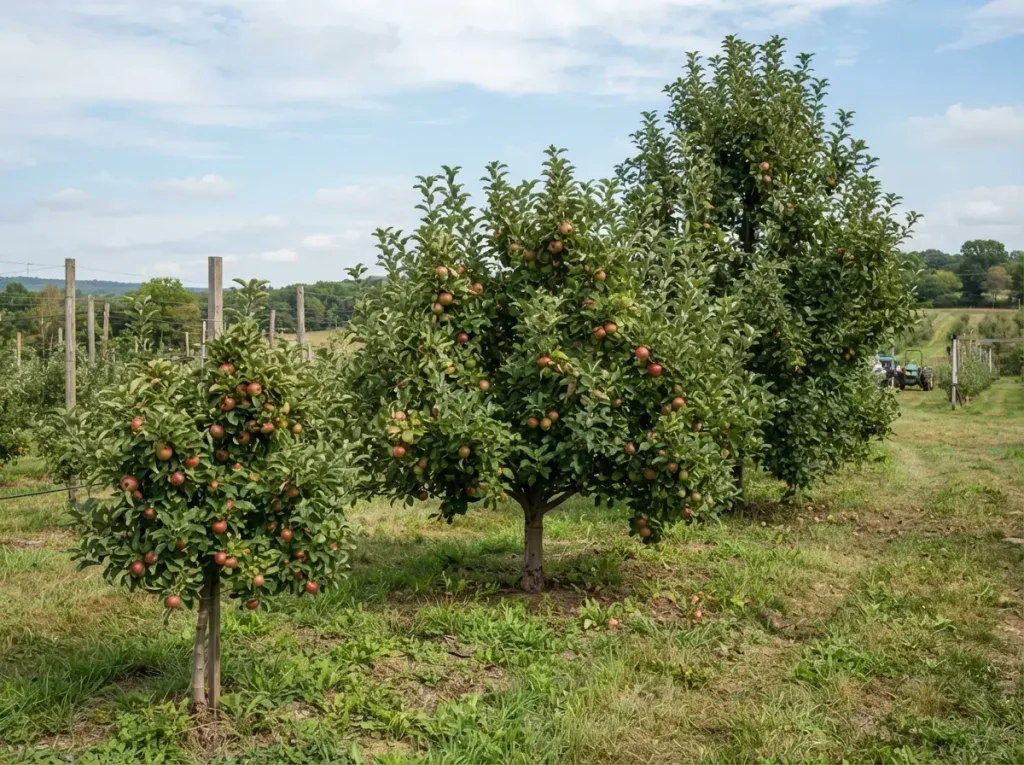
Extension consensus: rootstock choice affects size, bearing age, anchorage, and site tolerance, but the final tree is also shaped by the scion cultivar, soil, climate, training system, and aftercare. Treat a size label as a planning range, not a guarantee.
Selected video: Why MM106 is the Best Apple Rootstock (Propagation ) by Sustainable Self Sufficiency. The video is a practical supplement; extension sources above remain the basis for site and disease cautions.
How Large Does an MM106 Apple Tree Get?
The RHS lists an MM106 bush-trained apple. For planning purposes, MM106 rootstock should be treated as a medium-to-large backyard tree, not a compact container tree. at about 3 to 4 metres tall, or approximately 10 to 13 feet, with a spread of about 4 metres, or 13 feet. That is a useful home-garden planning range, although a vigorous cultivar, fertile soil, limited pruning, or a favorable climate can produce a larger tree.
Plan the planting position from the mature canopy, not the size of the young tree in its nursery pot. Leave enough room for a ladder or picking pole, airflow through the canopy, mower access, and the root flare to remain visible.
How to Choose a Site and Plant an MM106 Tree
1. Test drainage before ordering
Choose full sun and soil that drains freely after heavy rain. MM106 rootstock performs best when excess water can move away from the root zone. MM106 is a poor match for a low spot where water collects, compacted ground that stays saturated, or a planting hole that acts like a bowl in heavy clay.
University of Missouri Extension identifies MM106 as susceptible to crown rot during rainy seasons and recommends good drainage for apple trees. If the site is marginal, use a raised berm or another site-improvement method based on local extension advice. Do not bury the root collar to compensate for poor drainage.
2. Keep the graft union above the soil
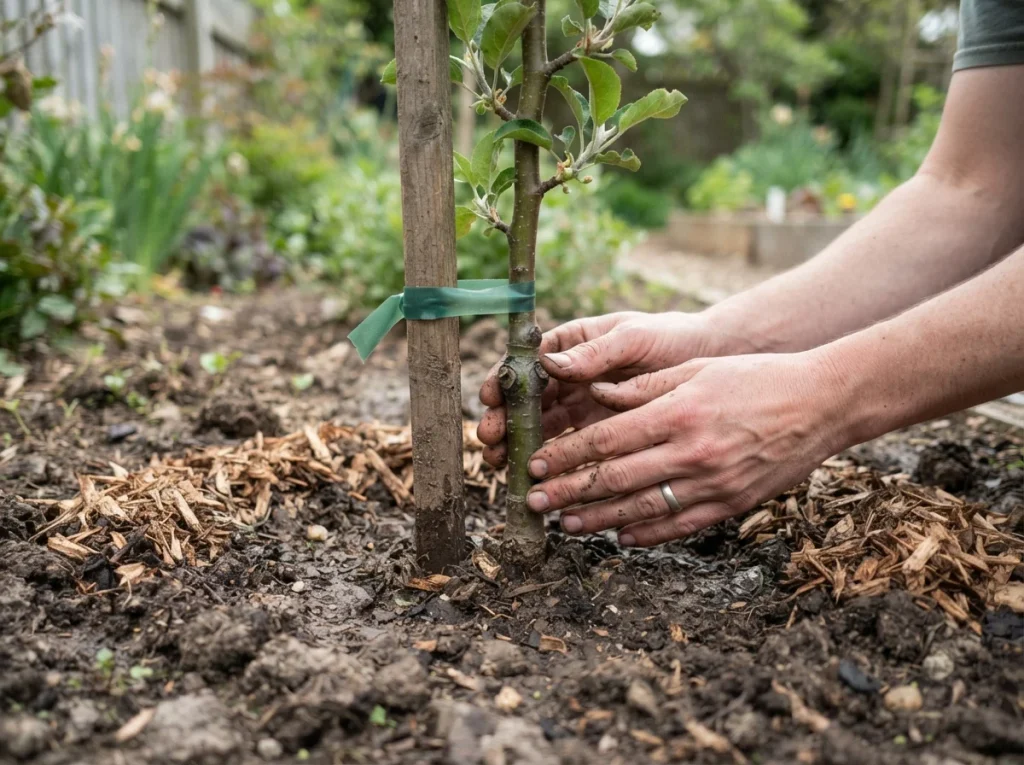
Plant the tree at the same depth it occupied in the nursery, while keeping the graft union above the finished soil line. Missouri Extension recommends keeping the union about 2 inches above the soil level. If the scion roots over the union, the intended size control can be reduced or lost.
Backfill with the soil removed from the hole. Remove broken roots, spread the remaining roots without bending them sharply, water slowly after planting, and check again after the soil settles.
3. Set spacing around the mature canopy
For an MM106 bush, the RHS lists about 12 feet between trees and 15 feet between rows. Those figures are a useful starting point for a traditional orchard layout. Increase the distance when the cultivar is vigorous, the soil is fertile, or you want easier mowing and access.
Ten feet may look workable when trees are young, yet mature branches can meet quickly. If you are planting a narrow cordon or espalier, use a training-specific plan rather than applying bush-tree spacing to every form.
4. Support the tree while the roots establish
Although mature MM106 trees often become self-supporting, a newly planted tree can rock in wind before its roots anchor. Keep the support long enough for the tree to establish, and use a flexible tie that does not cut into the bark.
How to Manage Growth After Planting
Young trees
During the first seasons, protect the trunk. MM106 rootstock still benefits from careful establishment, even though it is larger and stronger than a very dwarfing stock. from rodents, keep competing grass away from the root zone, and water during dry periods according to local conditions. Avoid heavy nitrogen feeding that drives soft, excessive shoot growth. Use a soil test and local extension recommendations before applying fertilizer.
Train the young tree toward a strong, open framework suited to the cultivar and the space available. Remove damaged, crossing, or badly placed growth first. Then make moderate structural cuts rather than trying to force a full-size tree into an unsuitable footprint.
Established trees
Once the framework is formed, pruning should maintain the balance expected from MM106 rootstock: enough canopy for fruiting, with access for light, airflow, and harvest. Light penetration, clearance, and manageable fruiting wood. A vigorous MM106 tree may need more regular pruning than a small dwarf tree, especially on deep fertile soil.
Remember that the rootstock does not determine fruit flavor or apple quality by itself. The cultivar, pollination, crop load, weather, disease pressure, harvest date, and storage conditions all affect the fruit you pick.
MM106 Rootstock Problems to Watch For
Crown and root rot
Persistent wetness is the most important warning sign for MM106 rootstock. Symptoms can vary, but declining vigor, sparse foliage, poor growth, bark injury near the soil line, and premature yellowing deserve attention. Because several problems can look similar, use a local extension diagnostic clinic or qualified arborist when the cause is unclear.
Too much tree for the site
A semi-dwarf label does not make MM106 rootstock suitable for every small yard. If the canopy would overhang a path, roof, utility line, or neighboring property, select a smaller rootstock or a compact trained form before planting.
Confusing rootstock and cultivar problems
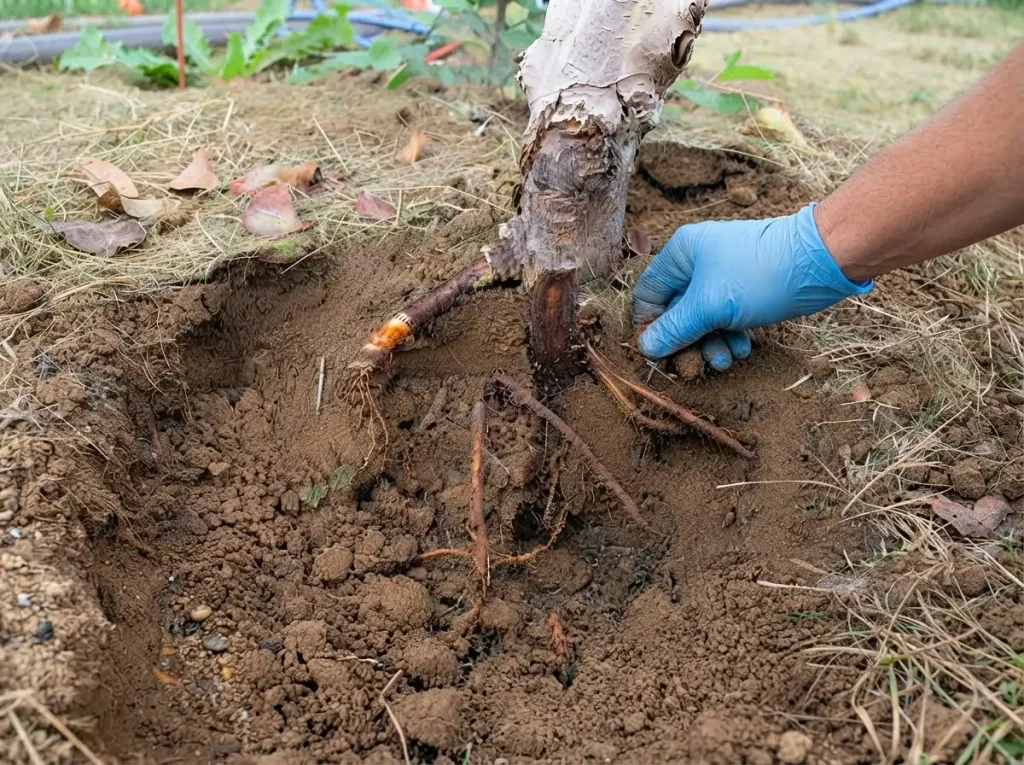
Fire blight, scab, rust, mildew, and poor fruiting can involve the scion cultivar, weather, pollination, pruning, or site conditions. Do not assume that a symptom is caused by MM106 alone. Identify the problem first, then use regionally appropriate extension guidance.
FAQs
How tall does an MM106 apple tree become?
An MM106 apple tree trained as a bush commonly reaches about 10 to 13 feet tall and about 13 feet wide according to the RHS planning table. A vigorous cultivar or fertile site can produce a larger canopy, so allow room for the mature spread rather than spacing trees by their first-year size.
Is MM106 rootstock suitable for wet soil?
MM106 rootstock is a risky choice for poorly drained or waterlogged soil because crown and root rots are important weaknesses. Improve drainage or choose a different rootstock only after checking regional recommendations. A raised planting position may help, but it does not make permanently saturated ground safe.
Does MM106 need a permanent stake?
Usually, an established MM106 tree can stand without permanent support, but a new tree may need a stake while its root system develops. The RHS lists five years of staking for MM106, with longer support in exposed locations. Inspect ties regularly so they do not constrict the trunk.
Related Articles
- Apple tree rootstocks: compare size, hardiness, and site fit
- M9 rootstock apple tree: spacing and support considerations
- How to graft apple trees: choose and prepare a rootstock
- Best grafting tools for apple trees
- Apple tree propagation from cuttings
Sources
- University of Maryland Extension, All About Apple Rootstocks
- Washington State University Tree Fruit, Rootstocks for Apple
- Royal Horticultural Society, Rootstocks for Fruit
- University of Missouri Extension, Home Fruit Production: Apples
