9 Apple Scab Resistant Varieties: Which Ones Are Best?
Apple scab resistant varieties give backyard growers a way to reduce problems caused by Venturia inaequalis, the fungus responsible for apple scab. Liberty and Freedom are good starting points, while Pristine, Redfree, Enterprise, and GoldRush suit different harvest needs. The right choice depends on your climate, the fruit you enjoy, and other diseases common in your area.
Table of Contents
Imagine finding a promising apple tree at a nursery. The label says “scab resistant,” the fruit looks delicious, and the tree seems just right for your yard. But there is still plenty the label doesn’t tell you.
Will the apples ripen before your first autumn freeze? Does the variety resist cedar apple rust as well as scab? Will you need another apple tree for pollination?
Those questions matter because apple scab is only one part of growing healthy fruit. This guide compares nine cultivars listed in university extension resources, with particular attention to their weaknesses and where they make sense to plant.
Key takeaways
- Liberty is a sensible first choice if you want resistance to several common apple diseases.
- Pristine, William’s Pride, and Redfree are worth considering for earlier harvests.
- Enterprise and GoldRush are better candidates when storage matters, provided your growing season is long enough.
- GoldRush resists scab but is susceptible to cedar apple rust. Crimson Crisp has a different weakness: fire blight.
- A resistant cultivar may reduce disease pressure, but it still needs suitable pollination, proper pruning, and routine care.
What does “scab resistant” actually mean?
Apple scab typically starts with olive-green spots on the leaves. Those spots can darken, and severe infections may cause leaves to fall early. The fungus also infects fruit, leaving rough, corky patches that sometimes crack as apples grow.
The disease is particularly troublesome during cool, wet spring weather. Infected fallen leaves provide a source of spores, which can spread when conditions favor infection.
A resistant apple has inherited traits that make it harder for the fungus to establish or cause serious damage. The degree of protection varies by cultivar and by the strains of the fungus present locally.
Why an “immune” rating still deserves caution
University of Minnesota Extension describes several cultivars, including Liberty, Freedom, and Pristine, as immune to apple scab. Cornell discusses these cultivars as resistant but also documents cases where fungal populations have overcome certain resistance genes.
Both statements can be useful. The Minnesota rating describes the cultivars’ expected performance, while Cornell’s research explains why growers should continue checking their trees for disease.
Research takeaway: Disease-resistant cultivars are an important part of apple scab management. They do not eliminate the need to monitor trees or manage other orchard diseases.
This summary reflects guidance from Cornell Integrated Pest Management and University of Minnesota Extension.
The following orchard video shows how apple varieties can differ in their response to scab. It is an older grower demonstration, so use the university resources in this article for current planting and disease management advice.
9 apple scab resistant varieties to consider
The varieties below are arranged roughly by harvest season, not by a claim that one apple is better than all the others. A useful summer apple and a good winter keeper solve different problems.
Harvest dates come mainly from Penn State and Minnesota Extension. They are regional estimates, not dates you should expect in every USDA hardiness zone.
| Variety | Approximate harvest | Why consider it? | What to check? |
|---|---|---|---|
| Pristine | Late July to early August | Early yellow fruit with a tart flavor | Fire blight risk |
| William’s Pride | August | Early red apples for eating and cooking | Limited storage life |
| Redfree | Late August to September | Sweet, crisp summer fruit | Best used soon after harvest |
| Crimson Crisp | Early September | Firm, crisp flesh and distinctive flavor | Fire blight susceptibility |
| Liberty | September to early October | Resistance to several diseases | Climate and pollination suitability |
| Freedom | September | Large, juicy fruit | Black rot susceptibility |
| Florina | October | Sweet-tart red apples | Cedar apple rust susceptibility |
| Enterprise | Mid-October | Firm apples that store well | Fruit spotting and regional rust ratings |
| GoldRush | Late October | Firm yellow fruit with good storage potential | Late ripening and cedar apple rust |
For detailed ratings, see Penn State Extension’s cultivar table. Disease ratings sometimes differ between extension publications, particularly for diseases other than scab, so local guidance is worth checking before ordering a tree.
1. Pristine: for apples early in the season
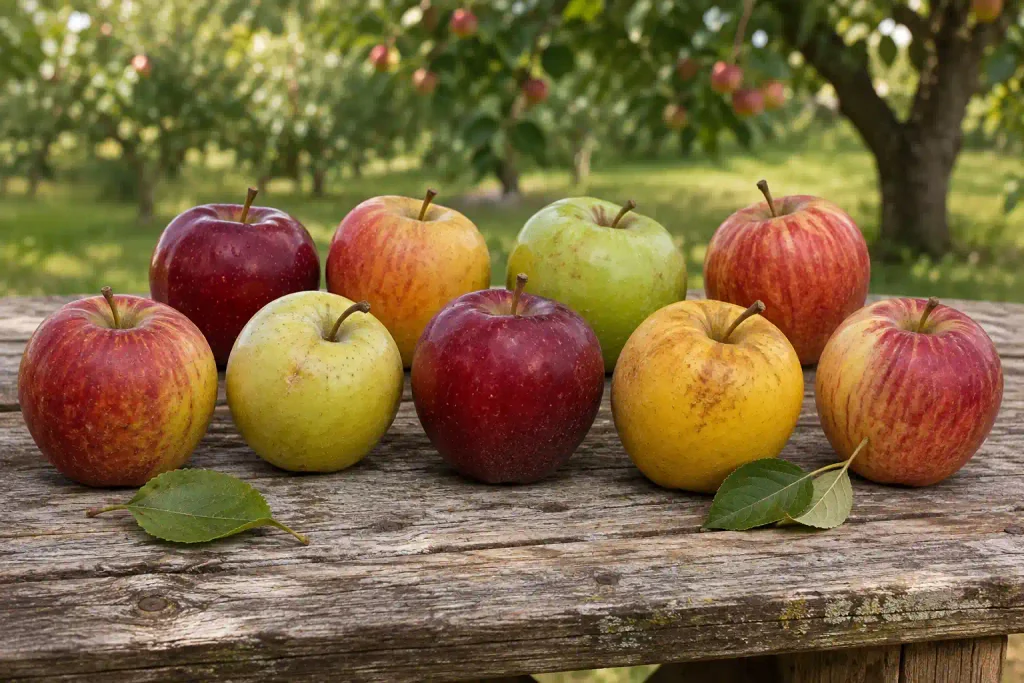
Waiting until fall for your first homegrown apple isn’t necessary if you have room for an early cultivar. Pristine produces medium-sized yellow fruit with a pleasant tart flavor. Penn State places its harvest in late July or early August.
Pristine has strong scab resistance and is also rated resistant to powdery mildew. Its resistance to fire blight is more limited, however, which matters in places where that bacterial disease regularly affects apples.
One reason to choose Pristine is timing. It can provide fruit before later cultivars have finished developing, although its exact harvest date will depend on local conditions.
Best fit: A gardener who wants an early apple and prefers a tart flavor.
2. William’s Pride: an August apple with useful resistance
William’s Pride is a red summer apple with a slightly acidic flavor. Minnesota Extension lists it for fresh eating and cooking, with a typical harvest around mid-August in that region.
Its disease profile is appealing. The Minnesota guide identifies resistance to both apple scab and fire blight, two problems that can be difficult for backyard growers to manage.
There is a tradeoff: William’s Pride does not store as long as many fall varieties. That may be perfectly acceptable if you want apples to eat or cook soon after picking.
Best fit: Someone who wants a red apple early in the season and isn’t planning to store the harvest for months.
3. Redfree: an early apple that is best eaten fresh
Redfree is another summer cultivar, with red skin and crisp, sweet flesh. Penn State lists its ripening period from late August into mid-September, while Maryland Extension reports an earlier window for its region.
That difference is a reminder to treat published harvest dates as local estimates. A cultivar’s picking season can shift considerably between climates.
Redfree resists apple scab and cedar apple rust. However, Penn State notes that its apples do not have a long storage life.
If your goal is to fill a refrigerator with apples for winter, another variety would make more sense. If you simply want good fresh fruit earlier in the year, Redfree deserves attention.
4. Crimson Crisp: a crisp apple with a fire blight weakness
Crimson Crisp has attractive red fruit and firm, crisp flesh. Its flavor has a noticeable acidity, with a spicy character described in Penn State’s cultivar guide.
Cornell rates Crimson Crisp as highly resistant to scab. That sounds reassuring, but the same tree is rated susceptible to fire blight by Penn State.
Fire blight is a bacterial disease that can damage blossoms and shoots. Its importance varies with climate and weather, so the scab rating alone should not determine whether Crimson Crisp belongs in your yard.
Best fit: A grower who values crisp eating apples and has checked the local fire blight risk.
5. Liberty: a strong starting point for a backyard orchard
Liberty deserves its reputation among home orchard varieties. The fruit has a balanced flavor that Minnesota Extension compares with McIntosh, although Liberty is firmer.
Its main attraction is the combination of disease resistance traits. Penn State rates Liberty resistant to cedar apple rust, powdery mildew, and fire blight, in addition to its well-established scab resistance.
Liberty ripens during the fall. Penn State places the harvest around mid- to late September, while Minnesota lists early October. The difference reflects the growing regions covered by those guides.
The fruit’s flavor can improve after storage, so you may prefer using some apples immediately and keeping others for later.
For a gardener choosing apple scab resistant varieties without an existing favorite cultivar, Liberty is a sensible place to begin researching. It still needs compatible pollen and suitable growing conditions.
Best fit: A small home orchard where resistance to several diseases matters more than choosing the latest fashionable apple.
6. Freedom: good scab resistance, with a different concern
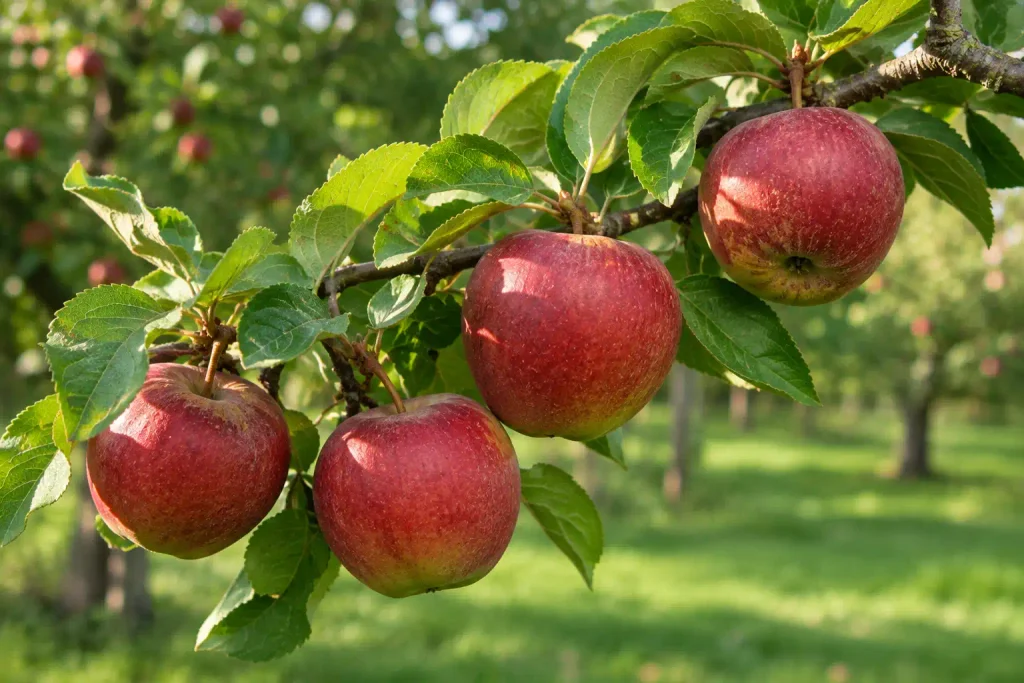
Freedom produces relatively large apples with juicy, sweet flesh. Minnesota Extension lists it as a September apple suitable for eating fresh or cooking.
The cultivar is rated immune to scab in Minnesota’s growing guide. Penn State also reports resistance to powdery mildew and cedar apple rust, although its fire blight rating is less strong than Liberty’s.
Freedom has another weakness that deserves mention: susceptibility to black rot. Penn State also notes that fruit appearance and quality can vary.
That makes Freedom an interesting choice, but not an automatic replacement for every susceptible apple tree. Look at which diseases commonly occur in your region before deciding.
7. Florina: attractive fruit, but watch for rust
Florina, also known as Querina, produces large, dark red apples with a sweet-tart flavor. Maryland Extension lists October as its harvest period.
The Maryland guide identifies resistance to apple scab, powdery mildew, and fire blight. It also warns that Florina is somewhat susceptible to cedar apple rust, while Cornell’s compiled ratings describe a higher level of susceptibility.
Cedar apple rust involves both apples and junipers in its disease cycle. Where susceptible junipers grow nearby and rust repeatedly affects apple foliage, Florina may be a less convenient choice.
Best fit: A gardener interested in fall apples who has checked local cedar apple rust pressure.
8. Enterprise: a late apple that keeps well
Enterprise is useful for people who want apples after the main September harvest. It produces firm red fruit, and both Penn State and Maryland Extension describe its keeping qualities favorably.
The tree is highly resistant to apple scab, according to Cornell’s cultivar database. Penn State also rates Enterprise resistant to fire blight, although powdery mildew resistance is more moderate.
There is an important inconsistency worth knowing before buying. Penn State rates Enterprise resistant to cedar apple rust, whereas Missouri Extension’s cultivar table gives it a susceptible rating.
Those conflicting assessments are a good reason to seek regional advice if rust is a major problem in your orchard. Penn State also notes susceptibility to a fruit spotting disorder.
Best fit: A grower looking for a later harvest and apples that can be kept beyond picking season.
9. GoldRush: excellent storage potential, if it ripens in time
GoldRush is a firm yellow apple that typically ripens very late. Penn State lists its harvest around late October, which may be too late for some short-season locations.
The apples have good storage qualities and a tart character that can mellow after picking. This makes GoldRush particularly interesting to gardeners who enjoy storing part of their crop.
Its scab resistance is strong, but cedar apple rust is a clear weakness. Penn State’s table rates GoldRush susceptible to that disease, so it is not the obvious choice in every humid region.
Before ordering GoldRush, ask a local nursery whether it reaches good eating maturity in your area. Choosing a late apple that regularly meets an early freeze can be frustrating, however appealing the fruit sounds.
Best fit: A gardener with a sufficiently long growing season who wants firm apples for storage.
How to narrow the list for your own yard
You can quickly reduce nine choices to two or three by looking at your harvest season, local disease problems, and available growing space.
Start with when you want to pick apples
If summer fruit interests you most, compare Pristine, William’s Pride, and Redfree. For a fall crop, Liberty, Freedom, and Crimson Crisp offer different combinations of flavor and disease resistance.
Enterprise and GoldRush make more sense when late ripening is an advantage rather than a risk. The harvest windows in this article come from extension publications, not from a guarantee that the same dates apply nationwide.
Local growing-season length matters just as much as winter hardiness. Our apple tree varieties by zone guide
Check which diseases trouble nearby orchards
A tree may resist scab and still suffer substantial damage from another disease. The comparison between GoldRush and Liberty is especially useful here.
Both have strong scab resistance, but Liberty has a more favorable cedar apple rust rating in Penn State’s table. If rust is common around your property, that difference could outweigh GoldRush’s attractive storage qualities.
The same principle applies to Crimson Crisp and fire blight. Instead of relying on a nursery tag that simply says “disease resistant,” look up the individual disease ratings.
Choose the rootstock and pollination partner before ordering
A cultivar name tells you what kind of apples the tree produces. The rootstock influences how large the tree becomes, how it is supported, and when it may begin producing fruit.
University of Maryland Extension explains that rootstock choice also affects characteristics such as winter hardiness and susceptibility to certain problems. Two Liberty trees on different rootstocks may therefore require different spacing and support.
Most apples need pollen from another compatible apple variety. A suitable crabapple can sometimes provide that pollen, but the flowering periods must overlap.
For small yards, ask the nursery about both mature tree size and pollination compatibility. Our apple tree rootstocks guide covers the size choices in more detail.
Can you grow these apples without spraying?
Some gardeners choose apple scab resistant varieties specifically because they want to reduce fungicide use. That is a reasonable goal, and university extension publications recognize resistant cultivars as an important preventive measure.
Still, a scab-resistant tree can develop other diseases. Apples also attract insects, and the tree’s resistance to one fungus does not protect the fruit from insect feeding.
Whether a particular tree needs treatment depends on which problems appear, their severity, the growing conditions, and local recommendations. There is no reliable national spray-free guarantee for the nine cultivars listed here.
Keep the area beneath the tree clean
Apple scab survives the winter primarily in infected fallen leaves. Cornell recommends reducing infected leaf material to help limit the spores available for infection the following spring.
Remove fallen leaves or manage them according to local extension sanitation guidance. You should also remove badly damaged fruit and keep the area around the tree maintained.
Prune to help the leaves dry
Crowded branches hold moisture longer than an open, properly trained canopy. Pruning to improve spacing and airflow can reduce the conditions that favor apple scab infection.
Young trees generally need structural training, while established trees benefit from routine removal of dead, broken, or poorly placed branches. Avoid severe pruning simply to make the tree look tidy.
Don’t try to cure old spots with a late spray
Fungicides used against apple scab are primarily preventive. A treatment applied after visible damage develops cannot restore a spotted leaf or remove corky lesions from fruit.
If your tree already has symptoms, start with our apple scab guide to check the disease signs, then consult the apple scab treatment article for management options.
Always confirm the diagnosis and follow current label instructions before applying a pesticide. Product registration and appropriate treatment timing vary by location.
A few things to ask the nursery
Before paying for an apple tree, try to get answers to these questions:
- Is this the exact named cultivar, and what rootstock is it grafted onto?
- How large should the tree become under local growing conditions?
- Does this cultivar normally finish ripening before the first hard autumn freeze?
- Which compatible pollination partners are available?
- Are cedar apple rust, fire blight, or powdery mildew important concerns for this variety here?
- Does the cultivar have suitable winter hardiness and chilling requirements for this location?
If the nursery cannot answer a question about disease susceptibility, an extension cultivar guide is a useful second reference. A tree will occupy its planting space for years, so checking these details is worth the effort.
FAQs
Which apple scab resistant varieties are best for beginners?
Liberty is a good candidate because it combines scab resistance with resistance to several other common diseases. Freedom also deserves consideration, although its susceptibility to black rot should be taken into account.
For an earlier harvest, Pristine and William’s Pride are worth comparing. Your final decision should include local hardiness and pollination requirements.
Is Honeycrisp resistant to apple scab?
Honeycrisp has some resistance, but it is not generally classified with the strongest scab-resistant cultivars. Minnesota Extension lists Honeycrisp as resistant while placing Liberty, Freedom, Pristine, and several others in its immune category.
If avoiding scab is your main priority, compare these ratings before choosing Honeycrisp for its fruit quality.
Can Liberty or Enterprise still get apple scab?
Yes. Although these cultivars have strong documented resistance, certain populations of the scab fungus have overcome resistance genes used in apple breeding.
That does not make resistant cultivars a poor choice. It means that routine orchard monitoring remains important.
Will two resistant apple varieties pollinate each other?
Possibly, but their scab resistance does not determine pollination compatibility. Their flowering periods must overlap, and the cultivars need compatible, fertile pollen.
Check a cultivar-specific pollination chart before buying two trees. Nearby flowering crabapples may sometimes serve as pollen sources.
Are all scab-resistant apples suitable for cold climates?
No. Winter survival, adequate winter chilling, and the length of the summer growing season are separate considerations.
For example, GoldRush ripens late and may struggle to mature in some short-season areas. A cultivar such as William’s Pride offers a much earlier harvest, although you still need to confirm its winter hardiness locally.
Related articles
If you’re planning a new planting, these guides cover the questions that usually come next:
- Apple scab: identifying symptoms and understanding the disease
- Apple scab treatment options for home orchards
- Disease-resistant apple tree varieties beyond scab
- Choosing apple tree varieties by USDA zone
- Understanding apple tree rootstocks and mature size
Which variety would I narrow it down to?
For a small backyard planting where several apple diseases are a concern, Liberty is a reasonable first cultivar to investigate. If you want early fruit, compare Pristine and William’s Pride. If storing apples matters more, look at Enterprise and GoldRush after checking your growing season.
There is no need to choose the most resistant apple on paper if the fruit does not suit your household or the tree cannot ripen reliably in your climate. A good match should satisfy both the growing conditions and the reason you’re planting apples in the first place.
Sources
- Penn State Extension. Home Orchards: Table 4.1. Scab-resistant Apple Varieties.
- Cornell Integrated Pest Management. Apple Scab Fruit Fact Sheet.
- Cornell University. Disease Susceptibility Ranking of Apples.
- University of Minnesota Extension. Growing Apples in the Home Garden.
- University of Minnesota Extension. Apple Scab of Apples and Crabapples.
- University of Maryland Extension. Growing Apple and Pear Trees in a Home Garden.
- University of Missouri Extension. Apple Cultivars and Their Uses.
Editorial note: This article is based on published university extension cultivar descriptions and disease susceptibility resources. It does not claim original field trials or taste testing. Harvest windows and disease ratings are presented as regional guidance, not guaranteed results for individual trees.
Disclaimer: This article provides general horticultural information, not a field diagnosis. Apple disease symptoms can overlap, and cultivar performance depends on local pathogen populations, climate, rootstock, and tree care. If symptoms are uncertain, consult a certified arborist or your local university extension diagnostic clinic. Always read and follow pesticide labels and applicable regulations before using any treatment.