
5 Proven Disease Resistant Apple Tree Varieties Guide
Disease resistant apple tree varieties can make a home orchard easier to manage, but no cultivar is immune to every disease, insect, or weather problem. The best choice depends on your local climate, the diseases common nearby, fruit use, harvest season, pollination plan, and rootstock. This guide compares five well-documented options.
Table of Contents
Key Takeaways
- Disease resistant apple tree varieties are rated against particular diseases, not against every orchard problem.
- Liberty and Enterprise are strong starting points when scab and fire blight are major concerns.
- GoldRush offers excellent late-season storage quality, but it is a poor fit where cedar-apple rust is common.
- Pristine is useful for an early harvest, while Freedom offers a mid-season option with scab and rust resistance.
- Resistance works best with sanitation, airflow, compatible pollinizers, and a rootstock suited to your site.
Choosing among disease resistant apple tree varieties is one of the most practical ways to lower disease pressure before planting. However, the word “resistant” needs careful interpretation. University extension tables may use terms such as resistant, moderately resistant, very resistant, or immune, and those ratings can differ by disease and source.
How to choose disease resistant apple tree varieties
Resistance is disease-specific
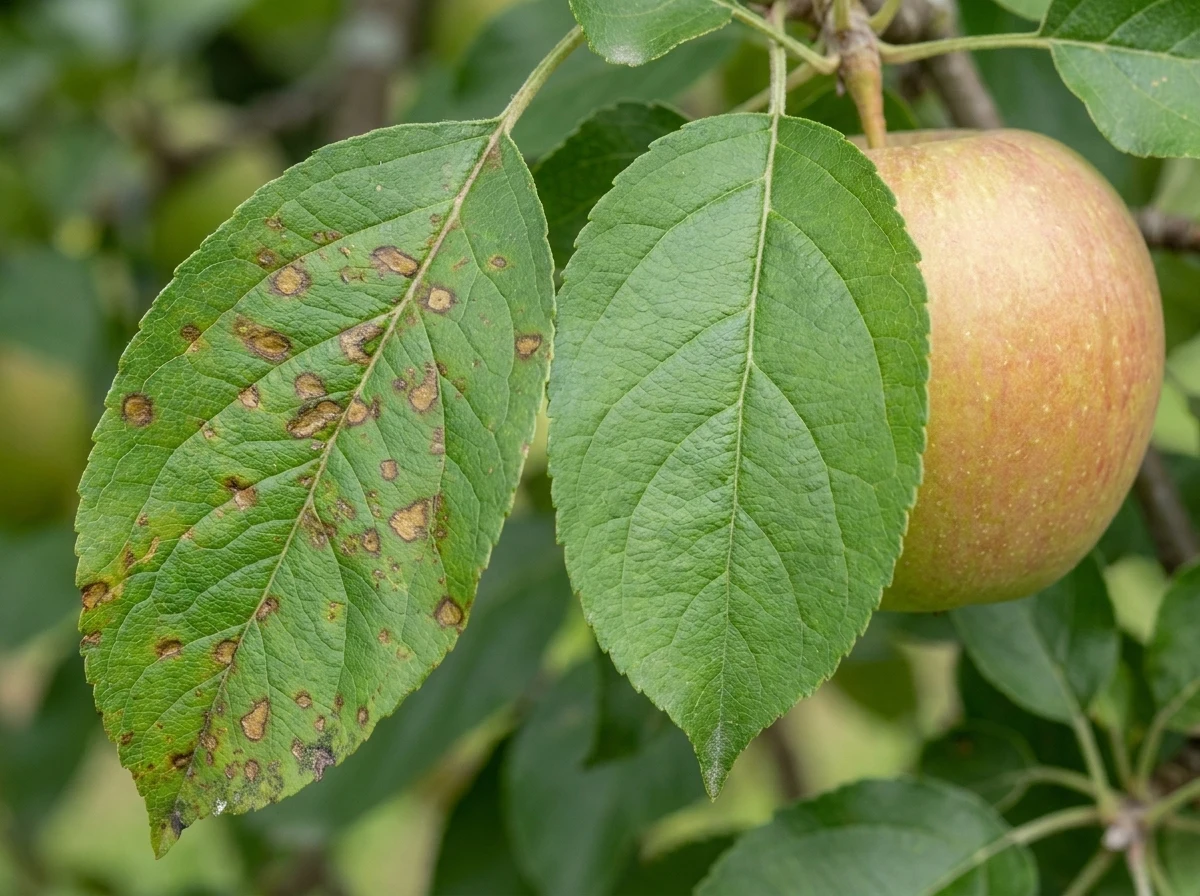
Apple scab, caused by the fungus Venturia inaequalis, produces olive-green to brown leaf spots and corky fruit lesions. The University of Minnesota identifies resistant planting material as the best way to manage scab, while Michigan State Extension notes that disease resistant apple tree varieties may still need attention for other diseases and insects.
Fire blight is bacterial and can blacken blossoms, leaves, shoots, and branches. A bent “shepherd’s crook” shoot is a familiar symptom, but diagnosis can be difficult. Cedar-apple rust involves both apple relatives and cedar or juniper hosts, while powdery mildew produces pale, felt-like growth on plant tissue. Therefore, a cultivar that performs well against scab may still struggle with rust, mildew, rot, or fire blight.
Match the cultivar to climate, rootstock, and pollination
Start with the USDA hardiness zone and the length of your frost-free season, then confirm local recommendations for disease resistant apple tree varieties. A late apple such as GoldRush may be rewarding in a long season but disappointing where autumn arrives early. In contrast, an early cultivar such as Pristine can be more practical in a short-season site, although summer apples generally store for less time.
Rootstock also changes the decision for disease resistant apple tree varieties. University of Maryland Extension explains that rootstock affects mature size, bearing age, hardiness, disease response, and ease of spraying. Most apples also benefit from a second compatible cultivar with overlapping bloom, even when a tree is described as partially self-fertile.
5 disease resistant apple tree varieties worth comparing
1. Liberty
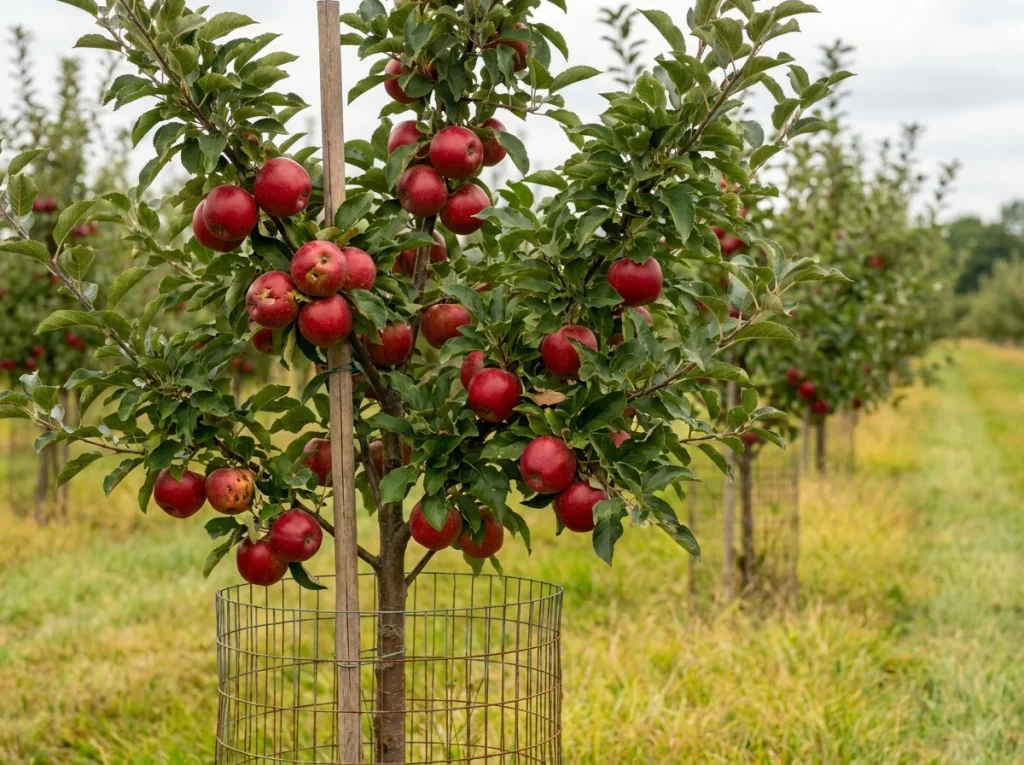
Liberty is one of the clearest choices for a lower-spray home orchard when several common diseases matter. Missouri Extension describes broad resistance to apple scab, fire blight, cedar-apple rust, and powdery mildew. UMN places Liberty in its scab-immune group and lists it among the more fire-blight-resistant apples suited to Minnesota.
The fruit is a red apple with a balanced, often tart flavor that works for fresh eating and cooking. Its mid-season harvest can fit many temperate gardens. Still, Liberty is not a promise of zero disease or zero insect management, and growers should confirm pollination compatibility and rootstock size before ordering.
2. Enterprise
Enterprise is a late-season red apple with useful storage potential and a flavor profile that suits fresh eating or cooking. Missouri Extension calls it immune to scab, resistant to fire blight and cedar-apple rust, and moderately resistant to mildew. Penn State rates it resistant to cedar apple rust and fire blight, with moderate powdery mildew resistance.
There is an important caution: disease-rating tables do not always agree for every cultivar and disease. Because of that, do not market Enterprise as cedar-rust-proof. It remains a strong candidate for growers who want a late apple and who can provide a season long enough for fruit to mature.
3. GoldRush
GoldRush is a late, yellow apple known for a sweet-tart flavor that can mellow in storage. Missouri Extension classifies it as immune to scab and moderately resistant to powdery mildew and fire blight. Penn State also lists it as a high-quality, very late apple with scab resistance in its home-orchard table.
The tradeoff is cedar-apple rust. Missouri specifically identifies GoldRush as susceptible and advises avoiding it where that disease is prevalent. In addition, its late maturity makes it a poor fit for some short-season or cool-summer locations. Choose it for storage and late harvest only after checking local climate and rust pressure.
4. Freedom
Freedom offers a useful middle ground for gardeners who want a mid-season apple with broad disease protection. UMN and Penn State identify it as resistant or immune to scab, resistant to cedar-apple rust, and resistant to moderately resistant for fire blight. Missouri describes its fire blight and powdery mildew resistance as moderate rather than complete.
Its fruit is generally described as spicy, crisp, and suitable for fresh eating or cooking. Penn State notes that fruit quality can vary and that black rot may still be a concern. Therefore, Freedom belongs on a shortlist, but it should be planted with good airflow, sanitation, and realistic expectations.
5. Pristine
Pristine is an early yellow or greenish-yellow apple for gardeners who want summer fruit. Penn State describes it as a pleasant, tart apple with a smooth finish, and UMN places it in its scab-immune group. Those sources support strong scab protection, but they do not establish equally detailed ratings for fire blight, cedar-apple rust, and powdery mildew.
That evidence gap matters. Do not infer broad disease resistance from scab performance alone. Pristine can be a practical choice for a short season or for extending harvest earlier, but fruit that ripens in summer generally needs to be used sooner than a late storage apple.
Compare disease ratings, fruit use, and season
The table below summarizes the most useful distinctions among disease resistant apple tree varieties. Ratings are simplified from extension guidance and should be checked against a current local cultivar list before purchase.
| Variety | Scab | Other disease considerations | Fruit and season | Best fit |
|---|---|---|---|---|
| Liberty | Immune or very resistant, depending on source | Strong fire blight, rust, and mildew profile | Red, mid-season, fresh or cooking | Beginners wanting broad protection |
| Enterprise | Immune or very resistant | Fire blight useful; rust ratings vary by source | Red, late season, stores well | Longer seasons and storage |
| GoldRush | Immune or very resistant | Moderate mildew and fire blight; rust susceptible | Yellow, very late, storage apple | Late harvest where rust is limited |
| Freedom | Resistant or immune | Rust resistant; fire blight and mildew vary | Red, mid-season, fresh or cooking | Balanced mid-season planting |
| Pristine | Immune or very resistant | Other ratings not established here | Yellow, early summer, use quickly | Short seasons and early harvest |
Extension consensus: Start with a disease-resistant cultivar, but do not stop there. Extension guidance consistently pairs cultivar selection with sanitation, pruning for airflow, appropriate rootstock, pollination planning, and careful local diagnosis.
How to reduce disease pressure after planting
First, remove fallen leaves and mummified fruit where practical, because infected debris can support future disease cycles in disease resistant apple tree varieties as well as susceptible trees. Next, keep the canopy open enough for air movement and drying. Avoid excessive nitrogen that produces soft, dense shoot growth, and water the root zone rather than repeatedly wetting foliage.
Inspect new growth, leaves, blossoms, fruit, and bark separately. Olive leaf spots and corky fruit lesions suggest scab, blackened shoots and shepherd’s crooks raise concern for fire blight, and orange lesions may indicate rust. However, similar symptoms can overlap, so use a local Extension diagnostic clinic or certified arborist when the diagnosis is uncertain.
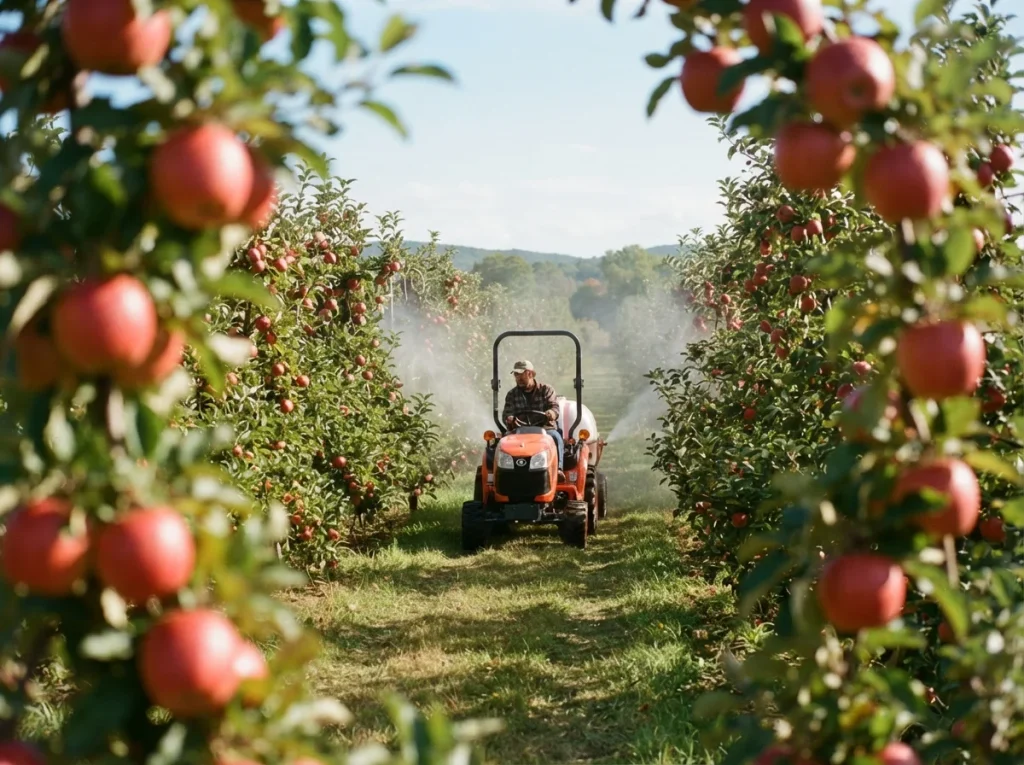
Resistant cultivars can reduce fungicide dependence, but disease resistant apple tree varieties do not remove insect pests such as codling moth or apple maggot. If a pesticide is considered, use only a product labeled for the crop and disease in your state, follow the label exactly, protect pollinators, and observe all harvest intervals. Fungicides generally protect healthy tissue rather than curing established damage.
FAQs
Are disease resistant apple tree varieties completely disease-free?
No. Disease resistant apple tree varieties usually resist one or more named diseases, but they can still develop other diseases, insect injury, or problems under severe weather pressure. Treat “immune” as a source-specific rating, not a guarantee against every orchard problem.
Which variety is best for a beginner who wants fewer sprays?
Liberty is a practical starting point because extension sources report a broad resistance profile. However, the best disease resistant apple tree varieties for your site depend on local disease pressure, hardiness, bloom overlap, rootstock, and the fruit you actually want to eat.
Do resistant apple trees still need a pollinizer?
Usually, yes. Resistance does not change pollination biology. Most apples set better with a compatible second cultivar that blooms at the same time, so check nursery bloom-group information for disease resistant apple tree varieties and avoid assuming that one tree will always crop reliably by itself.
Related Articles
- disease resistant apple trees
- Honeycrisp apple tree diseases
- best apple trees for home orchard
- apple tree varieties by zone
Sources
- University of Missouri Extension, Disease-Resistant Apple Cultivars
- Penn State Extension, Home Orchards: Table 4.1. Scab-resistant Apple Varieties
- University of Minnesota Extension, Apple Scab of Apples and Crabapples
- University of Minnesota Extension, Fire Blight
- University of Maryland Extension, Growing Apple and Pear Trees in a Home Garden
- Michigan State University Extension, Scab-immune Apple Varieties Are Worth a Try
- Oregon State University Extension, Growing Tree Fruits and Nuts at Home
Disclaimer: This article provides general extension-based growing guidance for disease resistant apple tree varieties. Soil, climate, rootstock, variety, disease pressure, and local regulations affect results. Field diagnosis can be difficult, so consult a certified arborist or local Extension diagnostic clinic when symptoms are uncertain. Always follow pesticide labels and applicable state requirements.
