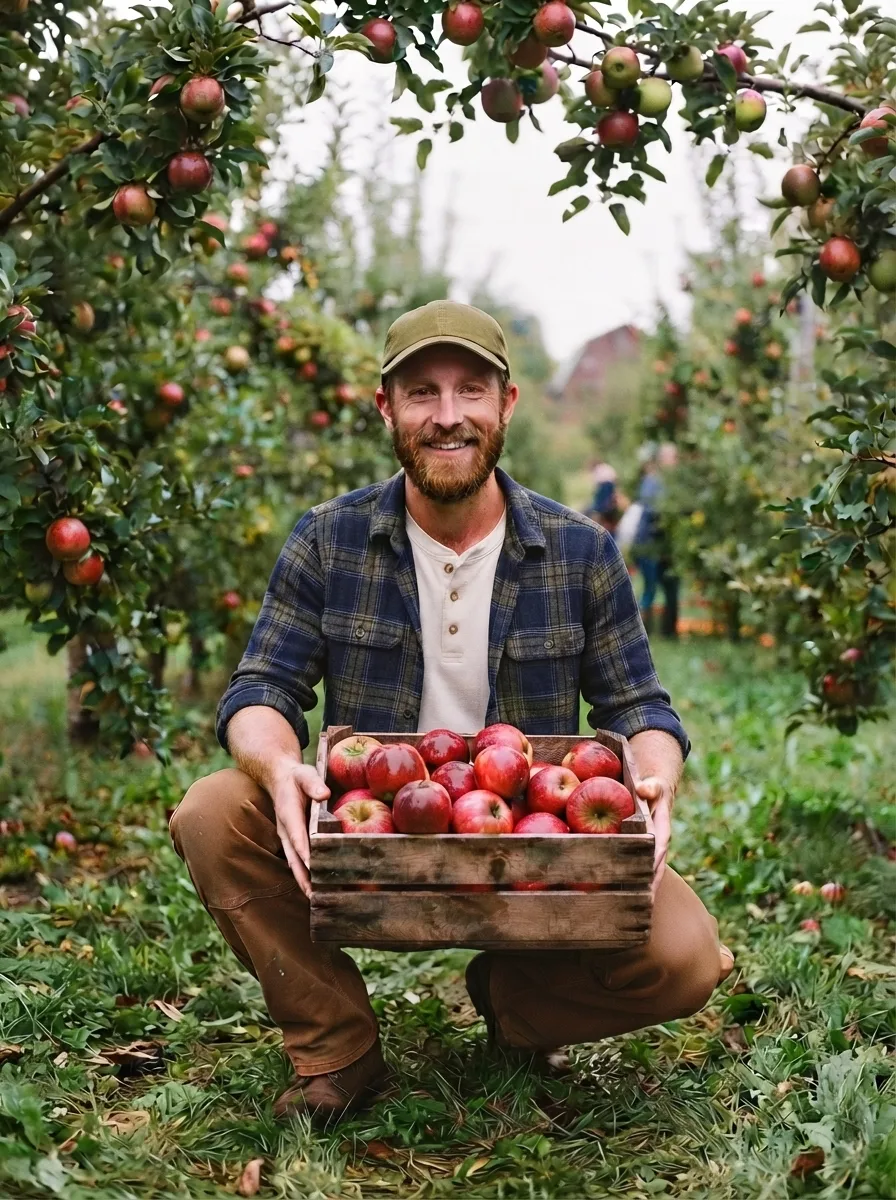
Apple scab treatment is easier to plan once you know what a spray can and cannot do. Dark, corky spots already on an apple will not disappear. But you can reduce the fungus left under the tree, protect healthy spring growth when needed, and make next year’s outbreak less likely.
Table of Contents
Key takeaways
Apple scab treatment cannot erase spots already on leaves or fruit.
Fallen infected leaves matter because the fungus commonly survives there through winter.
Sprays, when needed, work mainly as protection for new growth. Their timing depends on bud stage, weather, and the product label.
If you have just noticed brown patches on your apples, you probably want to know whether apple scab treatment can save the crop. The answer depends on when the damage appeared, whether the fruit is cracked, and how the rest of the tree looks. A few marks on the skin call for a different response than a tree that loses most of its leaves every July.
This guide is about making those decisions in a home orchard. For the full disease cycle and identification photographs, start with our apple scab overview.
Is it too late for apple scab treatment?
There is no product that restores scabbed skin to normal. A fungicide cannot remove an existing lesion, even when the fungus has stopped spreading. That distinction matters if you discover the damage in late summer and are considering spraying the whole tree.
Early in the season, the apple scab treatment decision is more complicated. If new leaves and fruit are still developing during wet weather, some orchards may need continued protection of uninfected tissue. Ask your local extension service before starting or changing a fungicide program, especially after symptoms are already widespread.
What to do with apples that already have spots
A small, dry scab on otherwise firm fruit is mainly a surface blemish. The Royal Horticultural Society notes that light infections can have little effect on eating quality. Fruit with deep cracks, soft areas, or rot is another matter: discard visibly decayed fruit and do not count on badly cracked apples storing well.
Likewise, there is rarely a reason to pull off every spotted leaf. The tree still needs its remaining foliage, particularly if it has already suffered early leaf drop. Concentrate on checking its overall condition and removing infected litter after leaves fall.
Check the symptoms before choosing apple scab treatment
The fungus is called Venturia inaequalis. Young leaf spots can be hard to notice at first: pale green patches develop an olive, velvety look before turning darker. Fruit spots often become rough and corky as the apple grows; early infections can distort or crack it.
Wet weather gives the fungus opportunities to infect new tissue. It usually passes winter in fallen diseased leaves, then sends spores into the air during spring rain. Once spots form, they can produce more spores, so the problem may continue through the growing season.
Three look-alikes worth checking
What you notice
What it could mean
What to check next
Olive, velvety patches on leaves and corky spots on fruit
Apple scab is likely
Look at several leaves, including their undersides
Bright orange spots on leaves
Cedar-apple rust is possible
Look for a more distinctly orange lesion pattern
White, powder-like growth on young leaves or shoots
Powdery mildew is possible
Check for surface powder rather than dark scabby patches
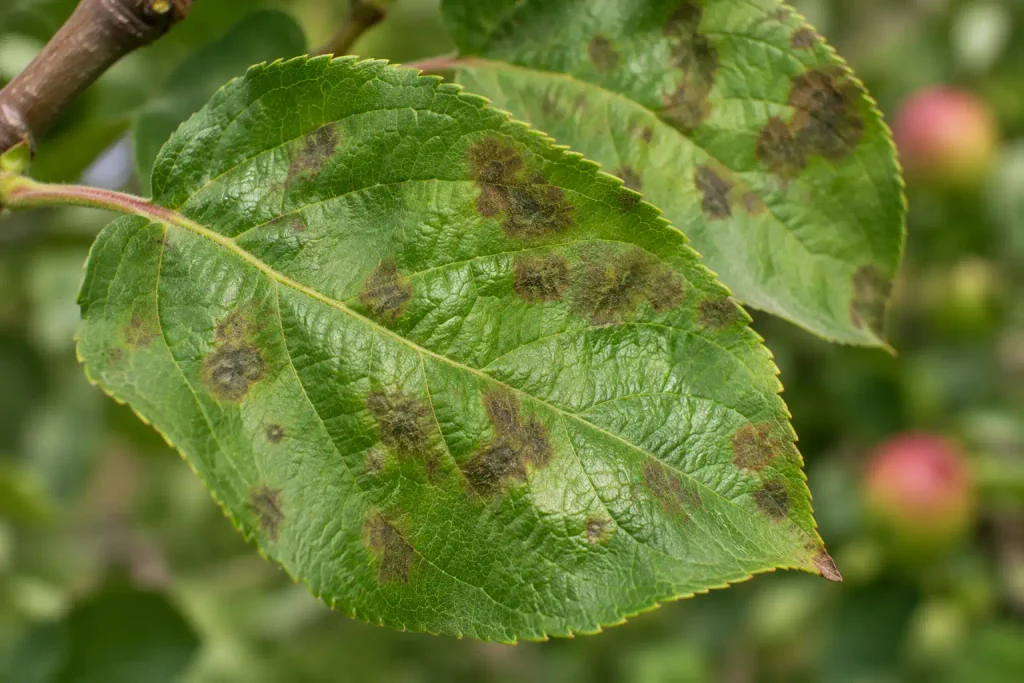
Early apple scab lesions often appear olive-green and velvety before darkening.
Before choosing apple scab treatment from a photograph, check whether the symptoms are unusual. Our apple tree disease identification guide explains other leaf and fruit problems; Cornell’s apple scab fact sheet has disease-specific images.
Video: University of Vermont Fruit Blog, VT Apple IPM: Apple scab (2024). The presenter discusses a commercial-orchard decision. Use local home-orchard guidance rather than copying its spray program.
Six steps for apple scab treatment and next year’s prevention
Most backyard growers will use some of these steps now and others when the seasons change. Apple scab treatment is rarely a one-afternoon job, because the infected leaves on the ground and the tender growth that appears next spring are part of the same disease cycle.
Step 1: Find out how much of the tree is affected
To plan apple scab treatment, walk around the tree and look beyond the most damaged apple. Are the youngest leaves spotted? Do the interior branches have more disease than the outside? Has the tree dropped a large share of its leaves, or is the canopy still full?
Take a few photographs and note the month. These details help you compare years and explain the problem to an extension specialist. If leaves are dropping heavily or branches are dying, don’t assume scab is the only cause.
Step 2: Deal with fallen leaves before spring
One useful part of apple scab treatment happens beneath the tree. Infected fallen leaves are a major source of spores the following spring. Rake them up for appropriate disposal, or shred them thoroughly with a mulching mower so they break down faster.
Check beneath shrubs and along the edge of the lawn, where leaves tend to collect. Even careful cleanup cannot stop spores blowing in from nearby apple or crabapple trees, but it reduces one source you can control. Cornell and Minnesota Extension both recommend this practice.
Step 3: Let air move through the branches
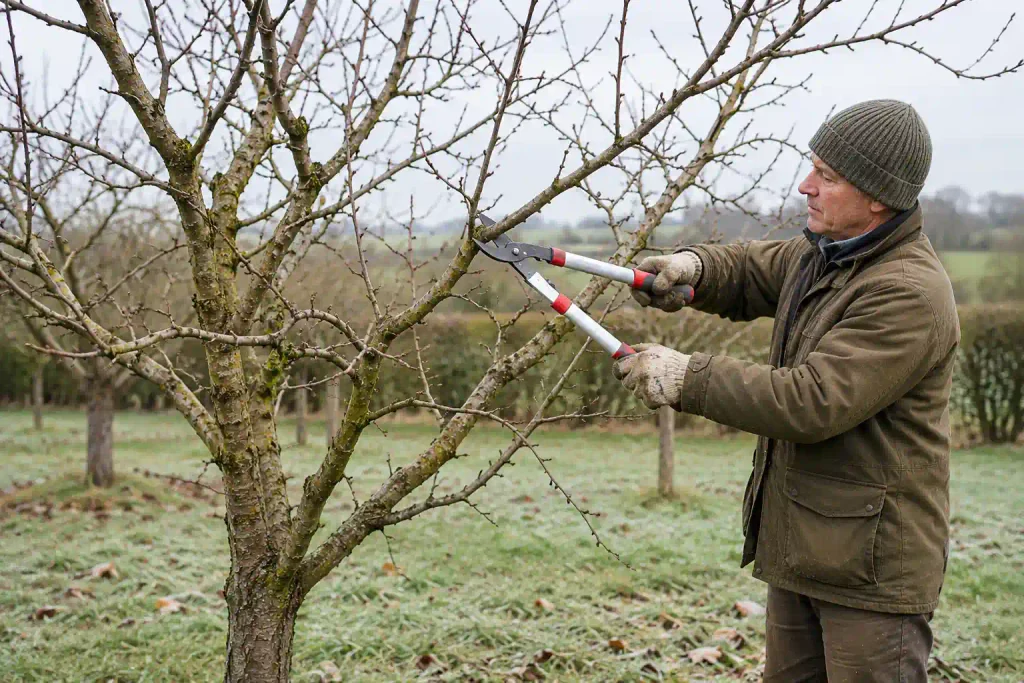
After rain, look up into the canopy. Thick clusters of branches keep leaves shaded and damp for longer, which gives fungal spores more favorable conditions. Remove crossing or crowded growth with selective cuts rather than stripping the tree.
For most climates, major pruning belongs in late winter or early spring, after the worst cold and before growth resumes. Prune young trees lightly and spread renovation of an overgrown mature tree over several seasons. Our apple tree pruning guide covers branch selection and cuts.
Selective pruning improves air circulation and helps foliage dry after rain.
Step 4: Decide whether apple scab treatment needs a fungicide
Before buying a fungicide, ask what you need from the tree. A susceptible variety grown for unblemished fresh fruit, especially one with repeated severe scab, presents a different situation from an ornamental tree or a tree whose few spots you can tolerate.
University of Minnesota Extension describes captan and certain sulfur products as options for scab management on edible apples. Those names are not a shopping list. Check the current label for edible apples, the disease, your state, safe application methods, harvest restrictions, and any compatibility warnings.
Be particularly careful with products marked for ornamental crabapples only. Also, never apply an all-purpose spray containing insecticide during bloom: pollinating insects may be exposed even if your purpose is fungal disease control.
Step 5: Time protection to new spring growth
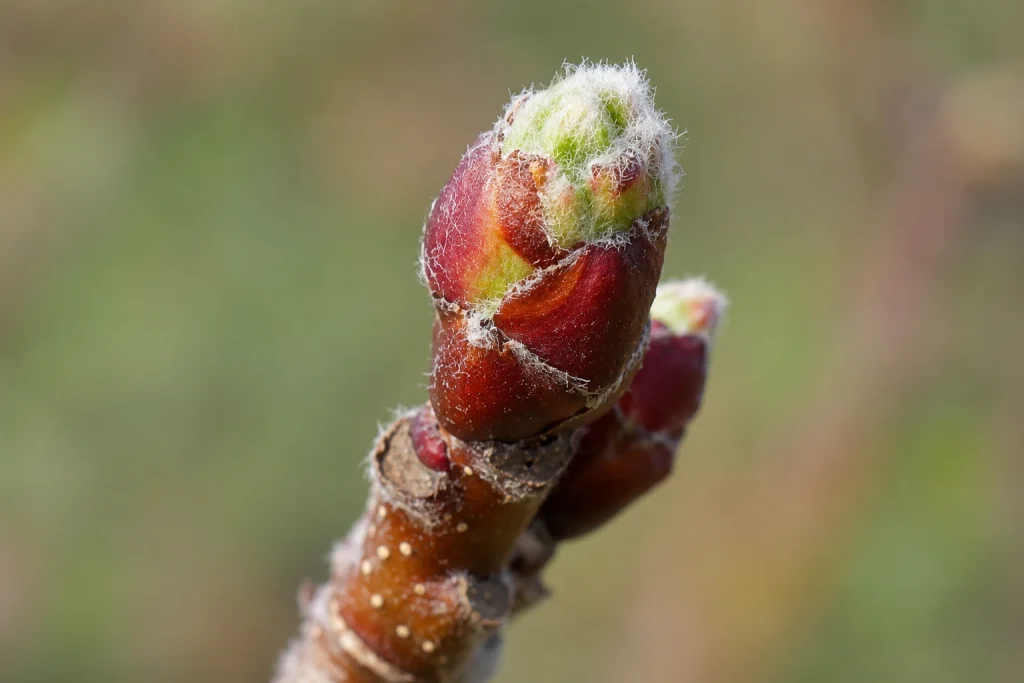
For trees that genuinely need a spray program, apple scab treatment begins around the first visible green leaf tips in spring, subject to local extension advice. This is a growth stage, not a date on the calendar. A warm coastal orchard may reach it weeks before a colder inland yard.
Rainfall and how long leaves stay wet influence infection risk. Follow the product’s current instructions and regional advice rather than choosing a weekly interval from a blog. The goal is to protect tissue before infection, not to wash dark spots off afterward.
Green tip marks the beginning of susceptible spring growth, when preventive disease management becomes important.
Extension-based management principle: Reduce infected leaf litter, improve air movement, choose resistant varieties when planting, and use well-timed preventive fungicides only where they are justified. No one of these measures replaces the others.
Step 6: Make the next tree easier to care for
Sometimes the hardest part of apple scab treatment is repeating the same spray decisions every wet spring. If you are planting another tree, look for a cultivar with documented resistance to scab. Liberty and Enterprise are examples, although resistance to scab does not guarantee resistance to every other disease.
Check USDA hardiness, chill requirements, rootstock size, and a suitable pollination partner before choosing. Our disease-resistant apple tree varieties guide can help you compare options without turning this treatment article into a cultivar catalog.
Apple scab treatment by season: what actually helps
Use the season to decide your next job, not to invent a spray schedule. If you are reading this after harvest, the most useful work may be leaf cleanup rather than purchasing a fungicide.
Season or stage
Useful action
What to avoid
Late summer
Record symptoms, assess leaf loss, inspect fruit for cracks or rot
Expecting a spray to erase existing scabs
Autumn leaf fall
Rake or thoroughly shred infected leaves
Leaving thick infected leaf piles below the tree
Late winter
Prune crowded or damaged branches without overdoing it
Removing too much of a young or neglected tree
Spring green tip
Review rain risk and labeled preventive protection if needed
Using a calendar date that ignores local bud development
Bloom and beyond
Follow local disease guidance and protect pollinators
Insecticide-containing all-purpose sprays during bloom
Choosing apple scab treatment for a small backyard tree
If a tree develops only occasional scab and keeps a healthy canopy, sanitation and careful pruning may be enough for your goals. When fruit quality is essential and the same susceptible tree suffers badly in wet springs, ask extension whether a preventive plan is practical.
Large trees pose an additional problem: getting even coverage without drift or unsafe ladder work. Minnesota Extension advises involving a certified arborist for applications to large trees. No home gardener should feel obliged to spray a tree that cannot be treated safely.
Apple scab treatment mistakes that make things worse
Spraying after the harvest is already marked
It is understandable to reach for an apple scab treatment product when the first black patches appear. Yet fungicides are mainly preventive, and spraying late simply because the fruit looks bad is unlikely to change that fruit’s appearance. Check whether there is still healthy tissue worth protecting before considering a treatment.
Following advice meant for ornamental crabapples
Some articles discuss fungicides for ornamental trees whose fruit is never eaten. The label for those products may not permit use on edible apples. Read the crop listing and restrictions rather than assuming all products described as scab treatments are interchangeable.
Trying homemade mixtures without evidence
Vinegar, dish soap, and improvised mixes are sometimes suggested online. They can injure foliage, and an untested mixture is no substitute for confirmed diagnosis and a registered label. If you prefer not to spray, focus on sanitation, pruning, and resistant varieties instead.
Taking advice for one region as a nationwide calendar
Apple trees in different USDA zones do not reach green tip on the same day. Even within one region, spring rain changes infection pressure from year to year. Local extension information is more useful than an exact date copied from another orchard.
When apple scab treatment needs professional advice
Apple scab rarely kills a mature tree outright, but repeated severe defoliation can weaken it. Ask a diagnostic clinic about widespread leaf loss, unexpected branch dieback, or spots that do not match the usual olive-green scab pattern.
Provide photographs of leaves on both sides, fruit, and the whole canopy. Mention the variety if you know it, when symptoms started, and whether the tree had similar problems last year. This is especially helpful before investing in a multi-season apple scab treatment plan.
FAQs
Can apple scab treatment remove existing black spots?
No. Fungicides cannot reverse established scab lesions. They are used, where appropriate, to protect still-healthy leaves and fruit, with preventive work planned around the next spring’s growth.
Can you eat apples that have scab?
Light surface scab may leave eating quality largely unaffected, according to the RHS. However, severe infections can crack or deform apples and make them poor for storage. Discard fruit with rot or other spoilage.
Will an infected tree recover next year?
Many trees produce healthy new leaves the following spring, but the fungus can infect them again when conditions are favorable. Repeated heavy leaf loss calls for a more deliberate management plan and sometimes professional assessment.
Is copper the best organic solution?
There is no single product that suits every orchard, and an organic label does not make a treatment harmless. Product registration, edible-fruit labeling, weather, and potential plant injury all matter. Ask local extension before choosing copper, sulfur, or any other fungicide.
Do I need to remove all spotted leaves from the tree?
Generally, no. Pulling off large amounts of foliage can add stress without curing the disease. Concentrate on managing infected leaves after they fall and keeping the remaining canopy healthy.
Owen Mercer is the editorial pen name used for AppleTreeGuide's guides on apple tree growing, pruning, pests, diseases, and seasonal care. Articles draw on university extension publications and other horticultural references to help home gardeners understand symptoms and practical care options. The accompanying portrait is an editorial illustration.