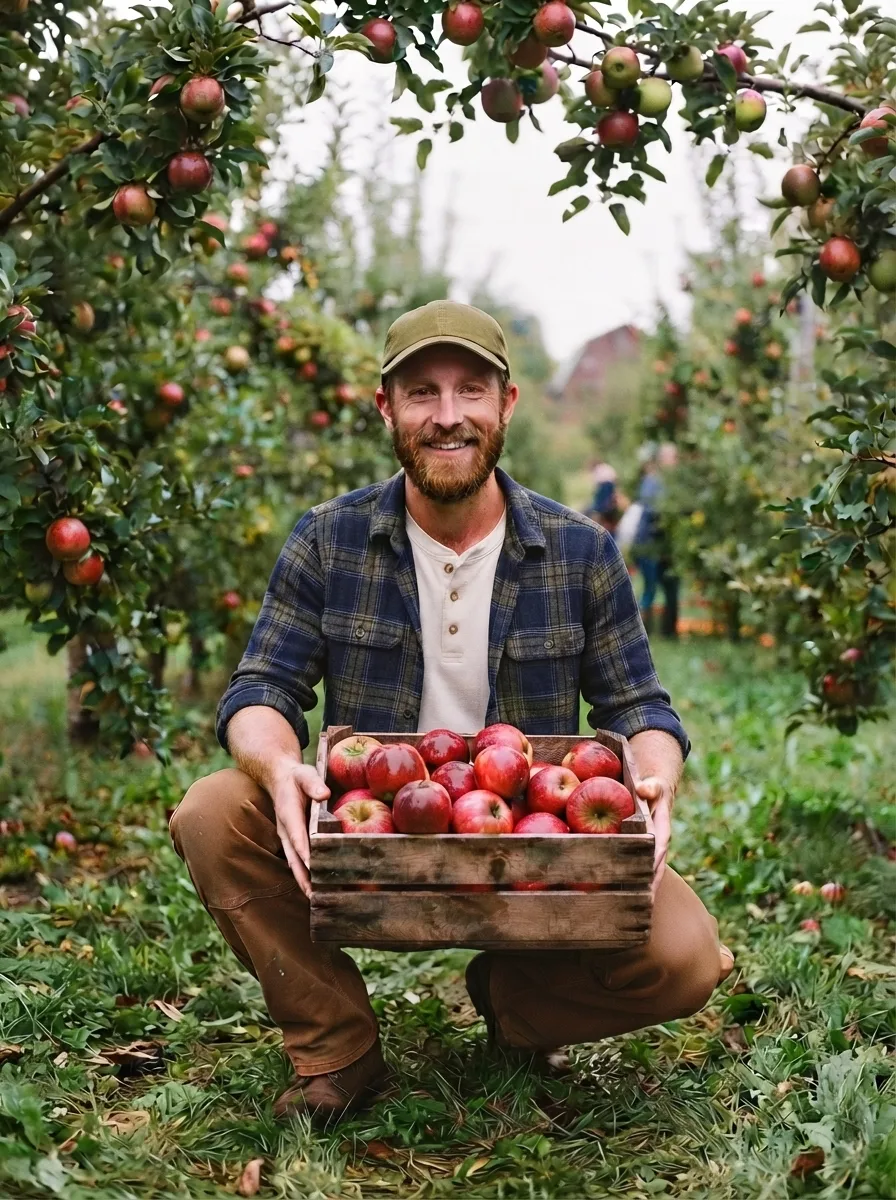
Protecting Apple Trees in Winter: 6 Simple Steps That Work
Protecting apple trees in winter means shielding the trunk from sunscald, blocking rabbits and voles, and keeping the root zone healthy before the ground freezes. University extension guidance centers on white trunk guards, hardware cloth, a clear trunk base, and careful timing. Most of the work happens in fall, before the first snow arrives.
Table of Contents
Key Takeaways
- Protecting apple trees in winter starts in fall, because extension guidance says animal barriers should go up before snowfall.
- White guards reflect winter sun to prevent sunscald, while quarter-inch hardware cloth keeps rabbits and voles away from the bark.
- A clear trunk base, fallen-fruit cleanup, and delayed pruning also reduce winter risk for young and mature trees.
Protecting apple trees in winter is one of the most overlooked jobs in a home orchard. However, the damage often stays hidden until spring, when a tree fails to leaf out or shows bark chewed down to the soil line. By then, prevention is no longer an option.
This guide explains six extension-backed methods for protecting apple trees in winter, suited to backyard growers in every USDA zone. In addition, it compares common guard types, lists mistakes to avoid, and explains what to check during the cold months. Therefore, you can match each step to your own climate, tree age, and site.
Why Protecting Apple Trees in Winter Matters
According to University of Minnesota Extension, winter food shortages force rodents and deer to feed on bark, twigs, flower buds, and leaves. As a result, trees can be injured and sometimes killed. Young trees with thin bark face the greatest risk.
Utah State University Extension adds an important detail: voles prefer younger trees with smooth bark, but trees with rough bark can also be damaged or even killed outright. Consequently, mature trees are not automatically safe. That is why protecting apple trees in winter belongs on every fall checklist, whatever the age of the orchard.
Sunscald and Frost Cracks
Winter sunlight can warm bark enough to stimulate cellular activity, according to UMN Extension. White guards reflect that light instead of absorbing it. For this reason, they help prevent sunscald and the frost cracks that can follow on young, thin-barked trees.
Rabbit, Vole, and Deer Damage
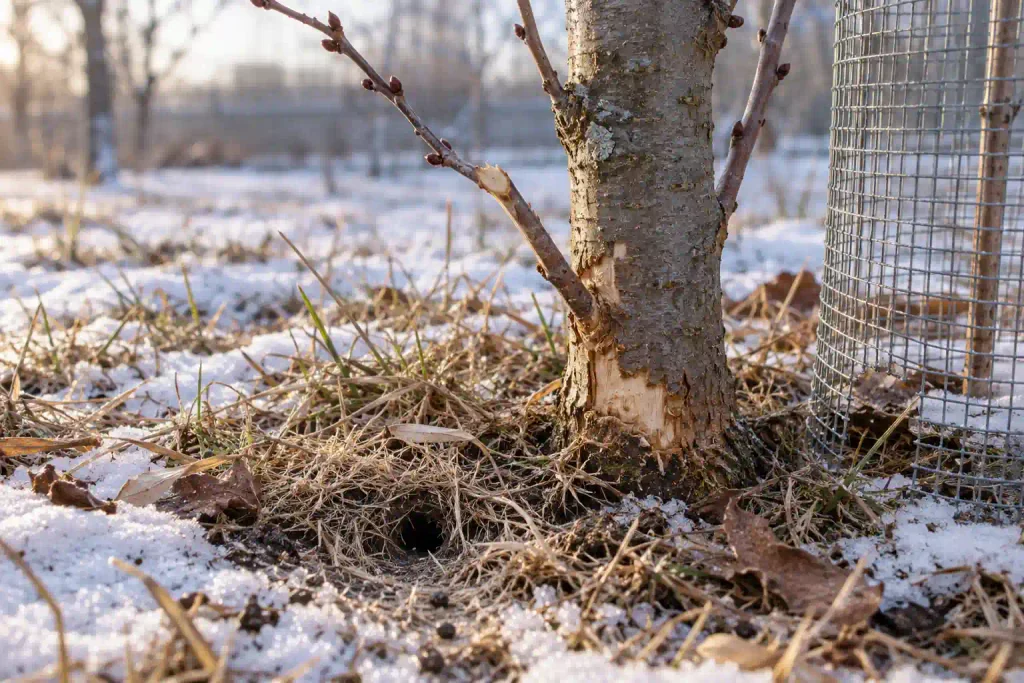
Rabbits chew the bark of younger plants from early fall through winter, and they leave a distinctive 45-degree bite mark. Voles work differently. Penn State Extension reports that their most common injury is trunk girdling at or near the ground surface, and that it occurs mainly in winter.
Deer cause a third kind of harm. They browse twigs and buds, and they rub or scrape trunks. For example, white plastic guards help protect bark from rubbing as well as from sunscald.
How to Start Protecting Apple Trees in Winter Before Snowfall
Timing matters more than any single product. UMN Extension advises installing animal barriers in fall before snowfall, and they can stay in place through the growing season or be removed. The video below shows the general approach for preparing trees for the cold months.
Method 1: Wrap the Trunk With a White Guard
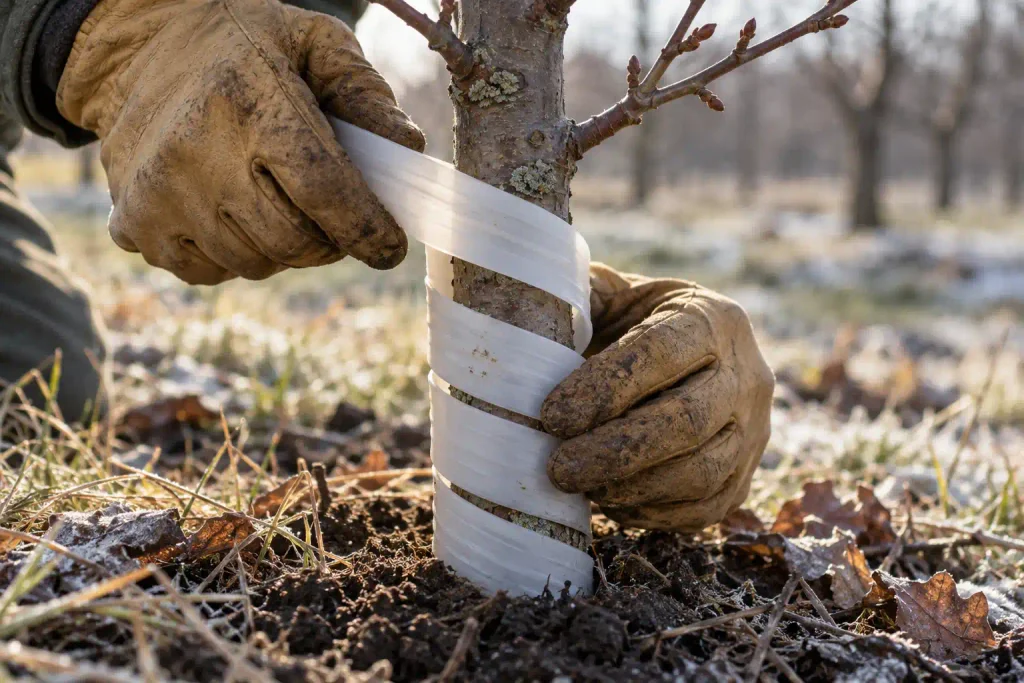
Protecting apple trees in winter begins at the trunk, where UMN Extension recommends a white commercial tree wrap or white plastic tree guards. In contrast, brown paper wrap and black guards absorb heat from the sun, so they should be avoided. This step matters most for young trees, because their bark is thin and smooth.
Wraps also need attention over time. Extension photos show trees that have outgrown their wraps, which can constrict the trunk. Therefore, check each guard every year and replace it when the trunk expands.
Method 2: Install Hardware Cloth Cylinders
Quarter-inch hardware cloth is the standard tool for protecting apple trees in winter against rabbits, mice, and voles. UMN Extension suggests forming a cylinder around the trunk about 6 inches away from the bark. Meanwhile, NC State Extension advises that guards encircle the trunk and reach a height of 18 inches.
Snow depth changes the equation, so in snowy regions UMN Extension recommends fencing at least 4 feet tall, with the bottom edge buried a few inches in the soil. Otherwise, animals can burrow under the barrier or walk over it on a snowbank. Winter severity also varies by USDA zone, so snow depth, rodent pressure, and sun exposure differ from one yard to the next.
Method 3: Clear the Trunk Base and Pull Back Mulch
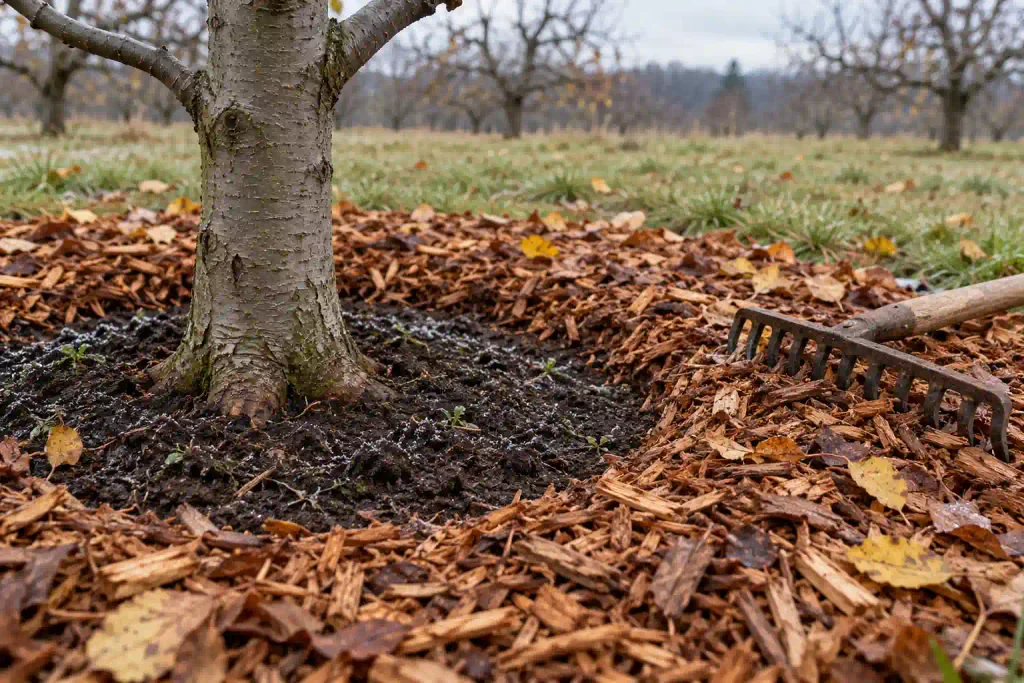
Tall grass and thick mulch give voles and rabbits cover, which is why NC State Extension recommends removing grass at the base of the trunk. If trees are mulched, pull the mulch back five to six inches. Penn State Extension adds that mulch, prunings, and decaying vegetation should not accumulate around tree bases.
UMN Extension goes a step further for young trees by recommending removal of vegetation within 2 feet of the trunk in late fall. As a result, rodents lose the hiding places they need to feed unseen, which makes clearing cover a low-cost part of protecting apple trees in winter. Our apple tree mulching guide explains how to mulch correctly during the growing season.
Method 4: Clean Up Fallen Fruit and Prunings
Fruit left under the tree can attract rodents. NC State Extension therefore treats fallen-fruit cleanup as part of the annual fall and winter orchard routine. Likewise, Penn State Extension says drops should be cleaned up quickly.
Sanitation also applies to brush. UMN Extension recommends hauling away or burning branches after pruning, since brush piles can shelter the animals you are trying to keep out. Check local rules before burning anything.
Method 5: Water Before the Ground Freezes
Roots keep working after leaves drop, so late-season moisture still counts. UMN Extension’s November garden checklist lists watering established trees and shrubs alongside protecting them from animals and winter sun. However, the right amount depends on rainfall and soil type in your area.
Our apple tree watering guide covers moisture needs by season. For region-specific timing, your local cooperative extension office is the best reference.
Method 6: Delay Pruning Until the Worst Cold Passes
NC State Extension advises holding off on pruning until after the worst winter weather has passed. In other words, wait for late winter rather than cutting during a hard freeze. Our apple tree pruning in winter article explains cut timing and technique in detail.
Meanwhile, the apple tree dormancy guide explains why trees need this rest period. Understanding dormancy helps you decide which tasks belong in fall and which belong in late winter.
Guard Types Compared for Protecting Apple Trees in Winter
No single product handles every threat when protecting apple trees in winter. The table below summarizes what extension sources say about each option.
| Protection | Best For | Extension Guidance |
|---|---|---|
| White commercial wrap or plastic guard | Sunscald and frost cracks on young, thin-barked trunks | Reflects winter sun; avoid brown paper wrap and black guards (UMN) |
| Quarter-inch hardware cloth cylinder | Rabbits, mice, and voles | Keep about 6 inches from the trunk (UMN); cover at least 18 inches in height (NC State) |
| Perforated white plastic guard | Voles, combined with mowing | Sits several inches from the trunk and can be adequate in many cases (Utah State) |
| Fencing at least 4 feet tall | Rabbits and deer in snowy areas | Bury the bottom edge a few inches; install before snowfall (UMN) |
In many orchards, a white guard and a hardware cloth cylinder work together. Specifically, the guard handles sun while the mesh handles animals. Local pressure from rabbits, voles, or deer should decide how much protection you add.
Common Mistakes When Protecting Apple Trees in Winter
Even careful growers make avoidable errors when protecting apple trees in winter. The most common ones are listed below.
- Using dark wraps: UMN Extension warns that brown paper wrap and black guards absorb heat from the sun.
- Waiting for snow: Barriers belong in place before snowfall, not after animals have started feeding.
- Piling mulch against the trunk: Mulch near the bark gives voles cover, so pull it back as described above.
- Forgetting to check wraps: A guard that is too tight can constrict a growing trunk.
- Assuming mature trees are safe: Rough-barked trees can still be damaged, according to Utah State Extension.
What to Check During the Winter
Protecting apple trees in winter is not a one-time job. Throughout the cold months, walk the orchard after storms and look for new problems. For instance, a gap in a guard or a collapsed fence can let animals in quickly.
Signs of Animal Activity
Look for the 45-degree bite marks that rabbits leave on bark. In addition, inspect the ground for tunnels in the grass or holes that signal vole activity. NC State Extension suggests using snap traps when vole activity is noted.
Extension consensus (summary): Across the university sources reviewed, the shared message is consistent. Install white guards and quarter-inch hardware cloth in fall, keep the trunk base clear of cover, and inspect barriers through winter. These habits form the core of protecting apple trees in winter.
When to Get Local Help
Some winter injuries need a professional diagnosis, even after careful work on protecting apple trees in winter. If bark is stripped all the way around the trunk, the tree may be girdled and needs expert assessment. Similarly, if you see cracks or dead patches in spring, read our apple tree frost damage guide and then contact a certified arborist or your local extension diagnostic clinic.
Moreover, local conditions vary widely across USDA zones. Your extension office can confirm the best timing for protecting apple trees in winter where you live.
FAQs
Do apple trees need to be wrapped for winter?
Extension sources recommend white guards for young, thin-barked trees. Protecting apple trees in winter with a white wrap helps prevent sunscald, while hardware cloth handles animals. Needs vary by climate and animal pressure, so check with local extension.
When should I start protecting apple trees in winter?
Start in fall, before snowfall. UMN Extension advises installing animal barriers at that time. Cleanup tasks, such as removing fallen fruit and clearing the trunk base, also fit this window.
Do mature apple trees need winter protection?
Mature trees are generally less vulnerable, but they are not immune. Utah State Extension notes that voles prefer young, smooth-barked trees, yet rough-barked trees can still be damaged. Therefore, assess each tree and the local animal pressure before skipping protection when protecting apple trees in winter.
Should I keep mulch around the trunk in winter?
Pull mulch back five to six inches from the trunk, according to NC State Extension. If voles are damaging trees, Penn State Extension advises clearing mulch 2 feet or more from the base.
Related Articles
Sources
- University of Minnesota Extension. Protecting trees and shrubs in winter.
- University of Minnesota Extension. Winter protection for plants.
- University of Minnesota Extension. Winterizing plants: Animal damage.
- University of Minnesota Extension. November garden checklist.
- NC State Extension, Burke County Center. Winter Fruit Tree Care.
- Penn State Extension. Orchard Wildlife: Integrated Management of Voles in Orchards.
- Penn State Extension. Voles.
- Utah State University Extension. Fruit IPM Advisory, November 4, 2013 (vole management in orchards).