
Apple Tree Winter Care: 7 Proven Steps to Protect Your Tree
Apple tree winter care starts with checking soil moisture before the ground freezes, maintaining a shallow mulch ring, and protecting vulnerable trunks from sunscald and chewing animals. Potted trees need extra root protection. Save routine pruning for late winter or early spring, with timing based on local weather and the tree’s growth stage.
A newly planted apple in a windy yard needs closer attention than an established tree in well-drained ground. A tree in a pot needs a different plan again. Use the seven steps below to decide what your tree needs now, what can wait, and what to check when winter loosens its grip.
Table of Contents
When to start apple tree winter care
Begin after harvest, while you can still reach the soil and work around the trunk. Clean up fallen fruit, check guards, and find out whether the root zone is dry. These jobs become harder once snow hides the ground or frozen soil prevents you from installing protection.
Use seasonal changes to schedule the work. A November calendar reminder may suit one garden and arrive too late in another. The University of Minnesota’s apple-growing guide separates fall cleanup and trunk protection from pruning after the coldest weather has passed. Its months describe Minnesota conditions, so adjust the sequence to your location.
| What you observe | What to do | What to avoid |
|---|---|---|
| Harvest is over, and leaves are falling | Remove leftover fruit and check the trunk and soil. | Adding fertilizer simply because winter is approaching. |
| Cold weather is approaching, but soil is workable | Install needed animal guards and arrange container protection. | Waiting until the pot is frozen to choose a storage place. |
| The tree is dormant and soil is frozen | Inspect guards, supports, and storm damage when access is safe. | Pouring water onto frozen ground. |
| A prolonged dry spell brings mild, snow-free conditions | Check soil moisture and water only if conditions allow. | Restarting the summer irrigation schedule. |
| Severe winter cold is easing, but buds have not opened | Assess pruning needs and review local timing advice. | Using USDA zone alone to choose a pruning date. |
| Buds are opening and frost is forecast | Assess frost risk for that bud stage. | Assuming trunk protection also protects flowers. |
Before buying protection, find the nursery label or planting record. Note the variety, rootstock, planting date, and whether the tree is permanently supported. Our guide to apple tree rootstocks explains why two trees carrying the same apple variety can have different support and site requirements. A protective wrap cannot make an unsuitable tree reliably hardy.
What dormancy changes, and what it does not
Leaf drop is normal for apple trees. During winter dormancy, visible shoot growth stops, but the tree remains alive. Cold acclimation is the process that increases its ability to tolerate low temperatures. The University of Maine’s winter-preparation guidance explains that hardiness develops gradually and can be reduced by winter warm spells.
Chilling is a separate part of the annual cycle. An apple variety needs sufficient exposure to suitable cool temperatures before buds can resume normal growth when warmth returns. Utah State’s orchard-management guide describes this temperature-driven process and the way cultivars differ. Chill requirements describe a developmental need; cold hardiness describes tolerance of damaging temperatures.
This distinction matters in mild climates. A winter with little snow can still provide useful chilling, while a variety poorly matched to local winter temperatures may flower inconsistently. Ask your local extension office which varieties and chill estimates fit your area. When comparing figures, check the calculation method: chill hours, Utah chill units, and chill portions are different measures.
For an existing tree, concentrate on its actual exposure. Record whether it stands beside a sunny wall, in a low frost pocket, or in a container above ground. Those details help explain why a nearby tree can behave differently despite sharing the same weather forecast.
1. Clean up fallen fruit and record this year’s problems
Pick up windfalls and remove shriveled fruit still hanging on reachable branches. Then deal with fallen apple leaves, especially where scab caused spotting and early leaf loss. Keep cleanup focused on the orchard’s sources of infection rather than treating every leaf in the garden as a problem.
The apple scab fungus survives winter in infected fallen leaves. Minnesota Extension recommends removing leaves or chopping them with a mulching mower to help reduce that source. Cleanup lowers pressure, but spores from neighboring trees can still reach your tree.
If you remove diseased material, use an appropriate local disposal route. A cool backyard compost pile may not destroy plant pathogens. Do not tuck infected leaves under fresh mulch and assume the problem is solved.
Take photographs of suspicious areas before winter changes their appearance. Useful records include the whole tree, a close view of the affected branch, and the point where healthy-looking bark meets damaged bark. Write down when the problem first appeared. A crack noticed in March may have started months earlier.
If identification is uncertain, compare the symptoms in our apple tree disease identification guide before choosing a treatment. The purpose of the winter record is to carry a clear question into spring, not to assign a disease name from one photograph.
2. Check soil moisture before watering
Keep checking moisture after harvest when rainfall is scarce. A recently planted tree has a limited root system, and its original root ball can need attention even when surrounding ground looks damp. Move mulch aside and inspect soil in the root ball and nearby ground without cutting major roots. A wet surface alone does not tell you what is happening below.
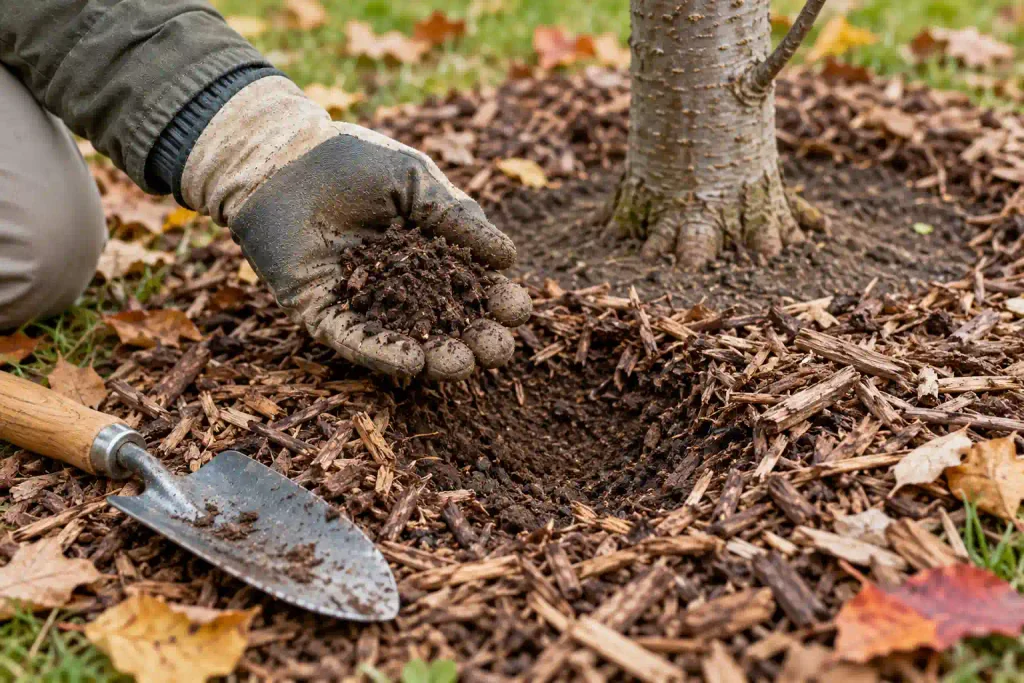
University of Maryland fruit-care guidance recommends continuing irrigation through dry periods after harvest. Let water soak into the root area gradually, and stop if it ponds or runs away. Our guide to how often to water apple trees explains how establishment and soil conditions change the decision.
During winter, temperature and soil condition come first
In dry regions, winter watering can still be necessary. Colorado State Extension advises watering during prolonged dry periods when air and soil temperatures are above 40°F and snow cover is absent. Water around midday so it can soak in before temperatures fall again.
That advice addresses dry winter conditions. It does not mean every apple tree needs water twice a month. Skip irrigation when soil is frozen, saturated, or already adequately moist. Check a potted tree separately because its growing medium and shelter receive different amounts of precipitation.
For example, imagine two trees during the same winter thaw. One stands in damp clay after several days of rain. The other is in a sheltered pot that has received no rain at all. The first may need drainage attention; the second needs a moisture check. The date and air temperature alone cannot determine the right action.
3. Maintain a mulch ring with space around the trunk
Check the depth of existing mulch before adding more. For routine apple care, Utah State recommends 2 to 3 inches of mulch over the root zone, kept away from the trunk. This is a total depth, not a fresh layer to add every fall.
Spread coarse organic mulch across the cleared area around the tree. Keep the trunk base visible and leave a gap of several inches between wood and mulch. Where a graft union is visible above the soil, do not bury it beneath a winter mound. See our apple tree mulching guide for material choices and placement.
Cold-region recommendations sometimes call for a deeper insulating layer around new plantings. Minnesota Extension, for example, recommends 3 to 4 inches of shredded wood mulch for root protection. Choose a depth suited to the material, drainage, and local advice. More mulch is not automatically better, particularly where the ground stays wet or rodents hide beside the trunk.
After spreading it, check your work from ground level. Can you see the trunk flare? Is mulch touching bark on the far side? Has a guard trapped wet leaves against the stem? Those checks are more useful than judging the ring only from above.
4. Protect exposed young bark from winter sun
Young trunks can suffer sunscald when winter sun warms exposed bark and temperatures then drop rapidly. Damage often develops on the south or southwest side. Minnesota Extension recommends reflective white trunk protection for susceptible trees.
Choose a commercial white guard or reflective wrap intended for trees. Fit it according to its instructions, with room for the trunk and no tight ties biting into bark. Record when you installed it and when it needs inspection or removal. Check underneath during seasonal removal for rubbing, moisture accumulation, and concealed damage.
Keep the purposes of different products clear. Reflective protection reduces bark heating. Mesh guards exclude animals. A material selected for one job may not perform the other. Ordinary plastic film and dark coverings are poor substitutes for a purpose-made reflective guard.
If bark is already split, protection may reduce further exposure, but it cannot restore dead tissue. Photograph the wound and arrange diagnosis if the damaged area is extensive or worsening. Avoid filling it with tar or wound sealant.
Prioritize young, thin-barked trees and newly exposed trunks. An established tree with thicker bark may need less sun protection, although animal damage can still occur. Inspect each tree before buying enough wrapping material for the whole orchard.
5. Keep rabbits, voles, and deer away from vulnerable trunks
Inspect the ground and bark for gnawing, small runways, and other signs of feeding. Voles can work beneath snow, while rabbits reach higher bark as snow accumulates. A guard that looks tall enough in November may leave the trunk exposed above a February drift.
University of New Hampshire recommends 1/4-inch galvanized hardware cloth for vole protection. Form a roomy cylinder and secure it so it cannot rub the bark. Close access at ground level; install the lower edge carefully without cutting roots. Clear leaves and other debris from inside the cylinder.
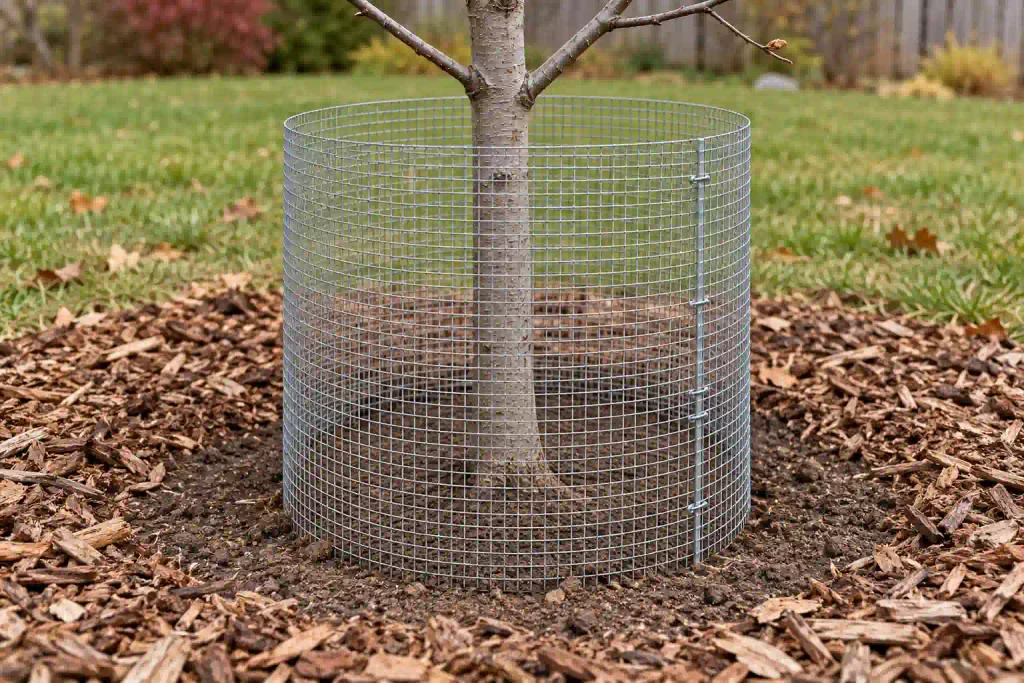
Match height to the animal and expected snow, rather than copying a single measurement. The University of Minnesota’s stem-protection guide documents rabbit damage well above normal ground level in deep snow. Recheck coverage after drifting or plowing changes the surface around the tree.
Deer browsing requires protection around reachable branches as well as the trunk. Where deer are a recurring problem, use an appropriate tree enclosure or orchard fence. A narrow trunk sleeve cannot stop a deer from eating exposed shoots.
Mesh cylinders can remain in place if they allow room for growth and are checked regularly. Seasonal opaque wraps need a spring removal plan. Walk around the full circumference during inspection: a loose seam or an opening behind the tree can defeat otherwise good protection.
6. Give potted apple trees extra root protection
An apple tree that is hardy in the ground may still lose roots in an exposed pot. The small volume of growing medium follows outdoor temperature changes more quickly than garden soil. A pot on a deck also lacks the surrounding soil that helps insulate an in-ground root system.
Iowa State Extension describes two overwintering options: sinking the container into the ground after dormancy but before soil freezes, or storing it in a suitably cold, unheated structure. Its general storage guidance gives a range of 20°F to 45°F. Treat that as a starting point for hardy container plants, not a tested survival limit for every apple rootstock.
If using the ground, choose a well-drained location and preserve the tree’s existing planting depth. Keep trunk protection in place where animals have access. If using a garage or shed, measure the temperature. An unheated building can become surprisingly warm in sun or nearly as cold as outdoors during a long freeze.
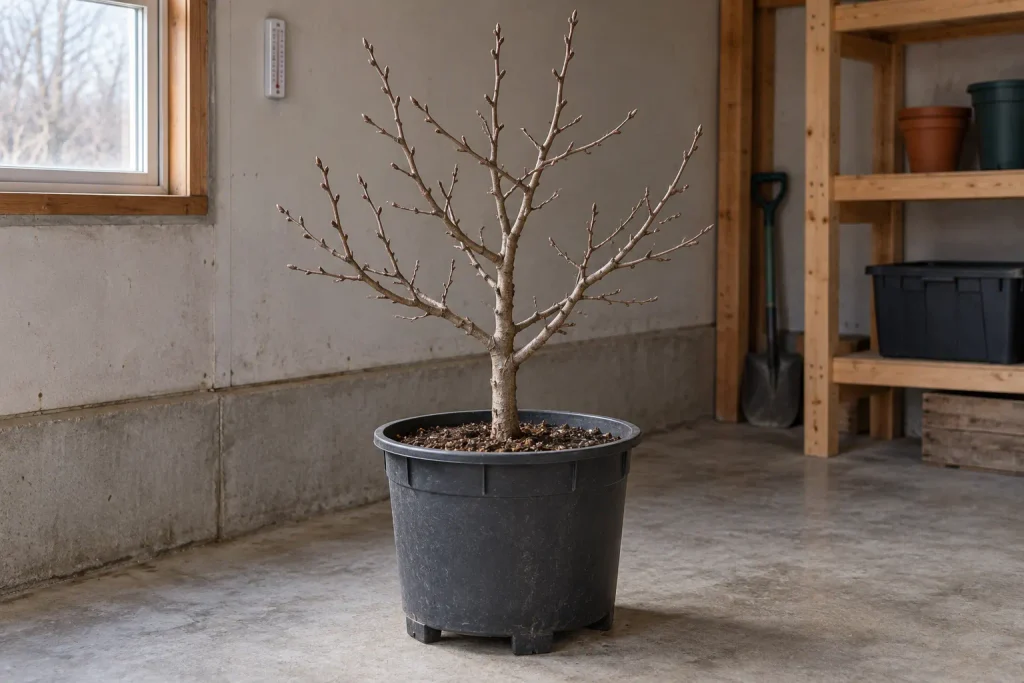
Check the pot throughout winter.
Inspect moisture regularly while the medium is unfrozen, and water when needed without leaving the pot standing in water. A sheltered tree receives no useful rainfall if the roof keeps it dry. Put the moisture check on a reminder so the stored tree is not forgotten until spring.
The Royal Horticultural Society’s container-fruit guidance, written for UK conditions, says to leave hardy fruit outdoors over winter. Iowa State’s guidance calls for protection from the colder conditions its readers face. These recommendations show why advice must match your climate: an outdoor location suitable for a mild UK winter may be inadequate in the northern United States.
A heated living room is generally a poor winter destination for a dormant apple. Choose conditions that preserve its seasonal rest. If buds start opening in storage, reassess the temperature and light immediately. Do not move tender new growth straight into severe outdoor cold.
7. Plan late-winter pruning and a measured return to spring care
Use the leafless season to examine branch structure, but avoid making all your cuts at the start of winter. Maine Extension notes that pruning reduces hardiness and recommends waiting until the risk of severe cold has passed. It advises extra caution with trees younger than three years, delaying their pruning until early spring in its climate.
For routine pruning, aim for the locally recommended late dormant period before growth begins. Identify broken branches, rubbing growth, and structural problems first. Our guide to pruning apple trees covers the individual cuts. Training system and tree condition matter, so do not remove the same fraction of every tree by habit.
Storm-broken limbs that pose a hazard need prompt attention when work is safe. Suspected disease also deserves a separate decision about timing and tool sanitation. Mark questionable branches, take photographs, and ask your local extension service before cutting if the diagnosis is unclear.
Review feeding and pest needs before buying supplies
Winter preparation does not require a routine fertilizer application. Maryland Extension advises basing feeding on plant needs and soil testing, and avoiding late summer and fall fertilization that interferes with hardening off. Review our apple tree fertilizer guide alongside local recommendations before planning spring applications.
A dormant spray is also a decision about a particular pest or disease. The word “dormant” on a product does not make it suitable for every leafless tree or every winter day. Before use, confirm that the exact label covers edible apples, the target problem, the growth stage, and the expected weather. Do not improvise mixtures. Our seasonal apple tree pest-control guide explains how monitoring informs those decisions.
What to do after a thaw, ice storm, or late frost
After a storm, inspect from a safe distance before working beneath the canopy. Hanging limbs and split branch unions need professional assessment when they cannot be reached safely from the ground. Do not hit ice-covered branches to clear them. Iowa State’s snow and ice guidance recommends allowing ice to melt naturally.
At ground level, look for a leaning support, damaged guards, standing meltwater, and fresh bark loss. Keep road-salt piles and shoveled debris away from the root area. Record what changed instead of assuming every new symptom came from freezing.
| Observation | Possible explanation | Next action |
|---|---|---|
| Bare branches after normal fall leaf drop | Seasonal dormancy | Monitor buds as local spring growth begins; leaflessness alone does not prove death. |
| Gnawed or missing bark near the soil or snow line | Animal feeding | Repair protection and seek advice promptly if damage extends around the trunk. |
| A sunken or split patch on an exposed trunk | Sunscald, frost cracking, injury, or disease | Photograph its location and edges; get a diagnosis before treatment. |
| Bent or broken limbs after ice | Mechanical damage | Allow ice to thaw and assess branch safety. |
| Browning blossoms after a spring freeze | Possible flower injury | Assess the crop separately from the tree’s overall survival. |
Once buds open, frost risk changes
Winter hardiness does not describe the tolerance of open flowers. The Utah State frost-damage chart, based on Washington State data, lists about 10% apple bud kill at full bloom after 30 minutes at 28°F, and about 90% at 25°F. These are reference estimates, not guarantees for an individual tree.
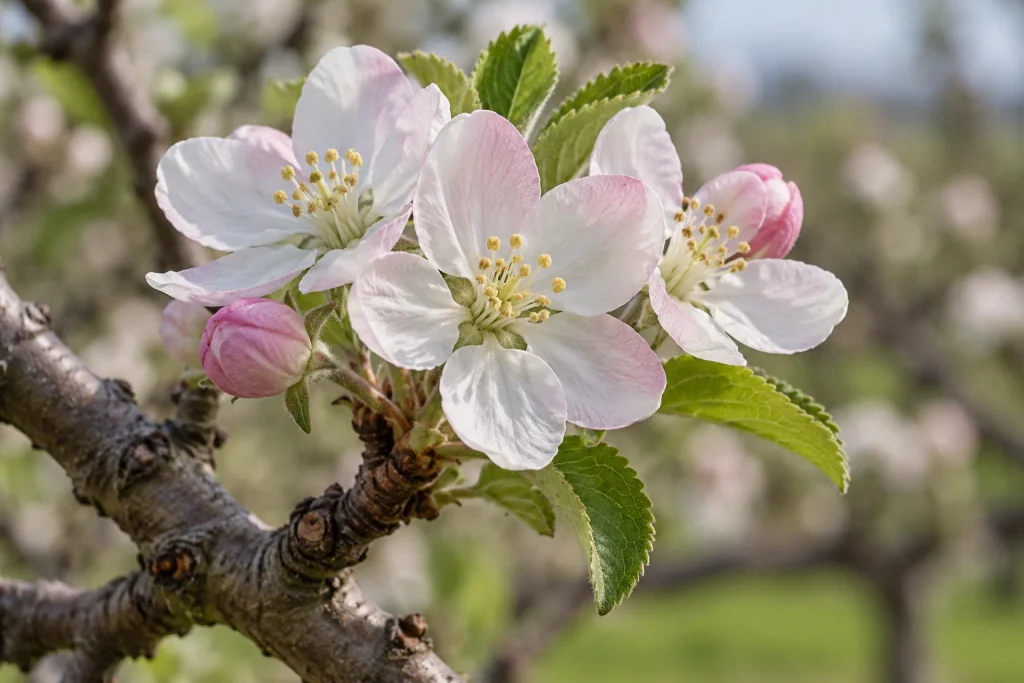
Identify the bud stage before interpreting a forecast. As buds develop, their susceptibility increases, so a temperature that caused little concern earlier may threaten the crop later. Trunk wraps and mulch do not directly protect open blossoms.
Protecting a flowering tree through a freeze is difficult in a home garden. Iowa State cautions that practical protection options for home fruit trees are limited. Do not improvise an orchard sprinkler system or assume a sheet will save a large canopy. Ask local extension staff about realistic options for the size of your tree and the forecast event.
If growth was injured, give the tree time to show which buds and branches remain alive. Avoid heavy corrective pruning based only on its appearance immediately after the freeze. Extensive trunk injury, a broken main union, or bark loss around most of the stem warrants individual assessment.
Your winter inspection checklist
Keep a short record for each tree. A phone note with dated photographs is enough. Start with the variety and rootstock if known, the planting date, and the location. Add the checks below after protection is installed, after major weather changes, and during the spring transition.
- Record soil condition as frozen, moist, dry, or saturated, rather than simply writing “watered.”
- Check mulch depth and confirm that bark remains clear.
- Inspect guard seams, trunk clearance, and height above the current snow line.
- For stored pots, record temperature and whether the growing medium needs water.
- Photograph new damage and note whether it is on the sunny side, near a tie, or near animal activity.
- As spring approaches, record bud stage and remove seasonal protection at the appropriate local time.
This record gives next year’s preparation a specific starting point. If rabbits reached above a guard, change the protection height. If a stored pot dried out, revise the inspection schedule. If meltwater repeatedly collected around the trunk, investigate drainage instead of adding more mulch.
FAQs
Do apple trees lose their leaves in winter?
Yes. Apples are deciduous, and seasonal leaf drop is normal. Timing varies with climate, variety, and weather. Leaves remaining late in fall do not by themselves prove a problem. Unseasonal leaf loss earlier in the growing season deserves a separate check.
Should I cover my whole apple tree for winter?
For a locally hardy tree in the ground, routine care usually focuses on roots and vulnerable bark, plus animal protection. Whole-canopy covers are more relevant to short frost events after growth starts. A potted tree needs a separate plan for its exposed root system.
Can I bring a potted apple tree indoors?
A suitably cold, unheated storage area can work. A warm living room can encourage growth at the wrong time. Monitor the actual storage temperature and soil moisture, and protect the roots from temperatures beyond the tree’s tolerance.
Should I cut the top off my apple tree before winter?
Do not make topping a winterizing job. Height control belongs in a pruning plan suited to the tree’s structure and training system. Inspect first, then make deliberate cuts during the appropriate local pruning window.
Does an apple tree need fertilizer in winter?
There is no automatic winter feeding requirement. Decide based on tree performance, soil information, and local guidance. Avoid adding fertilizer to a stressed tree simply because its leaves have fallen or its buds have not yet opened.
When should I remove tree wraps?
Remove seasonal opaque protection in spring according to local frost conditions and product guidance. Inspect the bark at removal. Roomy mesh animal guards can remain where needed, provided they are checked and enlarged before they restrict growth.
Will a late frost kill my apple tree?
A late frost can damage flowers or new growth without killing the tree. The outcome depends on temperature, exposure time, growth stage, and tree condition. Check for surviving growth before judging recovery, and assess blossom injury separately from damage to the trunk or main branches.
Sources and Further Reading
- University of Maine: Preparing trees for winter
- University of Minnesota: Protecting trees and shrubs in winter
- Colorado State: Fall and winter watering
- Iowa State: Overwintering container plants
- University of New Hampshire: Preparing backyard fruits for winter
- Utah State: Critical temperatures for frost damage
