
Apple Tree Dormancy: Proven Care Guide
Apple tree dormancy is the seasonal pause in visible shoot growth that helps an apple tree survive winter. A healthy dormant tree has living wood and resting buds, even when its branches are bare. Care during this period means checking moisture, protecting vulnerable roots and bark, and timing work around the tree’s condition and local weather.
A leafless tree in January and a leafless tree after neighboring apples have begun growing need different attention. This guide helps you decide what to check before watering, pruning, or trying to encourage growth. For the broader seasonal checklist, use our apple tree winter care guide.
Table of Contents
What apple tree dormancy means, and when it happens
In much of the United States, apples stop extending shoots in fall, lose their leaves, and remain visibly inactive through winter. Spring growth resumes when the tree has received sufficient winter chilling and subsequent warmth. Cultivar and local weather affect the timing, so there is no nationwide starting date or fixed number of dormant months.
Two stages explain why a mild afternoon does not always make buds open. During endodormancy, internal controls restrict bud growth while the tree fulfills its chilling requirement. During ecodormancy, that requirement has been met, but cool conditions still hold growth back. Michigan State University Extension explains this distinction. You cannot reliably separate these stages just by looking at a closed bud.
Chilling is not simply a count of freezing nights. One common model counts hours between 32°F and 45°F, while other models calculate cold exposure differently. Use local records and the model associated with your cultivar’s requirement. Mississippi State’s chilling guide explains why inadequate chilling can delay leaf emergence and reduce fruit set. Cold hardiness, meaning tolerance of low temperatures, is a separate consideration.
That distinction matters when choosing a tree for a mild-winter garden. A USDA hardiness zone does not tell you how much winter chilling a site receives. Check local cultivar recommendations as well as apple varieties suited to your zone.
Roots also need attention while branches look inactive. They are generally less cold-hardy than the aboveground tree, and soil helps insulate them. An exposed pot loses that protection, which is why container apples need a separate winter plan.
How to tell whether your apple tree is dormant or damaged
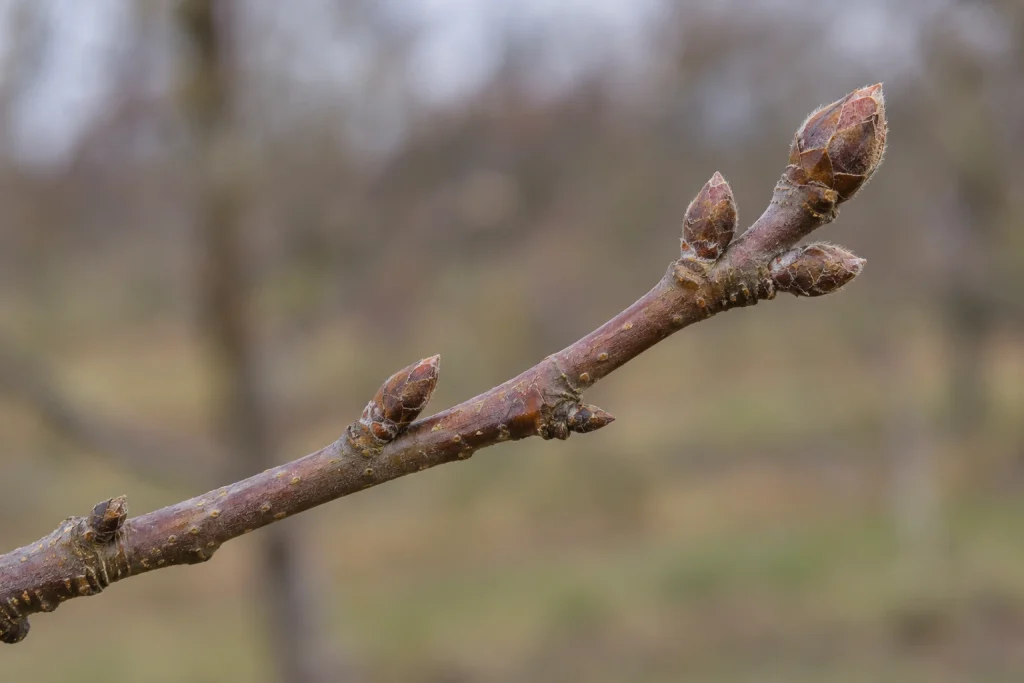
Start with the season and the whole tree. Normal autumn leaf loss followed by closed buds is consistent with dormancy. Sudden leaf loss during growing weather, damaged bark, or one dead-looking branch among growing branches needs investigation. None of these observations alone proves the cause.
| What you notice | What it may mean | What to do next |
|---|---|---|
| Bare branches in winter with closed, intact buds | Normal seasonal rest is plausible | Monitor soil moisture and winter protection; do not try to force growth. |
| Bud scales separating and green tissue appearing at their tips | Bud development has begun | Record the stage and watch the frost forecast. |
| Brown, brittle twigs while other branches are growing | Localized dieback is possible | Inspect the affected branch and photograph the pattern before pruning. |
| No leaf growth alongside chewed, sunken, or split trunk bark | Trunk injury may be contributing | Request local assessment instead of assuming the tree is simply late. |
| No growth and persistently saturated soil | Poor drainage or root injury needs checking | Pause extra irrigation and investigate the wet site. |
If a twig looks dead, a tiny, shallow scratch through its outer bark can help you check for living tissue. Green, moist tissue supports that the tested spot is alive; brown, dry tissue is concerning. Ask Extension describes this scratch test. Keep the mark small and avoid repeated scraping or stripping bark from the trunk.
A green scratch does not establish that the roots, graft union, and every branch are healthy. Likewise, a dead twig does not prove that the entire tree has died. Combine that observation with bud changes, soil conditions, and the trunk inspection.
The Backyard Farmer video below demonstrates pruning a leafless apple tree. Use it to understand branch selection and tools; its regional calendar and pruning examples need adapting to your tree’s age and training system.
How to care for a dormant apple tree
Follow these six steps from fall leaf drop through spring bud development. Revisit moisture and protection checks as conditions change. You will need a notebook or phone camera and a hand trowel. A watering can or hose, mulch, and a suitable trunk guard may be useful if your inspection shows a need. Use a thermometer if you overwinter a container tree under cover.
Step 1: Record the tree’s condition before changing care
Write down the cultivar if known, planting date, and whether the tree grows in the ground or a container. Photograph several accessible buds and the lower trunk. Include any recent leaf loss, unusual cold, or watering changes in your notes.
Let healthy autumn leaves remain while they are functioning. Harvest does not end their contribution: Illinois Extension describes how postharvest foliage helps build reserves for winter and spring. Do not deliberately dry out a tree or strip green leaves as a routine home-garden method of forcing dormancy.
Step 2: Check the soil before deciding to water
When the ground is workable, move loose mulch aside and gently check moisture about 6 inches below the surface without cutting roots. For a new planting, compare the root ball with nearby soil. Maryland Extension recommends checking below the surface because appearance alone can mislead.
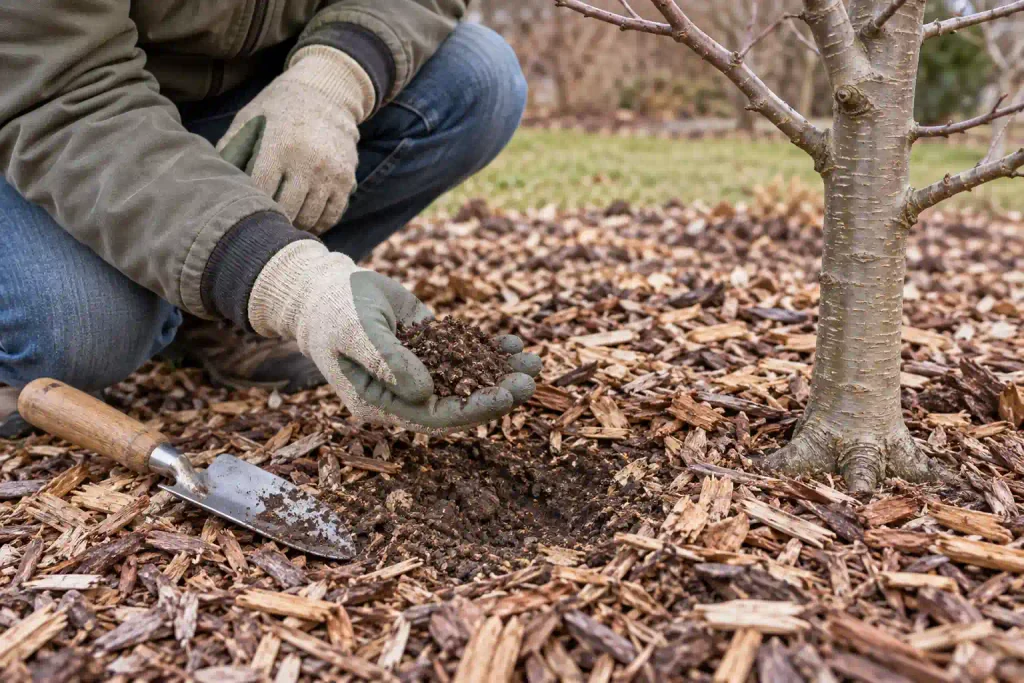
Moist soil can wait. If the root zone is dry, water slowly under suitable conditions and check that moisture reaches it. Give newly planted trees closer attention than established trees. Our guide to adjusting apple-tree watering explains how soil and establishment change the decision.
In dry-winter climates, occasional winter watering may be necessary. Colorado State advises watering when air and soil are above 40°F, and there is no snow cover. Apply water around midday so it can soak in before night. This is guidance for dry conditions, not a monthly watering requirement for every US garden.
Do not water frozen or saturated ground. Where water stands around the tree, investigate drainage using our guide to excess-water symptoms. Bare branches are not evidence that more water is needed.
Step 3: Check mulch, bark protection, and container shelter
Maintain a shallow mulch layer over the root area and keep it clear of the trunk. Check the existing depth before adding more material. Our apple tree mulching guide covers the ring layout and maintenance.
Inspect guards for rubbing, trapped debris, and chewing damage. Young, thin bark can suffer winter sunscald, especially on the south or southwest side. Use locally recommended protection and check it again after snow changes animals’ access to the trunk. Minnesota Extension explains these winter injuries. A bark split is an injury to assess, not a normal sign that dormancy is ending.
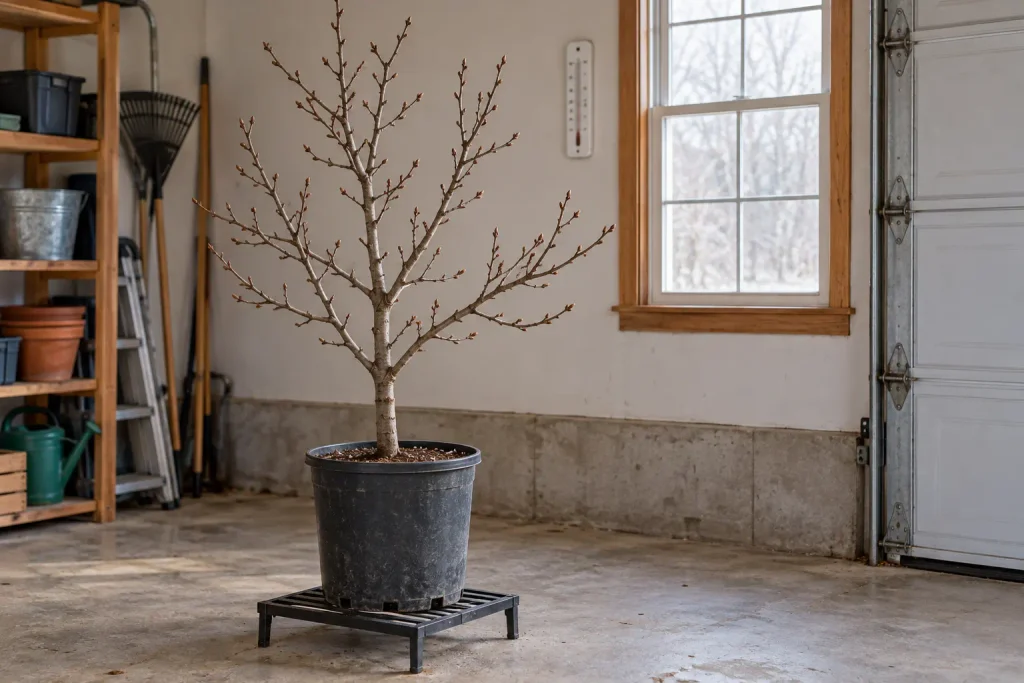
For a potted apple, choose shelter that protects the roots while keeping the tree cold. Iowa State describes burying containers or using a consistently cold, unheated space for woody plants. Its general indoor-storage range is 20°F to 45°F; this is not a guaranteed safe root temperature for every apple rootstock. Check suitability locally, monitor the actual temperature, and keep drainage open. A garage that warms sharply in sunshine may encourage early growth. Check the potting mix throughout storage and water when needed; avoid letting the root ball dry out completely or remain waterlogged.
Step 4: Review feeding needs instead of feeding bare branches
Leaflessness during the normal dormant season is not a fertilizer diagnosis. Gather last season’s growth notes and any soil-test results before planning spring nutrition. Oregon State’s home-horticulture advice recommends checking for deficiencies before adding fertilizer. Avoid feeding simply because the tree has not opened its buds.
Use the tree’s condition and local recommendations to decide whether feeding is needed and when to apply it. Our fertilizer timing guide gives the seasonal context. Fertilizer cannot repair girdled bark or correct a waterlogged planting site.
Step 5: Plan pruning around late-winter conditions
For routine dormant pruning, aim for the locally recommended late-winter or early-spring window, usually before bud break. A warm spell early in winter is not a reliable signal to begin. North Carolina Extension warns that early pruning can increase exposure to subsequent cold injury.
Inspect the framework now, but decide which cuts suit the tree’s training system before picking up the tools. A newly planted tree and an old, crowded apple need different work. Consult our guide to when to prune apple trees, and seek separate advice for broken, hazardous, or diseased limbs.
Step 6: Monitor buds as warm weather returns
Photograph the same buds during each check. Watch for swelling, separated scales, and the first visible green tips. Once development starts, assess frost risk using the actual stage. The temperatures that injure expanding buds and flowers differ from those tolerated by fully dormant wood.
Michigan State’s apple bud-stage chart shows how sensitivity changes. Its injury estimates are guides, not guarantees for an individual tree. Record the forecast low and seek local frost advice if developing buds are threatened. Do not assume a tree can return to its previous winter hardiness after leaves have opened.
What if the tree does not leaf out in spring?
Compare it with nearby apples, ideally the same cultivar, rather than with the first flowering shrub in the yard. Revisit your photographs to see whether buds are changing at all. Check moisture and inspect the trunk before deciding that the tree needs feeding.
In a mild-winter location, insufficient chilling is one possibility, especially if the cultivar’s needs do not match local conditions. Elsewhere, root stress, winter injury, or damaged buds may explain the delay. No single calendar date or scratch test can distinguish all of those causes.
For example, imagine two leafless trees on the same spring day. One has intact bark and buds that are gradually swelling. The other has missing bark around its lower trunk and no visible progress. These hypothetical trees call for different responses: continue observing the first while promptly seeking help for the second.
Keep a short record containing the date, bud stage, soil condition, recent weather, and any action taken. If comparable local apples are growing and yours remains unchanged, send the record and clear photographs to your county extension office or the nursery that supplied it. Widespread brittle wood, major bark loss, or worsening damage warrants assessment sooner.
FAQs
How long can an apple tree stay dormant?
Visible winter rest commonly lasts several months, but its length varies with cultivar and climate. Bud development depends on chilling followed by suitable warmth. A tree remaining bare well into the local growing season needs investigation rather than an assumed extra-long rest.
Do all the leaves have to fall before an apple tree is dormant?
Leaf retention alone cannot settle the question. Some apples keep leaves later than nearby trees. In a Colorado response about a newly planted Honeycrisp, Extension considered early-November leaf retention normal for those conditions. Check growth, weather, and bud condition together.
Can I keep a dormant apple tree in a warm house?
A heated living room is unsuitable winter storage for a normally dormant apple tree. Warmth can encourage growth after chilling needs are met. Container trees need root protection in conditions suited to their hardiness, with moisture checks throughout storage.
What should I spray on dormant apple trees?
There is no spray required simply because a tree is dormant. Utah State’s dormant-oil guidance bases treatment on pest history, bud stage, and weather. If treatment is justified, follow the exact product’s edible-apple label, including temperature and mixing restrictions. Dormant oil does not replace chilling or revive dead wood.
