
Apple Tree Mulching: 5 Proven Benefits & How to Do It Right
Apple tree mulching works best with a 2 to 3-inch layer of coarse organic material spread over weed-free soil, leaving at least 6 inches clear around the trunk. Start with a broad ring, keep the root flare exposed, and check soil moisture before watering or adding more mulch.
Table of Contents
Key Takeaways
- Apple tree mulching helps conserve moisture, suppress weeds, moderate soil temperature, improve soil, and protect trunks from lawn equipment.
- Use wood chips or bark on the surface, with a shallow layer and a clearly visible trunk base.
- Measure existing mulch before topping up, and check beneath it to see whether water reaches the soil.
A young apple tree surrounded by lawn shares its water supply with thirsty grass roots. Meanwhile, a tree buried in a mound of mulch faces a different problem: a trunk that stays damp and hidden.
Good apple tree mulching starts with the space you cover and the depth you leave behind. This guide explains the choices that matter, including how many bags to buy and when extra mulch would make conditions worse.
5 Benefits of Apple Tree Mulching
1. Slower moisture loss
Mulch shields the soil surface, reducing evaporation between rains or watering sessions. As a result, moisture conditions become steadier around roots, although the tree still needs irrigation during dry weather.
2. Less weed and grass competition
A mulch layer blocks light and makes it harder for many weed seedlings to emerge. However, remove established weeds first: covering a vigorous clump does not guarantee it will disappear.
3. Smaller soil-temperature swings
Organic mulch insulates the soil against rapid heating and cooling. Therefore, apple tree mulching supports a more stable root environment, as described in Maryland Extension’s fruit plant care guidance.
4. Gradual improvement in soil condition
As organic material decomposes, it contributes organic matter and supports soil organisms. Over time, this can improve soil structure and water-holding capacity, according to Minnesota Extension’s mulch guide.
5. A buffer from mowers and string trimmers
A grass-free ring creates room to maintain the lawn without running equipment against the bark. This practical benefit is especially useful around young trunks, and Oregon State’s tree care guide includes it among the reasons to mulch.
This UNH Extension demonstration shows a general tree-mulching technique. For apple trees, use the trunk clearance and maintenance checks explained below.
Which Mulch Should You Use?
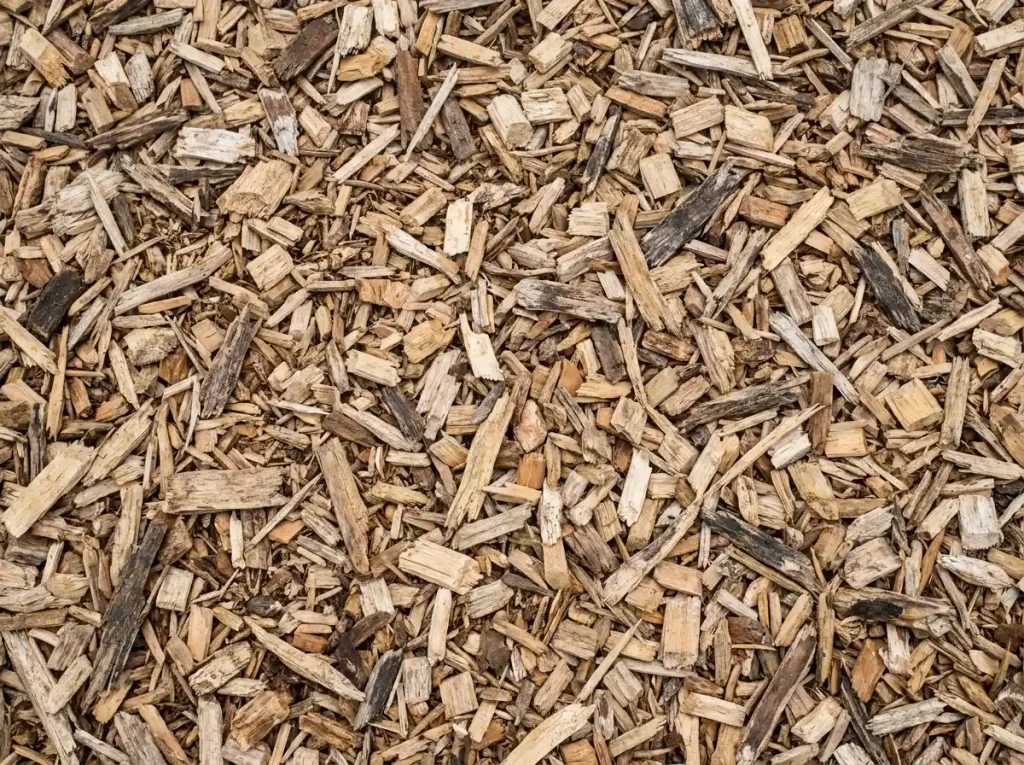
For routine apple tree mulching, coarse wood chips or bark are practical starting choices. However, match the layer to the material: fine, dense products need a shallower application.
| Material | Useful feature | Main consideration |
|---|---|---|
| Arborist wood chips | Long-lasting surface cover | Keep fresh chips above the soil; do not dig them in. |
| Bark mulch | Durable, widely available | Use only 1 to 2 inches of finely shredded material. |
| Shredded leaves | Uses garden material and decomposes readily | Check for a compressed, matted layer. |
| Finished compost | Contributes organic matter and nutrients | Weeds can germinate in it; it is less effective as lasting weed cover. |
| Straw | Lightweight organic cover | Choose material free of weed seeds and inspect for rodent activity. |
Maryland Extension’s material guide supports surface use of fresh arborist chips. Meanwhile, Oregon State explains why nutrient-rich compost can become a seedbed for weeds.
When to Start Apple Tree Mulching
Spring is a useful time for apple tree mulching, after cold soil begins warming and before summer drying. However, soil conditions matter more than choosing the same calendar date across every US climate.
At planting or during summer
After planting, water the tree and allow the water to soak in before spreading mulch. If you are mulching in summer, first check whether the soil underneath needs water; a protective layer cannot replenish dry soil.
During fall maintenance
In fall, inspect the existing layer and restore coverage only where it has thinned. Also, clear the trunk area and check for chewing damage before winter shelter and snow make inspection harder.
For established trees, Penn State recommends mid-spring as a useful application window, while allowing mulching at other times. For newly planted trees, follow the watering-first sequence in Maryland’s planting guidance.
How to Mulch an Apple Tree Step by Step
1. Measure your apple tree mulching area
Gather a rake, gloves, tape measure, and a ruler for checking depth. For a young apple tree, aim for a ring about 3 feet in radius, or 6 feet across, where space allows.
That weed-free radius follows Minnesota’s guidance for the first three to five years. For an established tree, extend coverage toward the canopy edge rather than concentrating all the material beside the trunk.
2. Clear vegetation and inspect the ground
Remove weeds and grass carefully, avoiding deep digging through tree roots. Then inspect the soil: if water stands around the tree or the ground stays saturated, address drainage before adding another moisture-conserving layer.
Leave soil levels around the trunk unchanged. For a difficult site, the guide to apple tree soil requirements explains drainage and soil preparation in more detail.
3. Locate the root flare
The root flare is the widening where the trunk transitions into the main roots. Keep it visible, along with the graft union higher on the trunk.
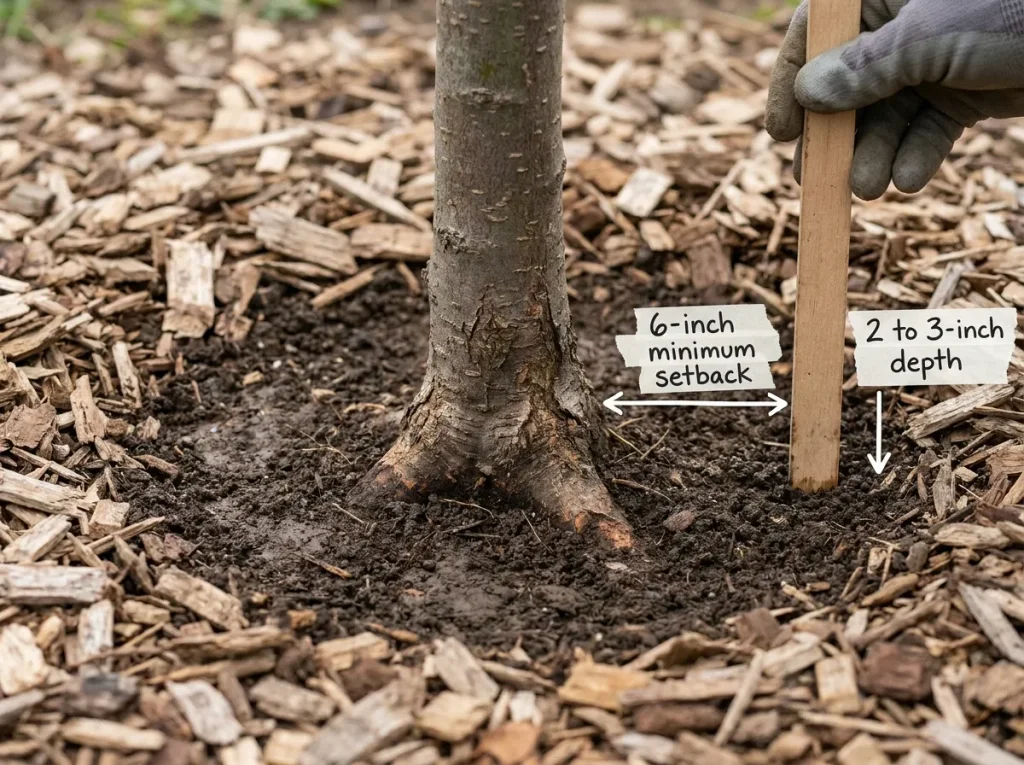
For apple tree mulching, leave at least 6 inches between the trunk and the mulch, widening that opening around a large flare. NC State’s apple fact sheet specifies a 6-inch setback to discourage feeding by voles and other pests.
4. Spread a shallow, even layer
Spread coarse mulch 2 to 3 inches deep over the cleared area, tapering to bare soil at the inner opening. Meanwhile, keep finely shredded bark closer to 1 to 2 inches and use less material where drainage is slow.
“Mulch wide, not deep.” Penn State Extension.
Check several places with a ruler instead of judging the pile from above. Successful apple tree mulching leaves a broad, low cover, with no mound touching the bark.
5. Confirm that water reaches the soil
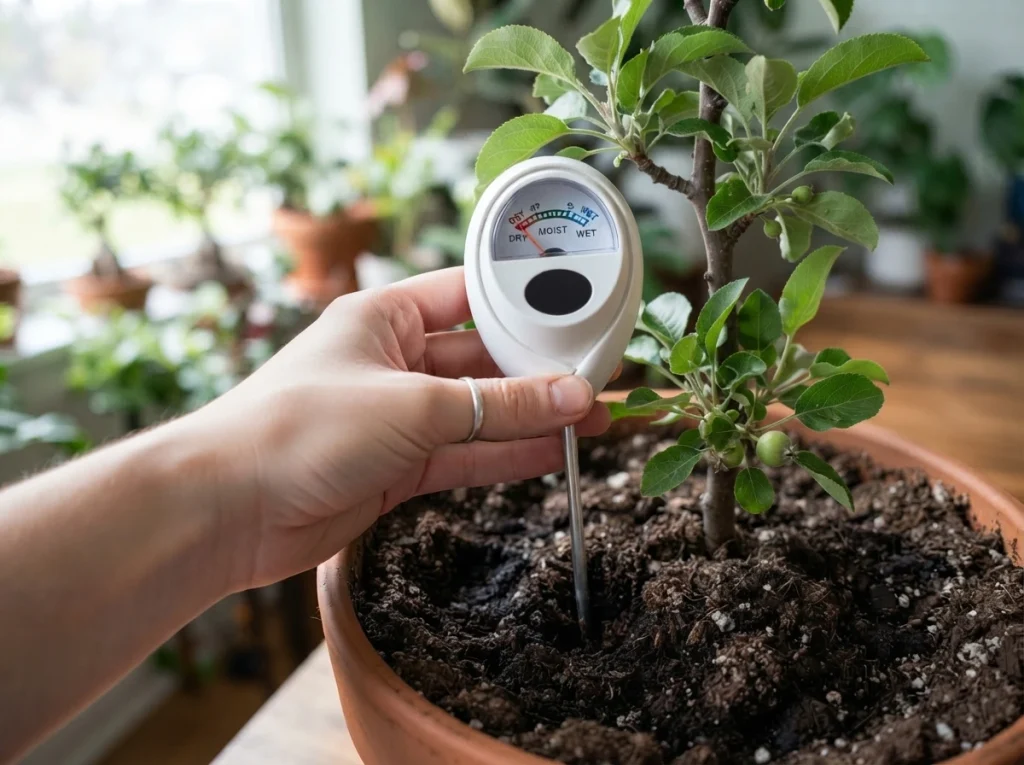
After watering, lift a small patch of mulch and feel the soil beneath it. If the mulch is wet but the soil remains dry, adjust your watering so it reaches the root zone.
As Oregon State explains, frequent light watering can wet only the surface covering. Use the apple tree watering guide to fit irrigation to the tree and weather.
How Much Material Do You Need for Apple Tree Mulching?
Calculate apple tree mulching volume before buying bags. For a circular bed, subtract the central opening from the full circle and multiply by depth.
Cubic feet = 3.14 × (outer radius² − inner radius²) × depth in inches ÷ 12. Use feet for both radii, and measure the inner radius from the center of the trunk.
A worked example for a young tree
For a 6-foot-wide ring, a 2-inch-thick trunk, and a 6-inch clearance from its bark, use an outer radius of 3 feet and an inner radius of about 0.58 feet. At a 3-inch depth, the calculated volume is approximately 6.8 cubic feet.
Therefore, buy four 2-cubic-foot bags and use only the amount needed. For a refresh, calculate the missing depth: an existing 2-inch layer needs just 1 additional inch to reach 3 inches.
Maintain the Ring and Avoid Common Mistakes
Adding a full new layer every spring
Annual apple tree mulching should begin with measurement, not an automatic bag count. As Penn State’s tree-care guidance explains, repeated additions can create excessive depth even when each application seems modest.
Leaving a crust above dry soil
Some mulch forms a water-resistant mat as it dries. If water runs off, gently loosen that surface without cultivating the roots, following Michigan State’s advice on matted mulch.
Hiding a wet trunk or rodent damage
Pull displaced mulch back after yard work, storms, or animal disturbance. However, if you find chewed bark, soft tissue, or roots growing through a deep old mound, ask an extension adviser or arborist to assess the damage before digging further.
Maryland documents rodent shelter and moisture problems under excess mulch. A clear opening improves inspection, but does not make a young tree rodent-proof.
Covering autumn debris without inspection
Collect fallen apples and inspect leaf litter before refreshing the ring. Where apple scab occurs, remove infected fallen leaves as part of sanitation because the fungus overwinters there, as explained by Minnesota Extension.
How Mulch Fits With Fertilizer and Soil pH
Apple tree mulching supports soil care, but it does not provide a predictable fertilizer dose. Instead, use soil testing and tree growth to decide what nutrients are needed, starting with the apple tree fertilizer guide.
Check growth before adding nutrients.
Minnesota lists typical annual shoot growth of 12 to 18 inches for young nonbearing apples and 8 to 12 inches for bearing trees. However, interpret those benchmarks alongside rootstock, water supply, and crop load rather than treating slow growth as automatic proof of nitrogen deficiency.
If feeding is justified, compare fertilizers for apple trees and follow the guidance on when to fertilize apple trees. Compost and other nutrient sources are covered in organic fertilizer for apple trees.
Test pH separately
Penn State recommends maintaining apple soil pH at 6.0 to 6.5. However, bark or pine-based mulch is not a reliable way to correct an unsuitable pH.
Use a soil pH test kit for fruit trees for an initial check, with laboratory guidance for amendment decisions. Sample the soil itself after moving the mulch aside.
FAQs
Can fresh wood chips rob an apple tree of nitrogen?
Fresh chips can be used for apple tree mulching when left on the surface. However, digging wood chips or sawdust into soil increases nitrogen tie-up, so do not mix them into the planting hole or automatically add nitrogen to compensate.
Can I use grass clippings around apple trees?
For apple tree mulching, clippings are an option if they contain no weed seeds and have not come from a lawn treated that season with herbicides. Apply a thin layer, since wet clumps can mat; coarse chips are easier to maintain as lasting cover.
Do established apple trees still benefit from mulch?
Yes, apple tree mulching can still help where lawn competes with established roots. However, enlarge the covered area rather than increasing depth, and leave the trunk and root flare clear.
Related Articles
- Apple tree soil requirements: assess drainage before mulching
- Apple tree watering: check moisture under the mulch
- Apple tree fertilizer: build a feeding plan from actual need
Sources
- University of Maryland Extension: Fruit Plant Care
- Penn State Extension: Mulching Landscape Trees
- University of Maryland Extension: Mulching Trees and Shrubs
- University of Minnesota Extension: Growing Apples in the Home Garden
- Oregon State University Extension: Mulching Woody Ornamentals With Organic Materials
- Penn State Extension: Nutritional Requirements of Apples in Home Fruit Plantings
Disclaimer: This article provides general growing guidance based on university extension research. Soil conditions, climate zone, and variety selection significantly affect results. Contact your local cooperative extension service for region-specific recommendations.
