
Apple Tree Growing From Seed: Proven What You Need to Know
Apple tree growing from seed is a rewarding long-term project that any home grower can attempt with a few simple supplies. The process begins with cold stratification, moves through germination and seedling care, and results in a tree that takes 6 to 10 years to produce fruit. This guide covers every stage, from seed to outdoor planting, so you know exactly what to expect.
Table of Contents
Key Takeaways
- Apple tree growing from seed requires cold stratification (60 to 90 days at 35 to 40°F) before any seed will germinate.
- Seedling-grown trees will not produce the same variety as the parent apple each seed is genetically unique.
- From stratification to outdoor planting, expect to invest 6 to 12 months before a seedling is ready for the ground.
What You Need to Know Before Apple Tree Growing From Seed Begins
Apple tree growing from seed is genuinely possible, but it comes with one critical caveat every grower must understand before starting. Apple trees are genetically heterozygous, which means each seed carries a unique combination of traits from two parent trees. As a result, the seedling will almost certainly produce fruit that differs from the apple the seed came from.
For example, a seed extracted from a Honeycrisp apple will not grow a Honeycrisp tree. According to Iowa State University Extension, seedling apple trees are genetically different from the parent and are usually inferior to it in fruit quality. However, there are valid reasons to grow from seed: producing your own grafting rootstock, exploring new seedling genetics, or simply the joy of watching a tree develop from scratch.
For seed quality, local or organic apples offer the best germination rates. Commercial apples are sometimes treated or stored under controlled atmosphere conditions, which can reduce seed viability. Additionally, choose seeds from fully ripe fruit rather than apples harvested early.
Step-by-Step: How to Cold Stratify Apple Seeds
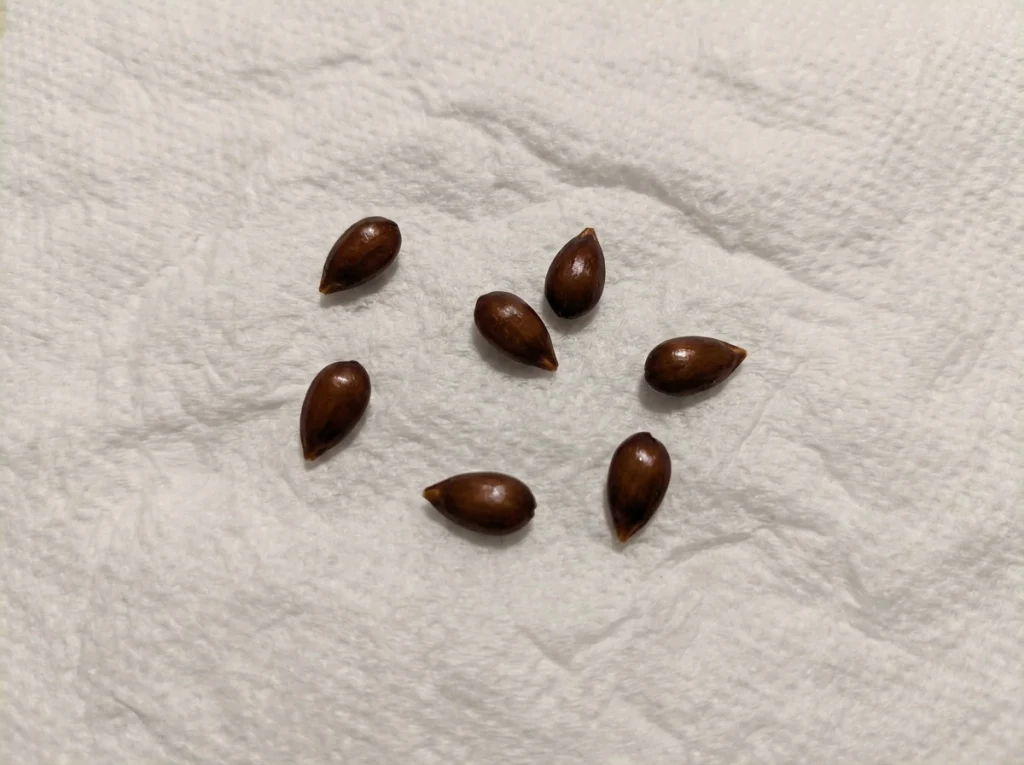
Cold stratification is the single most important step in apple tree growing from seed. Without it, the seed will not germinate, regardless of how warm or moist the soil is. Apple seeds require a sustained chilling period to break embryonic dormancy, mimicking the winter conditions the seed would naturally experience outdoors.
According to Penn State Extension, all common tree fruit seeds, including apple, require a chilling period before they will germinate and form new plants. The recommended stratification duration for apple seeds is 60 to 90 days at temperatures between 35 and 40°F (2 to 4°C).
To stratify apple seeds at home, follow these steps:
- Extract seeds from a fully ripe apple and rinse away any fruit residue.
- Allow seeds to air-dry for 24 hours at room temperature.
- Fold seeds into a lightly dampened paper towel (moist, not dripping wet).
- Place the folded towel inside a small zip-top plastic bag and seal it.
- Label the bag with the date and apple variety, then place it in your refrigerator.
- Check weekly: keep the towel moist and discard any seeds showing mold without white root tips.
- After 60 to 90 days, look for seeds showing a small white radicle (root tip) these are ready to plant.
Germination rates vary. Therefore, it is wise to stratify at least 10 to 15 seeds for every one or two seedlings you ultimately want to grow, accounting for natural loss during the process.
How to Germinate Apple Seeds After Stratification
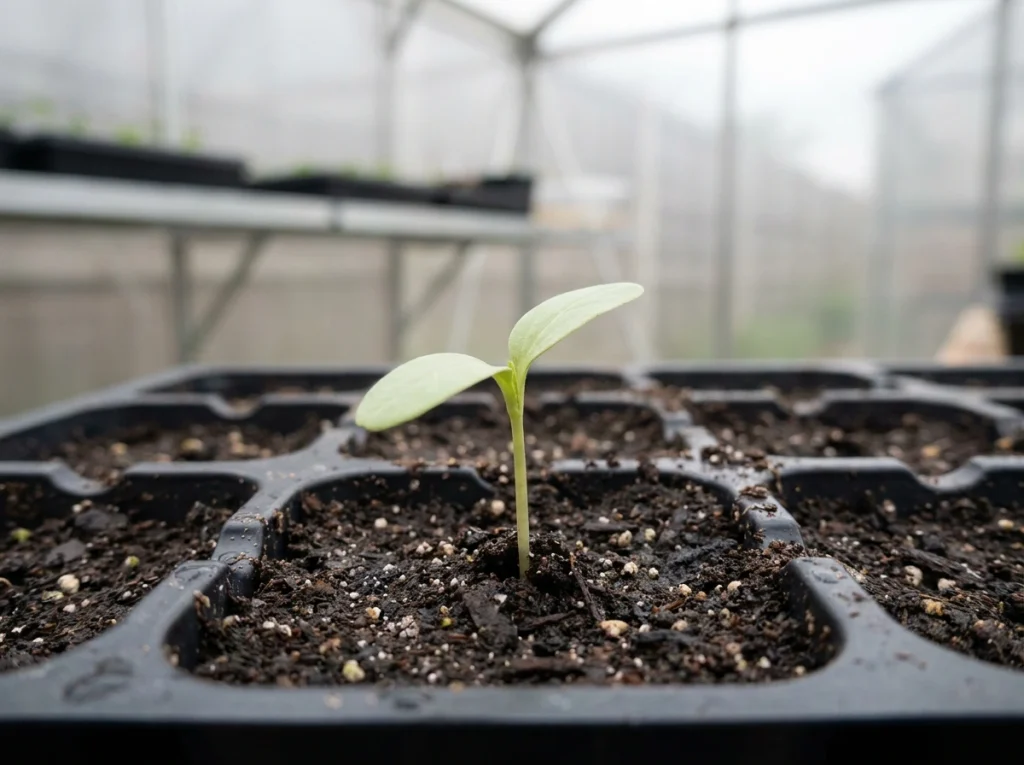
Once a seed shows a visible radicle emerging from the seed coat, it is ready to move from the refrigerator to a growing container. This stage of apple tree growing from seed requires gentle handling, because the emerging root tip breaks easily. Use a small pot or seed tray filled with moistened potting mix, and plant each seed approximately 1/2 inch deep with the radicle pointing downward.
Maintain consistent moisture in the growing medium without allowing it to become waterlogged, since standing water encourages damping off, a fungal condition that kills emerging seedlings. Place the containers in a warm location where temperatures stay around 65 to 70°F. Under these conditions, seedlings typically emerge above the soil surface within two to four weeks after planting.
Consistent warmth is more important than intense light during this early stage. However, as soon as the seedling breaks the soil surface, it needs bright indirect light for 12 to 16 hours per day to develop properly. A south-facing windowsill or a grow light positioned 4 to 6 inches above the seedlings works well.
Growing Apple Tree Seedlings: Indoors to Outdoors
Seedlings grown indoors require a careful transition to outdoor conditions. Additionally, they need to reach a suitable size before transplanting, since moving them too early exposes fragile roots to temperature swings and soil pathogens. As a general guideline, transplant seedlings into individual 4- to 6-inch pots once they reach 2 to 3 inches tall, giving each seedling room to develop its root system.
Hardening off is a mandatory intermediate step before any seedling moves to the garden. Start by placing pots in a sheltered outdoor location for two to three hours per day during mild weather, gradually extending the time over one to two weeks. Consequently, the seedling acclimates to outdoor temperature fluctuations, wind, and direct sun without experiencing transplant shock.
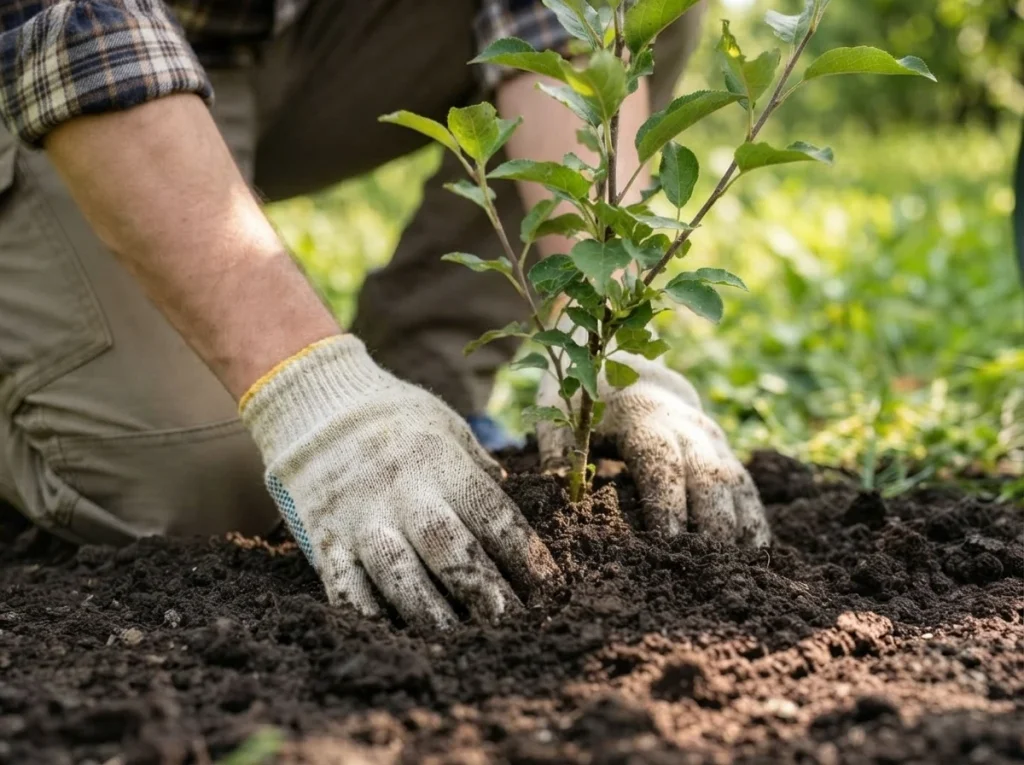
For final outdoor planting, Iowa State University Extension recommends waiting until the seedling reaches 12 to 30 inches tall. At this height, the root system is developed enough to anchor the tree and access soil moisture independently. Choose a location with full sun (at least 8 hours per day), well-draining soil, and enough room for mature tree spread. For spacing guidance, see our article on apple tree spacing, and for hole preparation, refer to our resource on apple tree planting depth.
Site and Soil Requirements for Seed-Grown Apple Trees
Seed-grown apple trees share the same site requirements as grafted trees. In terms of soil, apple trees perform best at a pH of 6.0 to 6.5. Outside this range, nutrient availability decreases, which slows growth and increases susceptibility to stress. A simple soil test, available through most university cooperative extension offices, confirms the pH before planting.
Well-draining soil is equally critical. Apple tree roots are sensitive to waterlogged conditions, and standing water around the root zone promotes root rot. In compacted or clay-heavy soils, raised bed preparation or backfilling with amended soil improves drainage significantly. For more detailed site preparation guidance, read our complete resource on how to plant an apple tree.
Seed-Grown Apple Tree Timeline: What to Expect Year by Year
One of the most common questions our research team encounters is how long apple tree growing from seed actually takes before the tree produces fruit. The honest answer is that patience is the primary requirement. In contrast to grafted apple trees, which begin bearing fruit in 2 to 5 years, seedling-grown trees typically take 6 to 10 years before producing their first flowers and fruit.
| Stage | Timeframe | Key Activity |
|---|---|---|
| Cold stratification | 60 to 90 days | Break seed dormancy in refrigerator |
| Germination | 2 to 4 weeks after planting | Seedling emerges above soil |
| Indoor seedling stage | 3 to 6 months | Grow to 12 to 30 inches indoors or in greenhouse |
| Outdoor establishment | Years 1 to 3 | Root system development, trunk thickening |
| Juvenile vegetative phase | Years 3 to 6 | Rapid canopy growth, no flowering yet |
| First fruit production | Years 6 to 10 | Initial harvest, fruit quality varies by seedling |
“Seedling apple trees are genetically different and usually inferior to the parent tree. Most apple trees are propagated by grafting, which allows growers to produce trees that are identical to one another.” Iowa State University Extension, Yard and Garden
For home growers focused on the best time to plant apple trees, spring planting after the last frost is generally recommended for outdoor seedling transplants in most USDA hardiness zones. In zones 6 through 8, this typically falls between late March and early May.
Seed-Grown Apple Trees vs. Grafted Apple Trees: Key Differences
| Factor | Seed-Grown Tree | Grafted Tree |
|---|---|---|
| Fruit variety | Unknown until first harvest | Identical to named variety |
| Time to first fruit | 6 to 10 years | 2 to 5 years |
| Tree size at maturity | Standard size (up to 20 feet) | Controlled by rootstock (dwarf to standard) |
| Disease resistance | Variable and unknown | Known, variety-specific |
| Cost to start | Very low (seed from any apple) | Moderate (nursery purchase) |
| Best use | Rootstock production, exploration | Reliable fruit production |
FAQs
Will a tree grown from apple seed produce the same fruit as the parent?
No. Apple tree growing from seed does not produce a true-to-type tree. Because apples are genetically heterozygous, each seed contains a unique combination of traits from two parent trees. The resulting tree will produce apples that may be significantly different from the fruit the seed came from, in flavor, size, color, and ripening time.
How long does cold stratification take for apple seeds?
Apple seeds require 60 to 90 days of cold, moist stratification at temperatures between 35 and 40°F. This chilling period breaks seed dormancy and signals to the embryo that winter has passed. Without this step, apple seeds will not germinate regardless of growing conditions.
Can you grow an apple tree from a seed found in a grocery store apple?
Yes, in most cases. Seeds extracted from grocery store apples are viable for apple tree growing from seed, provided the apple was ripe and the seeds are plump, dark brown, and intact. However, seeds from apples stored under controlled-atmosphere conditions for extended periods may have reduced viability. Locally grown or organic apples offer the most reliable germination rates.
Related Articles
- How to Plant an Apple Tree: Complete Guide for Home Growers
- Apple Tree Spacing: How Far Apart to Plant for Best Results
- Apple Tree Planting Depth: How Deep to Plant for Healthy Growth
- Best Time to Plant Apple Trees by USDA Zone
Sources
- Iowa State University Extension, Can I Grow an Apple Tree from a Seed?
- Penn State Extension, Growing Fruit Plants from Seed
Disclaimer: This article provides general growing guidance based on university extension research. Soil conditions, climate zone, and variety selection significantly affect results. Contact your local cooperative extension service for region-specific recommendations.
