
10 Best Disease Resistant Apple Trees for Backyards
Disease resistant apple trees are cultivars bred or selected to naturally withstand common apple diseases such as scab, fire blight, cedar apple rust, and powdery mildew. Planting them reduces fungicide use, cuts maintenance time, and helps home orchardists in wet or humid climates protect their harvest without a heavy spray schedule.
Table of Contents
Key Takeaways
- Disease resistant apple trees lower the need for fungicide sprays, but they are not completely immune to every apple disease.
- Liberty, Enterprise, and Freedom are among the most reliably scab resistant varieties for home orchards across the United States.
- Resistance varies by disease. A variety immune to apple scab may still need protection from cedar apple rust or fire blight.
- Regional hardiness zone, pollination needs, and local disease pressure should guide which disease resistant apple tree you choose.
- University cooperative extension trial data, not marketing claims, is the most reliable source for disease resistance ratings.
Why Disease Resistant Apple Trees Matter for Home Orchards
Apple trees face constant pressure from fungal and bacterial pathogens. Consequently, many commercial orchards apply fungicides ten or more times each growing season just to produce clean fruit. Home growers rarely want that level of chemical input, which is exactly why disease resistant apple trees have become so popular for backyard planting.
According to University of Kentucky Cooperative Extension, nearly every home apple grower will see some damage from fire blight or cedar apple rust at some point. However, choosing disease resistant apple trees from the start meaningfully reduces that risk and the number of sprays needed to keep trees healthy. For that reason, variety selection is often called the first line of defense in home orchard disease management.
This guide covers what disease resistance actually means, ten of the best disease resistant apple trees for home growers, and how to match a variety to your climate, space, and taste preferences.
Beyond convenience, there is also a real cost argument for planting disease resistant apple trees. Fungicide products, sprayer equipment, and the time spent on a repeated spray calendar add up quickly for a backyard grower managing just one or two trees. Choosing these varieties from the outset shifts much of that ongoing cost into a single, upfront decision at planting time.
What Makes an Apple Tree Disease Resistant?
Disease resistant apple trees inherit natural defenses through breeding programs that cross varieties with low susceptibility to specific pathogens. As a result, the offspring carry genes that slow, limit, or in some cases completely block infection from diseases like apple scab.
Most modern scab resistant varieties carry the Vf gene, originally sourced from the crabapple species Malus floribunda. Meanwhile, resistance to fire blight and cedar apple rust tends to be controlled by multiple genes and is usually described in degrees, such as “highly resistant” or “moderately resistant,” rather than as simple immunity.
The Four Diseases That Matter Most for Disease Resistant Apple Trees
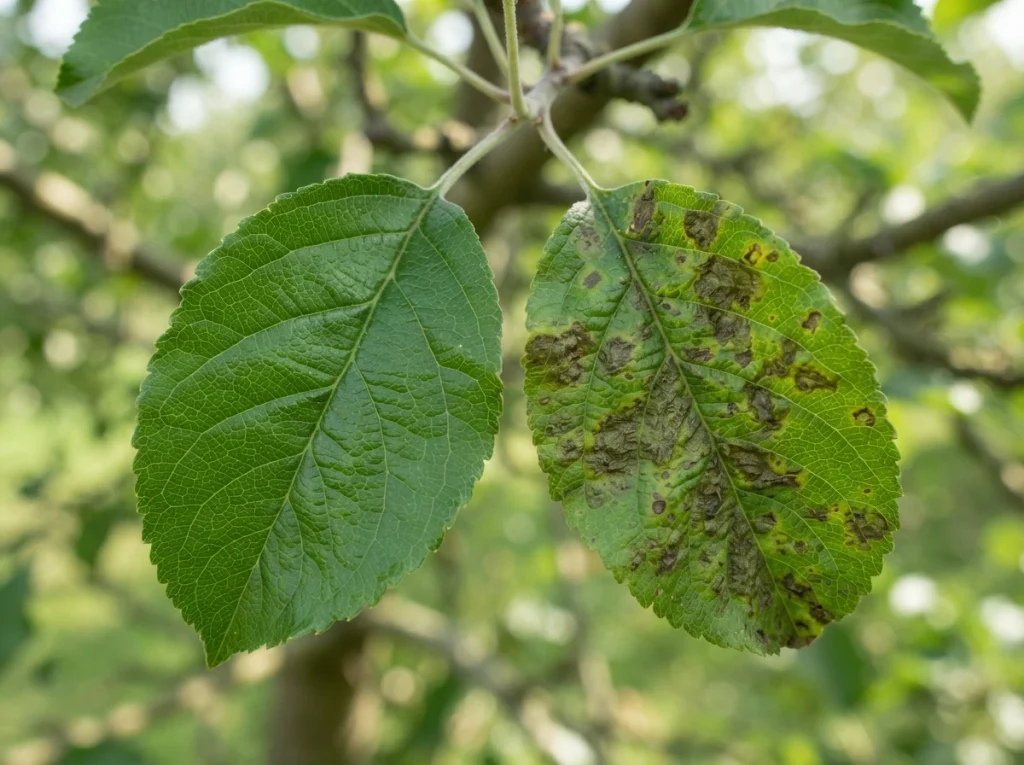
Four diseases account for most of the damage home apple growers see each year. Apple scab causes olive-green leaf spots and corky, cracked fruit. Fire blight is a bacterial disease that blackens blossoms and shoots, often in a distinctive shepherd’s-hook shape.
Cedar apple rust produces bright orange-yellow spots on leaves and requires a nearby juniper host to complete its life cycle. Powdery mildew coats young leaves and shoots in a white, dusty film. Consequently, the best disease resistant apple trees are usually described by which specific combination of these four diseases they resist.
How Our Research Team Selected These Disease Resistant Apple Trees
Our research team compiled this list of disease resistant apple trees by cross-referencing cultivar data from university cooperative extension programs, including the University of Maryland Extension, University of Minnesota Extension, and Penn State Extension. We prioritized varieties with documented resistance ratings from replicated trials rather than nursery marketing claims.
Additionally, we weighed fruit quality, storage life, and regional hardiness so this list serves growers across a range of USDA zones, not just one climate. Every disease resistant apple tree listed below has published resistance data linked in the Sources section at the end of this guide.
10 Best Disease Resistant Apple Trees for Home Orchards
The varieties below represent some of the best disease resistant apple trees available to home growers today. Each entry notes which diseases the cultivar resists, its approximate USDA hardiness range, and what to expect from the fruit.
1. Liberty
Liberty is one of the most widely recommended disease resistant apple trees for home orchards. It is immune to apple scab and resistant to fire blight, cedar apple rust, and powdery mildew, according to University of Minnesota Extension trial data.
The fruit is McIntosh-flavored, mildly tart, and stores well through winter without turning mushy. Additionally, because Liberty blooms mid-season, it pairs well with many other apple varieties for pollination.
2. Enterprise
Developed at Purdue University in 1982, Enterprise is another consistently disease resistant apple tree, with resistance to scab, fire blight, cedar apple rust, and powdery mildew. The fruit is bright red, crisp, and tart enough for baking, and it also holds up well for fresh eating.
Enterprise ripens late in the season, which makes it a useful choice for growers who want to spread out their harvest window across several disease resistant apple trees.
3. Freedom
Freedom is immune to apple scab and moderately resistant to fire blight, based on University of Minnesota Extension variety trials. The apple is crisp, juicy, and, as a result, well suited to both fresh eating and cooking.
Freedom also tolerates a wide range of soils and climates, making it a dependable disease resistant apple tree for zones 4 through 8.
4. Redfree
Redfree was one of the earliest scab and rust resistant apples developed, and it also carries some resistance to fire blight. As a result, the fruit ripens in mid to late August, offering an early harvest window for growers who do not want to wait until fall.
Consequently, Redfree apples are red-skinned with creamy flesh and a mild, sweet flavor, making this disease resistant apple tree a favorite for fresh eating straight off the branch.
5. William’s Pride
William’s Pride was one of the earlier scab resistant apples released through the cooperative PRI breeding program. As a result, it produces medium to large, dark red to purple fruit with a crisp, spicy flavor in July and August.
As an early producer, William’s Pride gives home growers fruit before most other disease resistant apple trees on this list are ready to harvest.
6. GoldRush
GoldRush was developed at Purdue University and is notable for both scab resistance and strong fire blight resistance. Consequently, the fruit is greenish yellow, ripening to deep yellow in storage, with a firm, tart-sweet flavor that mellows over time.
Because GoldRush ripens late and stores exceptionally well, it rewards patient growers who want a disease resistant apple tree that lasts well into winter.
7. Florina
Florina, sometimes sold as Querina, is resistant to fire blight, powdery mildew, and apple scab, though it is somewhat more susceptible to cedar apple rust, according to University of Maryland Extension cultivar data. Additionally, the fruit is dark red with a sweet-tart flavor and ripens in October.
Growers in regions without heavy juniper populations nearby often find Florina to be a reliable, low-maintenance disease resistant apple tree.
8. Crimson Topaz
Crimson Topaz carries resistance to both apple scab and powdery mildew, with medium to large fruit featuring a thin, red and yellow striped skin. As a result, the flesh is crisp with a balanced sweet-tart flavor.
As a newer disease resistant apple tree bred with Honeycrisp-type quality in mind, Crimson Topaz appeals to growers who do not want to sacrifice flavor for hardiness.
9. Priscilla
Priscilla is frequently recommended by university extension plant pathologists, including specialists at the University of Kentucky, as a reliable scab resistant apple for home orchards. In addition, the tree also shows good tolerance to cedar apple rust and fire blight.
Its fruit is medium-sized with a bright red blush and a tart, all-purpose flavor suited to both fresh eating and cooking, making Priscilla a practical disease resistant apple tree for growers focused on low-input management.
10. Antietam Blush
Antietam Blush was bred by University of Maryland researchers specifically for the hot, humid summers of the mid-Atlantic region. Because of its Cripps Pink and Gala parentage, it produces red-skinned fruit over a green-yellow background with crisp, sweet-tart flesh.
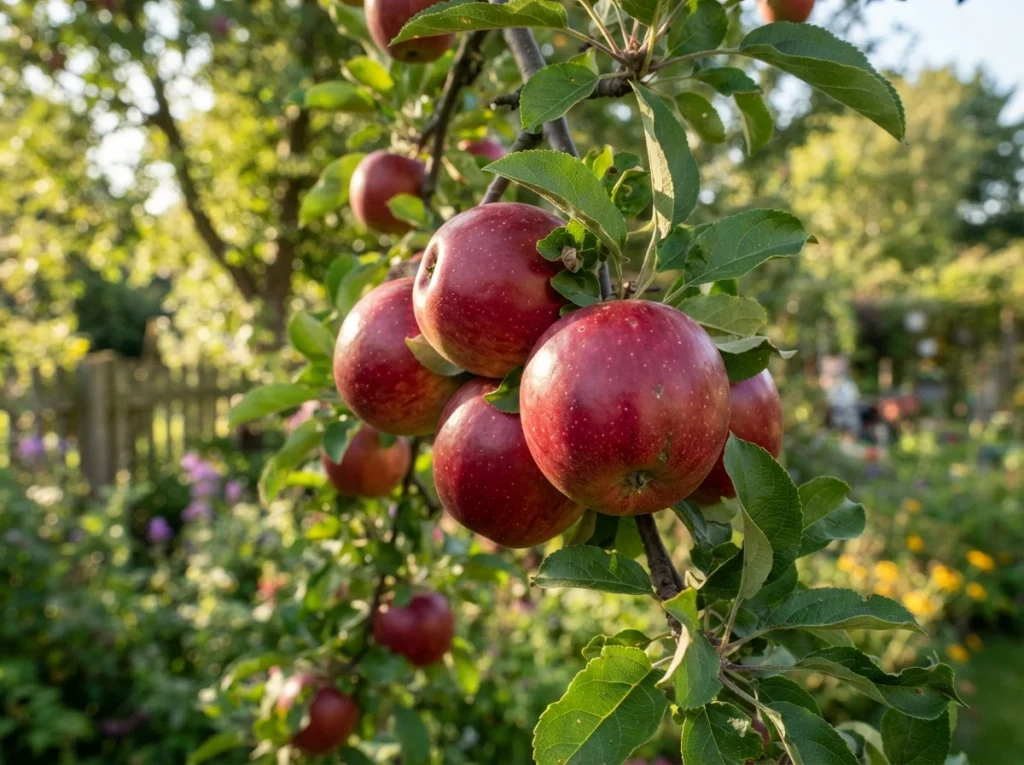
For Southern and mid-Atlantic growers, Antietam Blush is one of the few disease resistant apple trees bred and tested specifically for regional heat and humidity tolerance.
Disease Resistant Apple Trees Compared
For quick reference, the table below summarizes disease resistance and harvest timing for the disease resistant apple trees covered in this guide, based on published extension cultivar data.
| Variety | Scab Resistance | Fire Blight Resistance | Harvest Window |
|---|---|---|---|
| Liberty | Immune | Resistant | Early-mid Oct. |
| Enterprise | Resistant | Resistant | Late Oct. |
| Freedom | Immune | Moderately resistant | September |
| Redfree | Resistant | Some resistance | Mid-late Aug. |
| William’s Pride | Resistant | Moderate | July-Aug. |
| GoldRush | Resistant | Strong | Late Oct. |
| Florina | Resistant | Resistant | October |
| Crimson Topaz | Resistant | Moderate | Late Sept. |
| Priscilla | Resistant | Good tolerance | Late Aug.-Sept. |
| Antietam Blush | Good tolerance | Moderate | September |
Choosing the Right Disease Resistant Apple Tree for Your Zone
USDA hardiness zone should guide which disease resistant apple tree you plant, since cold tolerance varies significantly between cultivars. For example, growers in zones 3 and 4 need especially cold-hardy options, while growers in zones 6 through 8 have a wider selection to choose from.
For a full breakdown of which disease resistant apple tree varieties perform best in each USDA zone, see our guide to apple tree varieties by zone. Growers focused specifically on the Honeycrisp lineage should also review our article on Honeycrisp apple tree diseases, since Honeycrisp itself has only moderate resistance and benefits from being paired with a more resistant pollinator.
Home growers who want an expanded list beyond these ten selections can browse our full roundup of disease resistant apple tree varieties, which includes additional regional and heirloom options.
Planting and Care Tips for Disease Resistant Apple Trees
Even the most disease resistant apple trees need proper siting to perform well. Plant in full sun with at least six to eight hours of direct light daily, and choose well-drained soil with a target pH between 6.0 and 6.5.
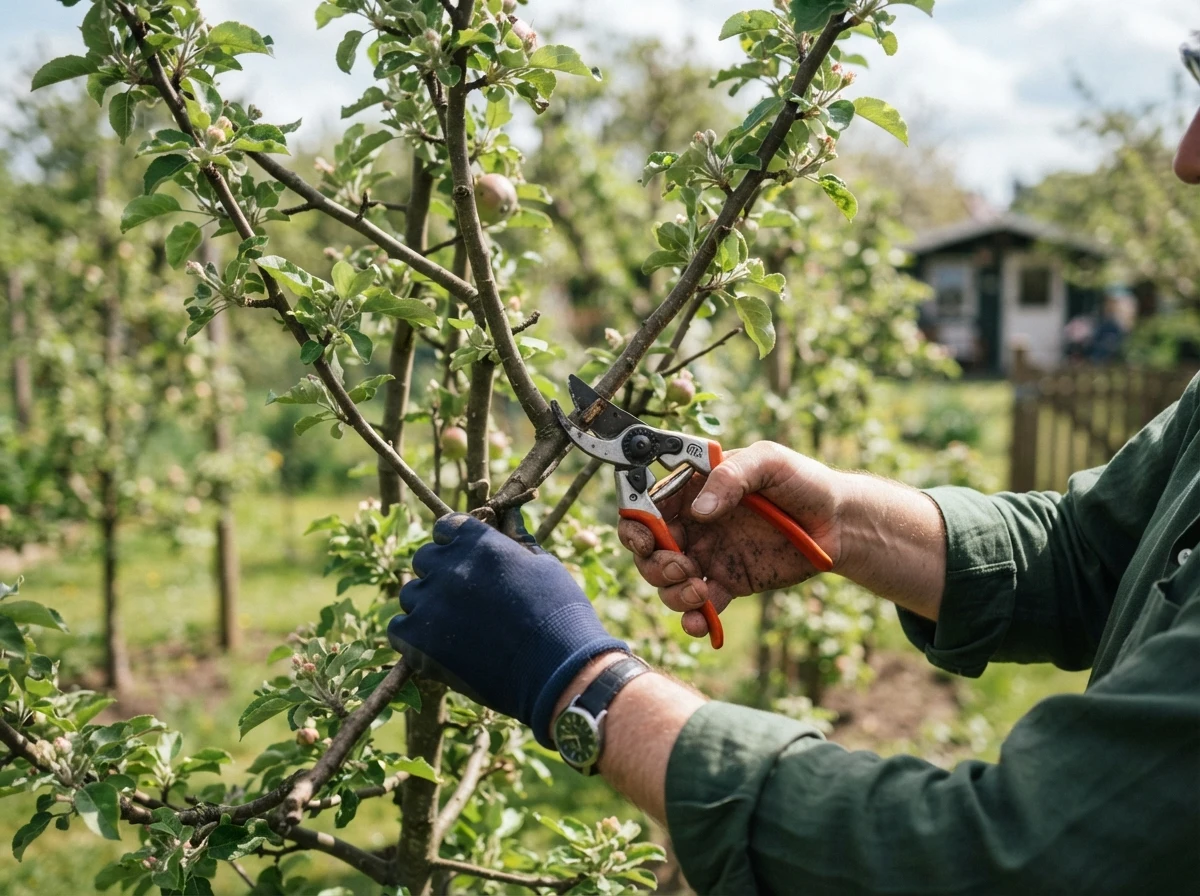
Additionally, space trees according to their mature rootstock size, and prune annually in late winter to maintain open canopies that dry quickly after rain. In fact, good air circulation is one of the simplest, most effective ways to reduce disease pressure on any apple tree, resistant or not.
Pollination Requirements
Most disease resistant apple trees are not self-fertile and require a second apple or crabapple variety blooming at the same time nearby. Therefore, before planting a single disease resistant apple tree, confirm that a compatible pollinator exists within about 50 feet, whether it is another named variety or a neighbor’s crabapple.
For that reason, growers interested in ornamental and fruiting crabapples as pollinator partners may also want to review our guide to Houcks Crabapple, a disease-tolerant crabapple option suited to home landscapes.
Do Disease Resistant Apple Trees Still Need Spraying?
Disease resistant apple trees dramatically reduce, but do not always eliminate, the need for fungicide applications. In particular, scab-resistant cultivars remain susceptible to other summer diseases such as sooty blotch, flyspeck, and bitter rot, which affect fruit appearance rather than tree health.
Planting disease-resistant varieties is the best way to manage scab, though fungicides may still be needed and proper timing of sprays is important for control, according to University of Minnesota Extension plant pathologists.
In years with unusually wet, humid spring weather, even highly disease resistant apple trees may show some symptoms. As a result, most university extensions still recommend a limited, well-timed fungicide program during bloom in high-pressure regions, rather than skipping disease management entirely.
Disease Resistant Apple Trees vs. Traditional Varieties
Traditional, highly susceptible apple varieties such as McIntosh, Cortland, and Red Delicious can still be grown successfully at home, but they generally require a more disciplined spray schedule to avoid scab and other disease damage. In contrast, disease resistant apple trees allow growers to skip or significantly reduce fungicide applications aimed at scab, freeing up time for other orchard tasks like pruning and thinning.
That said, the trade-off is not always about flavor, since several disease resistant apple trees on this list, including Liberty and Crimson Topaz, rate highly in taste trials against traditional varieties. Instead, the real trade-off tends to involve availability. Because these cultivars are less common at big-box garden centers, home growers often need to order from specialty fruit tree nurseries or cooperative extension plant sales to find named cultivars.
Common Mistakes When Choosing Disease Resistant Apple Trees
One frequent mistake is assuming that “disease resistant” means “maintenance free.” As covered above, these apple trees still benefit from good pruning, sanitation, and, in some regions, a limited fungicide program during bloom. Skipping basic care entirely can undo much of the advantage these varieties offer.
Another common error is choosing a disease resistant apple tree based on scab resistance alone. For example, a variety immune to scab but highly susceptible to fire blight may still struggle in a region where fire blight pressure is severe. Therefore, it is worth checking resistance ratings for all four major diseases, not just one, before making a final choice.
Finally, many home growers overlook pollination when selecting disease resistant apple trees. Even the most disease resistant apple tree will produce little to no fruit without a compatible pollinator variety blooming nearby at the same time, so this detail deserves attention before any tree goes in the ground.
When to Call a Professional
If a disease resistant apple tree develops unexplained cankers, sudden branch dieback, or symptoms that do not match common apple diseases, contact a certified arborist or your local university cooperative extension plant diagnostic clinic. Therefore, accurate, in-person diagnosis is especially important before applying any pesticide product, since misapplied chemicals can harm beneficial insects and pollinators.
In addition, growers weighing broader variety options for a new orchard, including productivity and space considerations, may also find it useful to review our guide to the best apple trees for home orchard planting.
FAQs
Are disease resistant apple trees completely immune to disease?
No. Disease resistant apple trees have reduced susceptibility to specific diseases, most commonly apple scab, but they can still develop other issues, especially in years with heavy disease pressure or wet spring weather.
Do disease resistant apple trees taste as good as traditional varieties?
In fact, many disease resistant apple trees, including Liberty, Enterprise, and Crimson Topaz, are bred specifically to combine strong disease resistance with high fruit quality, so flavor is not necessarily sacrificed for hardiness.
Which disease resistant apple trees grow well in colder zones?
Freedom, Liberty, and Frostbite are among the disease resistant apple trees suited to colder zones, with documented cold hardiness down to USDA zone 3 or 4 depending on the cultivar.
Can disease resistant apple trees still get cedar apple rust?
Yes, in some cases, because resistance is disease-specific. As a result, a variety that is immune to apple scab, such as Florina, may still show some susceptibility to cedar apple rust, particularly near juniper hosts.
How many disease resistant apple trees do I need for pollination?
Generally, most disease resistant apple trees need at least one other compatible variety blooming nearby at the same time, since the majority of apple cultivars are not self-fertile.
Related Articles
- Disease Resistant Apple Tree Varieties
- Honeycrisp Apple Tree Diseases
- Houcks Crabapple
- Best Apple Trees for Home Orchard
- Apple Tree Varieties by Zone
Sources
- University of Maryland Extension: Growing Apple and Pear Trees in a Home Garden
- University of Minnesota Extension: Growing Apples in the Home Garden
- Penn State Extension: Scab-Resistant Apple Varieties for Home Orchards
- Cornell University KhanLab: Database of Apple Diseases
Disclaimer: This article is for informational purposes only. Apple tree disease and pest identification in the field can be challenging. For a confirmed diagnosis, consult a certified arborist or contact your local university cooperative extension plant diagnostic clinic. Always read and follow pesticide label directions before applying any product.
