
Apple Tree Disease Identification: 8 Proven Visual Signs
Apple tree disease identification starts with the plant part affected, then compares color, texture, shape, timing, and weather history. Olive-green leaf lesions suggest a different problem than orange rust spots, white powder, blackened shoots, or sunken fruit rot. Use these visual clues to narrow the possibilities, then confirm uncertain cases locally before treating.
Table of Contents
Key Takeaways
- Apple tree disease identification is more reliable when you examine leaves, fruit, blossoms, shoots, and bark together.
- Apple scab, cedar-apple rust, fire blight, black rot, and abiotic injury can overlap, so one photograph rarely confirms the cause.
- Record the cultivar, USDA location, symptom timing, recent weather, nearby cedar or juniper, and affected plant parts before choosing a control.
When a tree develops spots or loses leaves, it is understandable to worry about the crop and nearby trees. However, a symptom is not the same as a diagnosis. The most useful first step in apple tree disease identification is to slow down and describe what changed.
This guide explains a practical process for apple tree disease identification in backyard orchards. It covers eight visual sign groups, the likely diseases associated with them, and the safer next steps for prevention and treatment decisions.
Start apple tree disease identification with the affected plant part
First, note whether the problem is concentrated on leaves, fruit, blossoms, new shoots, older branches, or the trunk. In addition, look for symptoms on more than one part because the combination often makes apple tree disease identification more reliable than a single spot.
Leaves: color, margins, texture, and leaf drop
Healthy-looking leaves that develop round olive-green, velvety spots with fringed edges are consistent with apple scab symptoms. According to the University of Minnesota Extension apple scab guidance, older lesions can become dark brown or black, merge together, and contribute to yellowing or early leaf drop.
Bright orange-red spots point toward a different line of investigation. Cedar-apple rust commonly begins as yellow leaf spots, then develops orange-red color, black dots on the upper surface, and short tube-like structures beneath the leaf. Therefore, inspect both sides of the leaf rather than judging color alone.
Fruit: surface marks, cracks, rot, and mummification
Apple scab on fruit tends to produce brown, corky lesions, while early infections may leave fruit distorted or cracked. By contrast, summer rots create soft, sunken areas that expand as tissue breaks down. Black rot can affect fruit and may also produce a frog-eye leaf phase with tan centers and dark margins.
Small black specks or soot-like smears can be associated with flyspeck and sooty blotch, which are often cosmetic surface diseases. Nevertheless, do not assume every black mark is harmless. A rotten, moldy, chemically exposed, or otherwise questionable apple should not be evaluated by appearance alone for food-safety purposes.
Blossoms, shoots, and bark: signs that raise urgency
Water-soaked blossoms that shrivel and turn brown or black, followed by wilted gray-green shoots bending into a shepherd’s crook, are strong clues for fire blight. The disease is bacterial and can also cause dark, sunken, cracked cankers with pale ooze during humid or wet weather.
Sunken dead bark with dieback suggests a canker problem, while silver-looking foliage followed by branch dieback raises the possibility of silver leaf. Because bark and shoot symptoms can threaten structure or spread, photograph the transition between healthy and affected tissue and seek local advice promptly.
| What you see | Possible match | Useful confirming clue |
|---|---|---|
| Olive-green, velvety leaf spots | Apple scab | Brown corky fruit lesions, cracks, or early leaf drop |
| Yellow spots becoming bright orange-red | Cedar-apple rust | Black dots above and tube-like structures below leaves |
| Blackened shoots with hooked tips | Fire blight | Water-soaked blossoms, cankers, or pale ooze |
| Tan leaf centers with dark borders | Black rot or frog-eye leaf spot | Black rot lesions on fruit or dead wood |
| White powder on young foliage | Powdery mildew | Powdery growth and distorted young leaves |
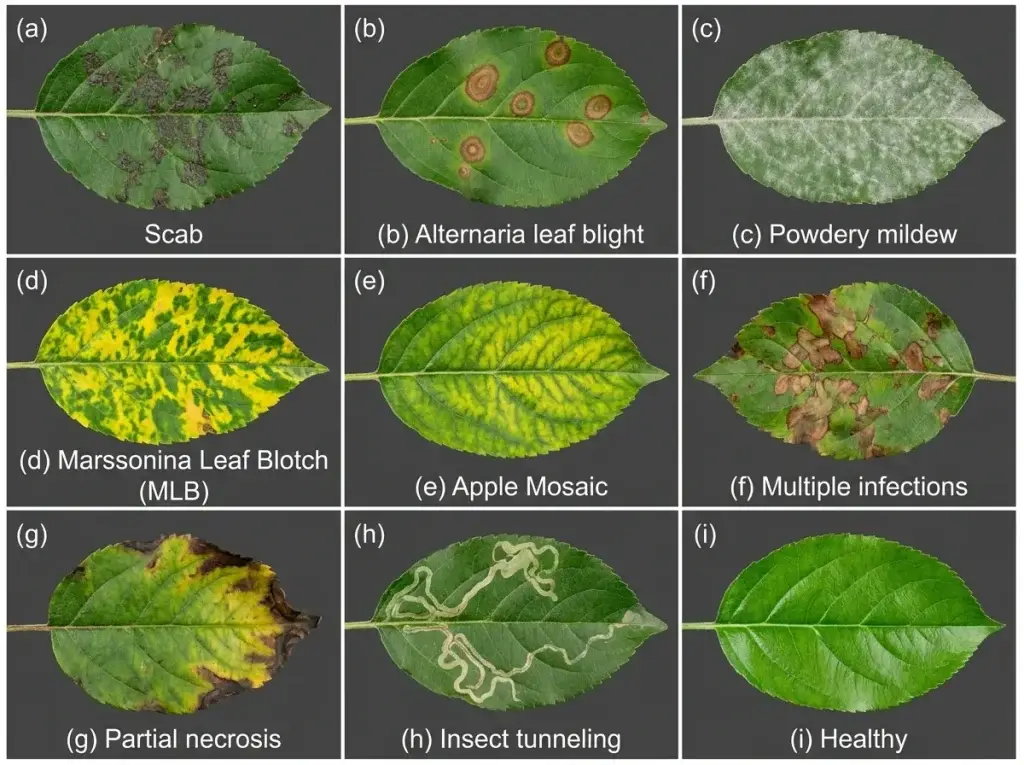
Compare the eight most useful visual signs
These signs make apple tree disease identification more systematic, but they are not a substitute for a plant clinic. The Cornell Database of Apple Diseases provides symptom images, disease factsheets, cultivar susceptibility information, and diagnostic-method resources for comparison. Use those resources as part of apple tree disease identification, not as proof from one image.
1. Olive-green, velvety lesions
Scab lesions often start as olive-green spots with a soft or velvety appearance. As they age, they may darken, merge, and appear less sharply defined. Check fruit for matching corky marks, because leaf and fruit symptoms together are more informative than an isolated leaf spot.
2. Yellow-to-orange rust spots
Cedar-apple rust can shift from yellow to vivid orange-red on apple leaves. If the suspected disease is rust, inspect the underside for small projections and consider whether eastern red cedar or juniper hosts are present within the surrounding landscape. Their absence does not prove that rust is impossible.
3. Water-soaked blossoms and shepherd’s-crook shoots
Fire blight often moves through blossoms and succulent shoots, producing a scorched appearance while leaves remain attached. The characteristic hooked shoot tip is especially useful, but a laboratory or extension diagnosis may still be needed before major pruning or removal.
4. Frog-eye leaf spots and black rot clues
Frog-eye spots have tan or brown centers with darker margins and may follow earlier damage or dead wood. Look for black rot symptoms on fruit and for mummified apples that remain attached. Similar leaf spots can have other causes, so record the full pattern.
5. White powder on young leaves
White, powdery growth is a classic clue for powdery mildew. Distorted young foliage may accompany it. However, residue from sprays, dust, or insects can look similar, which is why a close image of the leaf surface and its underside is valuable.
6. Soot-like smears or tiny black dots on fruit
Sooty blotch may look like a dull black smear, while flyspeck appears as many tiny black dots. Both can be cosmetic, yet fruit that is soft, rotten, moldy, or otherwise compromised requires a separate food-safety decision.
7. Sunken bark and branch dieback
Cankers appear as dead or sunken areas in bark and can lead to dieback beyond the original wound. Note whether the edge is sharply defined, cracked, wet, or producing ooze. Because several diseases and injuries can create cankers, avoid making a removal decision from one visual sign.
8. Silver foliage followed by dieback
Silver-looking leaves followed by branch decline can indicate silver leaf, although lighting, dust, and other stress can alter foliage color. Photograph the whole branch and compare unaffected and affected leaves in the same light.
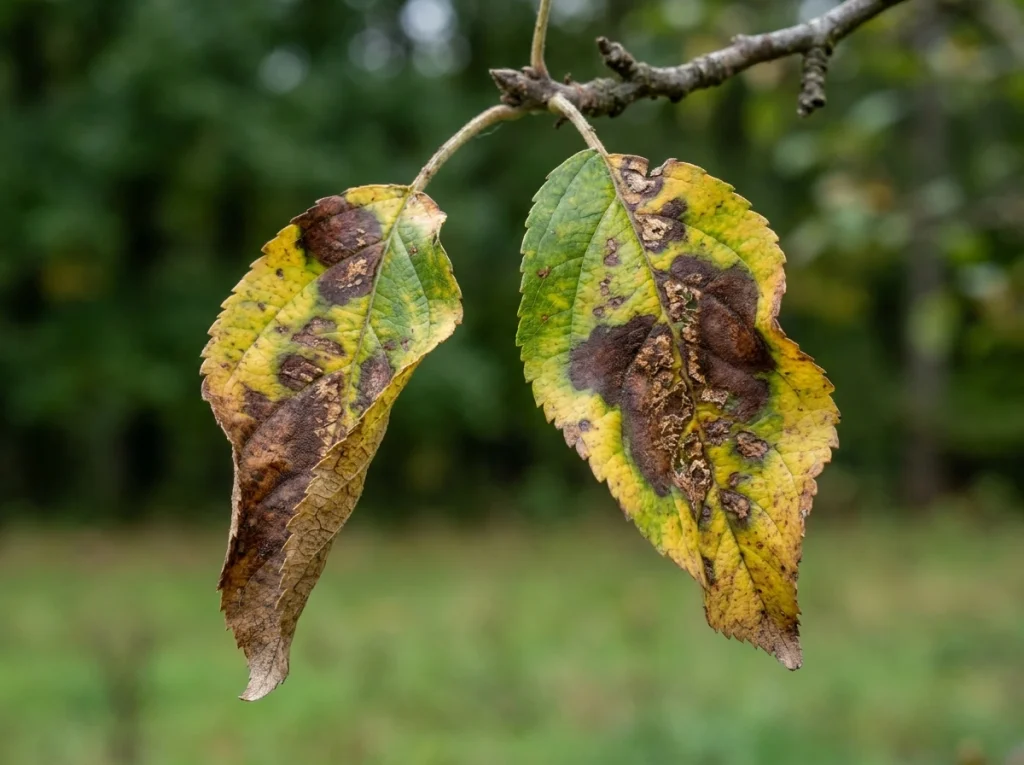
What to do after identifying a likely disease
After apple tree disease identification, write down the likely match and the evidence supporting it. Record the tree’s variety, age, rootstock if known, USDA growing zone, symptom onset, recent rain or drought, irrigation, nearby cedar or juniper, and whether symptoms are spreading. This record gives later apple tree disease identification a stronger context.
Record context before treating
Take clear photographs in natural light, including a whole-tree view, a close view of the symptom, and the transition between healthy and affected tissue. This is the most useful evidence to support apple tree disease identification from a distance. Keep a sample only if your local diagnostic clinic gives instructions for collection, because sample requirements vary.
Use prevention before reaching for a pesticide
- Remove fallen leaves and mummified fruit where sanitation is recommended for the suspected disease.
- Prune dead or diseased tissue only with disease-appropriate guidance, and sanitize tools between cuts when advised.
- Improve airflow through proper tree structure and avoid unnecessary leaf wetness from overhead irrigation.
- Choose cultivars with resistance appropriate to your region, since susceptibility differs by variety and disease.
- Monitor early symptoms and use local extension disease forecasts or calendars where available.
Separate organic and conventional control decisions
Organic and conventional products are not interchangeable, and a product label may vary by crop, disease, state, and use site. For that reason, identify the disease as carefully as possible, confirm that the product is labeled for apples and the target disease, and follow every label direction, interval, and protective requirement.
Expert consensus: Extension guidance treats visible symptoms as diagnostic clues, not automatic proof. Compare multiple plant parts and environmental details, then use a local cooperative extension diagnostic clinic or plant laboratory when the diagnosis affects pruning, removal, pesticide use, or fruit decisions.
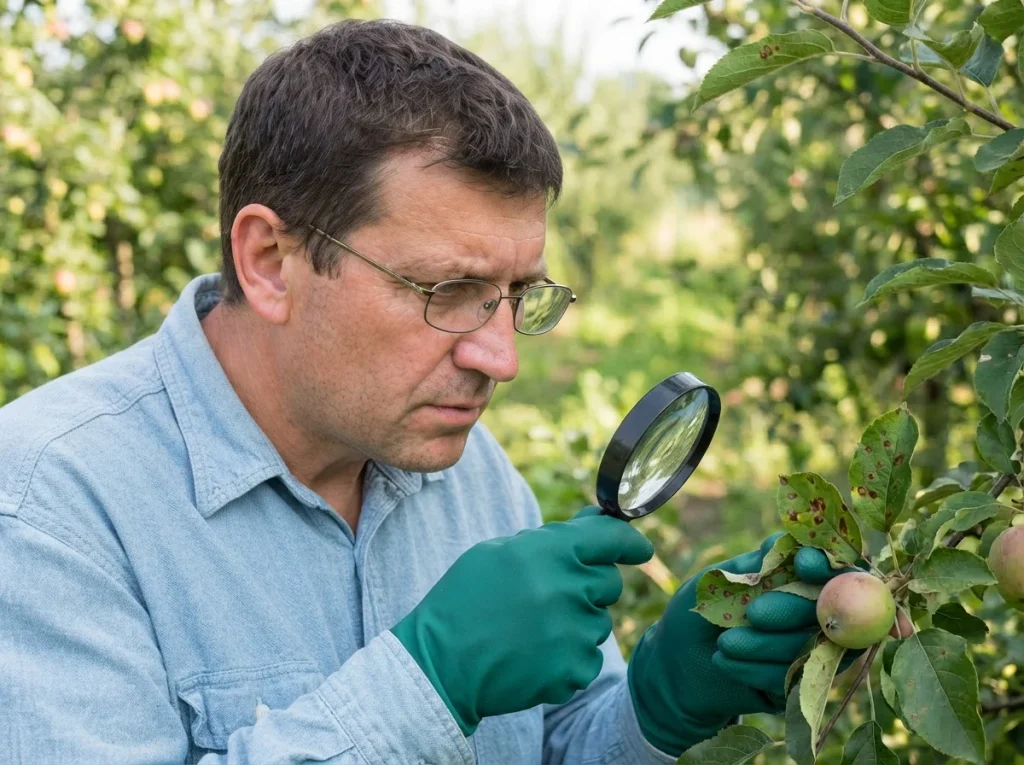
When to contact an extension diagnostic clinic or arborist
Ask for professional help when a young tree is declining quickly, a large scaffold or trunk has a canker, fire blight is suspected, several trees are affected, or symptoms do not match a reliable reference. A certified arborist can assess structural risk, while a university extension diagnostic clinic can help with apple tree disease identification and disease confirmation.
Professional input is also appropriate when you are unsure whether pruning will remove enough infected tissue or when pesticide use may affect pollinators, children, pets, waterways, or harvest timing. In short, accurate apple tree disease identification prevents both under-treatment and unnecessary removal, while a documented diagnosis supports better decisions next season.
FAQs
How can I tell apple scab from cedar-apple rust?
Apple scab usually creates olive-green to dark leaf lesions and corky fruit marks, while cedar-apple rust tends to create yellow-to-orange-red leaf spots with diagnostic structures underneath. Still, apple tree disease identification is stronger when you check symptom timing, fruit, nearby hosts, and local weather together.
Are apples with black spots safe to eat?
Black spots can reflect cosmetic sooty blotch or flyspeck, but they can also occur with rot or other damage. Do not use a general apple tree disease identification chart as a food-safety clearance. Follow local extension or food-safety guidance and discard fruit that is rotten, moldy, chemically exposed, or otherwise questionable.
Is this fire blight, and should I cut down the tree?
Hooked blackened shoots, water-soaked blossoms, cankers, and pale ooze are clues that support fire blight, but they do not automatically mean the whole tree should be removed. Seek local confirmation before major cuts, because apple tree disease identification must account for the extent of affected tissue and the tree’s structure.
Can someone identify an apple disease from a photograph?
A photograph can narrow the possibilities, especially when it shows the whole tree, close symptoms, leaf undersides, fruit, bark, and scale. However, apple tree disease identification from one image is uncertain when symptoms overlap with insects, herbicide injury, drought, nutrient problems, or multiple diseases.
What should I do after identifying the problem?
Document the evidence, confirm the likely cause with an approved extension resource, and select prevention or treatment steps that match the diagnosis and product label. Good apple tree disease identification also means recording what happened this season so next year’s monitoring begins earlier.
Related Articles
Sources
- University of Minnesota Extension, Apple scab.
- University of Minnesota Extension, Cedar-apple rust.
- University of Minnesota Extension, Fire blight.
- NCAT ATTRA, Apple Diseases Identification Sheet.
- Cornell University, Database of Apple Diseases.
Disclaimer: This article is for informational purposes only. Apple tree disease and pest identification in the field can be challenging. For a confirmed diagnosis, consult a certified arborist or contact your local university cooperative extension plant diagnostic clinic. Always read and follow pesticide label directions before applying any product.
