
Common Apple Tree Diseases: Proven Practical Guide
Common apple tree diseases are easiest to manage when you compare the pattern, location, and timing of symptoms before choosing a treatment. Apple scab, fire blight, cedar-apple rust, rots, and mildews can look similar at first, yet each has different signs and prevention priorities.
Table of Contents
Key Takeaways
- Common apple tree diseases affect leaves, fruit, flowers, shoots, bark, or more than one plant part.
- Start with diagnosis, sanitation, airflow, resistant varieties, and careful irrigation before reaching for a spray.
- When symptoms spread into major limbs or the diagnosis is uncertain, contact a certified arborist or local extension diagnostic clinic.
More than one problem often shows up in the same season. Wet foliage can favor a fungal disease, while insect feeding or winter injury creates openings for secondary infections, so before diagnosing, note the tree’s age, variety, affected tissue, recent weather, and whether symptoms are spreading.
Common apple tree diseases: start with symptoms, not sprays
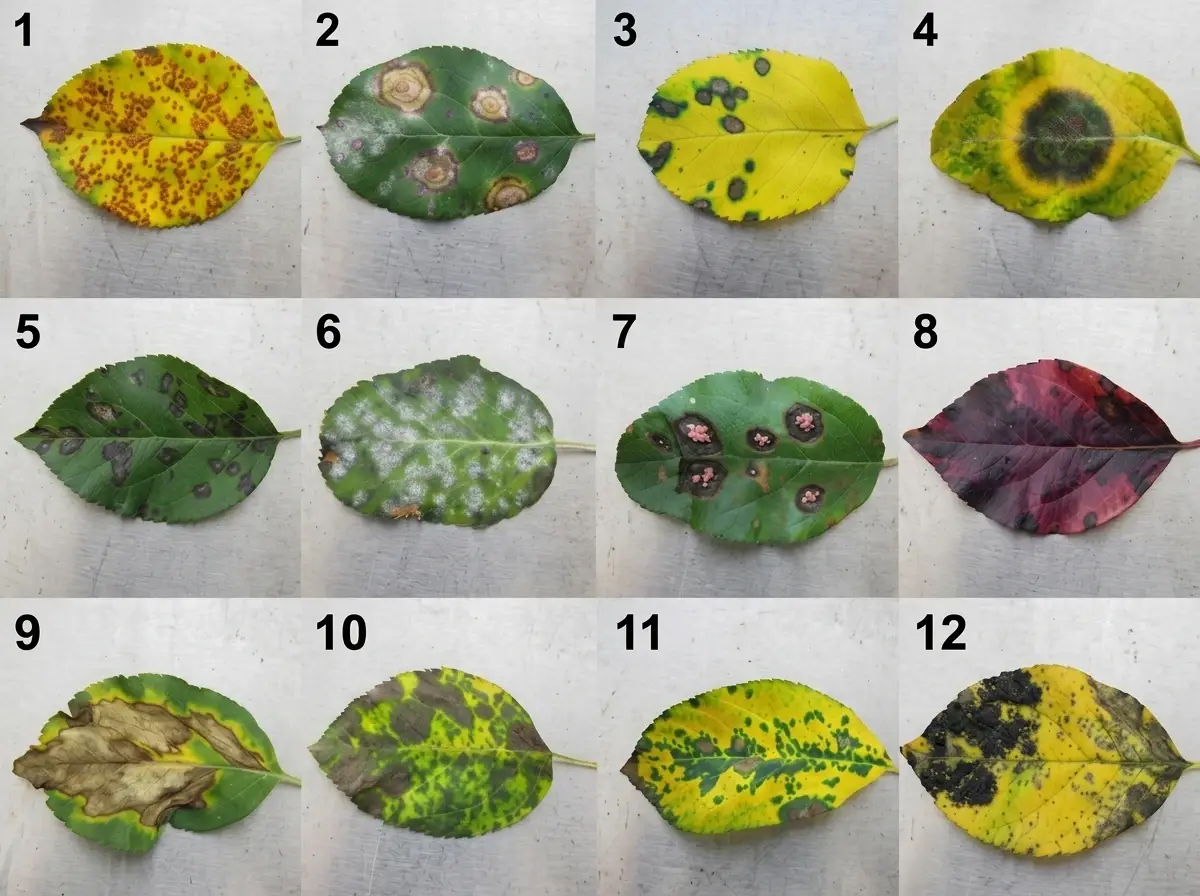
Common apple tree diseases can be grouped by the tissue they damage. Leaf spots and premature leaf drop suggest one set of possibilities, while blossom blight, sunken bark lesions, or rotting fruit point toward another. However, a photograph alone may not distinguish a pathogen from spray injury, drought, nutrient imbalance, or insects.
What to record before diagnosing a disease
- Record whether symptoms are on young leaves, mature leaves, blossoms, shoots, trunk bark, or fruit.
- Look for a repeating pattern, such as spots on both sides of leaves, lesions around fruit wounds, or damage concentrated on one branch.
- Note recent rain, overhead irrigation, frost, pruning, hail, drought, and nearby junipers, cedars, crabapples, or abandoned orchards.
- Save clear photographs and, when practical, a sample for a local extension diagnostic clinic.
If the symptom pattern doesn’t clearly match one disease, a closer symptom-by-symptom comparison can help narrow it down. See our guide to apple tree disease identification before assuming a diagnosis from a single photo.
7 common apple tree diseases to recognize
1. Apple scab
Apple scab is caused by the fungus Venturia inaequalis and is one of the most familiar apple tree diseases in home orchards. Early leaf symptoms may look pale, water-soaked, olive-green, or smoky; older lesions become darker and can cause curling, distortion, and early leaf drop. On fruit, scab often produces raised dark lesions that become brown and corky as the apple expands.
The fungus overwinters in fallen diseased leaves. In spring, spores spread by wind, rain splash, or irrigation, and infection is favored when young tissue remains wet. Fall leaf cleanup, mowing or shredding leaf litter, an open canopy, base watering, and scab-resistant cultivars are central prevention steps. UMN Extension explains the apple scab disease cycle and management options.
2. Fire blight
Fire blight is a bacterial disease that can turn blossoms, leaves, and young shoots brown or black. Affected shoots may bend into a shepherd’s-crook shape, while bark can develop darkened, water-soaked areas or cankers. Because fire blight can move through succulent growth and infect major limbs, fast confirmation matters.
Do not assume every blackened shoot is fire blight. Frost, drought, pruning injury, and other disorders can resemble it. Remove and dispose of confirmed infected material according to local extension guidance, disinfect tools between cuts, avoid stimulating excessive soft growth, and follow local recommendations for any authorized treatment.
3. Cedar-apple rust
Cedar-apple rust requires two unrelated host groups to complete its life cycle. On apple leaves, look for yellow spots that become bright orange-red, often with a darker border. Mature spots may develop black dots on top and small tube-like structures underneath; fruit symptoms are less common and usually remain near the surface.
Wet spring weather supports spore release from infected juniper or eastern red cedar galls. Spores can travel on wind, so removing a host plant on one property may not eliminate risk. Instead, choose resistant varieties where suitable, improve airflow, and use regional extension guidance for any fungicide program. UMN Extension describes the two-host rust cycle and identifying features.
4. Black rot and frogeye leaf spot
Black rot can affect leaves, fruit, and woody tissue, and the same fungus also causes the related frogeye leaf spot on foliage. Leaf symptoms typically begin as small purple flecks that enlarge into spots with brown or tan centers and purple margins. Fruit rot often starts at the calyx end and can expand, mummify, or darken as it spreads; Penn State Extension notes that black rot typically produces a single spot per fruit, which helps distinguish it from bitter rot.
Prune out dead or diseased wood when conditions and local guidance permit, remove mummified fruit, and reduce injuries that provide entry points, since the fungus commonly overwinters in cankers and mummified fruit. Because symptoms can resemble other rots and cankers, confirm an uncertain diagnosis with a local extension diagnostic service before treating a tree based on a photograph alone.
5. Powdery mildew
Powdery mildew typically appears as a white, flour-like coating on young leaves, shoots, or blossoms. Leaves may curl or become distorted, and shoots can remain stunted. Unlike many leaf-spot diseases, powdery mildew does not require prolonged leaf wetness to spread, although crowded growth and susceptible varieties can increase pressure.
Prune to improve light and air movement without making excessive cuts, remove badly affected material where appropriate, and select varieties with documented resistance. Product choice depends on the crop stage, local registration, and label directions, so use regional extension recommendations rather than a universal spray calendar.
6. Sooty blotch and flyspeck
Sooty blotch creates dark, smudged surface patches on apple skin, while flyspeck produces small black, pinhead-sized specks that often cluster together. These blemishes are mainly cosmetic and can be confused with scab or fruit rot. Extension guidance describes both as more likely to develop during extended periods of high humidity and wetness, especially later in the season.
Pruning for airflow, managing nearby vegetation, and maintaining a clean canopy can reduce favorable conditions. Wash or gently brush harvested fruit only when appropriate for the intended use, and do not confuse surface blemishes with internal decay.
7. Fruit rots and cankers
Fruit rots often begin at wounds, insect injury, cracking, blossom scars, or damaged tissue. Depending on the cause, a rotting apple may develop soft brown tissue, concentric rings, mold, or a dry mummy. Cankers on branches can appear as sunken, cracked, discolored, or dead areas.
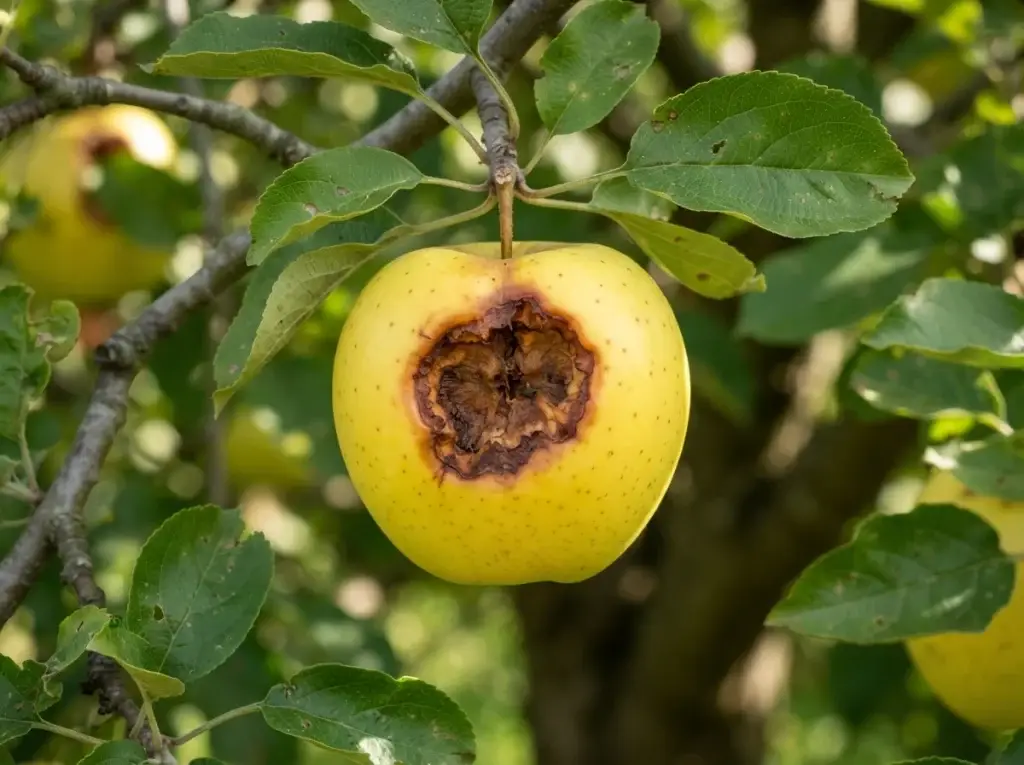
Sanitation is particularly important: remove rotting fruit and dead wood, protect bark from mechanical injury, and avoid moving contaminated material around the orchard. However, canker diagnosis can be difficult because several pathogens and environmental injuries produce similar bark symptoms.
Quick comparison of common apple tree diseases
| Likely problem | Main tissue | Typical clue | First response |
|---|---|---|---|
| Apple scab | Leaves and fruit | Olive or smoky spots, later corky lesions | Clean leaf litter, improve airflow, verify variety resistance |
| Fire blight | Blossoms, shoots, limbs | Blackened tissue and shepherd’s-crook shoots | Confirm promptly and follow local pruning and sanitation guidance |
| Cedar-apple rust | Leaves and sometimes fruit | Orange-red leaf spots with dark centers | Check nearby juniper or cedar hosts and choose resistant varieties |
| Powdery mildew | Young leaves and shoots | White powdery coating and distorted growth | Open the canopy and select resistant planting material |
| Rot or canker | Fruit and woody tissue | Soft decay, mummies, sunken or cracked bark | Remove sources of inoculum and obtain a diagnosis |
What to do after identifying a likely disease
Prevention and sanitation
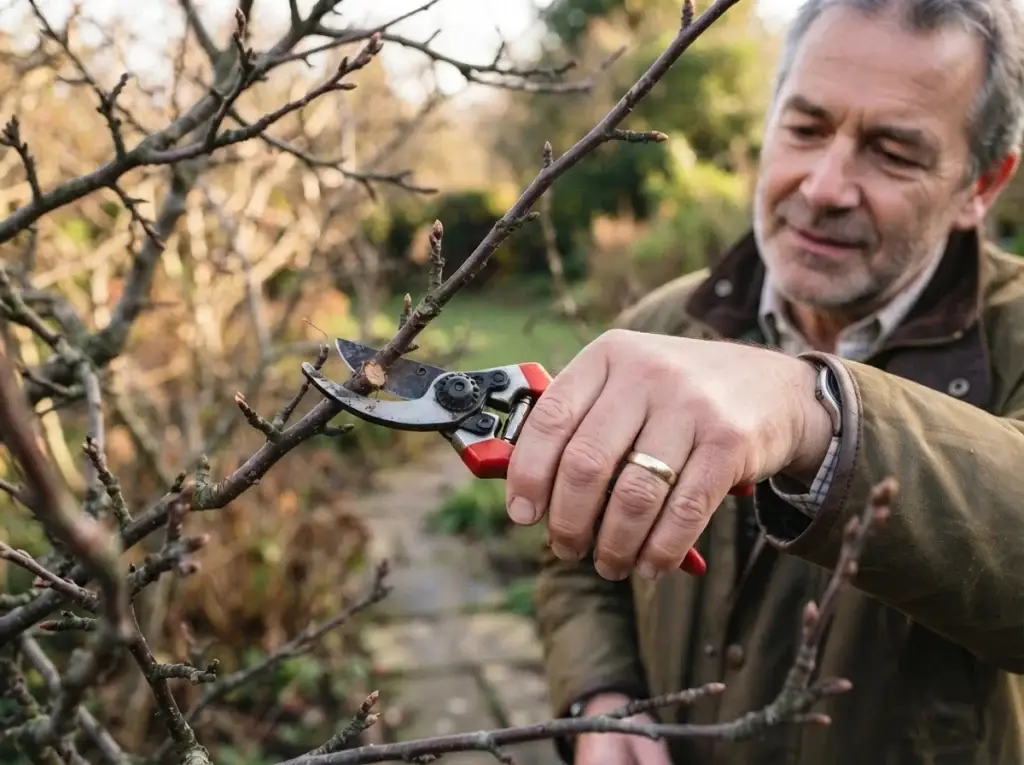
Prevention works best as a system rather than a single product. Plant in a site with suitable drainage and sunlight, keep the canopy open through appropriate pruning, water at the soil surface instead of wetting foliage, and remove fallen leaves, dead wood, and mummified fruit when recommended. Avoid moving contaminated tools or plant material between trees.
Variety selection is another high-value decision. The University of Maryland Extension notes that disease-resistant cultivars and dwarfing rootstocks can reduce management difficulty, although resistance is not immunity and performance depends on region, disease, and growing conditions. For a deeper walkthrough of specific treatments and organic-versus-conventional options once a disease is confirmed, see our full guide to apple tree diseases and cures.
Organic and conventional control principles
Organic and conventional programs both depend on correct diagnosis, prevention, monitoring, coverage, and timing. A fungicide cannot repair a leaf that is already scarred, and an insecticide will not cure a bacterial or fungal disease. Read the label, confirm the product is registered for the crop and disease in your location, protect pollinators, and never combine products unless the label permits it.
Oregon State University Extension’s fruit tree IPM guidance frames this directly: there is no silver bullet, and combining several complementary practices pruning for airflow, removing disease sources, monitoring pest thresholds, and timing any treatment correctly builds more stable long-term control than repeated use of one product. OSU Extension, Fruit tree integrated pest management.
This principle applies directly to disease management here: cultural controls, resistant varieties, sanitation, monitoring, and carefully selected treatments tend to be more reliable together than repeated use of one product. For regional decisions, use your state extension service, since disease pressure and pesticide regulations vary by region and state.
FAQs
What are the most common apple tree diseases?
The most common apple tree diseases in home orchards include apple scab, fire blight, cedar-apple rust, powdery mildew, fruit rots, cankers, and surface blemishes such as sooty blotch and flyspeck. The likely problem depends on the tissue affected and the season.
How can I tell apple scab from cedar-apple rust?
Apple scab usually begins as olive, smoky, or dark lesions on leaves and fruit, later becoming corky on apples. Cedar-apple rust more often produces bright orange or orange-red leaf spots, sometimes with structures on the underside. Even so, overlapping symptoms justify a local diagnostic review.
Can I eat apples with disease spots?
Surface blemishes are not automatically evidence that the inside of an apple is unsafe, but soft rot, mold, extensive decay, or an uncertain contaminant should be treated cautiously. Cut away only minor, clearly superficial damage when appropriate, and discard fruit that is rotten, moldy, or otherwise questionable.
Can an apple tree recover from disease?
Many trees can continue growing after a manageable leaf disease, especially when sanitation, airflow, irrigation, and variety selection improve. However, a severe trunk canker, repeated defoliation, or progressing fire blight can threaten structure and long-term health.
When should I call a professional?
Contact a certified arborist or local extension diagnostic clinic when a disease reaches the trunk or major limbs, a young tree declines rapidly, multiple disorders may be present, or you are considering pesticide use without a confident diagnosis. Professional confirmation can prevent unnecessary pruning and unsuitable treatments.
Related Articles
Sources
- University of Minnesota Extension, Apple scab of apples and crabapples.
- University of Minnesota Extension, Cedar-apple rust and related rust diseases.
- Oregon State University Extension, How to manage apple scab during Oregon’s wet spring months.
- Oregon State University Extension, Fruit tree integrated pest management.
- University of Maryland Extension, Growing Apple and Pear Trees in a Home Garden.
- Penn State Extension, Pome Fruit Disease – Black Rot and Frogeye Leaf Spot.
- New England Tree Fruit Management Guide (UMass Amherst), Sooty Blotch and Flyspeck.
- Family Plot, Apple Tree Diseases.
Disclaimer: This disease information is for general education only. Field diagnosis can be difficult, and similar symptoms may have different causes. Consult a certified arborist or local extension diagnostic clinic when symptoms are severe or uncertain. Always follow the pesticide label and all local requirements.
