
7 Proven Apple Tree Soil Requirements for Better Growth
Apple tree soil requirements start with slightly acidic to near-neutral soil, reliable drainage, adequate oxygen, and a soil test before planting. Most home apple trees do not need a special imported mix. Instead, test the native soil, correct only documented problems, and avoid deep planting or amendments that trap water around the roots.
Table of Contents
Key Takeaways
- Apple tree soil requirements generally include a pH around 6.0 to 7.0, with the practical target often narrowed to 6.0 to 6.5 when local recommendations support it.
- Drainage matters as much as pH. A site that stays saturated can deprive roots of oxygen and increase the risk of root problems.
- Test first, amend carefully, and prepare a broad planting area rather than creating a rich, sharply different pocket around the root ball.
For backyard growers, the most useful soil decision happens before the tree arrives. A healthy-looking nursery tree can struggle if its roots enter compacted soil, sit in a low spot, or encounter a sudden change between the planting hole and the surrounding ground.
Therefore, treat soil preparation as a site-matching exercise rather than a shopping list. The guidance below explains what to test, how to interpret the result, and which changes are reasonable for clay, sand, and compacted ground.
Apple Tree Soil Requirements: The Ideal Starting Point
The core apple tree soil requirements are simple: soil that drains excess water, holds enough moisture for steady growth, contains oxygen-filled pore spaces, and falls in a suitable pH range. University of Minnesota Extension says apple trees can grow in most soils when there is no standing water and the soil pH is between 6 and 7. Read its home apple-growing guidance for the regional context.
Apple Tree Soil Requirements for pH and Nutrient Access
Soil pH is one of the most important apple tree soil requirements because it affects how readily roots can access nutrients. A reading below the suitable range may limit availability of some nutrients, while a high reading can make certain micronutrients less available. However, do not add lime or sulfur simply because a product label suggests it. Use a laboratory soil report and follow its amendment recommendation for your soil type.
Prioritize oxygen and drainage over a perfect texture.
Loam or sandy loam is often easy to work, yet apple trees can grow in other textures when the site is managed well. This flexibility is why apple tree soil requirements should be evaluated as a group rather than reduced to one texture label. In contrast, persistent standing water is a major warning sign. University of Maryland Extension notes that most trees need well-drained soil and may develop root rot on wet sites, so drainage should be assessed before planting.
Test the Site Before You Amend It
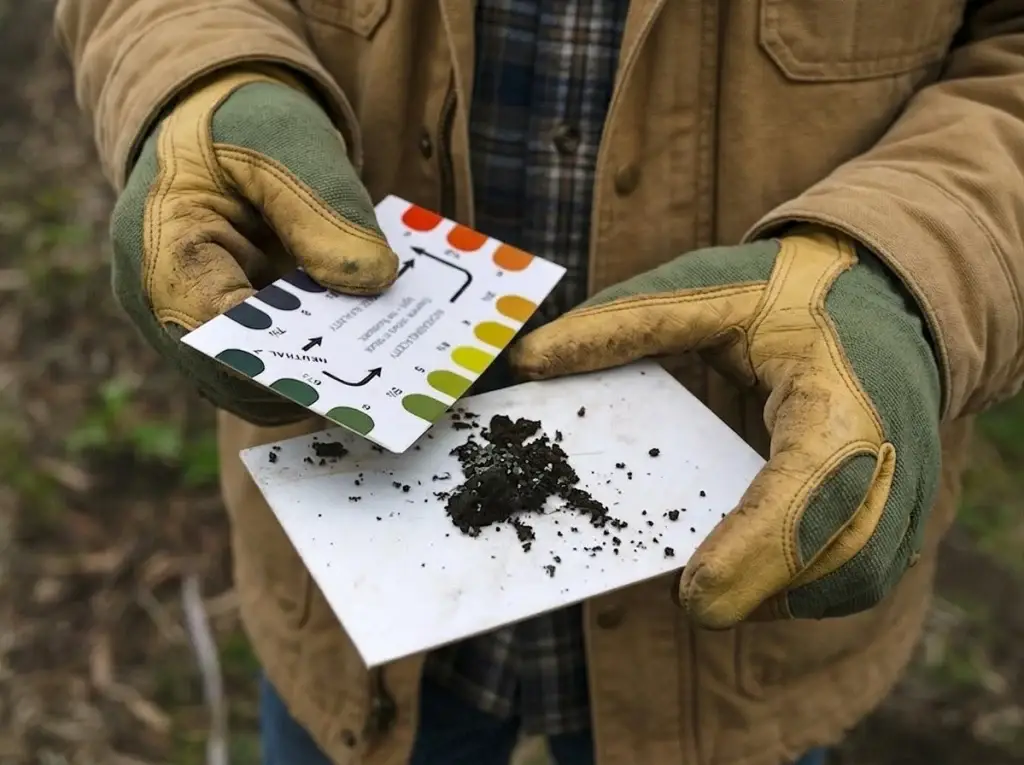
A soil test is one of the most practical apple tree soil requirement checks because it can report pH, phosphorus, potassium, and other factors that influence amendment decisions. Collect a representative sample from the future root zone, follow the laboratory’s instructions, and keep samples from very different areas separate.
This verified video, Soil Management for Fruit Trees from Utah State University Extension, provides broader soil-management context from an extension soil specialist. It is useful background, but your own soil report and local extension recommendations should guide site-specific amendments.
What a useful soil test tells you
A useful report can show whether the pH is already suitable and whether the apple tree soil requirements are being met for the planned root zone, whether nutrients are low or excessive, and whether organic matter or other measurements warrant attention. It also gives you a baseline for later comparisons. If you prefer a home screening tool, compare options in our guide to the soil pH test kit for fruit trees, but treat a basic meter as a screening aid rather than a replacement for a laboratory report.
Before collecting soil, remember that apple tree soil requirements vary across a yard, so remove surface mulch and sample several spots within the intended planting area. Mix those cores as the laboratory directs, avoid contaminating the sample with fertilizer, and record where it came from. As a result, the recommendation is more likely to describe the soil the roots will actually occupy.
How to read the result without overcorrecting
If pH is close to the recommended range, the apple tree soil requirements are already partly satisfied, so leave it alone and focus on structure, weeds, watering, and planting depth. If it is substantially high or low, use the report’s amendment rate rather than guessing. Sandy soils and clay soils can require different amounts of the same amendment, so a generic internet rate may be misleading.
Improve Heavy, Sandy, or Compacted Soil Carefully
Clay soil and slow drainage
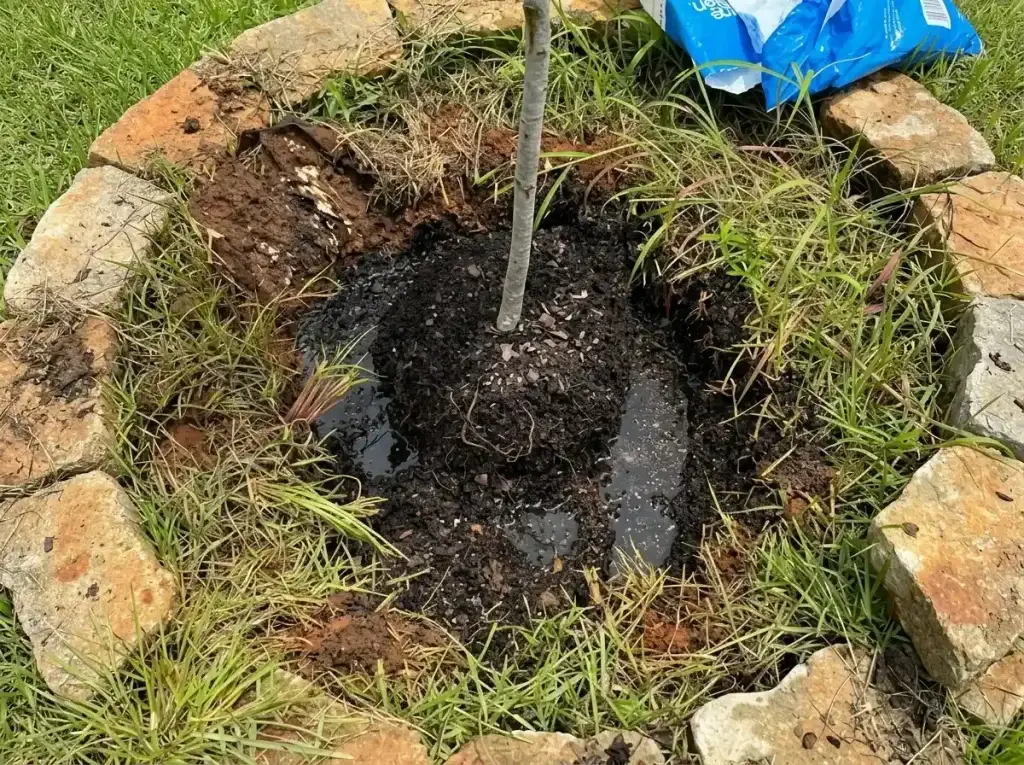
Apple trees can grow in clay, but compacted clay can conflict with apple tree soil requirements because it can drain slowly and restrict root growth. First, confirm whether the problem is texture, compaction, a shallow hard layer, or a high water table. A deeper hole alone will not solve a wet site because it can collect water like a basin.
Instead, improve the planting area broadly where practical, protect the soil from construction traffic, and consider a slightly raised planting position when local conditions support it. Do not mix a small amount of radically different material into a narrow hole and assume the surrounding clay will disappear. The transition between amended and native soil should allow roots and water to move rather than creating a container effect.
Sandy soil and low water-holding capacity
Sandy ground may drain quickly, so apple tree soil requirements in this setting include preserving moisture without reducing oxygen around roots. Sandy soil can also lose nutrients faster than a finer soil, so build resilience through appropriate organic matter, a surface mulch layer kept away from the trunk, and consistent watering during establishment. Still, avoid burying the root flare or using thick, wet mulch against the bark.
Organic matter, mulch, and the planting hole
Finished compost can support apple tree soil requirements when a soil test or local recommendation supports it, particularly when incorporated across a broad area. However, compost is not a universal substitute for drainage, and manure that is fresh or overly salty can injure roots. Keep fertilizer out of the planting hole unless a qualified local recommendation specifically calls for it.
Surface mulch is different from a soil amendment. Used correctly, it helps maintain several apple tree soil requirements at the surface. A moderate organic mulch layer can reduce evaporation and weed competition, but it should not touch the trunk. For broader nutrition decisions, use our guide to apple tree fertilizer and avoid treating pale leaves as proof that more fertilizer is needed before checking water, roots, pH, and pests.
Prepare the Planting Site Without Creating a Soil Pocket
Work across the root zone, not just one small hole
Start by removing turf and perennial weeds over a generous area. This broad preparation supports apple tree soil requirements beyond the narrow planting hole. Loosen compacted soil without smearing it when wet, and preserve the surrounding soil structure. The goal is a stable root zone with drainage that connects to the wider site.
University of Maryland Extension recommends checking soil pH and nutrient levels before planting and provides a practical guide to tree and shrub planting. Its guidance also emphasizes that planting too deeply and piling mulch against the trunk can create long-term problems.
Plant at the correct depth and protect the root flare
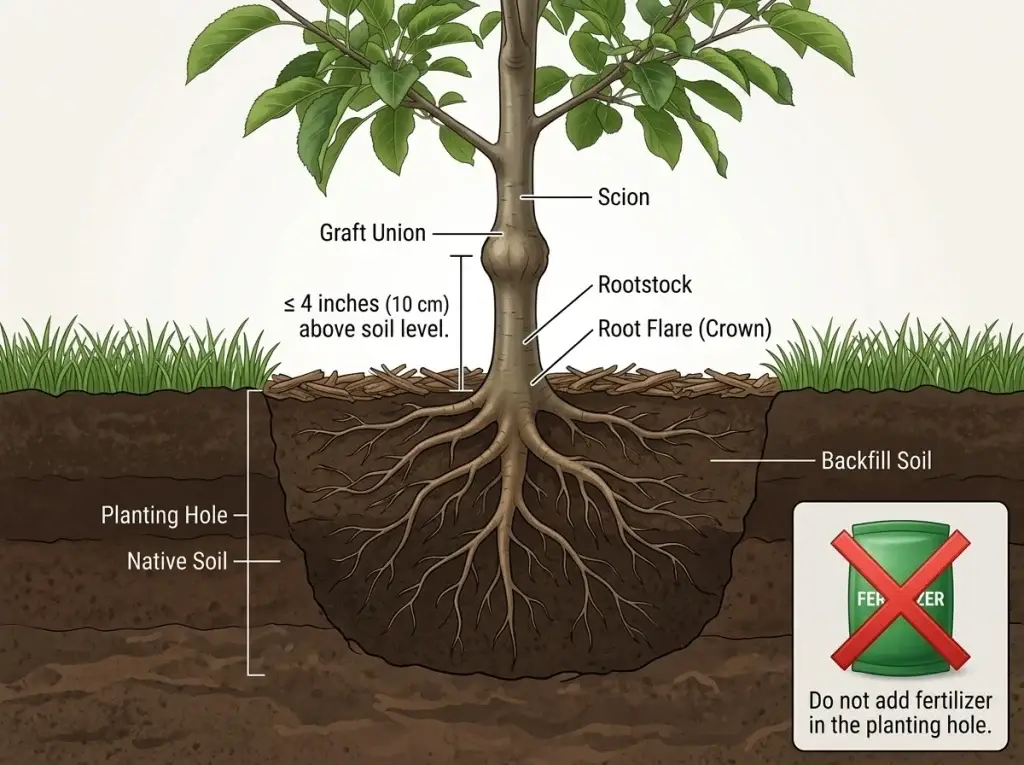
To meet apple tree soil requirements at planting, dig a hole no deeper than the root system requires and wide enough to let roots extend outward. Set a grafted apple tree so the graft union remains above the soil and the root flare is not buried. Then backfill with the native soil unless the soil report or local extension advice indicates a specific correction.
Match Soil Care to Tree Age and Growing Conditions
| Tree or site situation | Priority | Avoid |
|---|---|---|
| Newly planted tree | Confirm drainage, water consistently during establishment, protect the root zone, and maintain the correct planting depth. | Heavy fertilizer in the planting hole, deep planting, and mulch against the trunk. |
| Young tree with weak shoot growth | Check moisture, weeds, pH, and the soil report before considering nutrition. | Repeated fertilizer applications without a documented need. |
| Established tree | Maintain a broad, noncompacted root zone and monitor changes in growth, leaves, and soil moisture. | Routine amendments based only on leaf color or a single quick test. |
| Wet or compacted site | Correct the site constraint first, possibly with professional drainage or raised planting advice. | Digging a deeper bowl that holds water around the roots. |
Age changes the priority, but it does not change the fundamentals. Across seasons, the same apple tree soil requirements remain: drainage, oxygen, suitable pH, and a stable root zone. A young tree needs a forgiving root zone while it establishes, whereas an older tree benefits from protecting the larger area occupied by its roots. In either case, apple tree soil requirements are better managed through observation and testing than through routine product applications.
FAQs
Can apple trees grow in clay soil?
Yes, apple trees can grow in clay when it is not persistently saturated, and roots have enough oxygen. Improve compaction across the root zone where possible, verify drainage, and avoid creating a narrow pocket of loose soil surrounded by dense clay.
What pH is best for apple trees?
University of Minnesota Extension gives a general pH range of 6 to 7 for apples. Many home-growing recommendations use a slightly narrower practical target near 6.0 to 6.5, so use your local soil laboratory or extension service for the final interpretation of your apple tree soil requirements.
How do I know whether my soil drains well enough?
Observe the site after substantial rain and use a drainage test recommended by your local extension service. If water remains for an extended period or the soil is frequently saturated, address the site constraint before planting. A deeper hole is not a drainage solution by itself.
Should I add compost or fertilizer to the planting hole?
Do not add fertilizer to the planting hole unless a qualified recommendation specifically calls for it. Compost may help when used appropriately across the planting area, but the soil test should determine whether it is needed and how much is suitable.
Can I plant an apple tree where water collects after rain?
That location is a poor match unless drainage can be corrected. Because standing water conflicts with basic apple tree soil requirements, choose a better-drained site or obtain local arboricultural advice about raised planting and water movement before purchasing the tree.
Related Articles
Sources
- University of Minnesota Extension, Growing apples in the home garden.
- University of Maryland Extension, Planting a Tree or Shrub.
- Utah State University Extension, Soil Management for Fruit Trees.
Disclaimer: This article provides general growing guidance based on university extension research. Soil conditions, climate zone, and variety significantly affect results. Contact your local cooperative extension service for region-specific advice.
