
Honeycrisp Apple Tree Diseases: 5 Warning Signs & Fixes
Honeycrisp apple tree diseases range from fire blight and apple scab to cedar apple rust, powdery mildew, and bitter rot, and this variety’s unique genetics make it partially resistant to some problems while unusually vulnerable to others. Understanding which disease you are dealing with is the first step toward saving your harvest.
Table of Contents
Key Takeaways
- Honeycrisp shows some resistance to apple scab and fire blight, but it is not immune to either disease, and unsprayed trees can still develop leaf and fruit spots.
- Honeycrisp is more susceptible than other varieties to cedar apple rust, powdery mildew, bitter rot, and the calcium-related fruit disorder called bitter pit.
- Correct identification matters. However, symptoms like curled leaves or spotted fruit can come from several different causes, so matching symptoms to the right disease guides the right fix.
Understanding Honeycrisp Apple Tree Diseases
Honeycrisp apple tree diseases confuse a lot of home growers because this variety does not behave like other apples. Developed by the University of Minnesota and released in 1991, Honeycrisp carries partial genetic resistance to two of the most common apple diseases, apple scab and fire blight. As a result, growers sometimes assume the tree is problem-free, and that assumption causes trouble down the road.
In reality, university extension research shows a more nuanced picture. Honeycrisp’s partial resistance reduces the severity of scab and fire blight compared to highly susceptible varieties, but it does not prevent infection outright. Meanwhile, this same variety has a documented pattern of higher susceptibility to cedar apple rust, powdery mildew, and fruit rots such as bitter rot. Consequently, a spray-free, hands-off approach that might work for a truly resistant cultivar often leaves Honeycrisp exposed.
The 5 Most Common Honeycrisp Apple Tree Diseases
Below are the five issues that account for most of the disease complaints home growers report about their Honeycrisp trees. Each entry covers what to look for, why it happens, and how university extension sources recommend responding.
1. Fire Blight
Fire blight is a bacterial disease caused by Erwinia amylovora, and it is one of the two diseases Honeycrisp resists moderately well. Even so, young Honeycrisp trees remain more vulnerable than mature ones, and warm, wet weather during bloom can still trigger an outbreak.
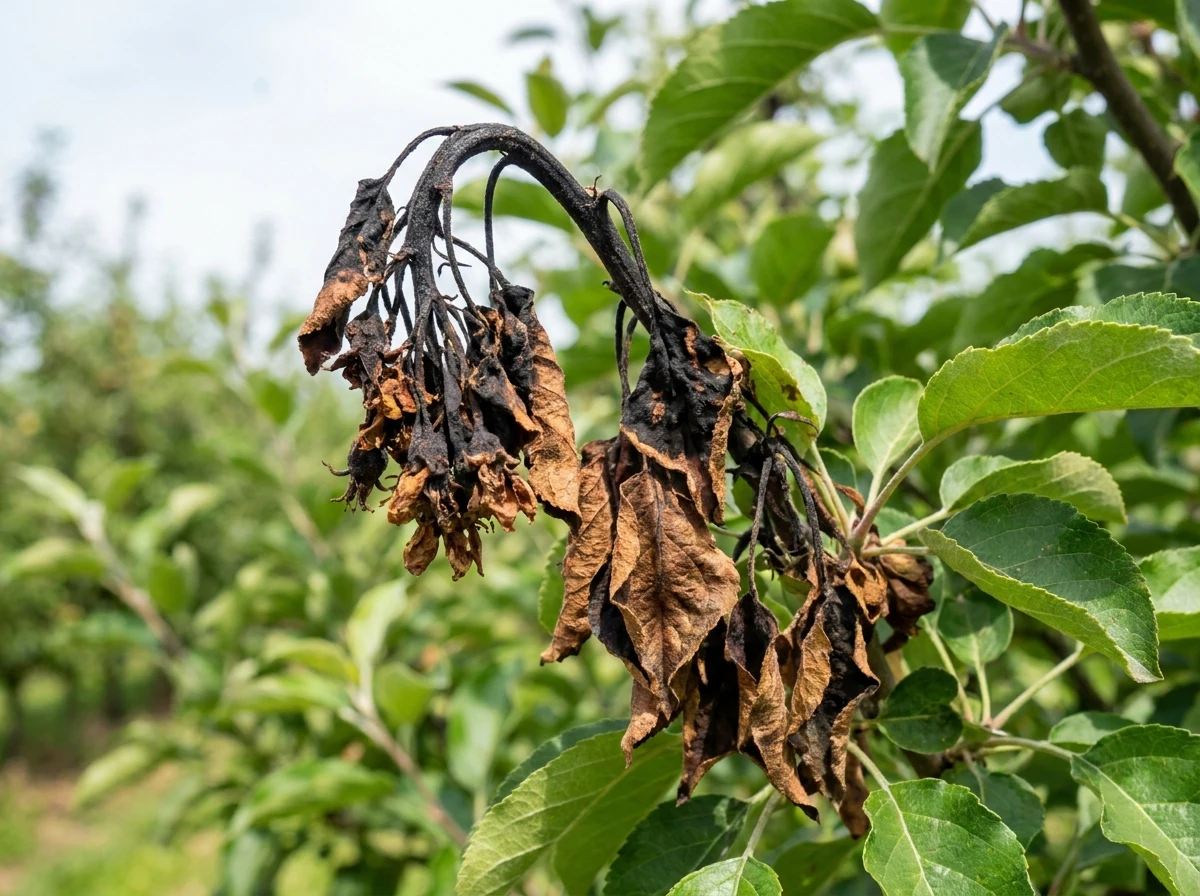
Affected blossoms and shoot tips wilt, turn black or dark brown, and curl into a distinctive shepherd’s crook shape. As a result, infected branches look scorched, which is how the disease got its name. Therefore, if you spot blackened new growth right after a rainy, warm bloom period, fire blight should be the first suspect.
Prune out infected wood at least twelve inches below any visible discoloration, and always sanitize pruning tools between cuts to avoid spreading the bacteria to healthy limbs. Prune during dry weather whenever possible, since wet conditions help the bacteria spread through fresh pruning wounds.
2. Apple Scab
Apple scab, caused by the fungus Venturia inaequalis, is the second disease Honeycrisp partially resists. However, partial resistance is not the same as immunity, and unsprayed or stressed trees frequently develop symptoms anyway, especially in cool, rainy spring weather.
Look for olive-green to brown spots with feathered edges on leaves, which eventually darken and turn scabby. Infected leaves often turn yellow and drop early, while affected fruit develops raised, corky spots and may crack or become deformed as it grows.
Rake and destroy fallen leaves each autumn, since the fungus overwinters in leaf litter and releases spores the following spring. Additionally, pruning to open up the canopy improves airflow and speeds leaf drying, reducing the window of time during which the fungus can infect new tissue.
3. Cedar Apple Rust
Cedar apple rust is caused by the fungus Gymnosporangium juniperi-virginianae, and unlike scab and fire blight, Honeycrisp shows little natural resistance to it. This disease requires two hosts to complete its life cycle, alternating between apple trees and nearby junipers or eastern red cedar.
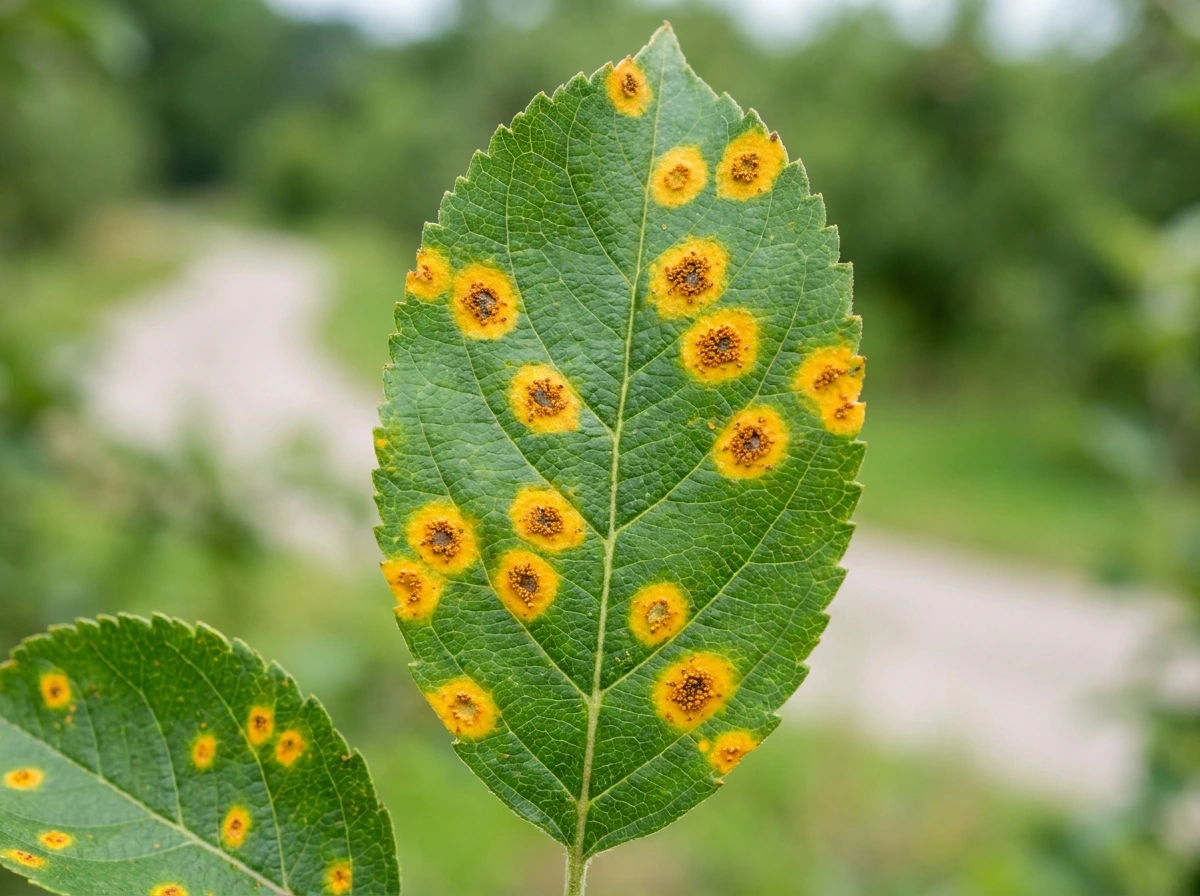
Symptoms begin as small yellow spots on the upper leaf surface in late spring, which enlarge and turn bright orange with a reddish border. On the underside of the leaf, small cup-like structures eventually form. In heavy infections, fruit can become dwarfed and misshapen.
Because the fungus needs a nearby juniper host, removing susceptible junipers within a few hundred feet of the orchard can meaningfully reduce pressure. When that is not practical, a preventive fungicide program timed from bloom through several weeks after petal fall is the standard extension recommendation.
4. Powdery Mildew
Powdery mildew, caused by the fungus Podosphaera leucotricha, is another disease in which Honeycrisp lands on the more susceptible end of the spectrum, according to NC State Extension cultivar susceptibility ratings. The fungus overwinters inside infected buds, so the earliest sign is often a short delay in bud break.
Once infected shoots emerge, they carry a white to gray, felt-like coating of spores across new leaves and shoot tips. Leaves curl, become stunted, and take on a brittle texture, while affected fruit can develop a netlike russeting on the skin.
Prune out and destroy visibly infected shoots during the dormant season before new growth begins. Avoiding overcrowded branches also helps, since better air circulation slows the humid, still conditions that favor mildew development.
5. Bitter Rot and Bitter Pit
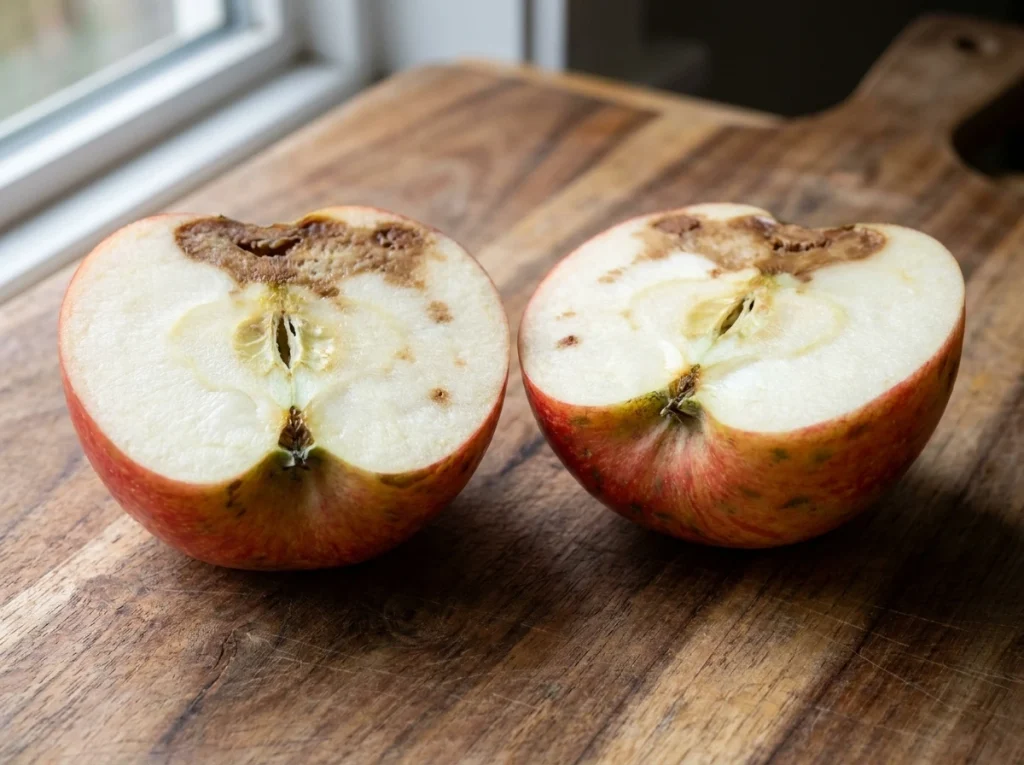
Honeycrisp’s reputation for fruit problems mostly comes down to two separate issues that are frequently confused with one another. Bitter rot is a fungal disease caused by Colletotrichum species, and it thrives during warm, humid weather. Symptoms appear as small, circular, sunken lesions on the fruit that darken and expand into a V-shaped rot when the apple is cut open. Removing mummified fruit and applying protective fungicide sprays from midsummer through harvest are the standard control measures.
Bitter pit, by contrast, is not caused by a pathogen at all. According to Utah State University Extension, bitter pit is a physiological disorder linked to calcium deficiency in the fruit, and Honeycrisp is specifically listed among the most susceptible varieties. Affected apples develop sunken, brown lesions with spongy tissue underneath, usually showing up weeks after harvest during storage. Consistent soil moisture, moderate fertilization, and timely harvest all help reduce bitter pit risk, since over-vigorous trees with irregular watering are the most prone to it.
Honeycrisp Disease Susceptibility at a Glance
The table below summarizes how Honeycrisp compares to the general apple disease picture, based on university extension observations.
| Disease | Type | Honeycrisp Susceptibility | Peak Risk Season |
|---|---|---|---|
| Fire Blight | Bacterial | Moderate resistance | Bloom through early summer |
| Apple Scab | Fungal | Moderate resistance | Cool, wet spring |
| Cedar Apple Rust | Fungal | Susceptible | Spring, near junipers |
| Powdery Mildew | Fungal | Susceptible | Spring bud break |
| Bitter Rot | Fungal | Highly susceptible | Midsummer through harvest |
| Bitter Pit | Physiological disorder | Highly susceptible | Post-harvest storage |
University extension plant pathologists generally agree that no apple cultivar, including Honeycrisp, should be assumed disease-free simply because it carries partial resistance genes.
Preventive Care Practices for Honeycrisp Trees
Good cultural practices reduce disease pressure before it starts, and this matters more for Honeycrisp than for many other cultivars given its mixed resistance profile. Start with sanitation: remove fallen leaves, mummified fruit, and pruning debris from around the base of the tree every season, since these materials harbor overwintering fungal spores and bacteria.
Prune annually to open the canopy, since better airflow and light penetration shorten the hours that leaves and fruit stay wet, which in turn limits fungal infection windows. Avoid over-fertilizing, because excessively vigorous growth is more attractive to fire blight and more prone to bitter pit. Finally, water consistently through the growing season rather than allowing the soil to swing between very dry and very wet, since irregular moisture is a documented trigger for calcium-related fruit disorders in this variety.
Cultural controls also include site selection when planting new trees. Choosing a spot with full sun and good air drainage, away from low-lying frost pockets and away from susceptible juniper species, reduces disease pressure before the tree ever produces its first apple. Similarly, spacing trees far enough apart to allow sunlight and airflow through the canopy pays off every season afterward.
Safety note: Always read and follow the label directions on any fungicide or bactericide before applying it to a home orchard, and consult your local cooperative extension office for products currently registered in your state.
When to Call a Professional
Most Honeycrisp disease problems can be managed with sanitation, pruning, and timed sprays. However, if a tree shows rapid dieback, extensive canker formation, or symptoms that do not match the descriptions above, a certified arborist or your local university extension plant diagnostic clinic can confirm the diagnosis and rule out root rot, canker diseases, or environmental stress that can mimic infectious disease.
FAQs
Is Honeycrisp actually resistant to apple diseases?
Honeycrisp carries partial resistance to apple scab and fire blight only. It remains susceptible to cedar apple rust, powdery mildew, bitter rot, and bitter pit, so a spray-free approach is not recommended in most regions.
Should I remove a Honeycrisp tree that keeps getting sick every year?
Not necessarily. Repeated disease pressure usually points to a site or care issue rather than a hopeless tree. Poor airflow, a nearby juniper host, or inconsistent watering can all be corrected before removal is considered, and an extension diagnostic clinic can help confirm whether the underlying cause is treatable.
Why do my Honeycrisp leaves curl and turn brown by midsummer?
This pattern is commonly reported to extension services and can point to apple scab, powdery mildew, or environmental stress from irregular watering. A close look at the spot color, shape, and leaf texture, ideally with extension help, narrows down the cause.
Why do my Honeycrisp apples have brown spots inside after storage?
Brown, spongy spots that appear weeks after harvest are the classic signature of bitter pit, a calcium-related disorder rather than a disease. Consistent watering and avoiding late, heavy nitrogen applications help reduce it in future seasons.
Can cedar apple rust kill my Honeycrisp tree?
Cedar apple rust rarely kills a mature tree outright, but heavy, repeated infections weaken vigor and reduce fruit quality. Removing nearby susceptible juniper hosts is the most effective long-term reduction strategy.
Related Articles
- Disease-Resistant Apple Tree Varieties Worth Planting
- Best Apple Trees for a Home Orchard
- Apple Tree Varieties by USDA Zone
Sources
- University of Minnesota Extension: Growing Apples in the Home Garden
- Cornell University, KhanLab: Database of Apple Diseases
- NC State Extension: Apple Powdery Mildew
- Utah State University Extension: Bitter Pit
- University of Maryland Extension: Growing Apple and Pear Trees in a Home Garden
Disclaimer: This article is for informational purposes only. Apple tree disease and pest identification in the field can be challenging. For a confirmed diagnosis, consult a certified arborist or contact your local university cooperative extension plant diagnostic clinic. Always read and follow pesticide label directions before applying any product.
