
4 Best Organic Fertilizer For Apple Trees (+ When and How to Apply)
Choosing the right organic fertilizer for apple trees determines whether your tree builds strong roots and heavy fruit or just grows a canopy full of soft, unproductive shoots. This guide covers the 4 most effective organic options, the soil benchmarks that tell you when fertilizer is actually needed, and the seasonal timing that university extension programs recommend for home growers.
Table of Contents
Key Takeaways
- The best organic fertilizer for apple trees feeds slowly, builds soil biology, and avoids the nitrogen overload that pushes shoot growth at the expense of fruit set.
- Compost is the foundation of any organic program. Add a targeted amendment (fish emulsion, blood meal, or a blended fruit tree fertilizer) only when soil tests or shoot growth measurements indicate a deficiency.
- Apply all fertilizers at the drip line of the tree, not piled against the trunk. Stop fertilizing no later than midsummer to avoid stimulating soft growth before winter.
Why Organic Fertilizer For Apple Trees Works Better Long-Term
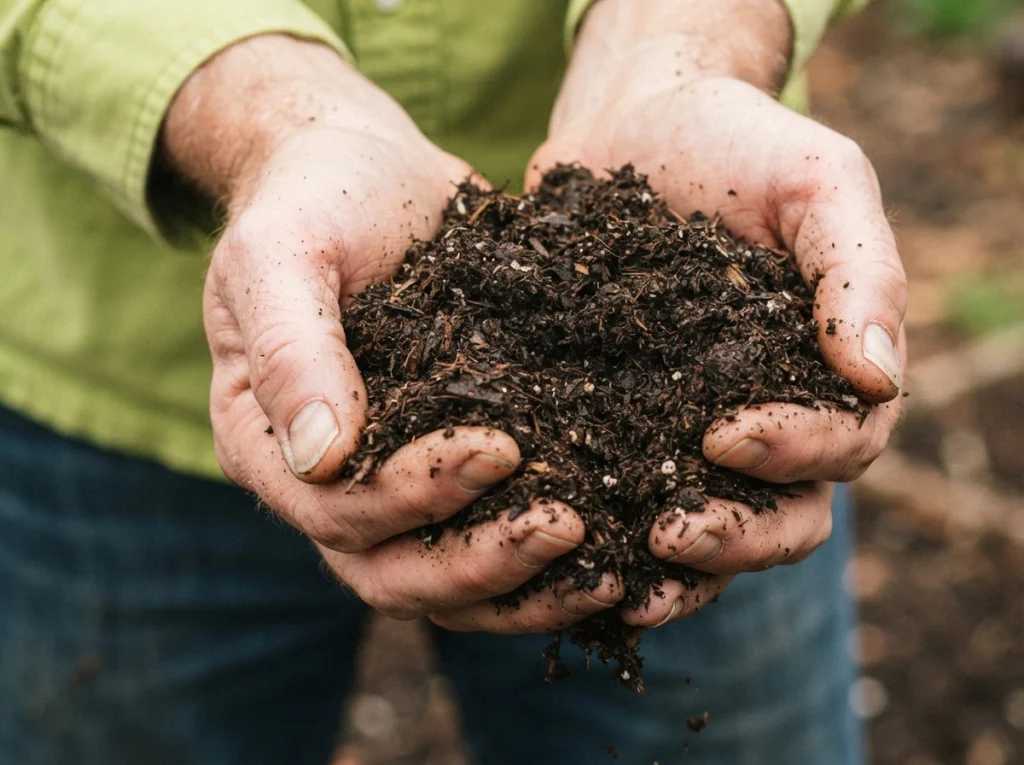
Organic fertilizer for apple trees releases nutrients slowly as soil microbes break down organic matter. This means the tree receives a steady, measured supply of nitrogen, phosphorus, and potassium throughout the growing season rather than a single concentrated flush that synthetic fertilizers can deliver.
The slow-release mechanism also protects against the most common fertilizing mistake home growers make: too much nitrogen. Excess nitrogen tells an apple tree to keep producing shoots and leaves instead of redirecting energy into flowers and fruit. As a result, apple tree fertilizer organic options consistently outperform synthetic alternatives for long-term soil health and fruit quality in backyard orchards.
Additionally, organic amendments improve soil structure over time. Compost and well-composted manure increase the soil’s ability to retain moisture, support beneficial fungi and bacteria, and buffer pH. All of these factors contribute to stronger root systems and more consistent fruit production year after year.
How to Know If Your Apple Tree Actually Needs Fertilizer
Before buying any product, measure last season’s annual shoot growth. According to Michigan State University Extension, established apple trees (4 years and older) should produce 6 to 12 inches of new shoot growth per year. Trees producing less than 6 inches of growth are candidates for fertilization. Trees growing more than 12 inches likely need no additional nitrogen at all.
A soil test is the most reliable way to confirm what your tree actually needs. Tests from your county cooperative extension lab typically cost $15 to $30 and return specific N-P-K recommendations. Without a test, you risk applying phosphorus and potassium to soil that already has adequate levels, a common and costly error. Our guide to soil pH test kits for fruit trees covers how to collect a sample and interpret your results. You can also review when to fertilize apple trees for a full seasonal timing breakdown by tree age.
Visual cues provide additional confirmation. Pale green or yellowish leaves in early summer, combined with weak shoot extension, indicate nitrogen deficiency. However, leaf color alone is not a reliable diagnosis since several conditions can cause yellowing.
The 4 Best Organic Fertilizer For Apple Trees Options
Not every organic product is the right fit for every tree or situation. The four options below cover the range from low-cost foundational amendments to targeted, fast-acting solutions for trees that need immediate correction.
1. Compost: The Foundation of Any Organic Program
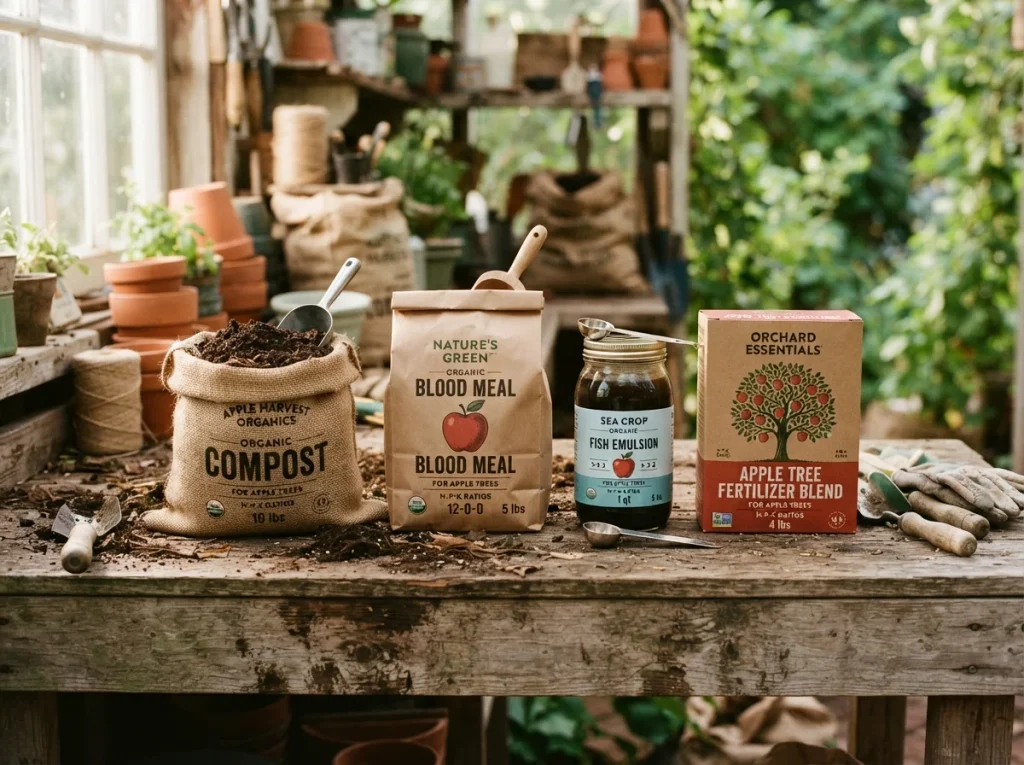
Compost for apple trees is the single most versatile organic amendment available. Spread 2 to 3 inches of finished compost under the canopy each spring, from 12 inches out from the trunk to the drip line. Well-composted material adds a broad spectrum of macro and micronutrients, feeds soil biology, and improves water retention simultaneously.
Compost does not carry a guaranteed N-P-K analysis, which means you cannot rely on it alone to correct a confirmed nitrogen deficiency. However, as a foundational annual amendment, it builds the soil ecosystem that makes all other nutrients more available to the tree over time.
2. Fish Emulsion: Fast-Acting Nitrogen for Early Spring
Fish emulsion (typically 5-1-1 or 5-2-2) is one of the most reliable organic fertilizer for apple trees options when you need a quicker nitrogen response in early spring before bud break. It delivers nitrogen in a form that becomes plant-available within a few weeks at soil temperatures above 50 degrees Fahrenheit.
Apply fish emulsion as a soil drench around the drip line, diluted according to label directions. It carries a strong odor for 24 to 48 hours after application. This is a normal part of the nutrient release process, not a sign of a problem. For trees that need a nitrogen correction without the concentrated punch of blood meal, fish emulsion is the gentler choice.
3. Blood Meal: For Trees With Confirmed Nitrogen Deficiency
Blood meal for apple trees is a high-nitrogen organic amendment (typically 12-0-0 to 13-0-0) that releases more quickly than most other organic options. It is most appropriate when a soil test or foliar analysis confirms a significant nitrogen shortage, not as a routine annual application.
Apply blood meal sparingly, following the product label rate. Overapplication can push excessive shoot growth and may temporarily acidify the soil. Consequently, blood meal works best as a targeted correction rather than a blanket soil amendment. Always water thoroughly after application to move nutrients into the root zone.
4. Blended Organic Fruit Tree Fertilizers (Espoma Tree-Tone and Similar Products)
Blended products formulated specifically for fruit trees offer the best organic fertilizer for apple trees in a single bag for growers who prefer simplicity. Espoma Tree-Tone (6-3-2) and similar products provide a balanced N-P-K profile with added calcium and trace minerals, combined with beneficial microbes that support nutrient uptake.
These products serve as organic apple tree food that covers all major macronutrients at once. Apply according to the rate on the label, typically based on trunk diameter or tree age. Blended organic fertilizers are a reliable starting point for new growers who have not yet completed a soil test, because their lower nutrient concentrations make over-application less likely than with concentrated single-nutrient amendments.
How to Apply Organic Fertilizer to Apple Trees
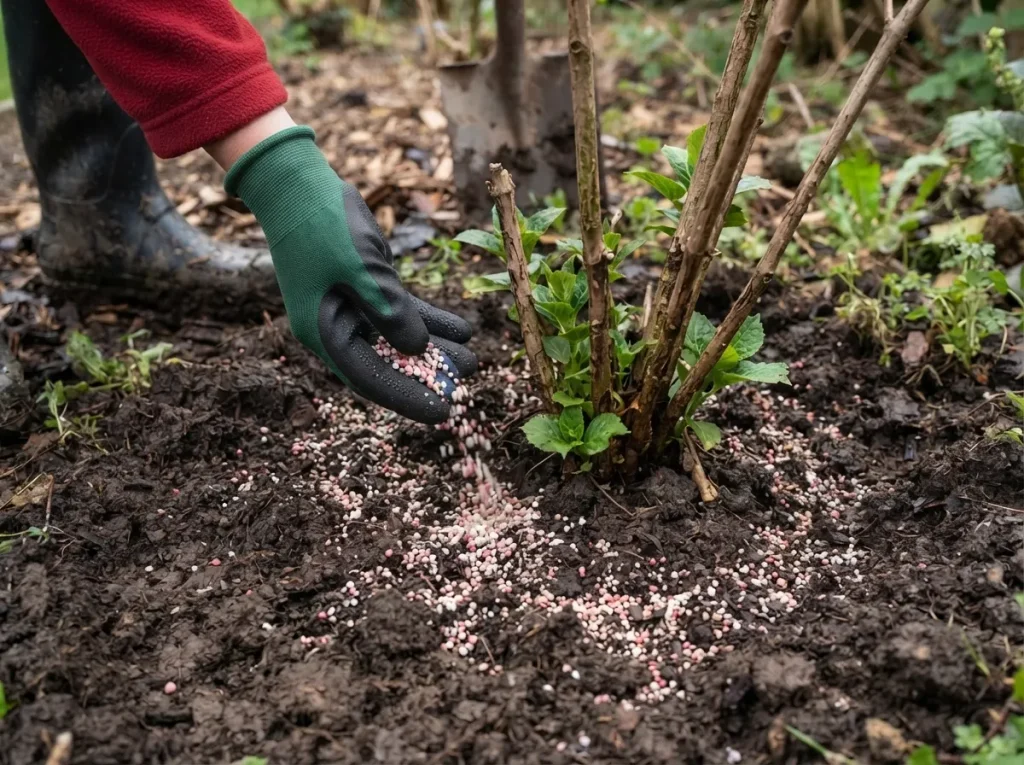
The most important application rule is also the most commonly ignored: fertilize at the drip line, not at the trunk. The drip line is the outer edge of the tree’s canopy, where feeder roots are most active. Piling fertilizer against the trunk bypasses the root zone and can cause bark damage over time.
For granular amendments (compost, blood meal, blended granular fertilizers), spread evenly from 12 inches out from the trunk to the drip line. Rake lightly into the soil surface and water thoroughly to move nutrients down into the root zone. For liquid amendments (fish emulsion, compost tea), apply as a soil drench over the same area.
Application rate guidelines by tree age: young trees (1 to 3 years) need conservative rates, roughly half the label recommendation for mature trees, to avoid burning tender roots. Established trees (4 years and older) can receive the full recommended rate, adjusted based on annual shoot growth measurements. Never exceed the label rate for any product.
Organic Fertilizer For Apple Trees: Seasonal Timing Guide
Timing matters as much as product selection. The organic fertilizer for apple trees program outlined below follows the growth benchmarks that university extension research supports for home orchardists.
| Season | Timing | Recommended Organic Amendment | Purpose |
|---|---|---|---|
| Early Spring | Just before bud break | Compost topdress + fish emulsion (if growth was weak) | Kickstart root activity and nitrogen supply |
| Late Spring | After petal fall | Blended fruit tree fertilizer (if soil test shows need) | Support new shoot extension and fruit set |
| Early Summer | June (last application) | Compost tea or kelp meal (light application) | Support fruit development without pushing late shoot growth |
| Late Summer / Fall | After mid-July: no nitrogen | No nitrogen amendments. Mulch only. | Harden the tree for dormancy |
“Apply fertilizer shortly after growth has started in spring. Organic sources may be substituted for conventional fertilizers as long as you compensate for the lower amount of nitrogen in the organic source. Fertilizer should be placed in a wide band under the farthest branches from the trunk, or the drip line, of the tree.” (Michigan State University Extension, Spring Fertilization of Garden Fruits)
For a complete overview of nutrient requirements by tree age and rootstock, our full apple tree fertilizer guide covers all fertilization scenarios from planting through mature tree management. Additionally, applying organic mulch after fertilization helps retain soil moisture and reduces nutrient loss. Review our guide to apple tree mulching for the best mulch types and application depths.
For a full comparison of organic versus synthetic options and NPK ratios by tree stage, see best fertilizer for apple trees. Soil structure is as important as fertilizer choice. Our apple tree soil requirements guide covers pH targets, drainage, and organic matter benchmarks that directly affect fertilizer effectiveness.
FAQs
What is the best organic fertilizer for apple trees?
The best organic fertilizer for apple trees depends on what your soil needs. For most home growers, a 2 to 3-inch compost topdress each spring combined with a blended fruit tree fertilizer (such as Espoma Tree-Tone) when shoot growth falls below 6 inches provides a complete, balanced organic program. Run a soil test every 2 to 3 years to confirm whether additional amendments are warranted.
When should I stop fertilizing my apple trees in summer?
Stop all nitrogen applications by mid-July at the latest. Nitrogen applied late in the growing season stimulates soft new shoot growth that does not have time to harden before winter temperatures arrive. This soft growth is highly susceptible to cold damage and to fire blight infection the following spring. After mid-July, switch to mulch only.
Can compost alone fertilize an apple tree?
Compost for apple trees provides a broad-spectrum nutrient base and significantly improves soil health, but it does not carry a guaranteed nitrogen analysis. For trees showing confirmed nitrogen deficiency (under 6 inches of annual shoot growth and pale leaves), compost alone may not deliver enough nitrogen quickly enough. In those cases, supplement with fish emulsion or blood meal based on your soil test results.
Related Articles
- Complete Apple Tree Fertilizer Guide: Timing, Rates, and Nutrients
- Best Fertilizer for Apple Trees: Organic and Conventional Compared
- When to Fertilize Apple Trees: A Seasonal Timing Guide
- Apple Tree Soil Requirements: pH, Drainage, and Organic Matter
- Apple Tree Mulching: Best Materials and Application Guide
Sources
- Michigan State University Extension: Spring Fertilization of Garden Fruits
- University of Minnesota Extension: Growing Apples in the Home Garden
Disclaimer: This article provides general growing guidance based on university extension research. Soil conditions, climate zone, and variety selection significantly affect results. Contact your local cooperative extension service for region-specific recommendations.
